
Maybe the scale isn’t the villain after all. Same goes for the calorie app, the sleep tracker, the screen time report, or whatever device or number you’ve decided is responsible for how you feel about yourself. None of those things are doing anything to you on their own. They’re just sitting there, waiting for you to decide what kind of relationship you’re going to have with them.
I’m a 36-year-old nutrition consultant who clawed her way out of her own body dysmorphia. And if I’ve learned anything, it’s that more data doesn’t always lead to better health. Mainly, the emotional kind. Sometimes less really, truly is more. No scale, no tracker, no smart watch, no band or ring, no number(s) to micromanage. Period.
For some, that’s where deep healing can begin. It’s where taking care of your body doesn’t simultaneously overflow your mental health reservoir. Spoiler alert: this was me after I had my second baby. For others, there’s a more nuanced approach. It’s a coveted middle ground where a tool can genuinely serve you if you’re paying attention to why you’re using it and what you’re doing with the information. Tracking becomes a source of insight, beautifully complementing your intuition.
All to say, the tool was never really the issue. How you engage with it is.
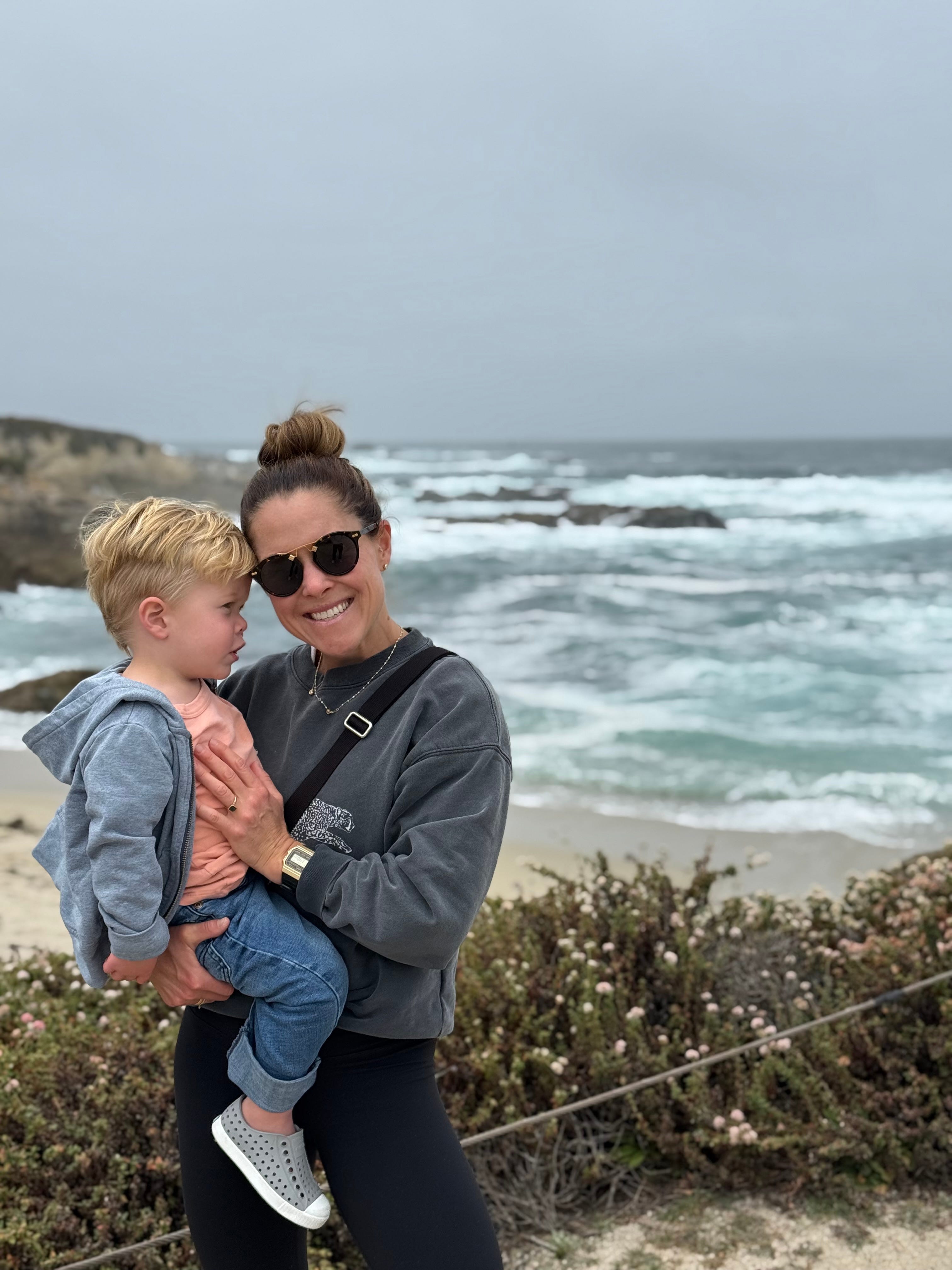
For years, my relationship with my scale was, for lack of a better word, toxic. I was a daily weigher. It was the first thing I’d do every morning, before my eyelids were fully open. If the number was down, I felt like I’d won something. A wave of relief would wash over me. If it was up, even half a pound, I’d spend the next 20 minutes mentally re-litigating everything I ate and how many steps I took the day before.
Ironically, as a nutrition consultant, I knew better. I’d constantly tell my clients that weight can swing 2-5 pounds (in a day) from water, sodium, the luteal phase, stress, a late dinner, etc. It fluctuates for dozens of reasons that have nothing to do with body fat. But I wasn’t living like I believed it. I was letting an otherwise objective tool make decisions that needed a lot more context.
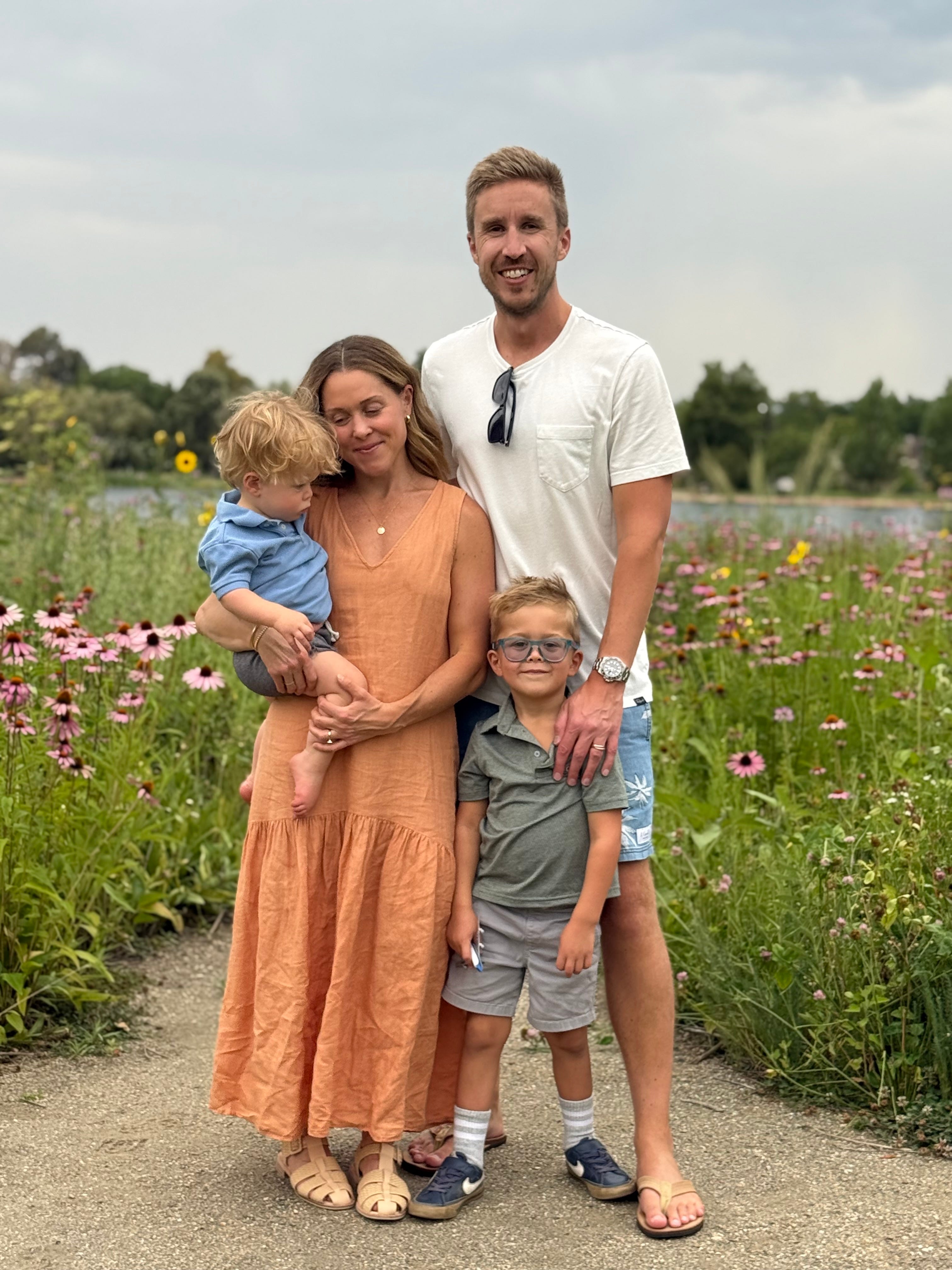
In 2024, a few weeks after I had Ellis (pictured above), it became abundantly clear that I could no longer separate the data from my self-worth. I needed a full stretch of tracking nothing, other than how frequently he was breastfeeding, before I could even think about picking a tool back up. I took off my Oura ring and let it collect dust in a drawer of pre-pregnancy clothes. I also tossed my scale. Like, in the trash. For the sake of my fragile postpartum mind, I knew I had to draw a hard line in the sand. It took almost a year of walking away from every number, entirely, before I was ready to let one back into my life.
Fast-forward to December 2025. Instagram started sending me targeted ads for the Hume Health scale. Despite my whole no-scale era, curiosity tends to kill the cat. I bought it, stared at it, gave myself a pep talk, and got crystal clear on why I was bringing a scale back into my life. I wanted to build (muscle). And I wanted to support my body differently than I ever had before. If this scale was going to earn a place in my bathroom, it needed to serve that goal and nothing less.
Fortunately, this scale has changed the entire dynamic between me and this tool I’d let boss me around for years. Instead of one number, it gives me body composition, muscle mass, body fat percentage, and data that reflects what’s happening under the hood instead of just how hard gravity is pulling on it that morning.
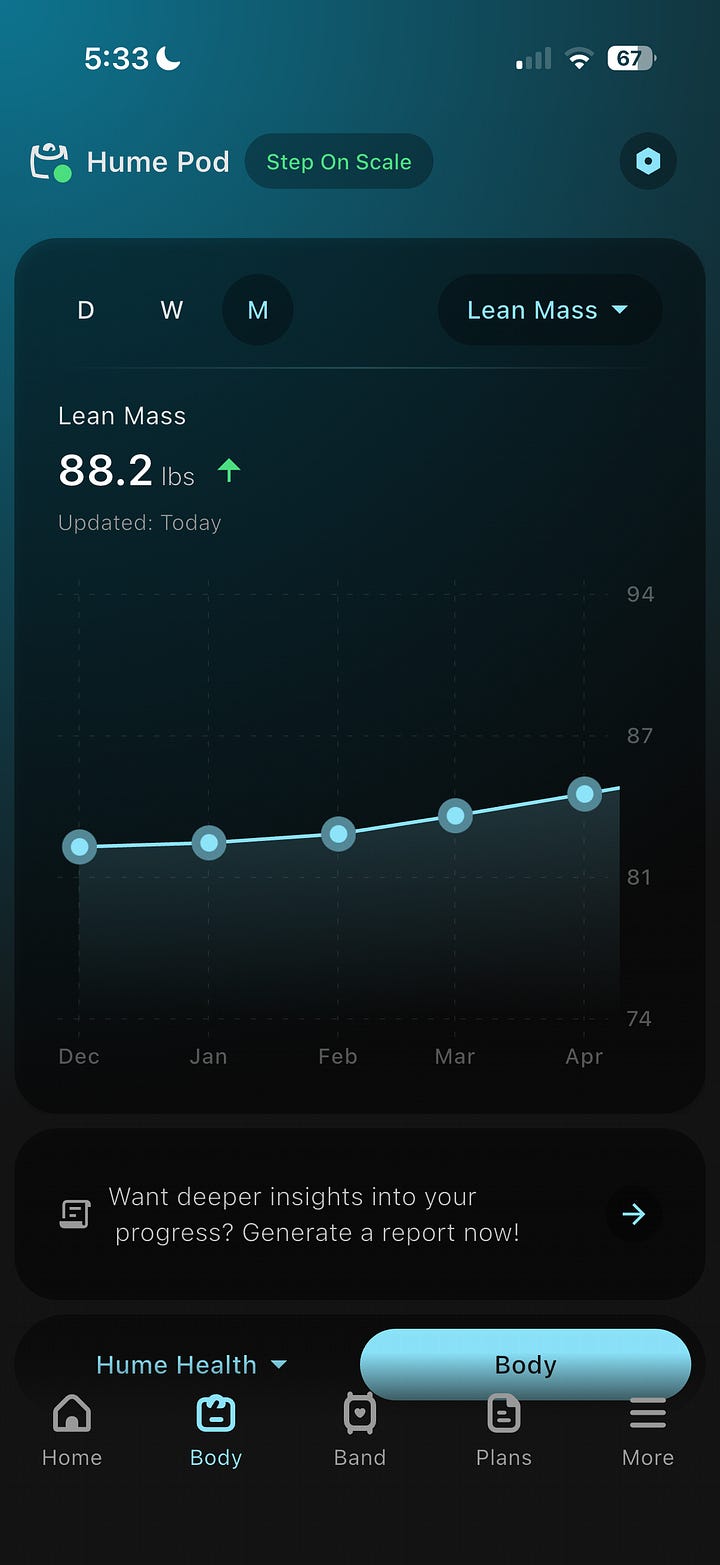
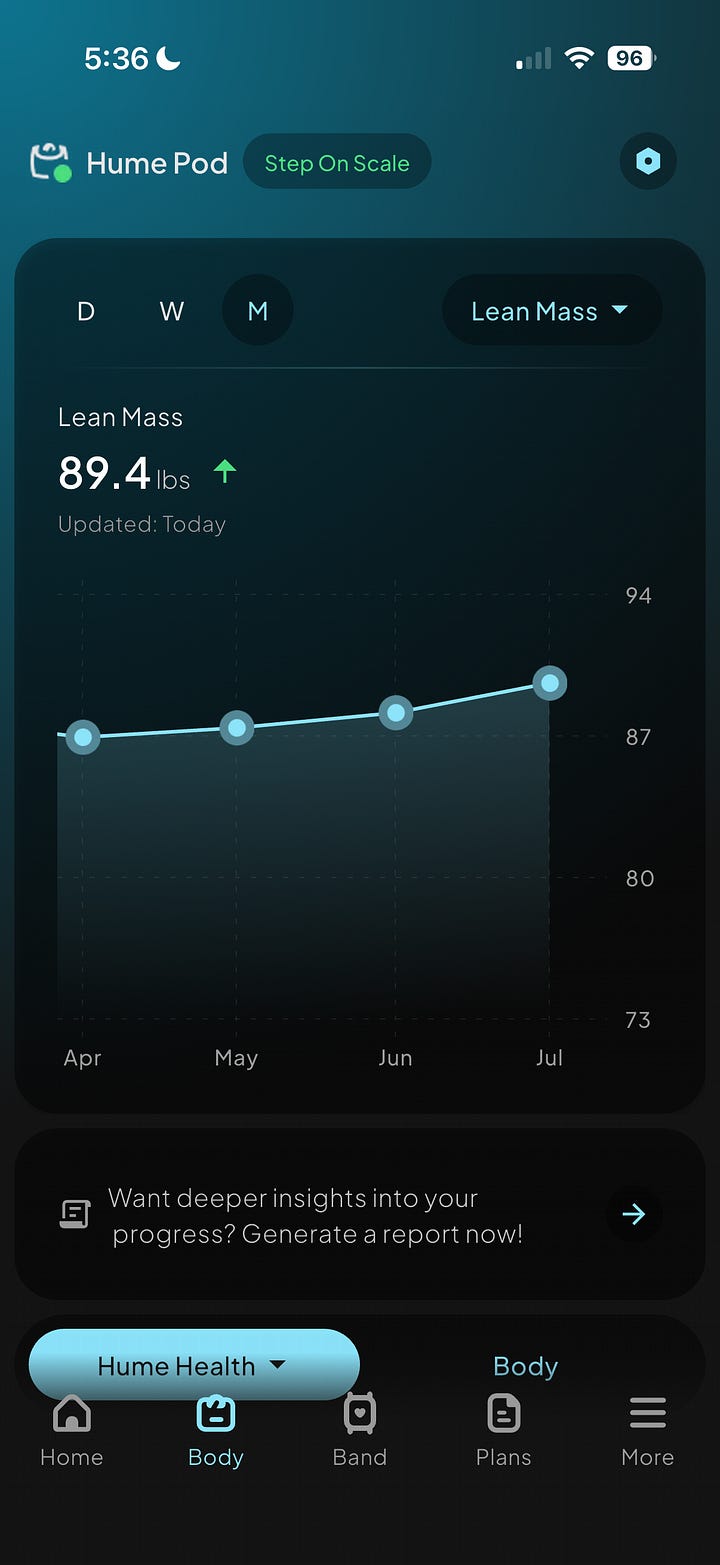
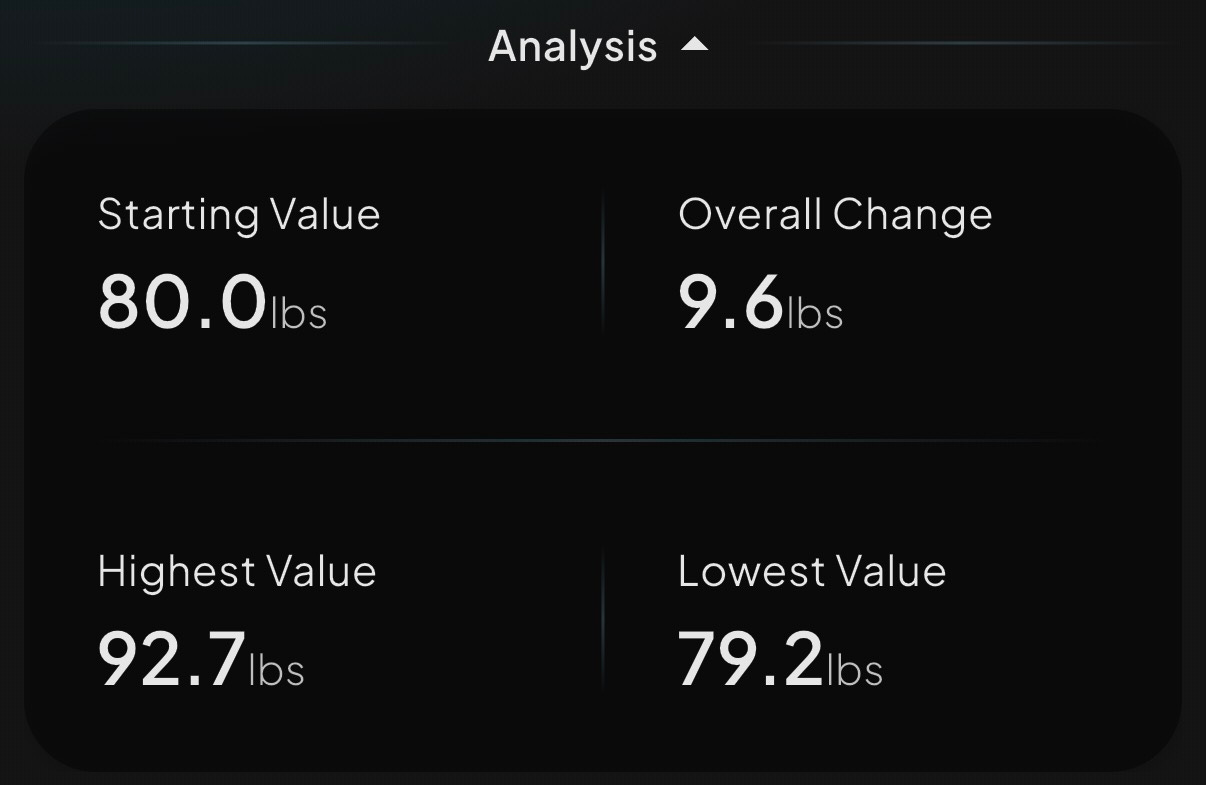
During a stretch where I gained about nine pounds of muscle over 15 months, a regular scale would have told me I was headed in the wrong direciton. I would have scrutinized every bite and second-guessed every rest day. And my inner monologue would have been brutal. Fortunately, my Hume scale told a completely different and far more accurate story: I’d dropped a jean size, my bloodwork had improved, my metabolic (biological) age went down, and I was building exactly the kind of strength I was working toward.
But here’s the reason I’ve grown to genuinely appreciate this tool rather than resent it. I have a history of PCOS (now known as PMOS), and I’ve learned that when my body fat drops too low, unintentionally, my cycle gets wonky almost immediately. Hi, low progesterone. That’s not something a regular scale would flag. It’s something my body composition data helps me catch early, before my cycle fully derails. Used this way, my scale isn’t the food or lifestyle police.
That’s the distinction I think gets lost in the discourse on podcasts and across socials. The problem was never that I owned a scale. The problem was that I was asking it the wrong question every morning, dutifully handing it authority over my mood, my food choices, whether I’d earned a rest day, etc. Once I started tracking body composition and trends vs. daily snapshots, it became one of the most useful tools I have for understanding my own hormonal health.
And I think this logic holds for basically anything you track. An app that counts your steps isn’t inherently good or bad. Neither is a calorie tracker, a sleep score, or your Instagram following count, for that matter. What matters is whether you’re using it to grow, to learn something insightful about your body or your habits, or whether you’re using it to keep score against yourself. Same tool, different relationship.
So now, twice a month or so, I step on my Hume. I’m watching for muscle gain since that’s a current goal of mine, and I’m watching my body fat percentage because I know exactly what happens hormonally when it dips too low. It’s not a verdict on who I am that day. It’s a data point, the same way I think about my bloodwork. Useful, informative, and worth paying attention to, but never the whole story on its own.
All to say, if you have a complicated relationship with your scale, or any tracker for that matter, you’re certainly not alone. And if you’re being brutally honest with yourself, maybe they’ve run their course. Kiss them goodbye and bathe in your freedom. Otherwise, grab a pen and paper. Ask yourself why things got charged and complicated in the first place and secondly, why the hell you’re even using the tool.
Is it teaching you something about your body or just giving you one more way to feel behind? Again, maybe the tool was never really the problem. Maybe we’ve just been conditioned to turn every health practice into another thing to obsess over.
Where do you currently fall: no tracking, occasional tracking, or intentional tracking?
Comments
Nothing yet. Say the first thing.
Sign in to join the conversation.