
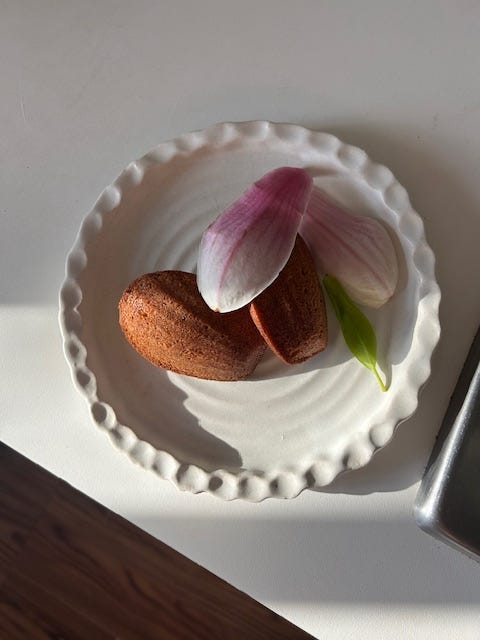
There are too many springy recipes that I’ve made recently and wanted to post up here, so a spring series feels appropriate - I’ll focus on the items and ingredients of the moment (right this very minute) that are exciting me the most. And perhaps these are recipes or ideas you’ll think back to in future springtimes. Spring is most definitely springing (although this week in NYC feels more like July or August). Blooms and greens are literally bursting on the streets and at the markets, and it’s honestly a long-awaited joy.
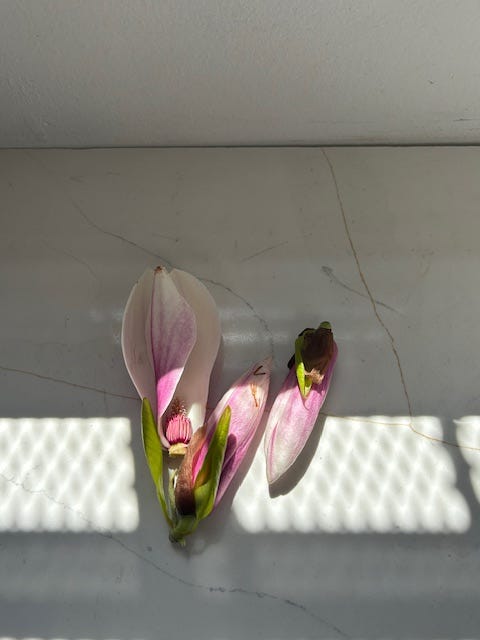
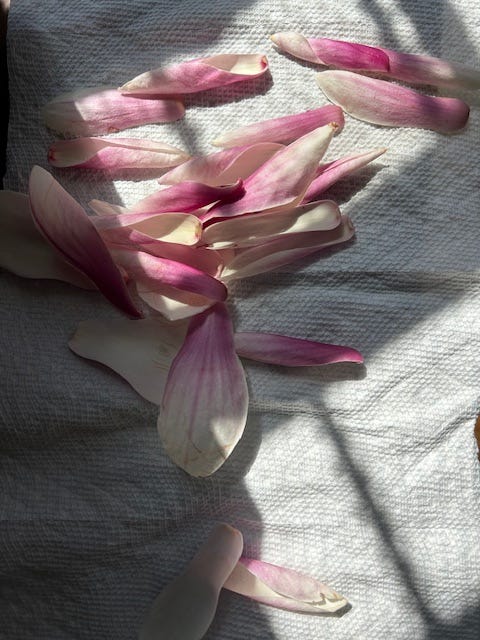
There are certain springy things that really put my senses on overdrive, in the best way possible, and magnolia trees are one of them. They happen to be blooming all around the city, looking magestic with outstretched branches and ombre-toned flowers. If you are lucky enough to have these beauties wherever you live, pause reading this post and go out and pick a few buds immediately - the trees bloom quickly and the petals are on the ground before you know it. If you are plucking them off a neighbor’s tree (guilty), be thoughtful, you don’t need many for this recipe. And if you are plucking them from a tree in NYC or really anywhere, you’ll want to give them a very thorough wash. If you weren’t already aware, (I wasn’t until a few years ago), magnolia petals are absolutely edible, and they’re fantastic. Pink-white buds bear a delicate ginger, warming aroma and flavor, and, as I’ve been told but yet to experience, white buds are citrusy and more freshly floral. You can pickle them, candy them, make a gorgeous gingery syrup for cocktails, homemade sodas and cake soaks. I’ve used pickled petals in years past in stir-fries, strewn over top roasted fish, tossed into springy salads.
In today’s post, I’m focusing on magnolia sugar—a little of which, goes a very long way and enhances anything you add it to. I decided to finally make use of the madeleine pans I got a few weeks back. And thus, we come to magnolia madeleines—seemingly a fancy dessert or snack, but actually so easy I was a bit shocked. I’ve never seen what the big deal with the iconic shell-shaped cake is, but I’m coming around—hell bent as of a weeks ago to figure out how to make madeleines and why they’re always so hyped. Well, now I know. They’re a lovely little buttery bite of cake and pair nicely with so many things (a dip of icing, glaze or melted chocolate; a sprinkle of powdered sugar or citrus zest; a dunk into coffee, tea or ice cream that’s melting so fast because your kitchen is like 88 degrees in mid-April ….that was me yesterday).
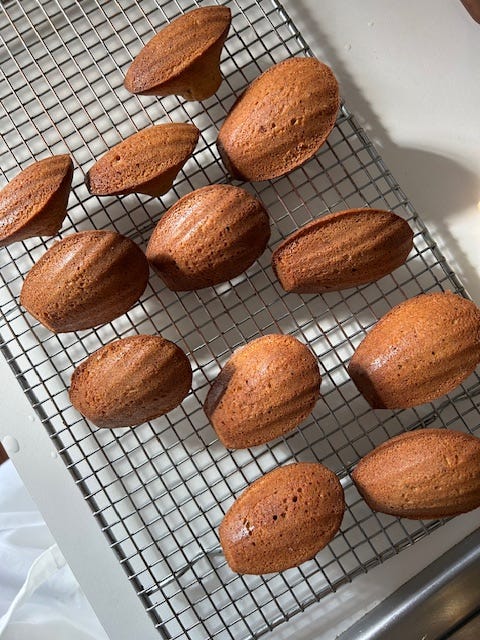
I’ll take the melting ice cream and the magnolia madeleines any day. Here’s why they’re gorgeous, and why I would recommend baking them asap.
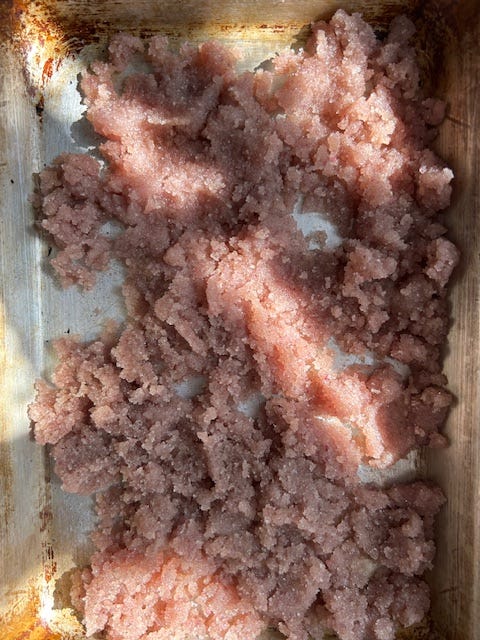
Magnolia sugar takes all of 60 seconds to zip up in a food processor (or you could work a hand blender or mortar and pestle in small batches if you had to). Keep any extra sugar in the freezer for future batches or other uses.
Madeleine batter is am overnight process, but the actual active time is less than 10 minutes. Whisk it all in a stand-mixer or in a bowl with some serious arm muscle and you’re done.
The magnolia sugar, when combined with a bit of butter (I used some brown butter in this first test batch) and a little bit of a nutty wholegrain flour like einkorn (I’ve talked about einkorn before here and here), well…that delicate note of ginger really just embraces the brown brown and einkorn in the loveliest way. This triple threat (I am pretty sure) takes an average madeleine to a whole new level. And it’s simply fun to use floral sugars.
Despite my questionable opinions for many years, madeleines are just cute and people really do love them. I gave a few to the wonderful woman at my local wine shop (shout out to Frog Wine) and her eyes lit up. That’s always a nice feeling to receive.
A brief madeleine history: they likely originated in France in the 1700’s in the Lorraine region, one legend has it they were named after a female chef who worked for the Duke of Lorraine. Marcel Proust cites them various times in his writing as cakes that evoke a deep memory of childhood…“She set out for one of those short, plump little cakes called ‘petites madeleines,’ which look as though they had been moulded in the fluted scallop of a pilgrim’s shell…No sooner had the warm liquid, and the crumbs with it, touched my palate than a shudder ran through my whole body, and i stopped, intent upon the extraordinary changes that were taking place.” - Remembrance of Things Past, Volume One
Before I continue with the recipe, let’s address the issue of the all-important “bump” (the rise on the back side of madeleines). There’s a lot of intimidating chatter about it anywhere you do some research. I’d never baked these beauties before so I had zero reference point. The bump (the “rise”) is the sign of a well-rested batter and a good difference in heat / heat conduction - very hot oven and cold batter, and often times cold pan (though I did not do that and I got nice bumps). I worked off notes from a Dorie Greenspan recipe, figuring the American-in-Paris notable pastry chef has had a run or two with madeleines. She did not steer me wrong. I had no issue with achieving said bump, so I’ll give you my exact method and the brand name of the madeleine pan I recently purchased, a well-made pan can impact heat conduction.
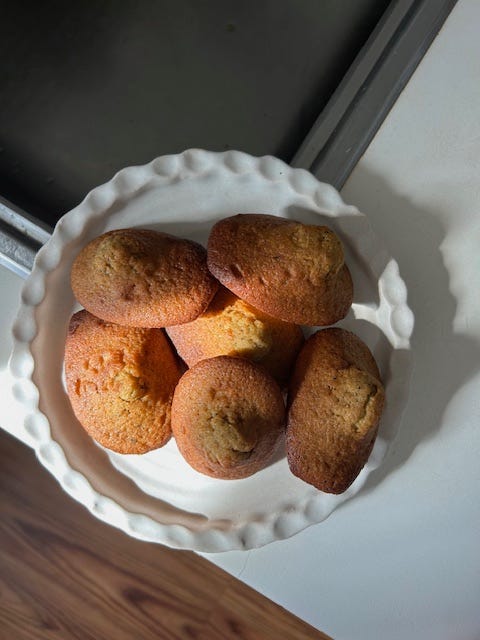
Ok, the recipe…make these one time and you’ll want to make them again asap. I’ve already got my second batch of madeleine batter resting in the fridge. I served batch no. 1 with a hand-churned ice cream from “scraps” (I was cleaning out my freezer)…a few peach kernels (otherwise known as noyaux) I’d saved from last summer and forgotten about, and some dried woodruff I saved from last summer when I was in Denmark. Both have a gorgeously almondy/marizpany note. This is an advance call out for the upcoming summer months — save your apricot, peach and nectarine stones! So, together we come out with magnolia madeleines with noyaux ice cream and raspberry cheong sauce. Cheong is essentially macerated fruit, naturally lightly fermented, following a Korean method. It creates gorgeous and very easy fruit syrups. I’ll do a separate post on them as we get into peak summer fruit season. But paid subscribers will get the ice cream recipe now just below the magnolia madeleine entry. Definitely worth ear-marking for peak summer.
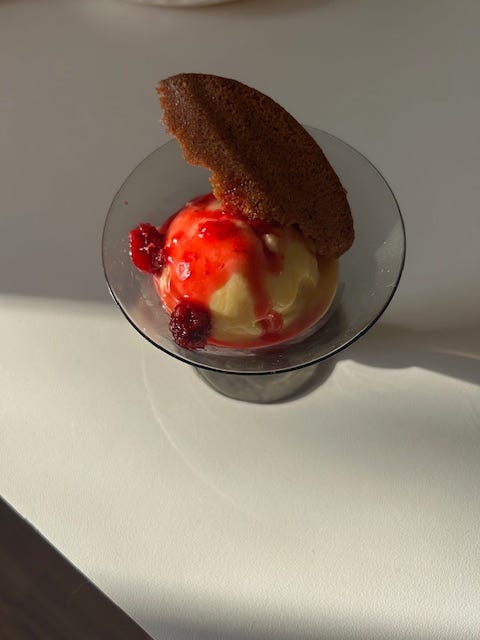
Magnolia Madeleines
makes 1 dozen cakes from a regular-sized madeleine pan
90g (just under 1/2 cup) magnolia sugar *see recipe below
10g light brown sugar *you could use 100g total of all magnolia sugar instead
2 eggs at room temperature
60g AP flour
20g einkorn or spelt or purple wheat flour
note on flour: (I used combo of 40g AP, 20g pastry flour, 20g einkorn flour), but mix and match and see what works well for you. 60g pastry flour would make even airier cakes
3/4 teaspoon baking powder (3g)
1/2 teaspoon kosher salt (3g)
1/2 tonka bean or 1/4 vanilla bean, cut and harvested (or 1/2 teaspoon vanilla extract)
30g brown butter *see a quick recipe for bb below
55g regular unsalted butter
Magnolia sugar (store excess in the freezer)
3 magnolia buds, petals cleaned, washed and dried
1 cup (200g) sugar
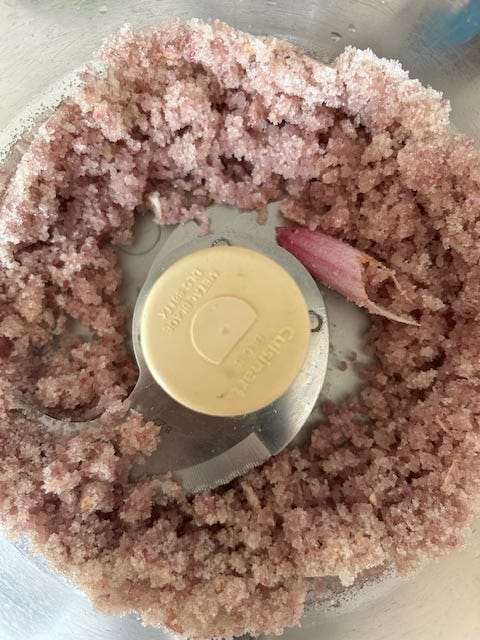
Blend petals and sugar together in a food processor for about 60 seconds until it looks like the photo below. The sugar will be a little “wet” (from the magnolia petals) but that’s completely fine. It won’t impact the end product.
Brown butter
Place a stick of butter in a small pot over medium-low heat and let it melt and simmer until brown milk solids collect at the bottom and the butter turns a golden brown color and smells nutty and aromatic. Strain and refrigerate until ready to use - or don’t strain and keep the brown butter solids in …they’re delicious and add a lot of aromatic sweet/savory nutty flavor particularly into this popcorn and into baked goods.
Method
In a stand mixer with the paddle attachment, paddle together the eggs and magnolia sugar on medium-high until the mixture is ribbony, about 4-5 minutes. Meanwhile, melt the brown butter and regular butter together in a small pot. Lightly cool while the eggs and sugar are beating. In a small mixing bowl, add the dry ingredients - flour(s), salt, baking soda, tonka bean or vanilla bean, mix lightly with a whisk.
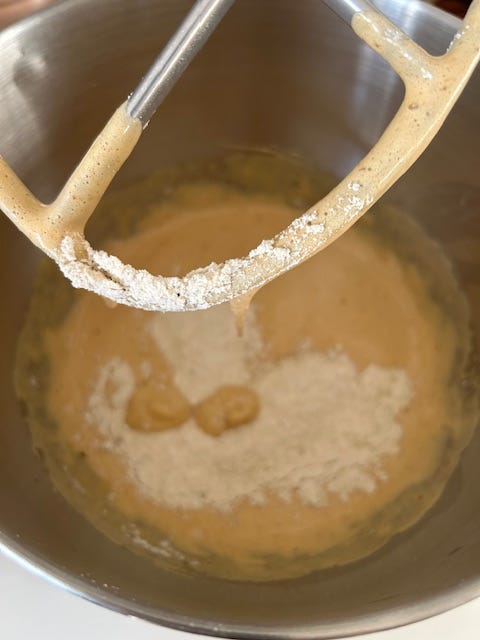
When the magnolia sugar and eggs are ribbony, add in the dry ingredient mixture in 2-3 iterations. Then, slowly add in the butters and gently mix on medium speed until well-combined. Put the batter in a storage container, place a piece of plastic wrap over top so a skin doesn’t form and then place the container lid on top. Chill in the fridge for at least 2-3 hours, preferably overnight (what I did).
When you’re ready to bake, preheat the oven to 400F / 200C. Here’s an important step to help you get that beloved “bump”: PLACE A COOKIE SHEET FLIPPED OVER IN THE OVEN WHILE IT’S PREHEATING - it will act as a baking stone for the madeleine pan so you get those bumps from the hot/cold heat conduction.
Now, prepare your madeleine pan (this is the one I have) with butter or baking spray. Spoon about a tablespoon-ish of batter into each shell mold, if you have extra batter distribute evenly. Don’t worry about getting the batter super smooth or level, it’ll even out when baking. Bake for 10-12 minutes ON THE MIDDLE RACK without disturbing (don’t open the oven). Depending on how hot your oven runs, you’ll need a minute less or more. *update from round 2 - I found that the middle rack is super important, at least in my oven, for the best heat conduction and bump and shell shape from the mold - the imprint comes out sharper and has a better sheen to it when baked on the middle shelf. Enjoy warm right out of the oven, or store them in an airtight container for 1-2 days. They’ll go fast!
Thanks for reading Well Fed ! This post is public so feel free to share it.
Comments
Nothing yet. Say the first thing.
Sign in to join the conversation.