
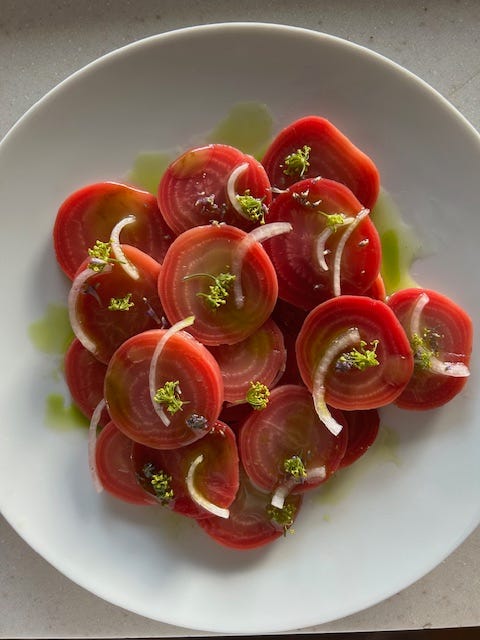
Sometimes the simplest things in life (and in nature) are the most elusive. I am speaking of the seemingly homely but technicolored root vegetable, the beet. If you mention beets in a sentence or a recipe, or serve it on the dinner table, inevitably there are multiple opinions and either some snide remarks, or elated smiles. The earthy, somewhat sweet, somewhat bitter flavor notes can be devisive. Beets indeed are a lesson in time, temperature and method—transforming something that looks like severly dirt-covered baseball into a vibrant vessel of flavorful nutrients with tender bite and flavor charateristics that almost take on hints of caramel, chocolate and whatever aromatics you might add into the roasting pan. Once you get into a good groove, beets (in my personal experience) can become a beacon of revivial: they’re loaded with good fiber to make digestive movement a little more “fluid”; they are exceptional “cleansers,” detoxifying the liver and helping boost energy and aliveness (read: they are particularly great if you’re hungover or rebooting after a multi-day bender, a long flight, a stressful string of workdays); they’re rich in antioxidants and potassium-great for heart health, lowering high blood pressure and recouping muscles and the healing process after intense workouts, a strain or surgery; and lastly, they’re an incredible example of the wonders that mother nature gifts us—thanks to their phytonutrients, they come to us in insanely captivating purples, reds, pinks, yellows and candy cane stripes. Such intense colors have a distinct connection to our emotionality—adding color to our plates can uplift our mood, our physical sensations, in mere seconds. Pretty impressive for tossing a seemingly unimpressive root in the oven with some water and aromatics.
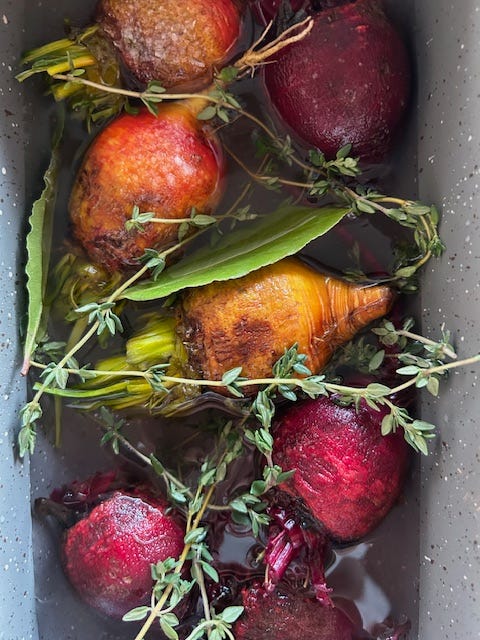
Throughout the world, many of us celebrated Passover or Easter this past week/weekend or Eid, a few weeks ago, holidays that signify the spring harvest and rebirth, moving into a season of growth, renewal and sunlit energy. The beet, in many ways, symbolizes this shift from the depths of winter, as it’s literally rooted in the ground waiting and sweetening its plant sugars, to being harvested and consumed, providing nutrients that usher us into this next growth season. Something grounded and earthy transformed into a reviving burst of aliveness.
All of this sounds lovely and idealistic, but let’s turn to practical application. Getting from a dirty rooty baseball to something glorious and tender, whose flavor has slowly been coaxed out and ready to shine on the table. In theory this should not be hard for beets, and in reality it isn’t. But somehow, we often get perplexed or nervous about how to cook a beet properly, or we just simply give up and don’t do it. Some common methods that may not be the best course if you’re looking for a glorious beet.
Boiling - throw it in a pot of water and go. Sure, it’s doable, but it can often leach out nice color and nutrients if you boil for too long or too strongly. And then you’re too likely to be left with the type of beet that people have aversions to—boring, flavorless (or too earthy/tastes a little like dirt) and perhaps watery and mushy.
Full on roasting - by full on roasting, I mean roasting as you would many other root veg (for example, parsnips, carrots, turnips etc). You know, tossing cut veg with some oil, salt and pepper and throwing them on a sheet pan at 425F or so. Beets, given their density would take a very long time to cook in dry heat and by the time they’re soft enough to bite, they turn to shriveled little pieces of over-caramelized earth. Not so nice and typically very chewy.
A better path: My suggested path to enlightened beetdom is a combination of both methods. Fill a baking dish, I prefer metal as it conducts heat better, with about 3/4 inch of water, add in cleaned and trimmed beets along with your selection of aromatics and a good, strong sprinkling of salt (similar to how you’d season pasta water). I probably use a heaping tablespoon or so of salt per 4-6 beets, but taste the water and once it tastes relatively like the ocean, you’re good. This helps season the entire beet - so the insides taste equally delicious and flavorful. The salt also helps unlock those fantastic nutrients. As for the aromatics, you have options, but generally I keep it simple so I can go on autopilot a bit (and make use of my spent coffee grounds from earlier in the morning). Coffee grounds? YES! I love using excess coffee grounds with beets…they’re complimentary flavors and bring out chocolately sweetness and depth in the beets. I’ll add in a bay leaf or 2, perhaps some thyme or tarragon springs and a few peppercorns or pink peppercorns. And that’s really it, but you could certainly go in other directions. A few lemon or orange peels, maybe a cinnamon stick and a star anise (I’d save these for autumn or winter). Some lemongrass stalks, fresh ginger and lime leafs. Cover the baking dish tightly with aluminum foil, put in the oven and go do something else for 45-75 minutes. Timing will depend on the size of the beets. XL sized balls I usually cut in half or quarters.
Check the beets for doneness around 40-45 minutes by pricking them with a cake tester or small knife or toothpick. They should be easily pierced but still have a little give, not hard but not mushy. Once your beets are nicely steam-roasted, remove the foil, cool for 10 mins, clean/wash off the coffee grounds if using and peel. Beware of staining your hands or cutting board.
After that, you have beets at the ready for salads (they would be stunning with this dressing), tossed into couscous or quinoa or barley, pureed into a gorgeous dip that everyone will ask about the recipe for (see below), pureed into a chocolate cake — amazing depth and flavor, or simply pickled for a quick snack.
With all this talk about roasting, I do want to add that beets are often so tasty raw they are delicious very thinly sliced on a mandolin and either pickled or tossed into a salad just as they are - no cooking required (leave them in super thin rounds or julienned—finely cut into long sticks). Apply this rhubarb pickling method to thinly shaved beets. Easy and yum. I also want to add, as I would for any vegetable (or fruit), if you have the opportunity to get beets from a local farmer’s market, they will likely be more flavorful and sweeter than the average beet you pick up in the grocery store. Shorter the distance / not sitting in a warehouse for a few weeks, allows the beet to possess better flavor and more nutrients that get passed right onto you.
Below is a quick recipe for perfectly roasted beets along with a few inspiration photos and below that, your gateway to a crudites dip that will catch all eyes and tastebuds.
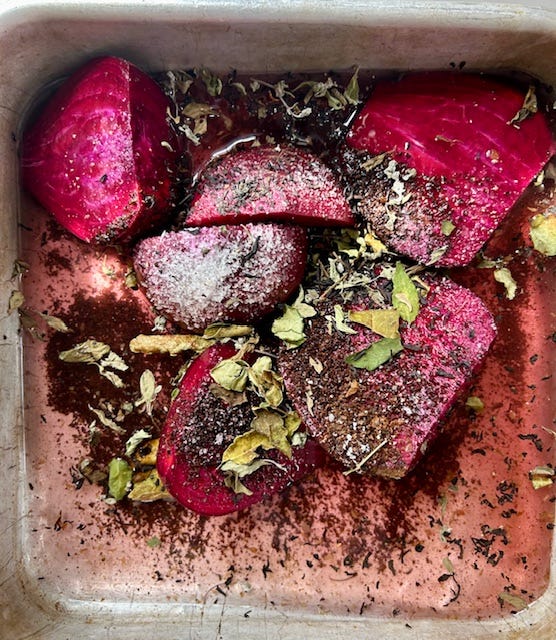
Perfectly Cooked Springy Beets
1 bunch of beets (any color), cleaned and trimmed of their leaves - cut in half if particularly large
2-3 tablespoons of used coffee grounds, if on hand
1 tablespoon or so of kosher salt or sea salt
2 bay leaves
*your choice: a few sprigs of thyme, tarragon or oregano; a few lemon peels; 1 teaspoon of black or pink peppercorns
Preheat oven to 425F. Fill a small metal baking pan or a cake / loaf pan with 3/4 inch water. Add beets, coffee grounds, salt, aromatics of choice.
Cover tightly with aluminum foil. Roast for 45-75 minutes depending on size. Check for doness with a cake tester, knife or toothpick around 45 minutes and then again every 10 minutes or so after.
Remove foil, cool, wash off coffee grounds and peel.
If you’re really wanting to go an extra mile, save the colorful beet juice and make shocking-fuschia beet-dyed hard-boiled eggs (a fun activity if you’ve got kiddos!). Just hard boil eggs, cool and cover them with beet cooking liquid overnight in the fridge.
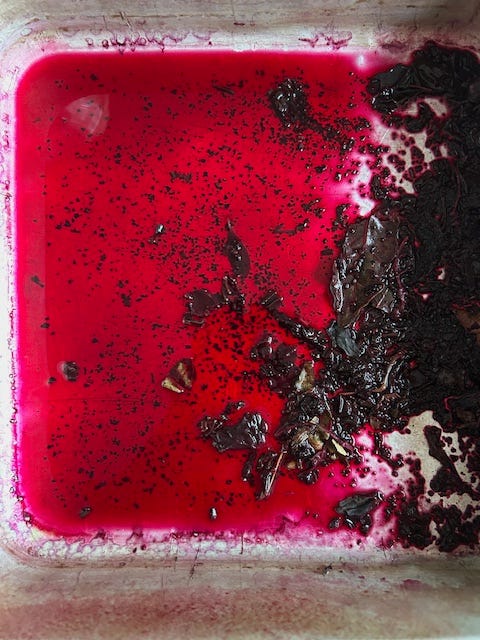
Beet inspo:
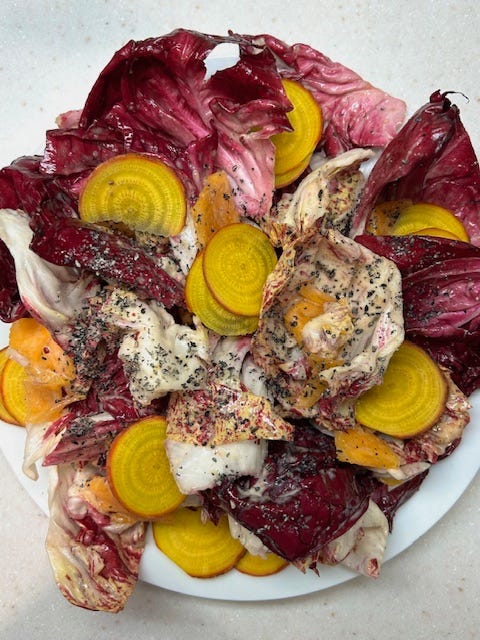
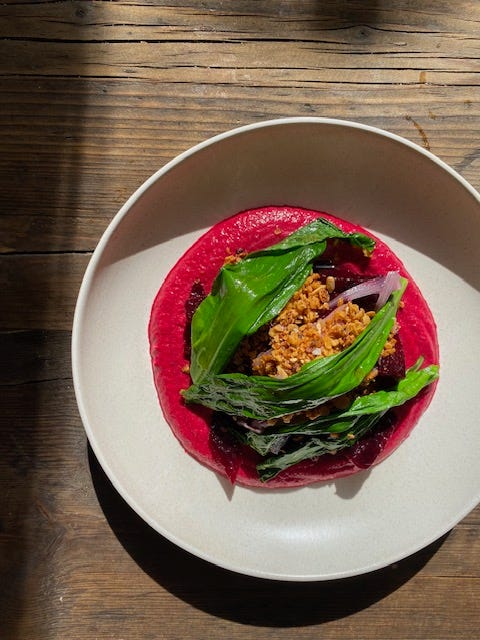

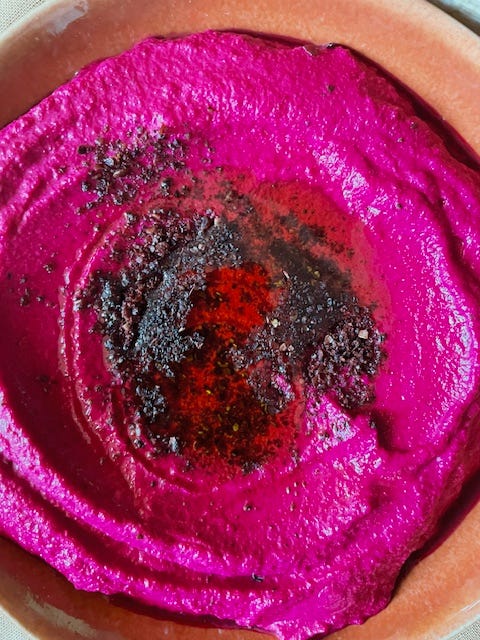
Beet Dip with Feta & Lemon
this gorgeous dip has never failed me, a go-to in my recipe arsenal for over 15 years, serve with seasonal crudites, focaccia, pita etc.
Comments
Nothing yet. Say the first thing.
Sign in to join the conversation.