
This final section provides some general notes on both the advance summary and the pattern analysis section, similar to reading notes you might have taken while studying the book except in this case we have taken the reading notes for you. If you have taken your own notes while reading it can be a useful exercise to compare them to the notes below. Our notes review some of the key points in each section and help you recall, study and internalize the book’s content. While the notes are not comprehensive and do not cover every important point in the book, reading through them will likely trigger your memory of the entire book, including points not explicitly brought up in the notes. Page numbers after each note are provided in parentheses to allow you to reference the sections where the notes come from.
The Combined Bomber Offensive (CBO) was an evolutionary contest that can be broken down into “phases” of evolution (7)
Theorists like William “Billy” Mitchell and Giulio Douhet suggest air power can win wars by itself (9)
Interwar theories suggested targeting industry with strategic bombing and populations with terror bombing (9)
Misconceptions took hold because people believed what they wanted to believe, hoping that air power could avoid another long war like World War I (10)
Knowledge of airpower was in a dangerous “adolescent” stage where people didn’t know what they didn’t know (11)
Experience in the Spanish Civil War and Battle of Britain did little to dispel interwar myths about strategic bombing (13)
The four key elements this book uses to analyze the CBO are targeting, survivability, accuracy and bomb damage (13)
Early British targeting was disjointed, daylight bombing incurred steep casualties, transition to night bombing in turn caused accuracy problems (14)
Lord Cherwell’s Butt Report of August 1941 exposed accuracy issues (14)
Early British 2-engined bombers had limited bomb load capacity (14)
British believed a long-range fighter escort was not technologically possible, since heavy, long-range fighters were less maneuverable (16)
Feb 1942 - Arthur Harris took over Bomber Command, focused on area bombing of cities which made bombing accuracy easier (16)
Gee navigation device improved accuracy but had limited range (16-17)
New 4-engined bombers like the Lancaster allowed for dropping heavy bomb loads and special bombs like the 12,000 lbs “Tallboy” (17)
The first “Thousand Bomber Raid” on Cologne opened a new era in British night bombing that would have greater impact on the Germans (17)
17 August 1942 marked first USAAF daylight raids which would focus on close-range targets in France to reduce risk and casualties (18)
AWPD targeting plan focused on key industries but proved disjointed at first, dividing effort between several target options (18)
Daylight increased bombing accuracy but reduced survivability (19)
Early escort fighters had limited range so the USAAF focused mostly on the self-defended bomber concept (19-20)
US bomb damage inadequate for some heavily fortified targets (22)
August 1942 the Germans could jam Gee, but British developed Pathfinder force tactics, Oboe for blind bombing, H2S airborne radar for long-range missions (23)
March 1943 new technologies made more precise targeting of German industries in the Ruhr Valley (such as Krupp Works in Essen) a possibility (25)
In conjunction with the Ruhr Valley campaign, the RAF conducted the Dam Busters special operations raid on 16 May 1943 (25)
USAAF long-range unescorted attacks into Germany suffered high losses (27)
14 June 1943 Pointblank Directive focused on bombing aircraft industry and destroying the Luftwaffe, an approach that would ultimately prove effective (28)
Self-defended bomber concept proved flawed and unescorted bombers were suffering unsustainable casualties, USAAF needed longer range escorts (29)
17 August 1943 double-raid on Schweinfurt-Regensburg was very costly (30)
Bomb damage was also a problem, failing to destroy heavy machinery (30)
14 October 1943 “Black Thursday” raid on Schweinfurt was the culminating point for unescorted bombing missions, USAAF transitioned to closer targets (30)
Spring 1943 German night defenses began to improve, having been neglected in part because Hitler found the need for air defense embarrassing (31)
Evolution of German air defense included expansion of the Kammhuber Line by 1942 with initially limited GCI capability, but that improved in 1943 (32)
British countered with Window in July 1943 but by the fall the German Fug 220 Lichtenstein SN-2 airborne radar reduced Window’s effectiveness (34)
Harris shifted focus to Berlin in November of 1943 and casualties were unsustainable by January of 1944 (34)
USAAF employed pressurized fuel tanks that could be easily jettisoned before combat, initial design was 75-gal tank followed by British 108-gal tank (36-37)
January 1944 USAAF implemented phased-escort at the same time James Doolittle replaced Ira Eaker and ended close-escort restrictions (37)
Abandonment of close escort allowed USAAF to regain the initiative and prevent the Germans from offering battle only when they had the advantage (39)
While bomber casualties remained high temporarily, the new offensive approach destroyed the Luftwaffe fighter force and casualties dropped by May 1944 (39)
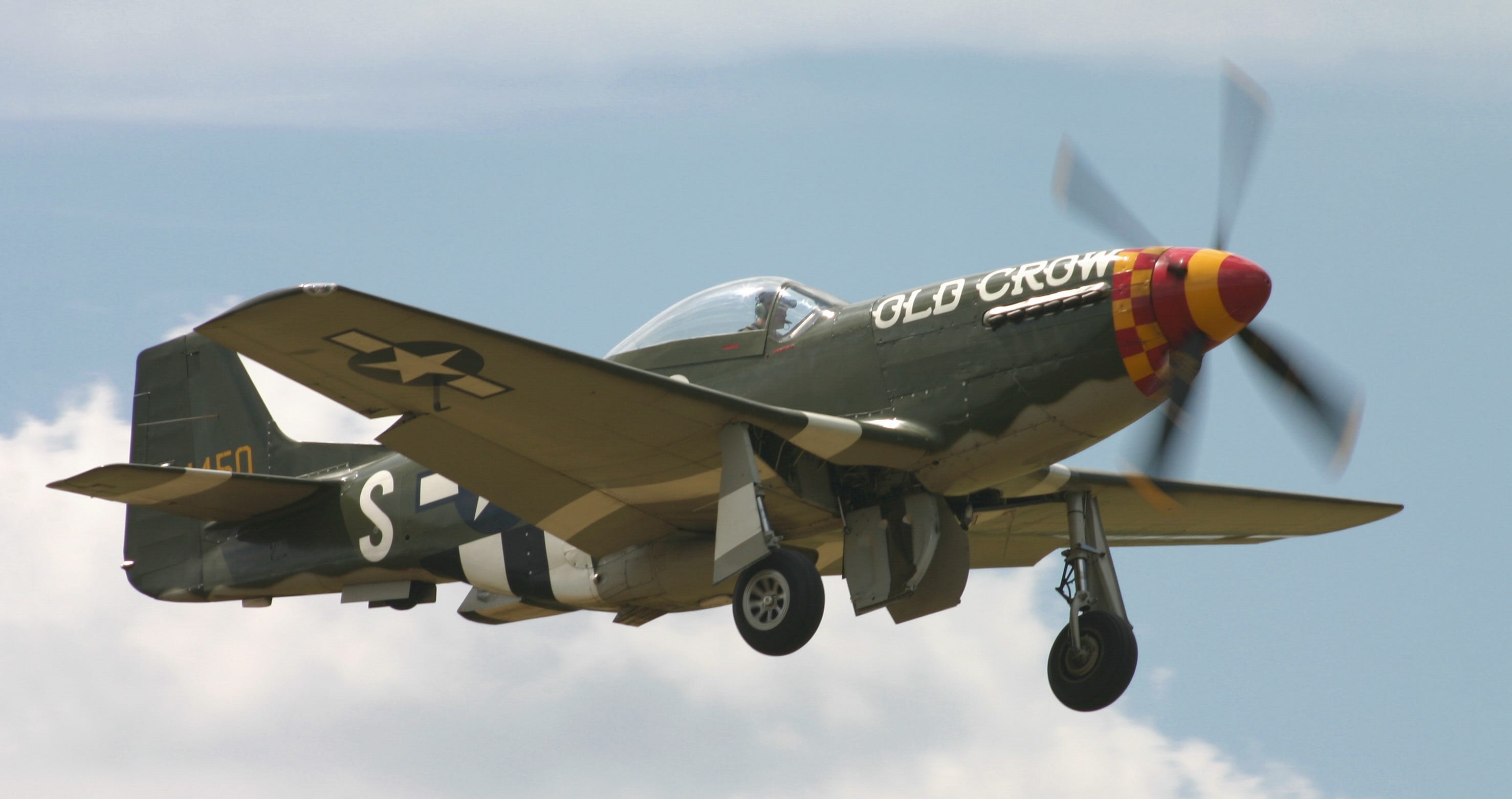
The long-range P-51 Mustang and overwhelming U.S. aircraft production capacity also played a critical role in defeating the Luftwaffe (40)
Harris continued to advocate area bombing over “panacea targets” but targeting oil and transportation arguably produced the best results (42)
Carl Spaatz proposed his new “Oil Plan” in May 1944 which had a powerful impact on both the German war industry and operational capability (44-45)
Arthur Tedder developed the “Transportation Plan” to prepare for and support the Normandy invasion of June 1944 (45)
Tedder executed a second transportation plan within the Reich itself in September 1944 which proved equally effective (46)
Carl von Clausewitz and Alfred Thayer Mahan both emphasized the importance of destroying the enemy force in a decisive battle (49)
For Clausewitz and Mahan, key terrain was generally not an end in itself, but rather a way to lure the enemy into decisive battle (50)
Air planners had looked for ways to bypass the enemy force, but air war proved to be the domain where destruction of the enemy force was most important (50)
Innovation effectiveness often drops off as the enemy adapts (52)
The most dominant innovations frequently provoke the most urgent efforts towards developing countermeasures (53)
Innovation massing means aligning an innovation’s limited window of effectiveness with other efforts aimed at achieving decisive results (54)
Tactical innovation is often quicker and easier than technological innovation (55)
Affluent economies and abundant resources tend to promote a bias towards technological innovation, limited resources encourage tactical innovation (56)
New technologies often trigger the development of new tactics to employ or counter those technologies (56)
U.S. Strategic Bombing Survey and other studies have emphasized the limited effectiveness of strategic bombing in World War II (57)
It is difficult to find clear, quantifiable answers about which targeting efforts were more effective than others (58)
The best conclusion to draw when comparing targeting effectiveness is just how difficult it is to compare targeting effectiveness (59)
Given the difficulties in identifying a single best targeting option, the logical conclusion is to opt for diversified targeting (59)
Diversified targeting reduces overall risk, promotes adaptability, increases flexibility and presents the enemy with a more complex problem (59-60)
CARVER analyzes targets in terms of criticality, accessibility, recuperability, vulnerability, effect and recognizability and is a useful tool for choosing targets (61)
CARVER can also be useful for planning how to improve and enhance your own capabilities in order to achieve better targeting results (62)
Survivability was the most decisive factor because it is the most irreversible and is a prerequisite for the other three factors (64)
The Kill-Rate Seesaw means that when your kill rate is increasing, the enemy kill rate is decreasing and each kill makes the next kill easier (64-65)
Long range escort and the decision to abandon close escort were particularly significant since they helped push the kill-rate seesaw in the Allies’ favor (65)
The concept of the kill-rate seesaw makes early victories and momentum particularly important in air warfare (66)
The necessity to divide attention between fighters and bombers tilts the kill-rate seesaw against the interceptors and in favor of the escorts (66)
Germans experimented with various combinations of guns, tactics and air-to-air rockets in order to increase their advantage as interceptors (67)
While destroying enemy aircraft on the ground might be simpler in some cases, the pilots live to fight another day (68)
In some cases, attacking aircraft on the ground might be more dangerous than engaging them in the air (68)
It is possible to develop procedures and policies to emphasize either pilot survivability or aircraft survivability (69)
The challenges of pilot training and the small percentage of the population that is suited for pilot duty makes replacing pilots progressively more difficult (69-70)
Survivability of experienced pilots is particularly important given the disproportionally high contribution these pilots make to the kill ratio (70)
Interceptors have an advantage in pilot survivability since pilots who bail out generally do so over friendly territory (70)
The time between the initial decision to build a new weapon and its actual deployment is often too long to fit into a coherent decision-cycle (72)
Given the uncertainty of how future warfare might look, the best aircraft designs are often simple, well-rounded, versatile, inexpensive and upgradable (72)
More specialized designs that initially prove sub-optimal can sometimes be repurposed for new missions as the battlefield evolves (73)
THIS CONCLUDES "EUROPEAN AIR WAR: THE BOMBER OFFENSIVE. YOU CAN DOWNLOAD A PDF COPY OF THESE STUDY NOTES BELOW. THANK YOU FOR READING!
Comments
Nothing yet. Say the first thing.
Sign in to join the conversation.