

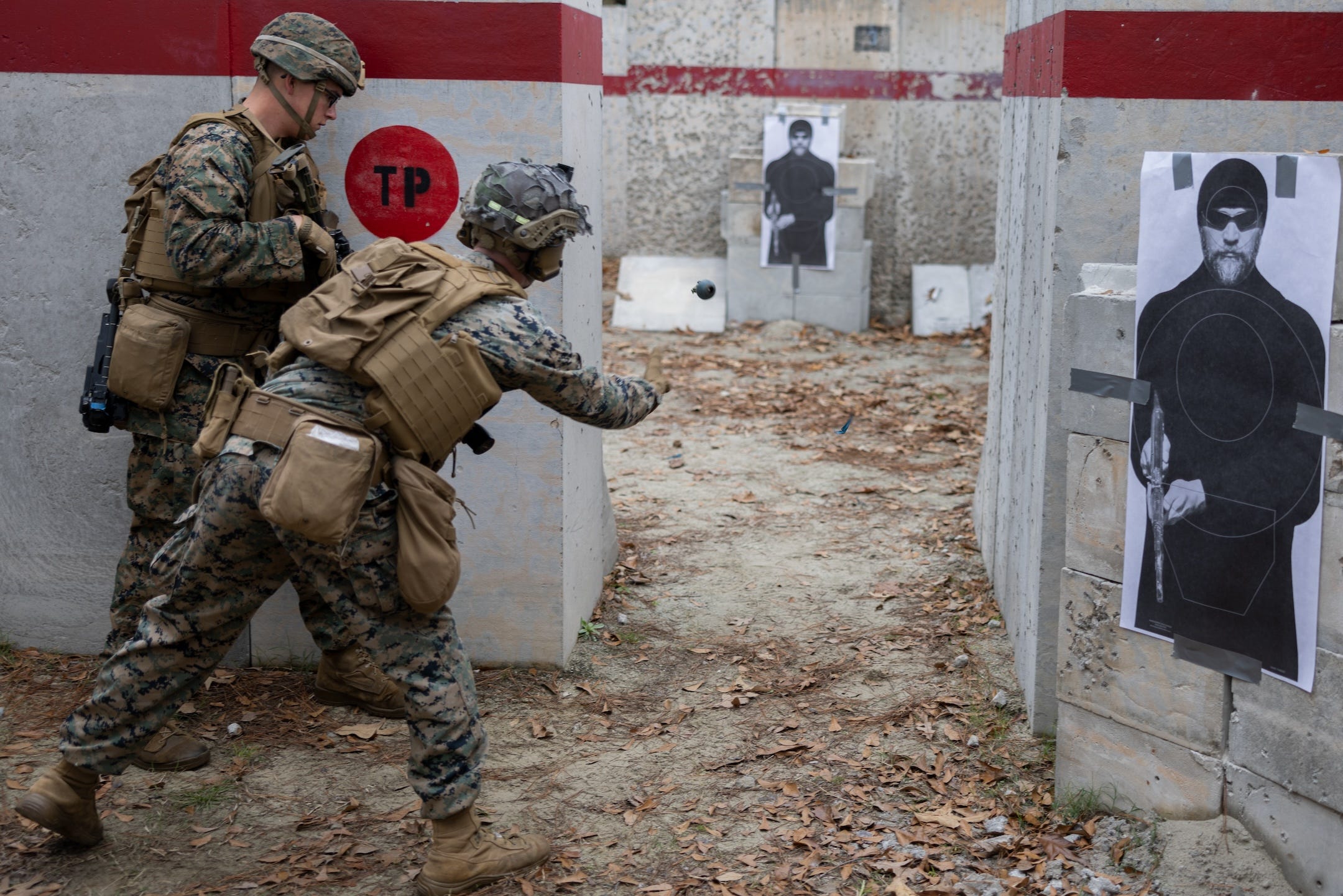
This article is adapted from our High Intensity Military Urban Combat book which we plan to publish here on Substack in serial form. The article discusses machine gun and fragmentation grenade employment and offers two example techniques. We offer special thanks to the courageous members of our team who have volunteered to deploy overseas to current conflict zones. Their real-time feedback has proven invaluable for our analysis.
In a high-intensity urban fight, commanders will have much more freedom in their use of heavy weapons and firepower. This includes the liberal use of machine guns and grenades. Historically, urban combat has been a very costly affair. Entire platoons or companies can be destroyed in seconds, and it might take wave after wave of assault to seize an enemy-held building. One way to reduce casualties is to throw or launch grenades through windows and fire automatic weapons through walls.
Instead of paying a high price in friendly casualties by sending multiple platoons into the teeth of an enemy urban defense, it can be possible to clear much of an enemy-held building simply by firing grenades, rockets, medium and heavy machine guns into every window and through every wall from an adjacent building.
The effectiveness of this sort of attack-by-fire will be determined by the strength of the target building’s construction and the quality of enemy defensive positions. It is also important to remember that using a high-volume of fire is very taxing on ammunition. Therefore, firepower solutions are unfeasible if there is not a surplus of ammunition and well-established logistics support.
In addition, employing a heavy volume of fire in confined areas can be dangerous if leaders do not impose strict control measures on subordinate units. If a unit fires through a wall, it is possible for bullets to accidentally strike friendly troops if the proper control measures are not in place. The same applies to tossing grenades. In addition, ricochets can prove especially dangerous when firing automatic weapons indoors.
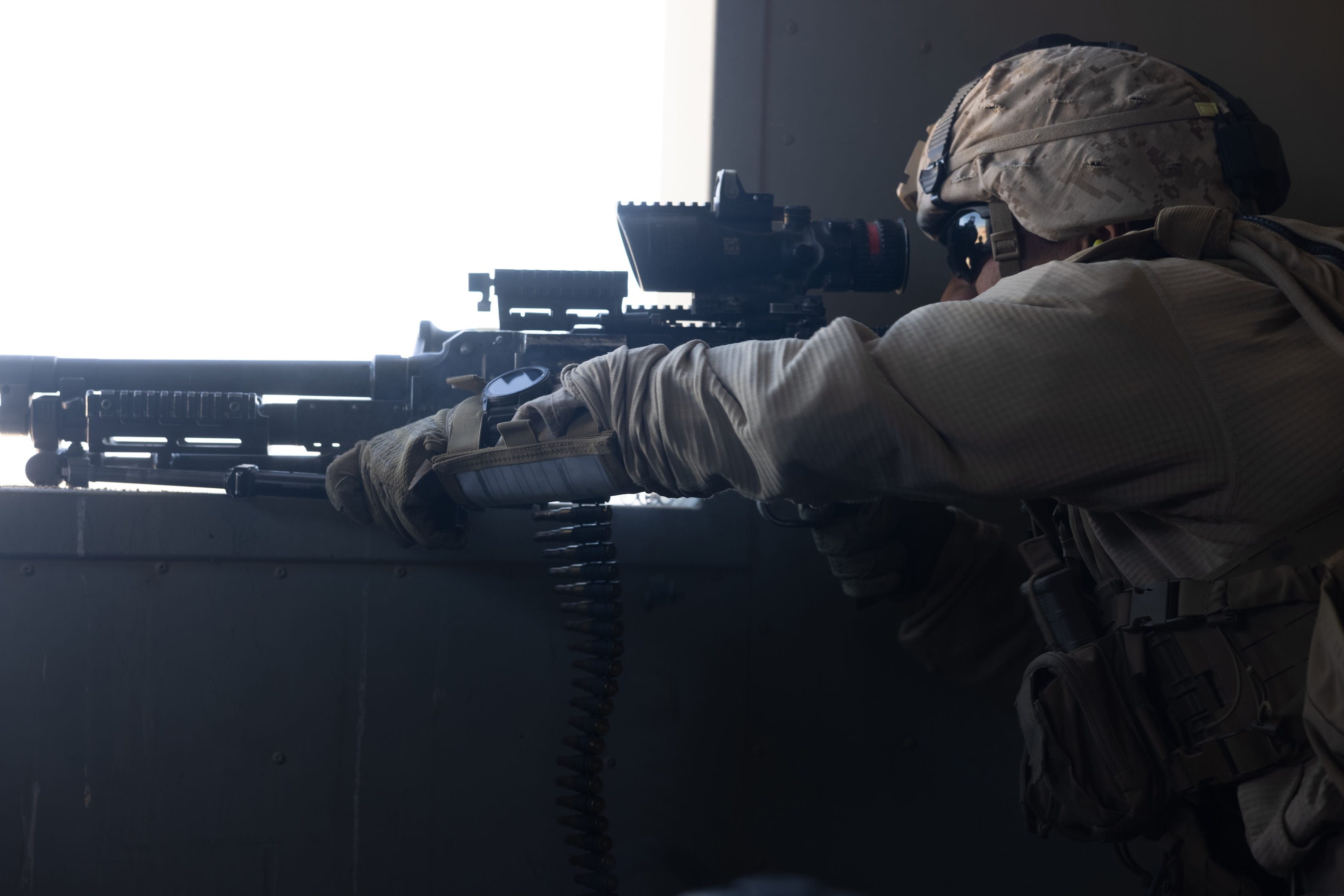
It is important to realize that the nature of conventional urban war is much more fluid and adaptable than the precision urban operations typical of counterinsurgency and counterterrorism. When squaring off against a highly-trained and well-armed enemy, the same technique will rarely work twice. Therefore, high-intensity urban combat is less about smooth execution of room clearing techniques and more about creative thinking and “dirty tricks.” While the basics of urban movement and CQB remain generally consistent, the key to victory lies more in outsmarting or surprising the enemy and specific tactics evolve constantly. What follows are two example techniques taken from our High-Intensity Military Urban Combat book.
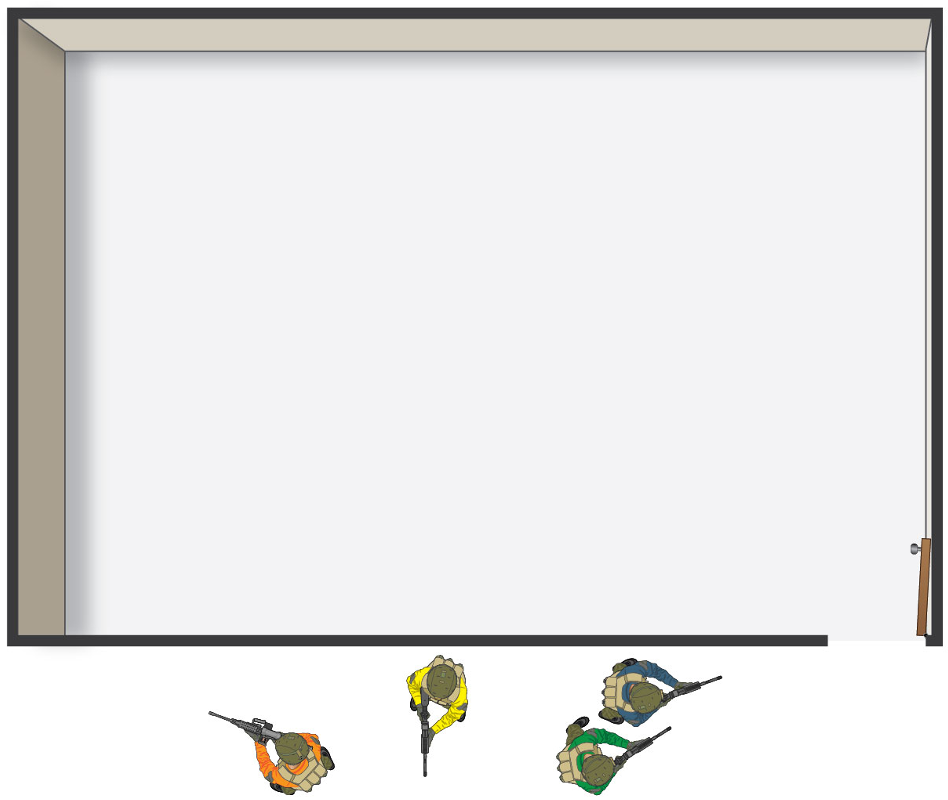
If the team identifies a possible threat in an adjacent room, it may be dangerous to attempt to throw a grenade through a doorway. Enemies inside the room will likely be watching the door and will open fire through the door and the walls around it as soon as they detect movement. Therefore, in some cases it might be preferable to throw the grenade through a hole in the wall instead.
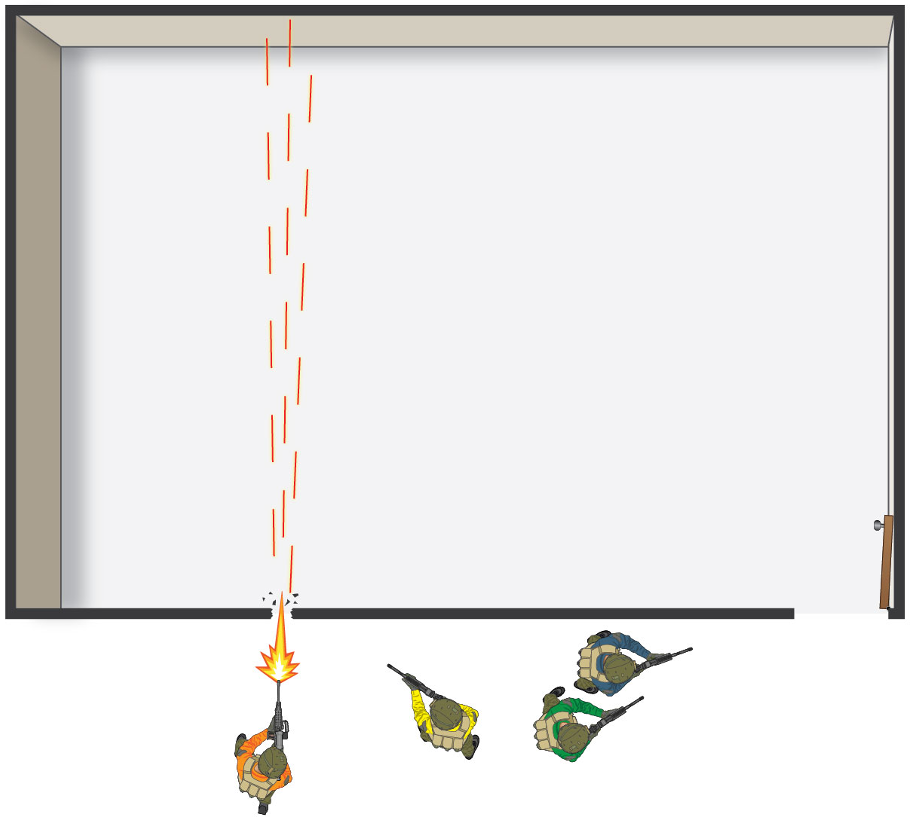
In some cases there may already be a hole in the wall, caused by previous battle damage. In other cases, the team can create a hole in the wall using tools, weapons or explosives. When punching a hole in a wall, it is important to remember that doing so can attract attention. For example, while it is possible to smash a hole in a wall with a sledgehammer or other breaching tools, the enemy will likely hear the banging and might fire through the wall. Making a hole in the wall with automatic fire can be more effective, since firing through the wall will suppress and distract any enemies inside. However, if the wall is weak enough for bullets to pass through, grenade shrapnel might pass through as well. There are no fixed formulas to guarantee safety but it is important to consider these factors before employing grenades.
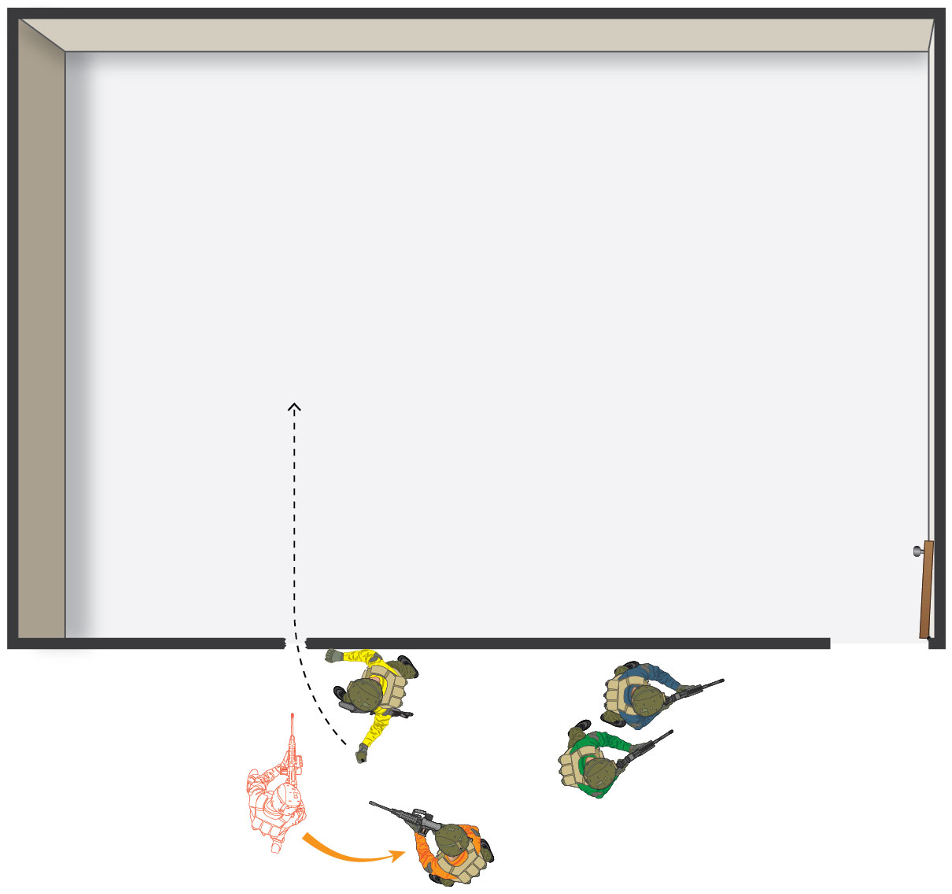
Once there is a large enough hole in the wall, the team member with the grenade should throw the grenade through the hole as forcefully as possible. The farther the grenade lands from the team, the less likely the team will be struck by grenade shrapnel. After throwing the grenade, all team members should back away from the hole since the enemy might fire back through it.
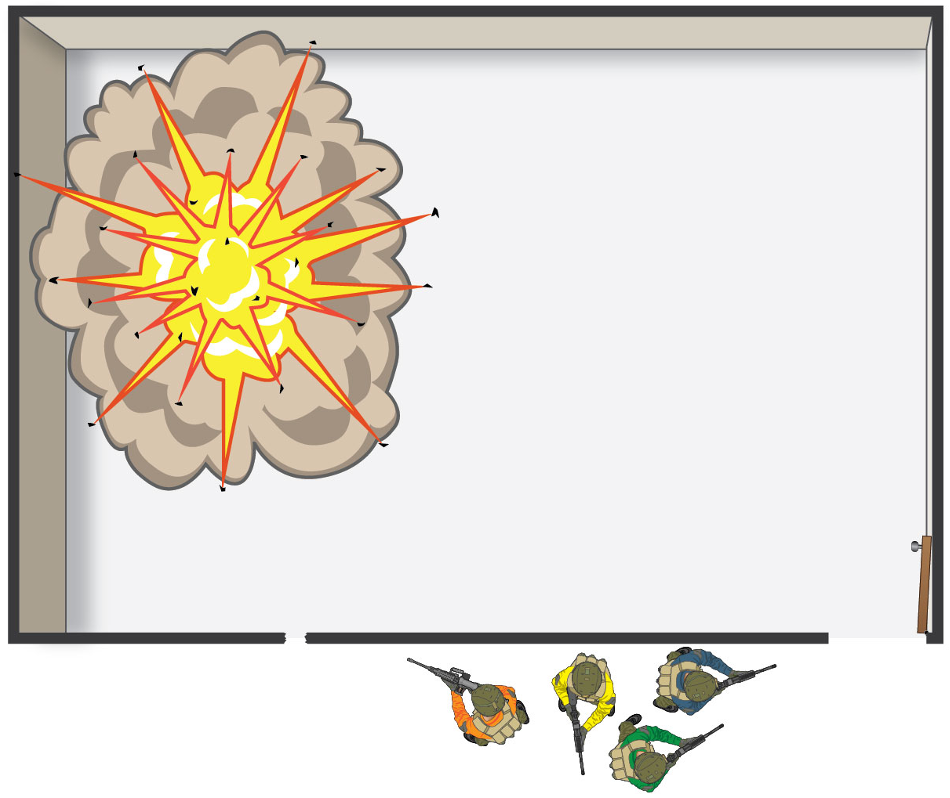
The team should move as far away from the grenade as possible before it goes off. Once it goes off, the team will enter the room through the doorway. It is also important to be ready to shoot enemies that come running out of the door in order to escape the grenade.
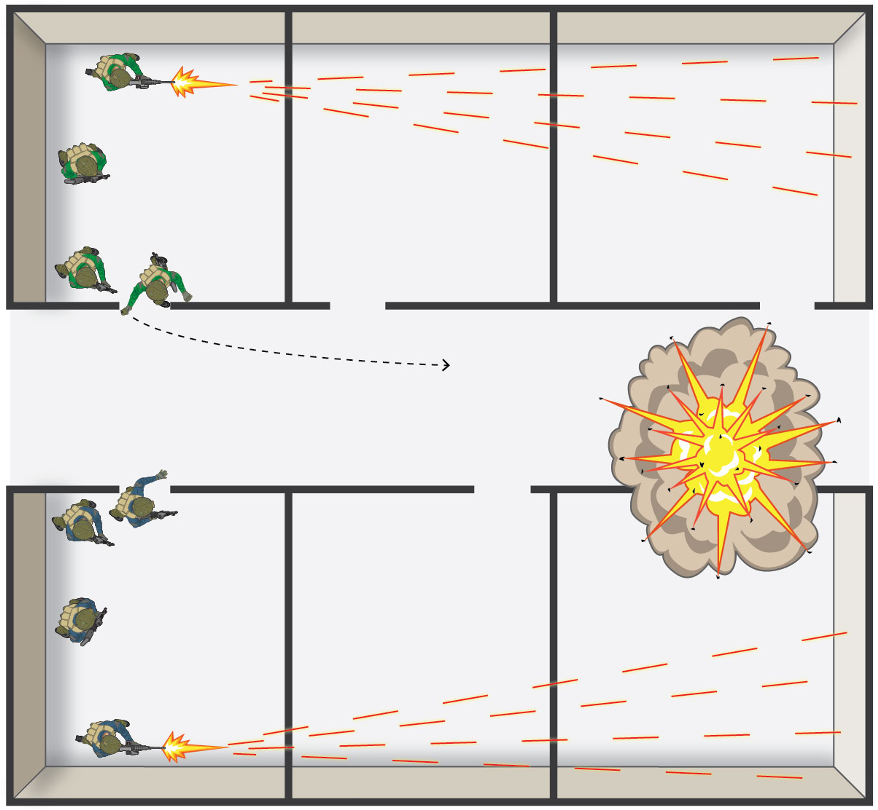
Moving down hallways can be particularly dangerous in high-intensity urban combat since the enemy can spray fire indiscriminately and toss grenades down the hall. However, if the squad beats the enemy to the punch by employing a high-volume of fire and explosives, the enemy may be suppressed and less capable of resistance. If the walls are weak enough, it is possible to suppress through the wall on both sides of the hallway. If grenades are detonating in the hallway, the enemy will feel trapped, increasing the level of suppression. Alternatively, as bullets start coming through the walls that may force the enemy out into the hallway into the grenade explosions. It is also important to remember that it can be dangerous to throw a second grenade before the first grenade goes off, since the explosion of one grenade can kick the other back towards the team. Therefore, when throwing multiple grenades at once, it is preferable to throw them as far away as possible.
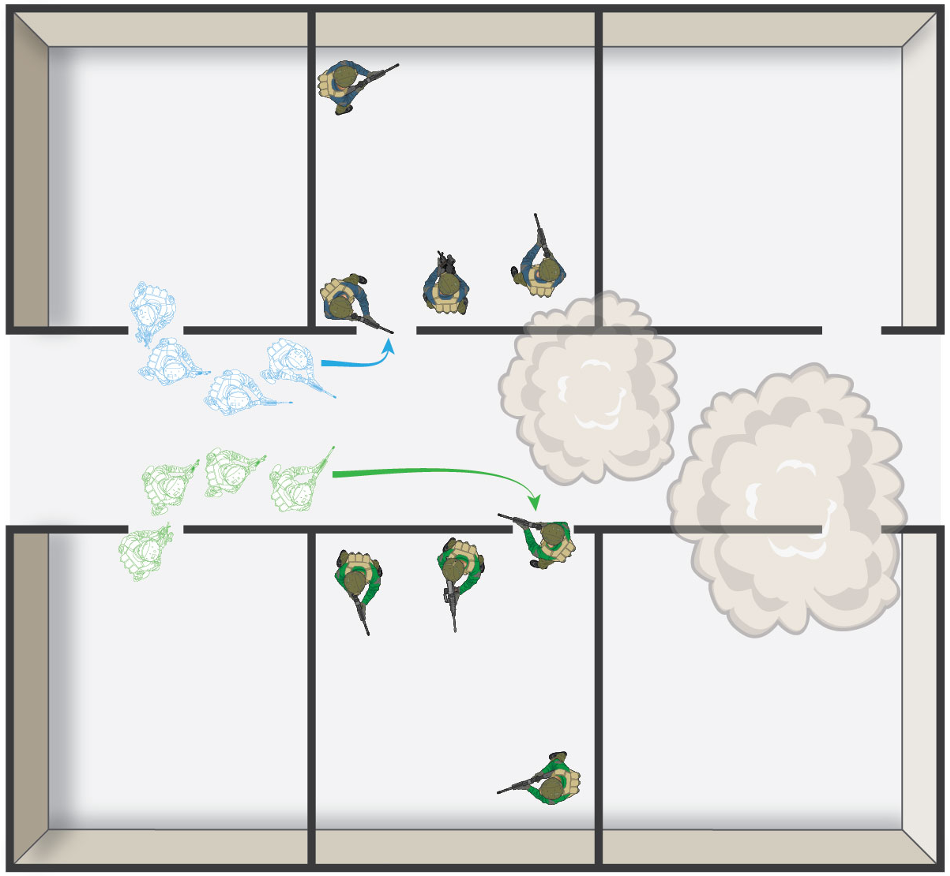
Once the squad achieves an acceptable level of suppression, it should move down the hall into the next set of rooms as quickly as possible. Team members can still fire forward down the hall if needed to maintain suppression. Once the squad enters the next set of rooms, the squad leader can assess the situation and repeat the process if necessary. It is also important to remember that even if there are no civilians on the battlefield, leaders must impose strict control measures to avoid fratricide whenever employing a high volume of automatic fire in an urban environment. It is also critical to remain aware of ammunition consumption. As previously mentioned, the heavy volume of fire required for suppression in urban environments can expend ammunition very quickly.
We hope you found the short article useful and once again we welcome your reactions, comments or suggestions below in the chat area. We want to promote constructive discussions on tactics with people from various tactical backgrounds and experience levels.
Comments
Nothing yet. Say the first thing.
Sign in to join the conversation.