
PLATO FAMOUSLY said that “nothing more excellent or valuable than wine was ever granted by the gods to mankind.” Is he wrong? Was he drunk when he said this? Many people may find this statement offensive today, perhaps partly because of the sober movement or the rise of wellness and optimization culture.
If cutting out alcohol has been a “game changer” for you, the chances are, you used to drink the wrong alcohol in the wrong quantities with the wrong people for the wrong reasons and in the wrong contexts.
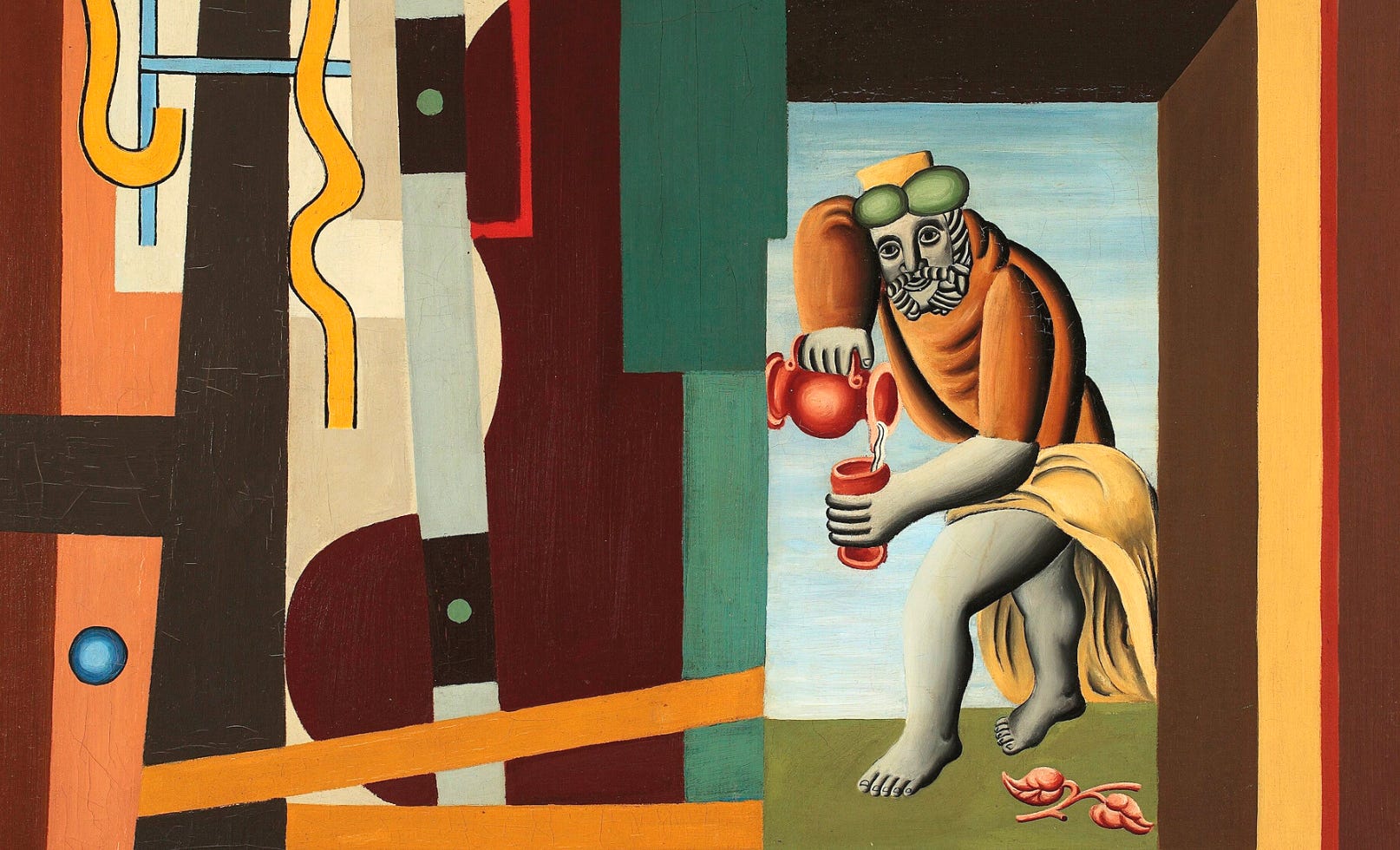
My goal with this essay is not to downplay the risks of alcohol or to make fun of people who get addicted to this substance. My grandfather died because of alcohol and quite a few people in my family struggle with this addiction. This is indeed a widespread problem in Romania and across the Balkans. I’m not declaring this to ask for sympathy or affection but to make you understand that I’m aware of how destructive alcohol can be. Please note that this essay is dedicated to wine and wine only and not to alcohol in general. I don’t want to encourage vice but to argue that (drinking) wine isn’t automatically incompatible with virtue.
In recent years, there’s been a relentless campaign from mainstream media and big influencers telling you that alcohol is terrible, with some studies suggesting that even the smallest amount carries risks. My view on the matter will appear here only indirectly, as I have no desire to enter that dispute. What I wish to address instead is more primitive: how to get drunk.
To do that, since we’ve already mentioned Plato, it’s convenient to take a closer look at the Ancient Greeks, or rather the type of culture they (successfully) built around wine instead of against it.
In antiquity, wine was treated as the incarnation of a god, and over time, ritual and theology refined it into a sacred drink. Yet this religious framework, while powerful, proved limited in scope—it elevated the meaning of wine but did not govern its everyday use. What remained unclear was how to influence alcohol consumption beyond the religious setting. A secular solution was needed to complement the religious one.
Now, the Ancient Greeks weren’t wise drinkers by birth; they experimented with quite a few different policies, toying with prohibition or encouraging abstinence. Concern about overdrinking was widespread—yet restrictions frequently backfired, as people always found creative ways to keep drinking. In the end, nearly every attempt to regulate alcohol failed. All except one.
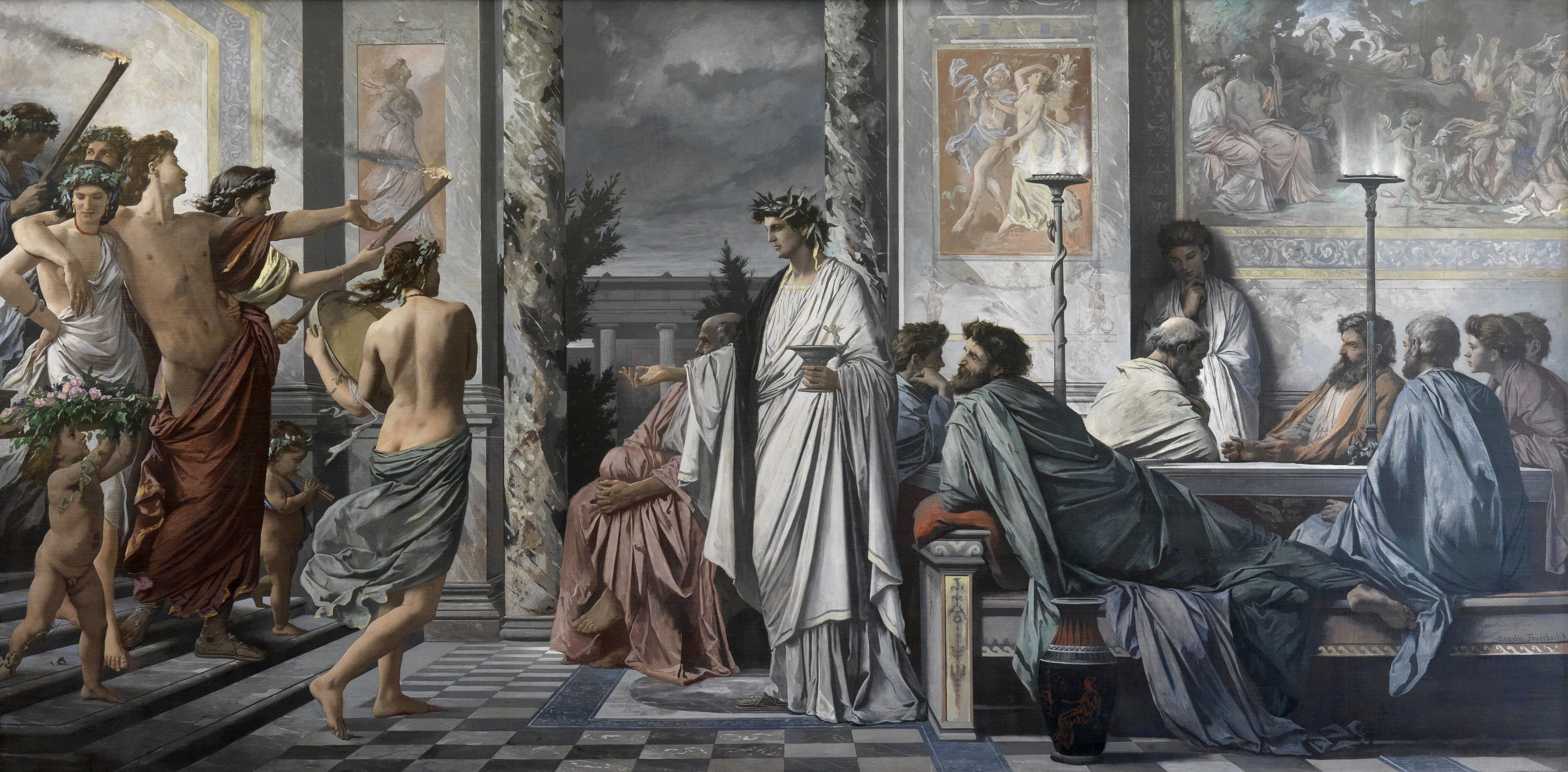
The best experiment they carried out was, like many things in life, counterintuitive. This experiment, notable as the title of a work by Plato, is the underrated symposium—which is, in essence, a drinking party with very clear rules and guidelines.
Roger Scruton came up with a great description:
The symposium would invite Dionysus, god of wine, into a ceremonial precinct. Guests, garlanded with flowers, would recline two to a couch, propped on their left arm, with delicious food on low tables before them. Manners, gestures, and words were as strictly controlled as at the Japanese tea ceremony; everyone was allowed to speak, recite, or sing, so that conversation remained always general.
The presence of Dionysus gave the gathering a quasi-sacred aura; the aim was to leverage wine as social and intellectual fuel without intoxication—sparking wit, poetry, and philosophical conversation without descending into chaos. Music, recitation, and shared dialogue created a communal rhythm, where pleasure and moderation were held in tension.
It may be useful to consider that Leonardo da Vinci, Epicurus, Cato, Montaigne, Cioran, and even Kant were lovers of wine. The great hero, Odysseus, shares his views on alcohol with a farmer, arguing that he indulges in wine so he can “dance, sing at the top of my lungs, and laugh like a fool!” There’s a clear pattern here. Odysseus doesn’t drink wine to drown his sorrows. He drinks so he can dance, sing, and laugh. He drinks to heighten his soul! He drinks in order to celebrate life.
Roger Scruton adds a memorable note:
Of course we’re aware of the medical opinion that a glass of wine every now and then is good [or at least not dangerous] for one’s health; and also with the rival opinion that drinking more is not healthy. This is not unimportant—but as long as this is detached from the symposium culture, it doesn’t make much of a difference. Most people no longer have an arsenal of topics, books, poems, songs, and ideas with which to entertain one another in their cups. They drink to fill the moral vacuum generated by their culture. And while we’re familiar with the side-effects of drinking on an empty stomach, we’re now witnessing the far worse effects of drinking on an empty mind.
If you still want to insist that drinking wine is a vice, let’s take a brief detour to the Ottoman shisha or hookah.
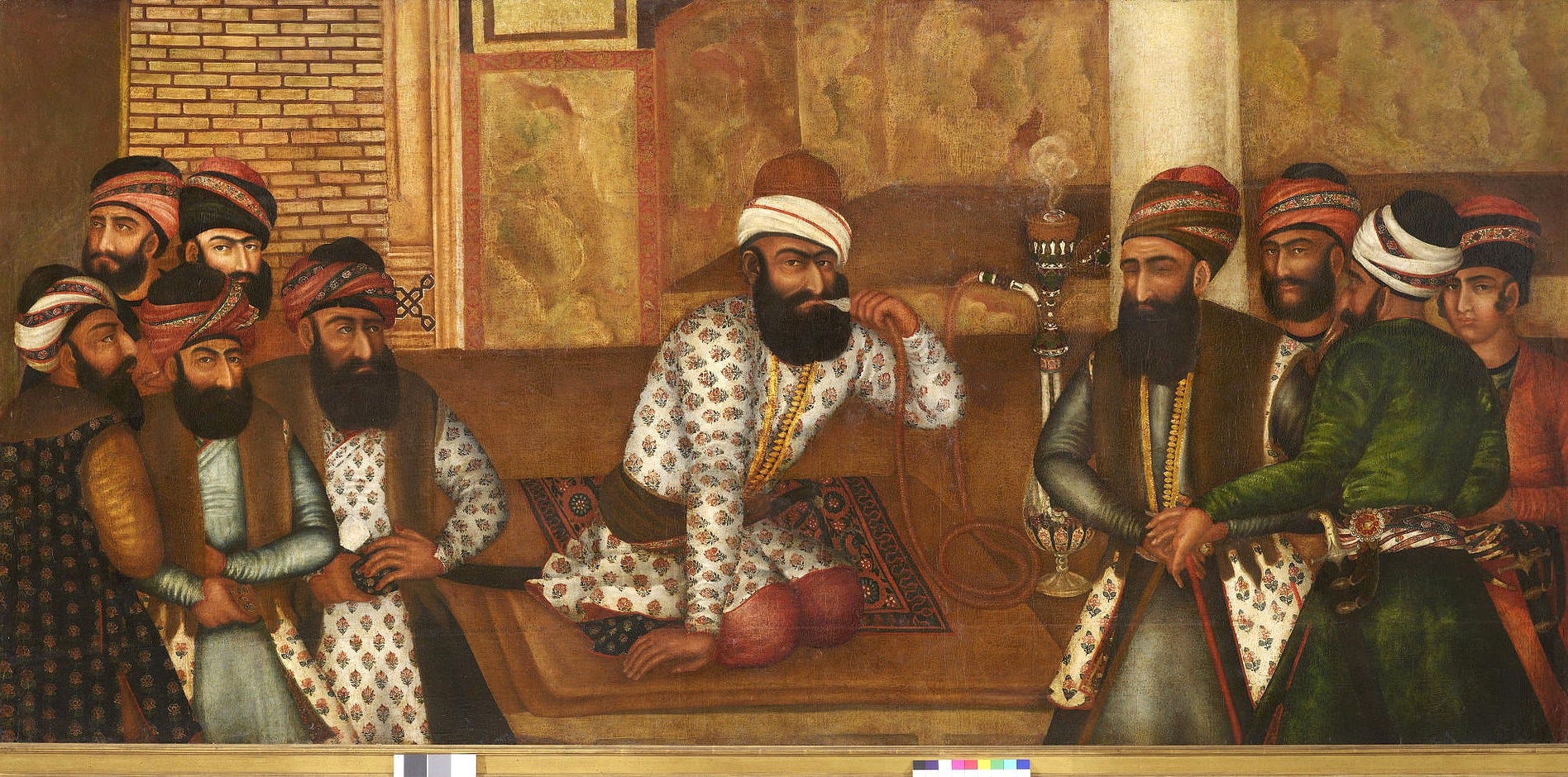
My observation is that the major difference between smoking cigarettes and shisha is that consuming the latter entails some sort of pseudo-ritual while the former is a banal, mundane activity.
If you want to smoke shisha, there’s a set of customs you need to abide by. You make a conscious decision to meet up with your friends in a specific place. You get some tea and never alcohol—the rule is simple: you’re allowed only one single vice. Namely, the vice you came for. You never combine vices. I have a friend from Istanbul who’s fed up with Russian tourists smoking shisha and drinking vodka at the same time. He has a point though: Russians, vodka, and shisha sounds like a terrible combination. And, finally, the experience requires thoughtful preparation. When the shisha is ready, you acknowledge its presence; a beautiful device that catches your attention. It’s an event. In contrast, cigarettes are all too convenient, too easy to get and consume. They’re designed to make you addicted; smoking cigarettes is a habit that can be picked up anytime and anywhere. I have a shisha at home, but I use it only a few times a year—not because I don’t enjoy it, but because setting it up takes (me) around 30-45 minutes. As Thomas Jefferson was surely right to argue that “wine is the best antidote to whiskey,” my friends from Istanbul have the right to argue that “shisha is the best antidote to cigarettes.”
Similarly, the symposium Plato wrote about entails only one “vice” and a ritual that needs to be respected. The greatest revenge against a culture that has no idea how to drink alcohol is not to give up on it altogether and “go sober” but learn how to integrate it into a lifestyle packed with love, friendship, and beauty. One strong rule I abide by is that a good wine must seldom be enjoyed alone; and should preferably never be accompanied by gossip.
At the risk of getting canceled, my position is that if you truly enjoy wine—then enjoy it! Guilt is unnecessary. And note that prudence and pleasure are best friends, not enemies. This is not a medical opinion; this is for the soul. The problem is not that you drink (too much?) wine. The problem is that you make the same mistake both the hedonist and the abstainer make: you regard wine as a drug. The problem is that you’ve invested no ritual, ceremony, or genuine appreciation into this otherwise sacred drink.
Roger Scruton is invited yet again to speak and end this essay in exactly the same fashion Odysseus spoke to the farmer:
Wine—drunk in moderation, at the right time, in the right place, and in the right company—is the path to meditation, peace, joy, and philosophy.
In July, we came together in Transylvania for a few days of wine, poetry, painting, and philosophy. In early October, I host the 5th edition of “Sipping Wine in Transylvania.” We return to the Saxon villages of Transylvania, with fortified churches and medieval architecture.1
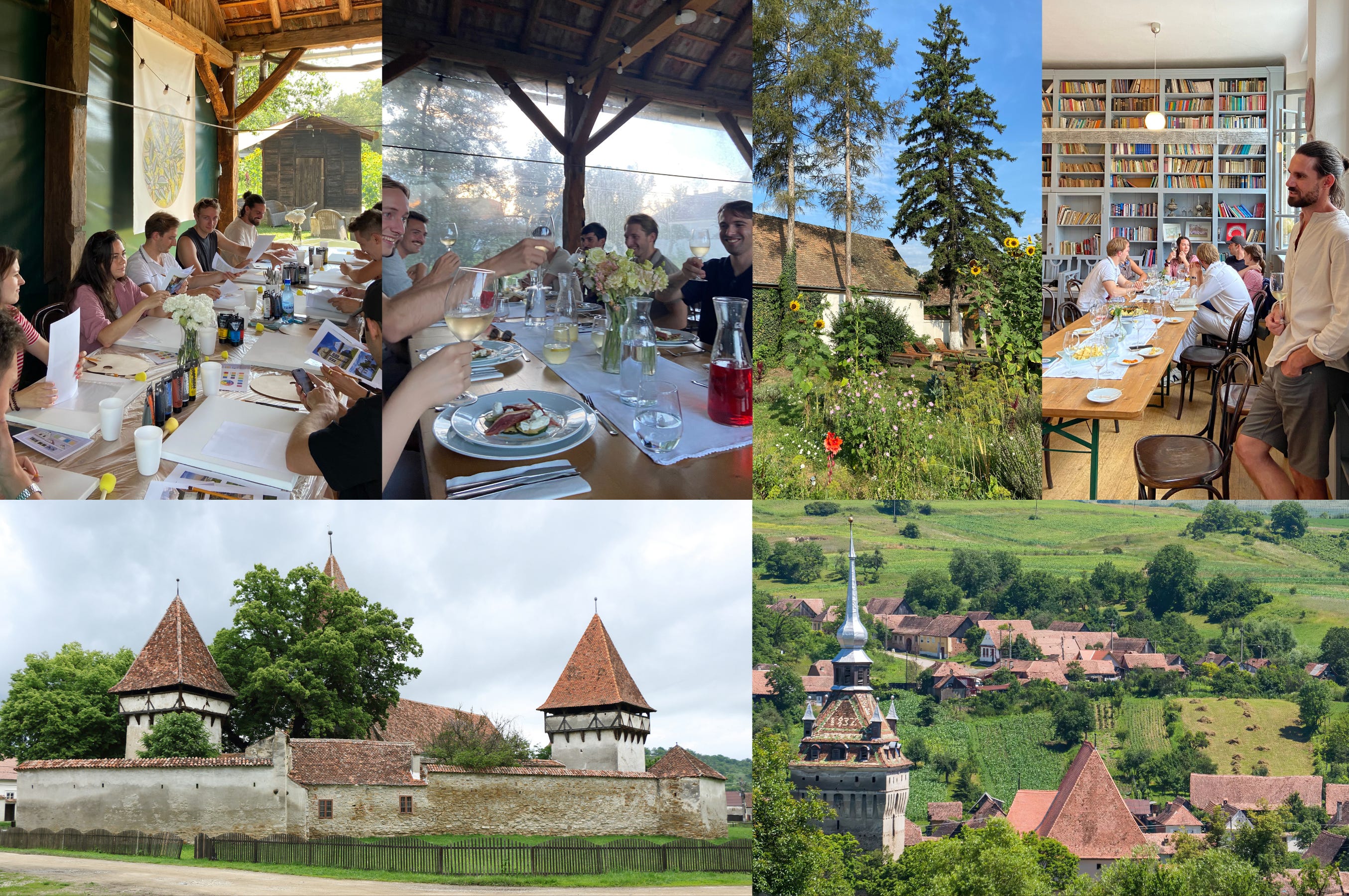
Needless to say, the cherry on top is the symposium, which forms part of this event. The central theme we explore in October is The Intellectual Life in Times of Uncertainty.
“When I first visited the Saxon villages of Transylvania almost 15 years ago, I was deeply impressed by how these medieval settlements and the wild countryside which surrounds them had remained so well preserved for so many hundreds of years. Together, they formed an extraordinary landscape and harmonious farming system, uniquely rich in biodiversity, which was the only example of its sort left in Europe.” — King Charles
Send an email to viziandrei@outlook.com if you’d like to join one of the upcoming retreats; I only organize 2 retreats/year. Please include the word RETREAT in the subject line.
This retreat is proudly sponsored by Catleya and Villa Vinea, two of my favorite wineries from Romania. I recommend all wines from Catleya, particularly Epopée—both white (Fetească Regală) and red (Syrah)—as well as Freamăt White (a blend of Fetească Albă and Fetească Regală). Perfect Simplu (Fetească Neagră, red wine) is also spectacular. From Villa Vinea, I recommend their Gewürztraminer Selection.
Comments
Nothing yet. Say the first thing.
Sign in to join the conversation.