

“When I step back and view the body as an integrated ecosystem, a framework I call the living body-self, I find that nature provides exactly what we need to thrive in the heat.” — Dr Rob
When the midsummer heat settles in, I begin to crave foods that are crisp, cool, and deeply refreshing. To me, it is no accident of nature that certain seasonal powerhouses reach peak ripeness exactly when our bodies need them most. Yet, I talk to so many people who completely overlook one of the season’s greatest gifts, dismissing it as a simple, sugary indulgence to be avoided, especially if they are managing metabolic challenges like prediabetes or type 2 diabetes.
I see this as a profound misunderstanding that comes from looking at nutrition through an isolated lens. When I step back and view the body as an integrated ecosystem, a framework I call the living body-self, I find that nature provides exactly what we need to thrive in the heat. In my view, the ideal seasonal food doesn’t just hydrate us on the surface; it contains specific, elegant biological compounds that speak directly to our cardiovascular and metabolic infrastructure.
The true champion of this summer survival strategy is a fruit I always look forward to this time of year: the humble watermelon. Far from being just a watery picnic treat, I recognize it as a highly sophisticated delivery system for vascular health, cellular defense, and metabolic balance. Once you understand how its unique properties interact with your inner biochemistry, and learn the simple art of nutrient buffering that I practice daily, you can unlock a powerful ally to cool the body, dampen systemic inflammation, and protect your heart all summer long.
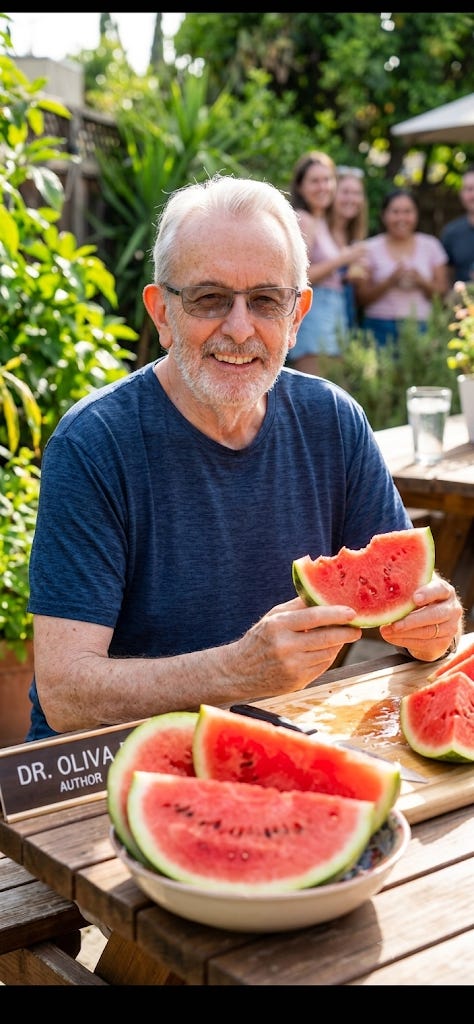
To show you the systemic power of watermelon, I want to look first at how it supports your cardiovascularr infrastructure. Watermelon is one of nature’s richest sources of an amino acid called L-citrulline.
When you consume citrulline, your body converts it into another amino acid, L-arginine. I often emphasize this pathway because L-arginine serves as the direct precursor for nitric oxide. Nitric oxide is a gas that signals the smooth muscles surrounding your blood vessels to relax and dilate. In my work, I look at this process as a vital way to lower systemic blood pressure, improve blood flow, and ease the workload on your heart.
Because citrulline bypasses initial liver metabolism and travels straight to the kidneys for conversion, I consider eating watermelon a highly efficient, steady way to support your endothelial function, the health of the inner lining of your blood vessels.
The vibrant red hue of watermelon signals something I always look for in whole foods: an abundance of lycopene, a potent lipid-soluble antioxidant. In fact, I often point out to people that watermelon contains higher concentrations of lycopene than fresh tomatoes.
In a balanced system, your cells are constantly managing oxidative stress. I look at lycopene as a systemic shield that neutralizes free radicals before they can damage cellular membranes and DNA. By dampening this systemic inflammation, regular lycopene intake supports long-term cardiovascular health and helps protect your joints from dry inflammatory degradation.
Perhaps the most common question I encounter is whether individuals with prediabetes or type 2 diabetes should avoid watermelon. I find this confusion stems from looking at food through an isolated, single-metric lens rather than a whole-system perspective.
If you look strictly at the Glycemic Index, watermelon ranks quite high, often between 72 and 80. This tells us that the simple sugars it contains can move into the bloodstream quickly. However, I always remind people that the Glycemic Index does not account for real-world portion sizes or water content.
This is where I find the concept of Glycemic Load becomes essential. Because watermelon is roughly 92% water, the actual concentration of carbohydrates in a typical one-cup serving is very low. This leaves watermelon with a Glycemic Load of only about 5, which I consider exceptionally low.
Furthermore, I have found that the systemic benefits of citrulline and lycopene actually help mitigate long-term diabetic complications by protecting the vascular system from the high oxidative stress associated with blood sugar fluctuations.
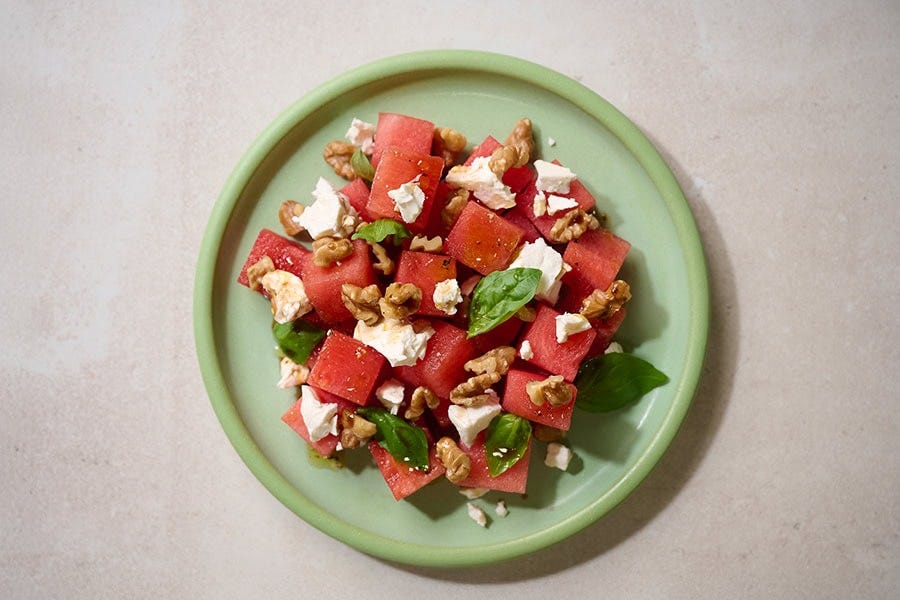
To keep your blood sugar completely stable, the secret lies in what I call nutrient buffering. When I enjoy watermelon, I always pair it with a source of healthy fat or protein, such as a handful of walnuts or a piece of cheese. I use this pairing because it acts as a natural brake on digestion, slowing down glucose absorption and ensuring a beautifully flat, stable energy curve (see the recipe below).
To get the most out of this seasonal gift, I recommend keeping these systemic principles in mind:
Choose deep red flesh: I look for the deepest color possible, as this indicates a higher concentration of lycopene.
Don’t throw away the white rind: The highest concentration of citrulline is actually found in the pale green flesh right next to the rind. You can grate this into summer slaws or blend it directly into smoothies.
Eat it whole: I advise avoiding commercial watermelon juices, which strip away the natural structure and concentrate the sugars, completely removing the low Glycemic Load advantage.
By treating watermelon not just as a dessert, but as a functional part of your bodily hydration and vascular defense network, you can fully enjoy everything this perfect summer food has to offer.
Enjoy your watermelon this summer!!! It’s refreshing and provides powerful health benefits.
To bring these scientific concepts to life, I want to share one of my favorite seasonal preparations. This dish isn’t just a collection of ingredients; it is a meticulously structured nutrient-buffering system. By pairing the rapid hydration of the fruit with structural lipids and proteins, gastric emptying is slowed and creates a beautifully flat, stable blood sugar curve.
Ingredients
3 cups fresh watermelon, cubed (choose a deep red flesh for maximum lycopene)
½ cup raw walnut halves, lightly crushed (your essential alpha-linolenic acid buffer)
⅓ cup sheep’s milk feta cheese, crumbled (provides structured proteins and organic fats)
¼ cup fresh basil leaves, torn (packed with volatile aromatic oils that aid digestion)
1 tablespoon extra virgin olive oil
A squeeze of fresh lime juice
A pinch of coarse sea salt and cracked black pepper
Instructions
1. Build the Foundation: In a large wooden salad bowl, arrange your chilled watermelon cubes.
2. Apply the Buffer: Scatter the crushed raw walnuts and crumbled sheep’s milk feta evenly over the top. This step introduces the lipid-protein matrix directly to the simple sugars, ensuring they are consumed together in every single bite.
3. Activate the Aromatics: Layer the fresh, torn basil leaves across the dish.
4. Dress Systemically: Drizzle the extra virgin olive oil and fresh lime juice over the salad. The addition of olive oil further enhances the absorption of the lipid-soluble lycopene, maximizing its cellular defense potential. Finish with a light dusting of sea salt and black pepper, toss very gently, and serve immediately.
By presenting this to your family or guests, you are offering more than just a refreshing side dish, you are sharing a practical masterclass in honoring the natural equilibrium of the living body-self.
Feel free to let me know your reactions or to ask any questions you may have.
Reminder: if you have any concerns about the your health, don’t hesitate to see your medical provider. None of the suggestions in this newsletter should supersede the advice of your physician. Vitality Vibes does not diagnose or treat any medical diseases or conditions.
If you like what you read, don’t forget to click the heart button and subscribe, as well as sharing on social media. It makes my work more visible.
Comments
Nothing yet. Say the first thing.
Sign in to join the conversation.