
“…just as the body can rapidly cascade into a stress response, we can use specific physiological levers to trigger an equally fast reset.” —Dr Rob
I always look forward to the summer. It gives me a sense of freedom and enjoyment. But the intense summer heat, disrupted schedules, and the pressure to squeeze the most out of the season can drive my stress levels sky-high. In today’s newsletter, I’m addressing a few simple ways to overcome the kind of stress summer brings and hopefully help us all enjoy the season more fully.
When I look at stress through a systems lens, it becomes clear that summer stress is not just a mental state; it is a full-body event. Our nervous, endocrine, and cardiovascular systems operate as a tightly knit network, a living body-self. When summer environmental stressors hit, this delicate ecosystem can easily get thrown out of balance.
Fortunately, just as the body can rapidly cascade into a stress response, you can use specific physiological levers to trigger an equally fast reset.
I’ve collected three simple yet powerful practices you can use to inoculate your system against the ravages of summer stress.
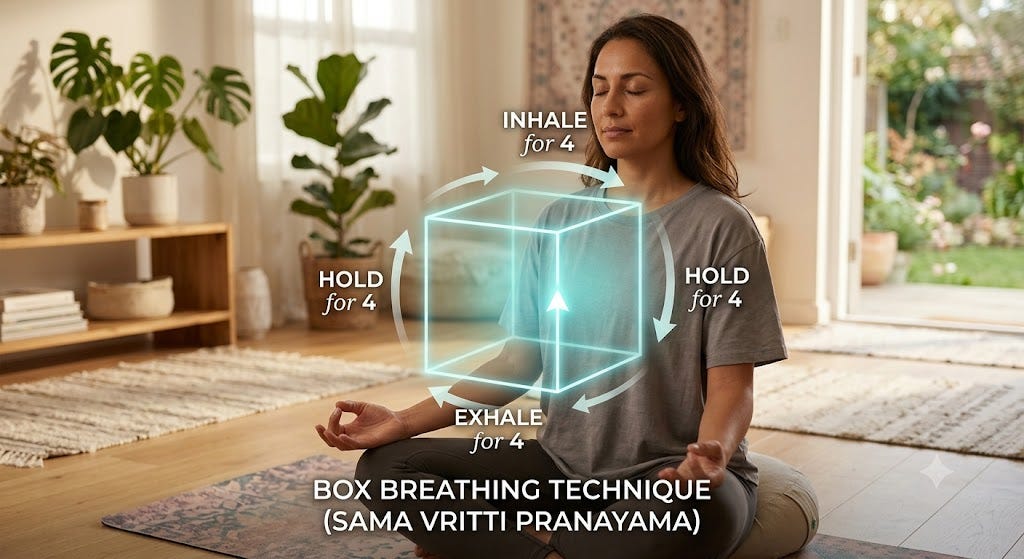
When stress strikes, the natural variability of your heart rate flattens out, leaving the cardiovascular system rigid and reactive. To restore balance to your system, I recommend using box breathing to synchronize your breath with your heart’s natural rhythms.
To practice this, visualize a square (just like the one in the image above), spending an equal count of four seconds on each side: inhale deeply for four seconds, hold that breath at the top for four seconds, exhale completely for four seconds, and hold the lungs empty for four seconds.
Repeating this precise cycle for just two minutes creates resonance between your respiration rate and your heart rate variability (HRV). This steady rhythm sends an unmistakable signal of safety to the brain, stabilizing blood pressure and clearing the mental fog brought on by summer stress. It acts as an immediate anchor, shifting your system back into a state of intentional control.

Summer heat acts as a constant physical stressor, placing a high metabolic demand on the body to keep its core temperature regulated. You can counter this systemic strain by introducing deliberate, localized cooling.
Submerging your face in a bowl of ice-cold water, placing an ice pack on your chest, or running freezing water over your wrists for 30 seconds triggers the mammalian dive reflex.
This ancient survival mechanism immediately lowers your heart rate and redirects oxygenated blood toward your vital organs. This rapid temperature shift acts as a shock absorber for the nervous system, blunting the physical impact of psychological stress and instantly cooling the body’s internal thermostat.
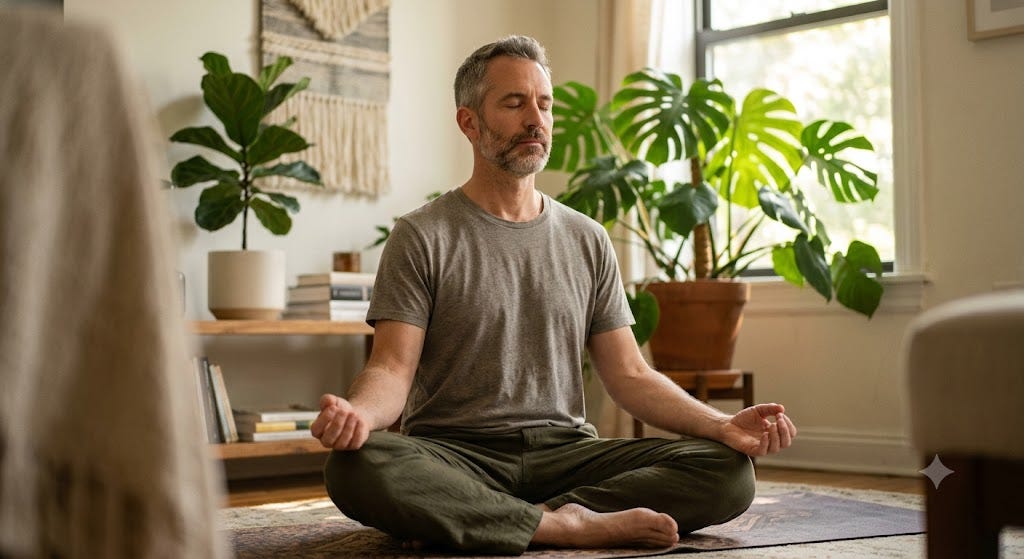
The high sensory stimulation of summer, bright glare, loud noises, and packed calendars, can overstimulate your brain’s sensory processing centers. To prevent this from degrading your systemic resilience, I encourage you to practice a brief daily sensory fast.
Find a quiet, shaded space, close your eyes, and spend five minutes tuning out the external environment. Focus entirely on the physical points of contact between your body and the chair or the ground.
By removing intense visual input and grounding your awareness in immediate physical sensations, you give your overtaxed nervous system a chance to recalibrate. These micro-breaks prevent the gradual buildup of cortisol throughout the day, keeping your systemic reserves intact.
When I look at the challenges of maintaining wellness during the high-energy summer months, I see a profound opportunity to practice true health ecology. Stress is not an abstract concept, nor is it a personal failing; it is a measurable biological reaction within an integrated ecosystem.
By utilizing these three targeted tools, you are not merely managing a temporary feeling. You are actively stepping in to guide your physiology, protecting your nervous system from chronic depletion, and keeping your vitality high all season long.
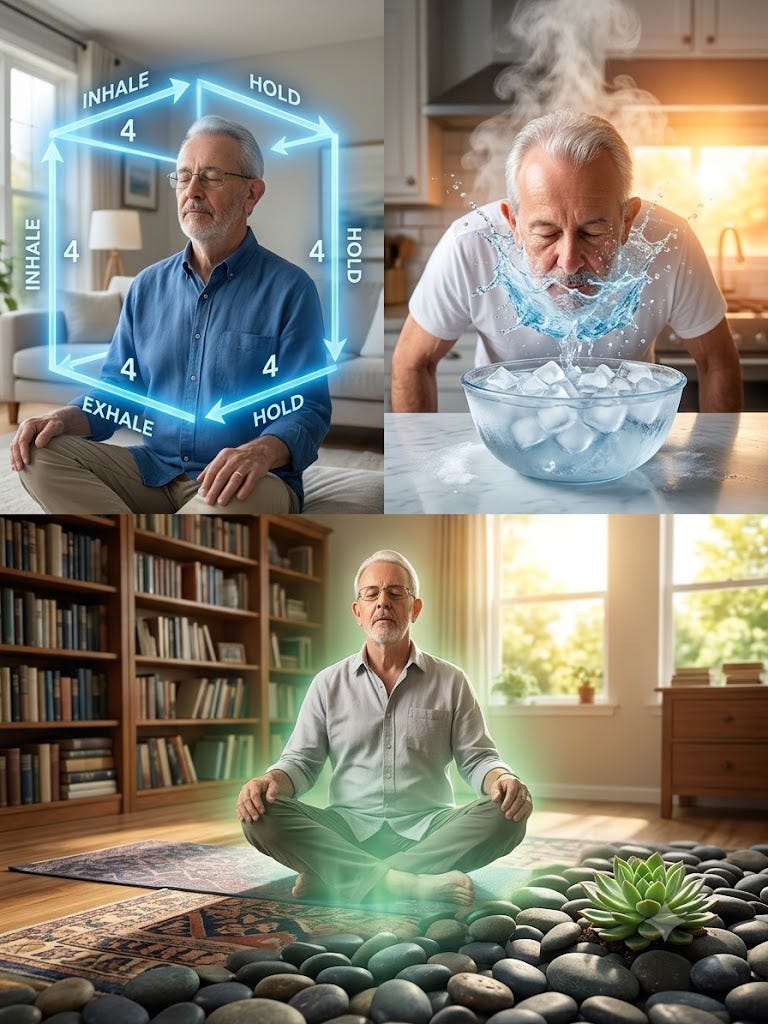
I’m very interested in hearing how you did with the 3 stress inoculation techniques. Give them a shot and let me know what works for you.
— Dr. Rob
Lehrer, P., & Gevirtz, R. (2014). Heart rate variability biofeedback: how and why does it work?. Frontiers in Psychology, 5, 756.
Ma, X., et al. (2017). The effect of diaphragmatic breathing on attention, negative affect and cortisol in healthy adults. Frontiers in Psychology, 8, 874.
Kinoshita, T., et al. (2006). Effects of local thermal stimulation on autonomic nervous activity and psychological comfort. Journal of Physiological Anthropology, 25(3), 211-218.
Landsman-Dijkstra, I. M., et al. (2004). Brief out-of-doors restorations: The effects of regular short micro-breaks on chronic stress. Journal of Environmental Psychology, 24(4), 435-442.
Feel free to let me know your reactions or to ask any questions you may have.
Reminder: if you have any concerns about the your health, don’t hesitate to see your medical provider. None of the suggestions in this newsletter should supersede the advice of your physician. Vitality Vibes does not diagnose or treat any medical diseases or conditions.
If you like what you read, don’t forget to click the heart button and subscribe, as well as sharing on social media. It makes my work more visible.
Comments
Nothing yet. Say the first thing.
Sign in to join the conversation.