
When compiling the list of what we wanted to study in Vermillion, we included a couple of child’s cellos, because one never knows what lies under this label. When we saw them, our first thought was: oh gosh, we need one more day here!
We are referring to a Ferdinando Gagliano, Napoli 1793, and an Anton Wachter, Füssen around 1760.
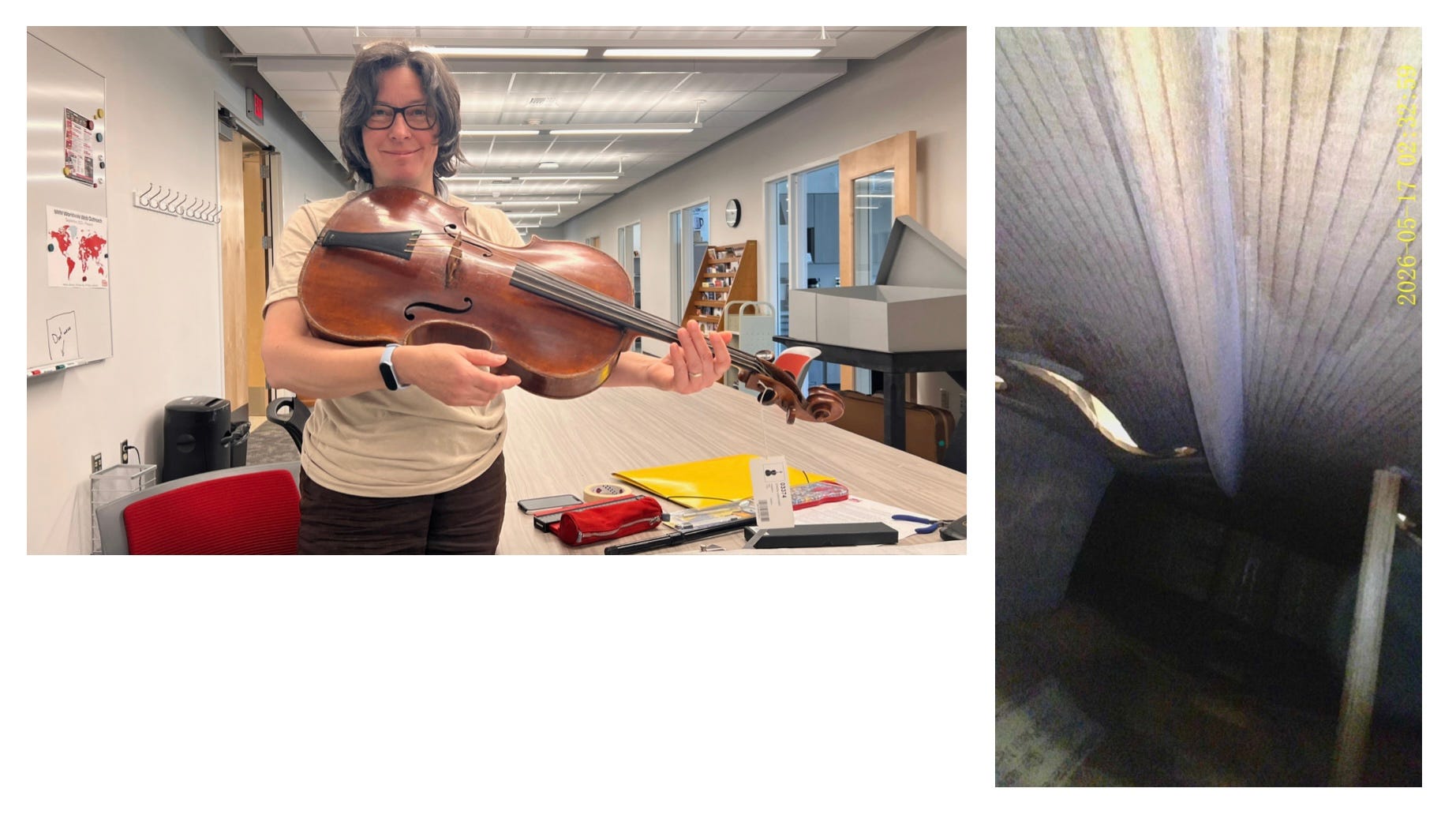
The Body length is 50.3 cm, ribs 62-66 mm, string length 46.3 cm.
If you are interested, take the time to carefully read the official entry in the museum catalogue, here.
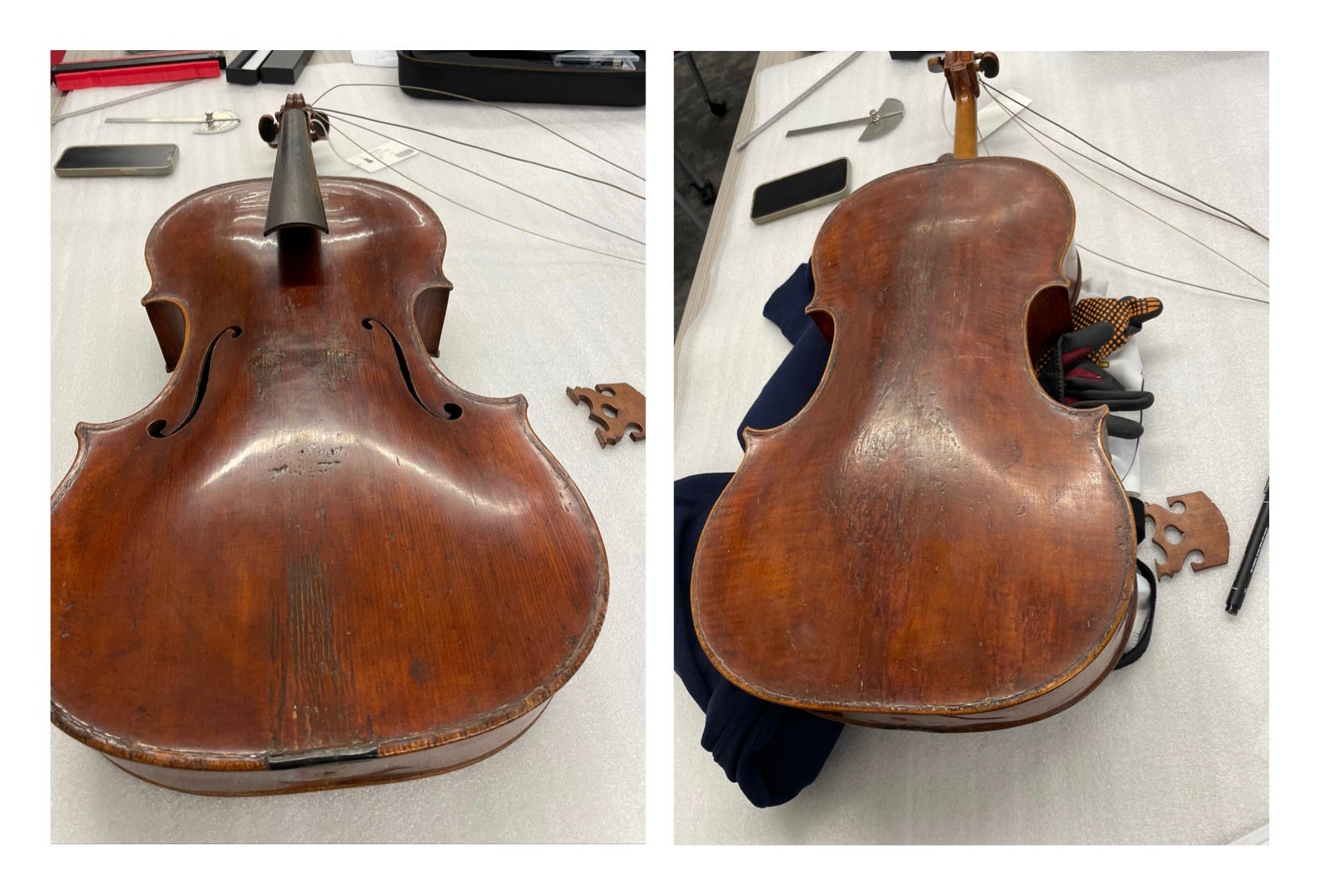
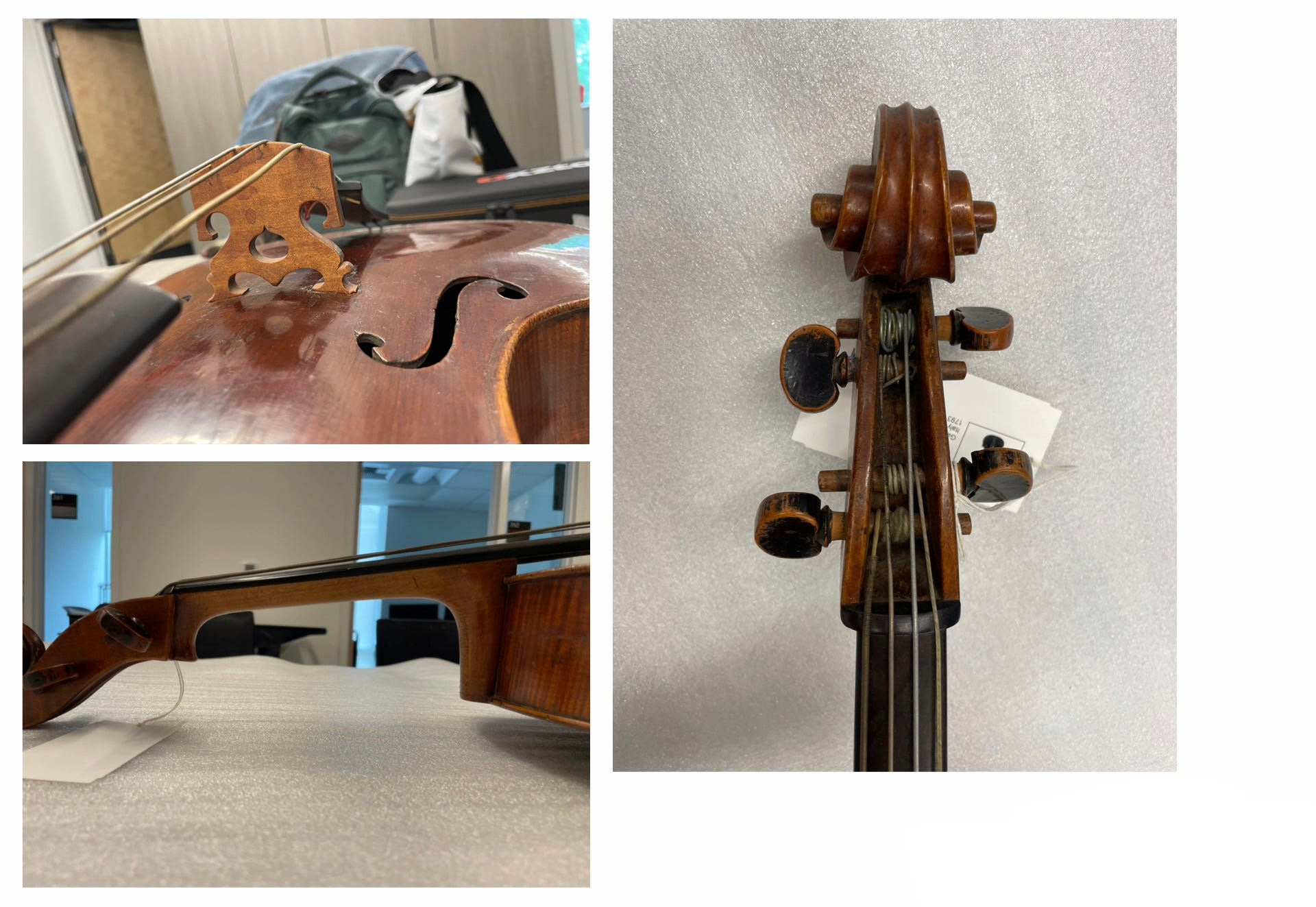
We agree with all that’s written there; the instrument is very fine craftwork, made with care, and it’s beautifully preserved. What could speak in favour of a da spalla playing is the wear of the back, those damages below the tailpiece on the top, and maybe the measure of the endbutton hole, too tiny to ever accommodate an endpin (not compulsory at all for the time, but maybe convenient for a child?). However, just as a personal feeling, the neck seems very modern cello-like. Was it reduced? If the bridge and setup are original, probably not. If they are original, it looks to me like a wonderful 19th-century setup, more than an 18th-century one, even if very late. We’re not expert of Neapolitan Lutherie, but you don’t need to be to admire this work.
One thing has to be said: we’re in the wrong place and period to speak about Violoncello da Spalla. However, inspired by Sigiswald’s experience with original child’s cellos, we’re very tempted to take this wonderful cello as a model for a Violoncello da Spalla. We’ll be measuring a fantastic Vogland one of the same measures, then we’ll decide… for sure we will make a Hoffmann-inspired one, but still, we’d love to make a bigger one that could be played both ways, horizontally and vertically: we just have to decide if going Italian or German! Let us know in the comments which you think would be more interesting!
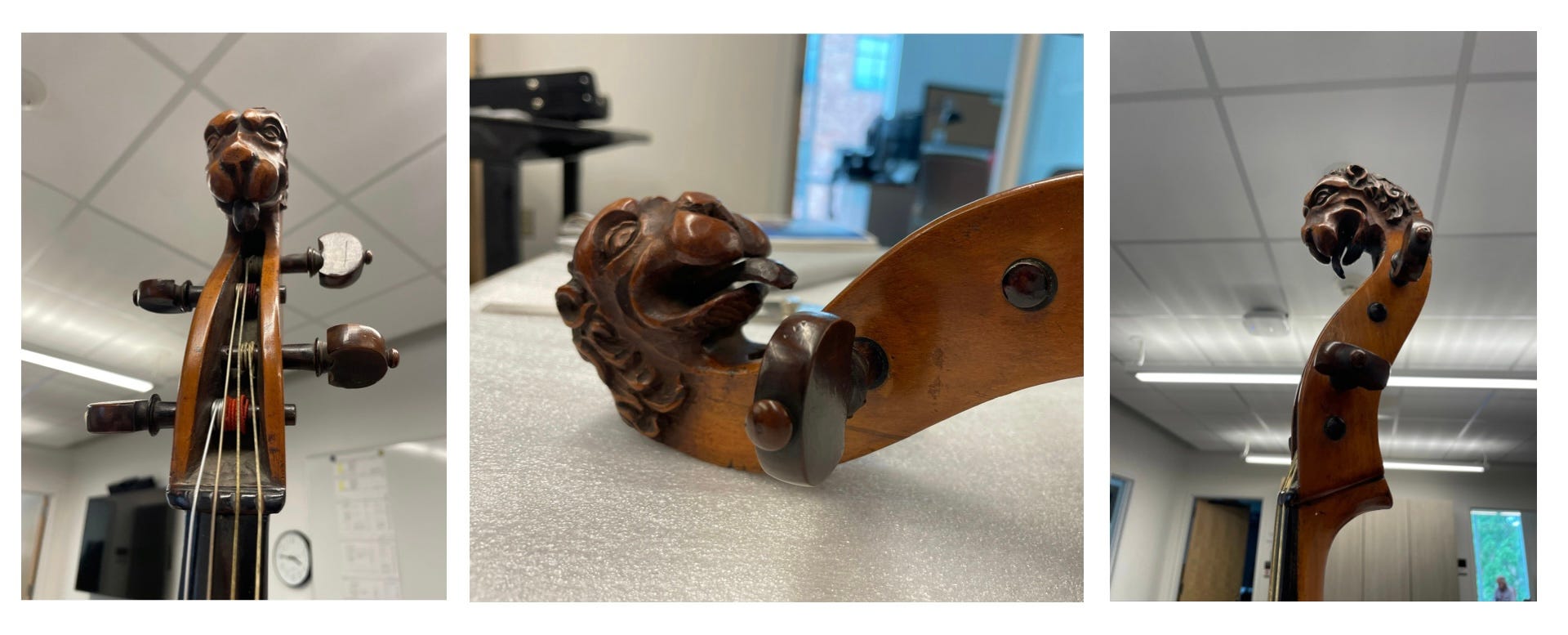
The second instrument is a child’s cello by Anton Wachter, Füssen around 1760, here is the catalogue entry. The Body measures 66,2 cm, ribs 10,5-11,2 cm, string length 59 cm.
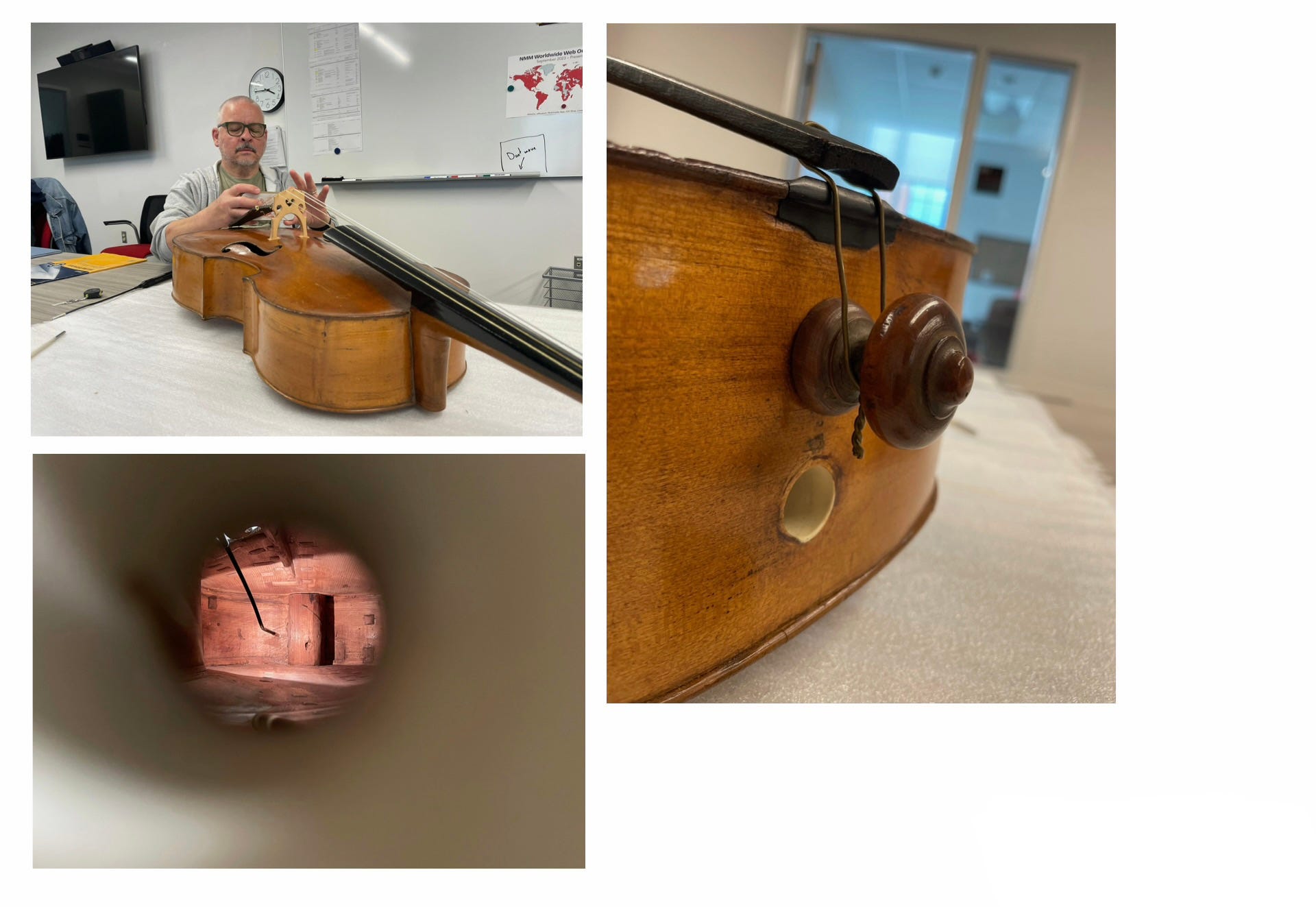
Too big for da spalla playing, indeed it looks like a fractional cello or a piccolo. There is a curious detail, the second hole below the endbutton hole, exactly like Hoffmann’s da spalla, that could be something useful to attach a strap. Again, it doesn’t appear to be of a suitable measure and shape for an endpin, but anything could be. What’s certain is that even this, like the Gagliano, is a remarkable piece of craftsmanship for a child’s instrument.
We’ve planned another research trip to close the summer and wrap up our ideas before making two new models of Violoncello da Spalla this winter. We’ll tell you everything next weekend!
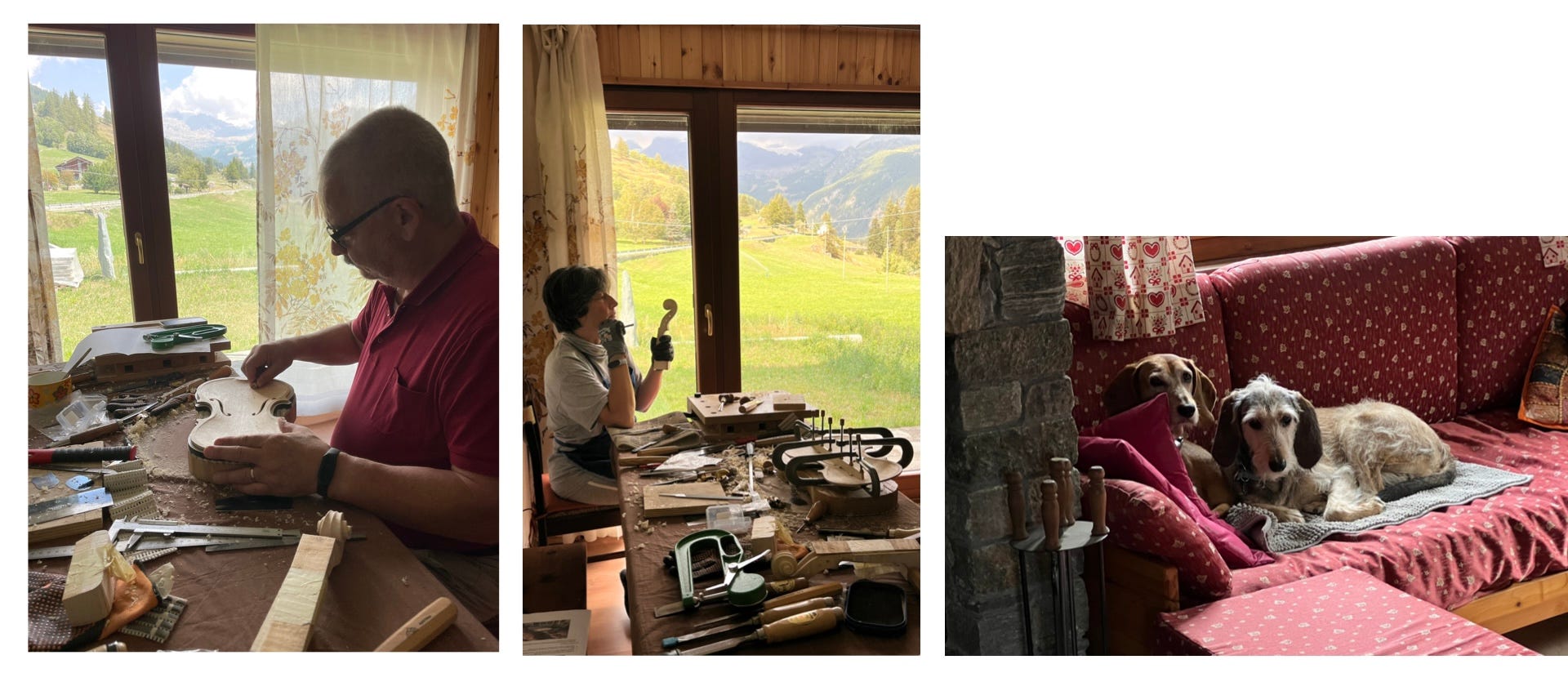
Want to try a Violoncello da Spalla? Get in touch, we’re happy to welcome you in Meltina, South Tyrol, Italy!
Are you a luthier interested in making a Violoncello da Spalla?
In the archive of this newsletter, I documented the whole process, sharing measures and templates. You can check the index and some of the posts at this link, and if you subscribe to a paid plan you have instant access to all the posts and to a private chat where you can ask me any question.
Comments
Nothing yet. Say the first thing.
Sign in to join the conversation.