
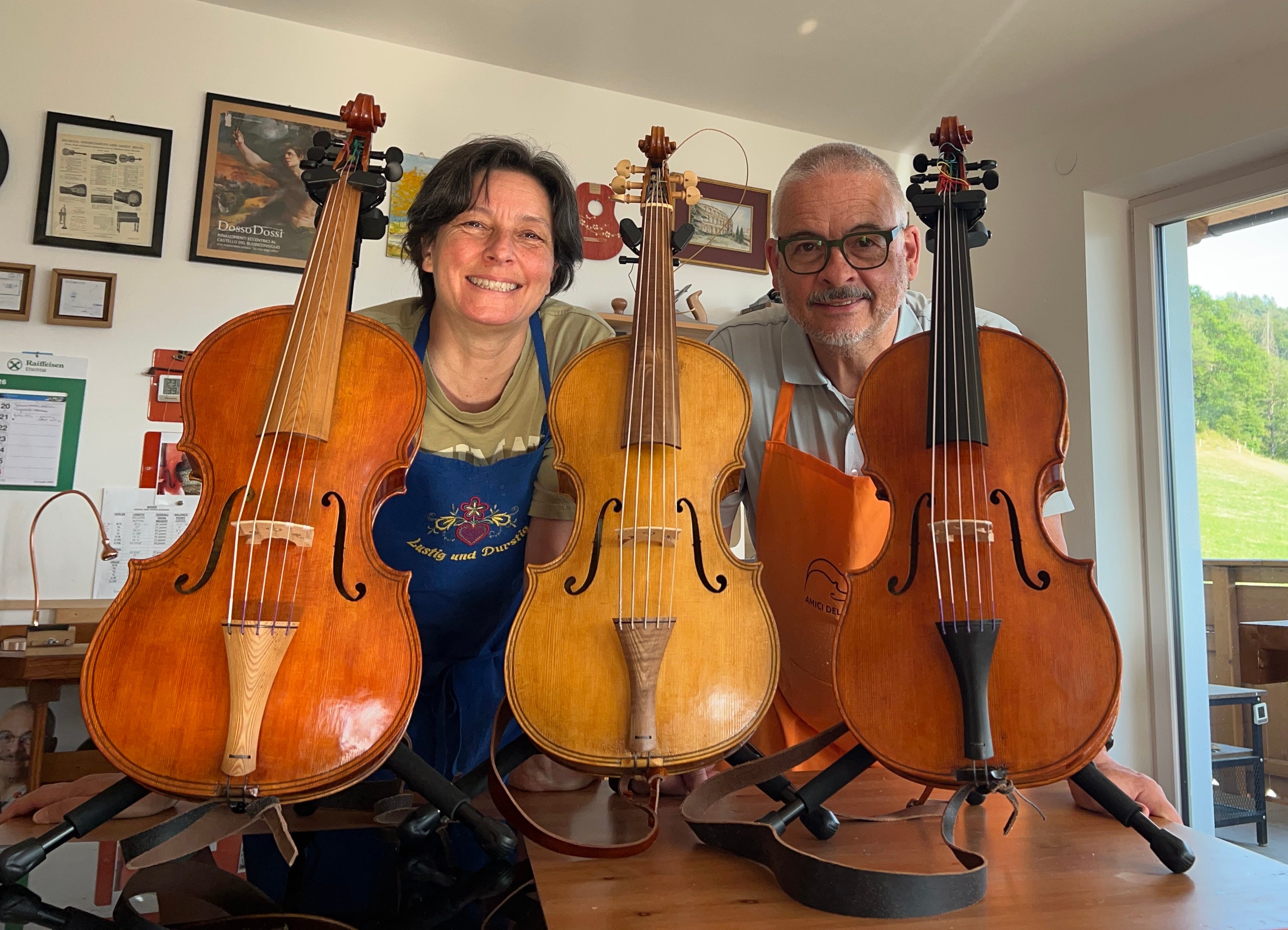
Traditionally, since the 18th century, a violin fingerboard has been made of ebony. Ebony is also used for bows, wind instruments, knife handles, and other home accessories. It’s almost black, very dense (some species are so dense that they sink in water) uniform, and solid. On a good quality piece of ebony, you can’t impress a mark by pressing your nail tip in it. On some of the ebony available today, you can. Good quality ebony is finished. It’s very hard to find and comes mainly from old stocks of wood, it’s not available in nature anymore. We used too much. If you weigh and measure an old ebony violin fingerboard and a modern one, you’ll find that to get the same weight, you have 1 mm more thickness. A softer fingerboard means a less direct response, a less focused sound, and… going more often to the luthier to redress it or replace it.
Yes, there are old stocks of ebony available, but we will not go very far with them. We think it’s better to leave those stocks for restorers. It’s no use to wait for that last moment to look around and search for an alternative.
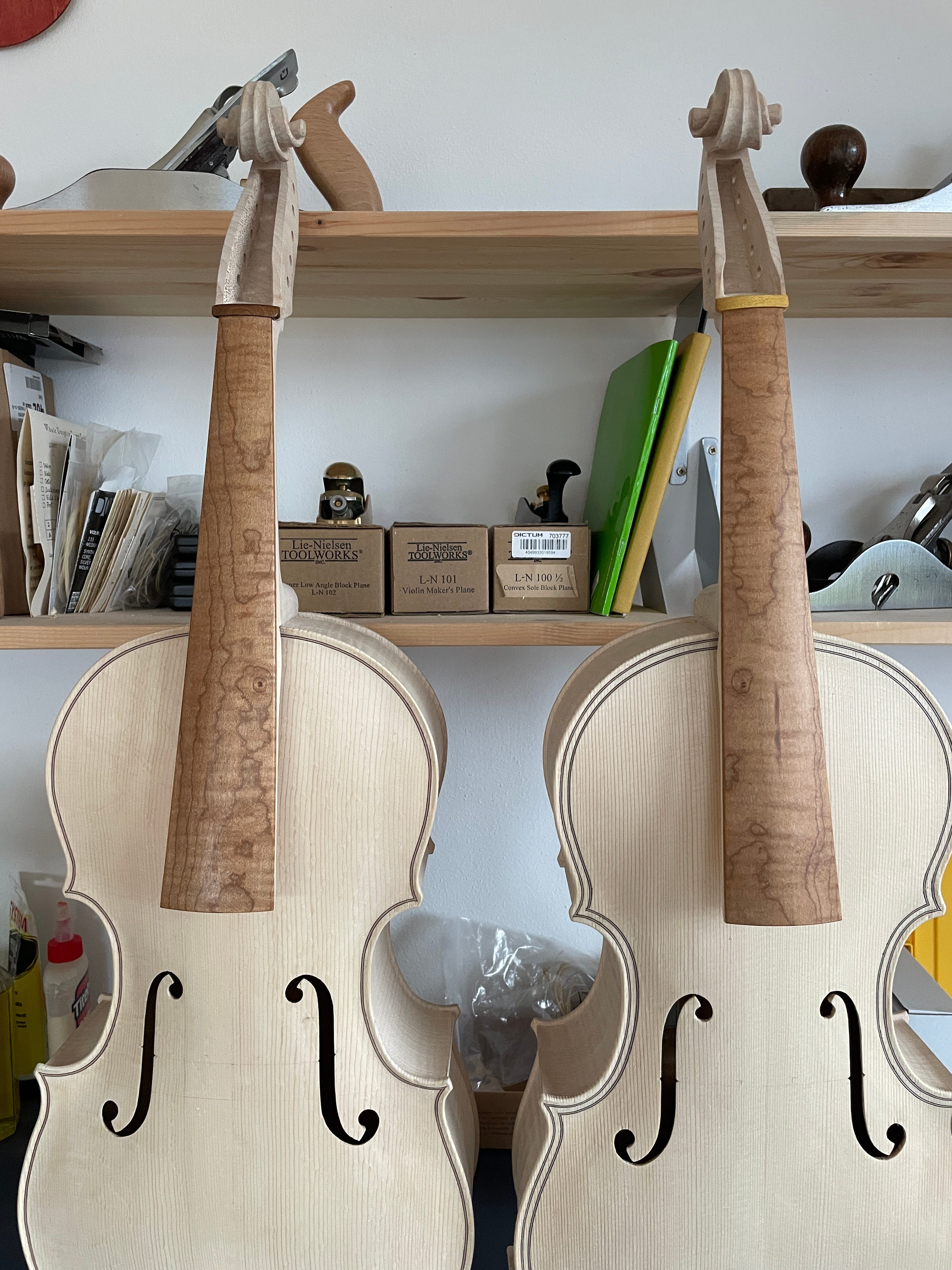
The Violoncello da Spalla is not a standardized instrument, it was born in the Baroque era, with different aesthetic standards. So, why stick with the idea of ebony, when it is unsustainable, and there are sustainable alternatives?
Sonowood is not a resin compound, wood dust wood and plastic something. It’s wood. It’s Swiss wood that is compressed until it becomes as dense as ebony. Its quality is perfectly consistent, because it is controlled at the source, and it actually works even better than ebony. For sure better than today’s ebony. It’s sustainable and it is also beautiful. Different from what we are used to seeing, but very beautiful: judge for yourself!
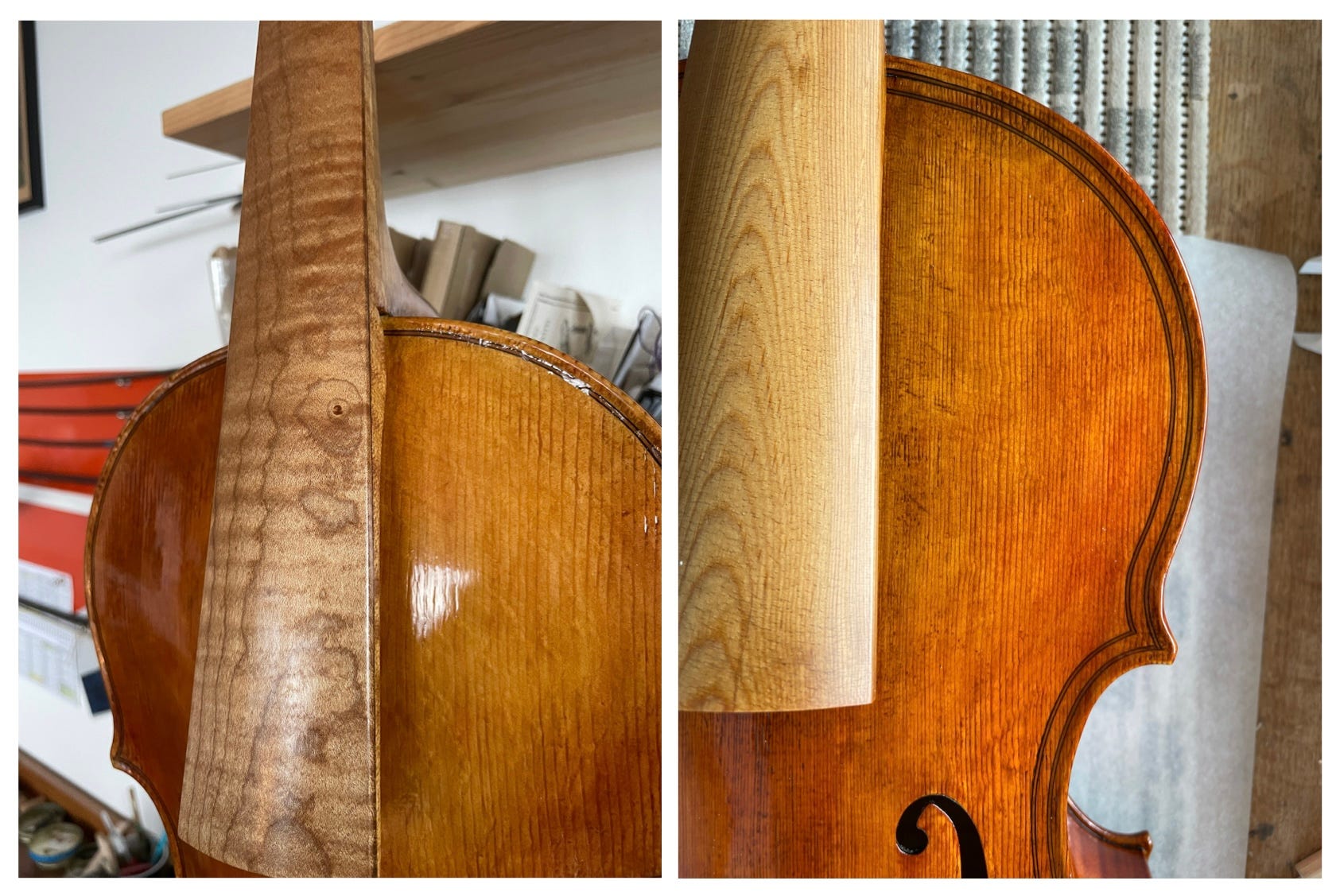
It’s expensive, yes, this is the only downside. But who wants to compromise on sound, beauty and the health of our planet, to save some money?
By the way, when you order a Violoncello da Spalla from us, you will receive a free six months Planetwild membership, with no obligation to continue it. If you don’t know what it is, check it in out here.
The first time we used a solid Sonowood fingerboard, when we tried the instrument the impression was that of a perfect setup. That response and focus of sound that you can get only with a perfect bridge and soundposts when everything is fitting perfectly with the correct tension. Was that only an impression?
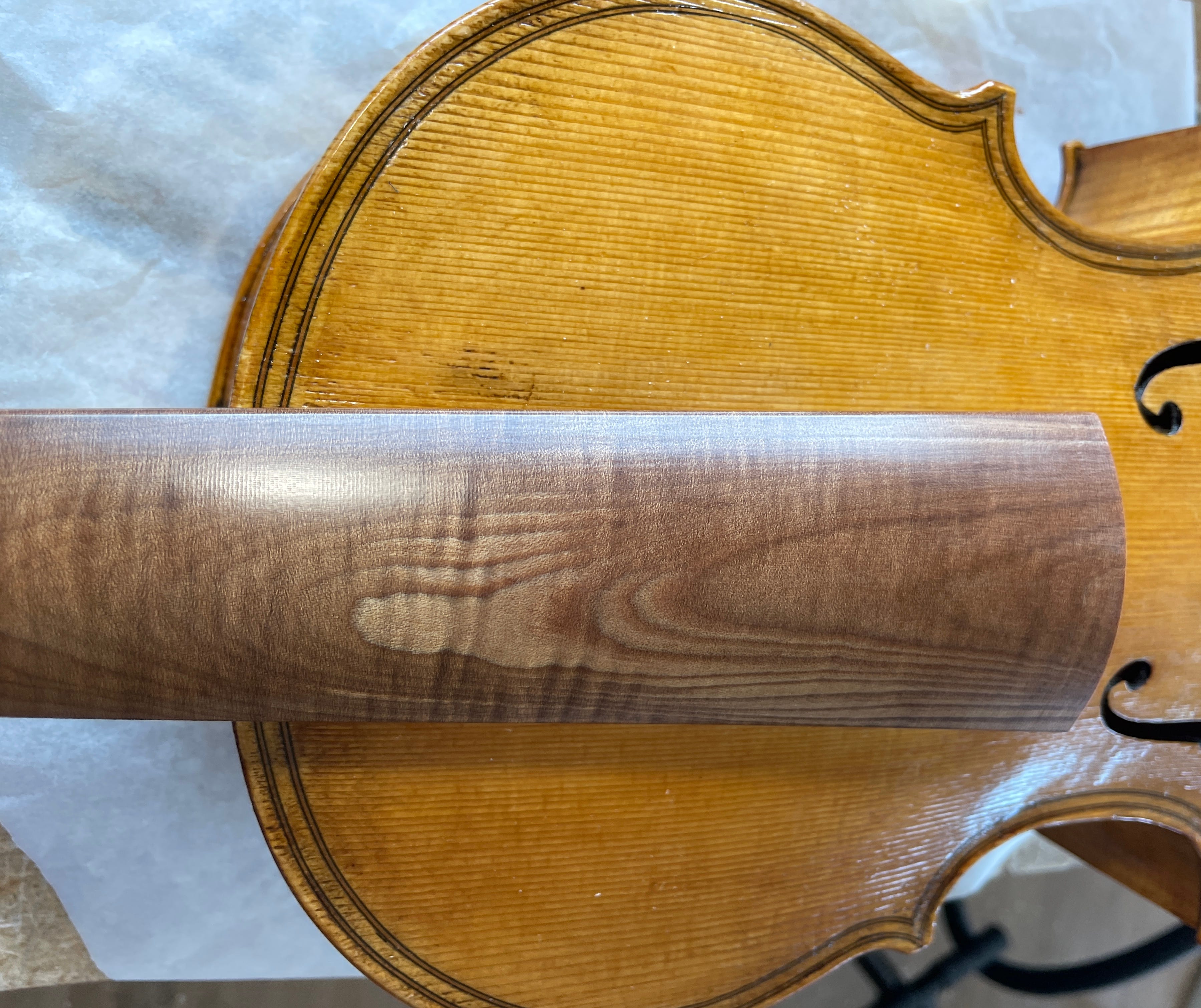
Last month we had the opportunity of a further comparison: we changed the fingerboard of a client’s instrument from a composite baroque with a Sonowood veneer, to a solid Sonowood one. And the impression is confirmed. Sonowood sounds better.
If you want to try one of our gorgeous da spalla cellos with a solid Sonowood fingerboard, get in touch!
Thank you for reading and being with us. Next week we will continue our series on our trip to the Vermillion National Music Museum, showing you two outstanding small cellos. Stay tuned!
Are you a luthier interested in making a Violoncello da Spalla?
In the archive of this newsletter, I documented the whole process, sharing measures and templates. You can check the index and some of the posts at this link, and if you subscribe to a paid plan you have instant access to all the posts and to a private chat where you can ask me any question.
Comments
Nothing yet. Say the first thing.
Sign in to join the conversation.