
Regarding my prior posts:
And:
I didn’t know, yet, how to use a spark gap to enhance and control ‘apparent’ overunity (more energy which comes ‘out’ of a circuit or device than what we have to pay for which goes ‘into’ that device).
The Konzen shorted coil is not part of his circuit. »»»
That was my oversight - and Konzen’s as well.
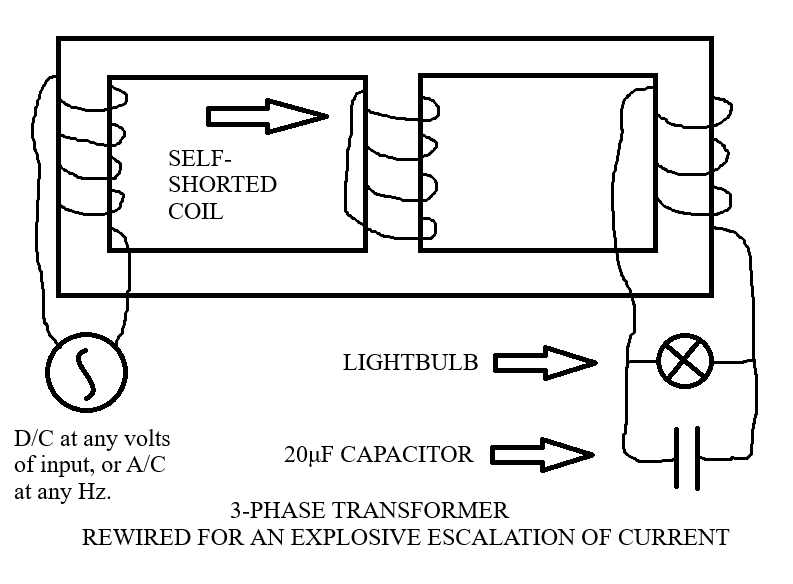
The shorted coil is an extra coil added to a two-coil transformer that does not exist according to conventional engineering practices since: why would you want to add a coil which connects only to itself? It doesn’t make sense from a conventional viewpoint.
But from a “free energy” viewpoint in which we want more energy to come OUT of a circuit than whatever we have to pay for going INTO a circuit, in this case, it makes perfect sense since the shorted coil does what Eric Dollard and his participating member of his audience helped elucidate for us:
Of course, the utility of a self-shorted extra coil on a transformer, or in a situation of an air-core coil coupled to two or more other air-core coils, becomes apparent when we add a surge arrester to this self-shorted coil:
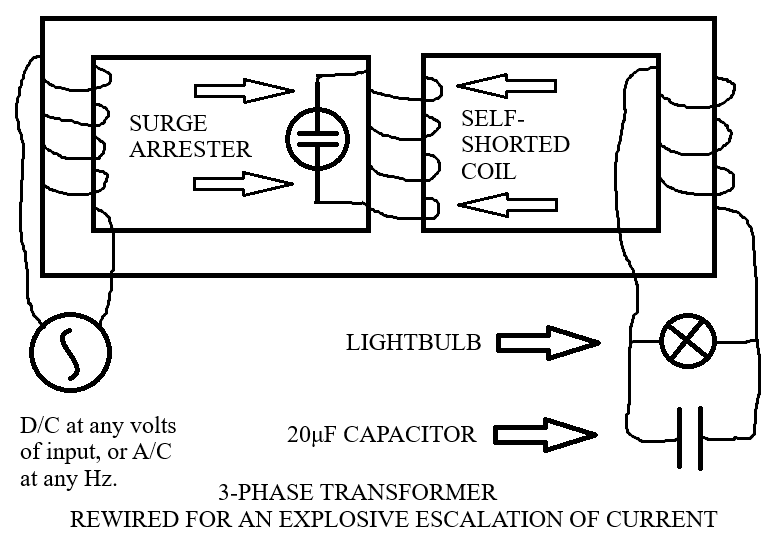
We’ve electrically isolated a gas-filled surge arrester so as to protect it from the entropic, and negentropic, influences which these various impedances could impact if they were all electrically linked together. But we don’t electrically link them together. Instead, we magnetically couple them together so that each can operate independently of the other yet contribute to each other.
You could say that this mutual inductive coupling is a sign of mutual respect and cooperation in which each helps the other, and benefits from the other, but neither one gets in each other’s way. »»»

So, like the method of regulating a surge demonstrated in a prior post, I was able to take the Graneau Simulation and extend how long it takes to explode. And by progressively putting off when it explodes, I’ve made it more likely to be regulatable.
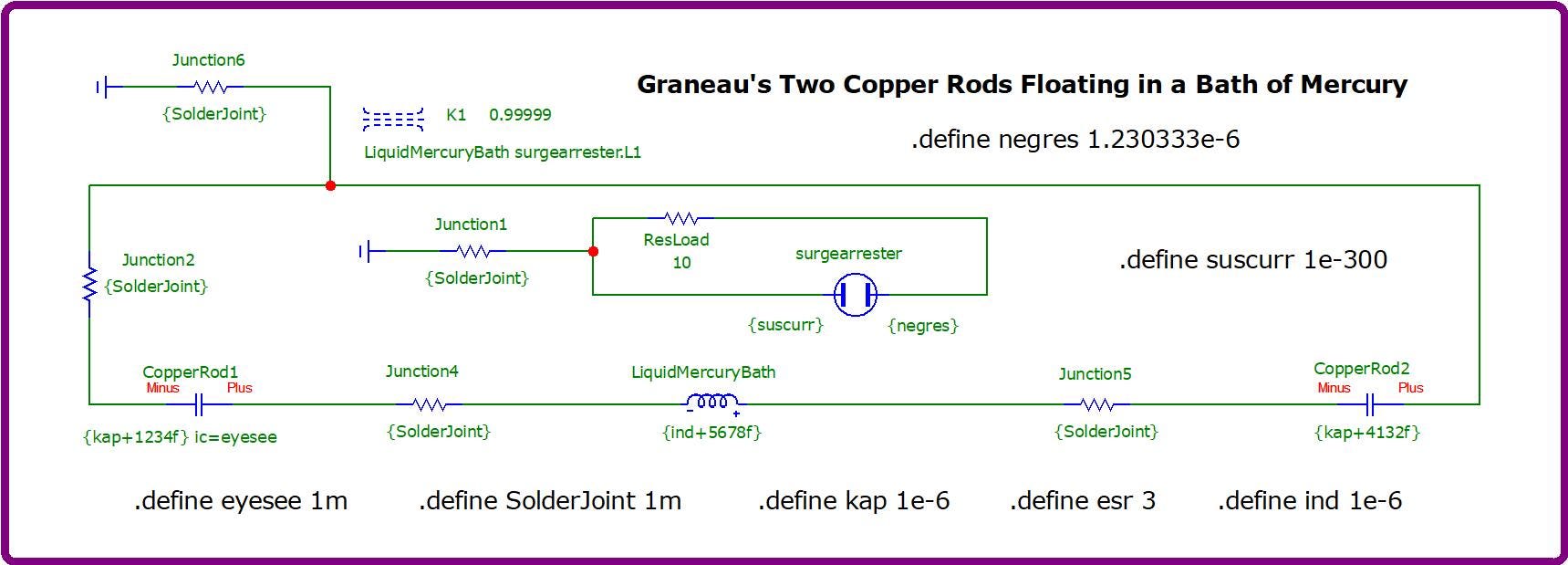
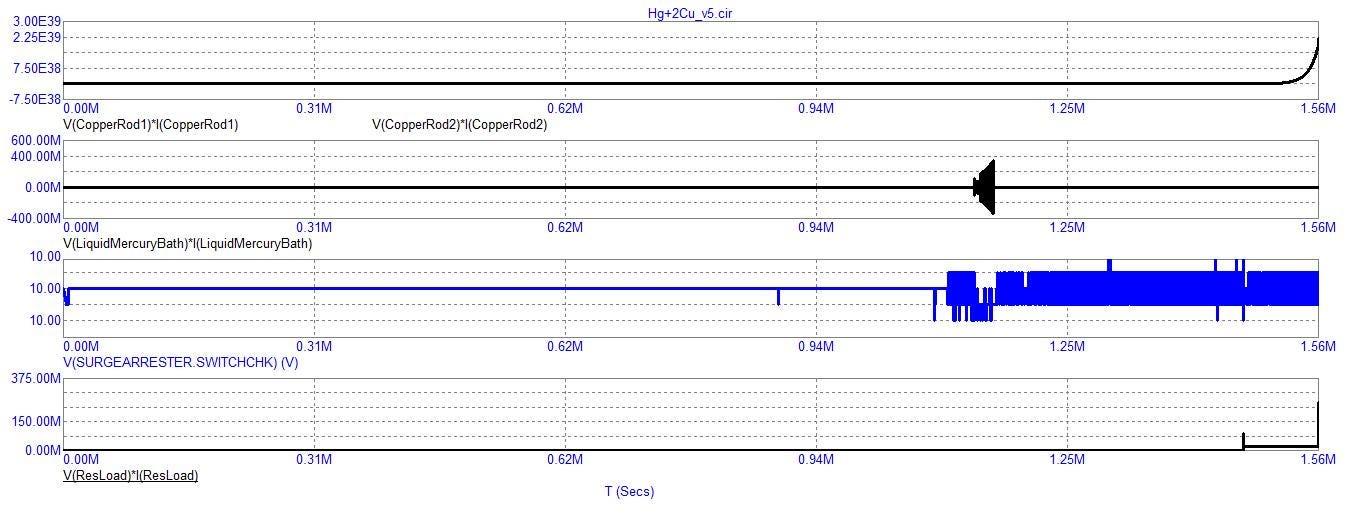
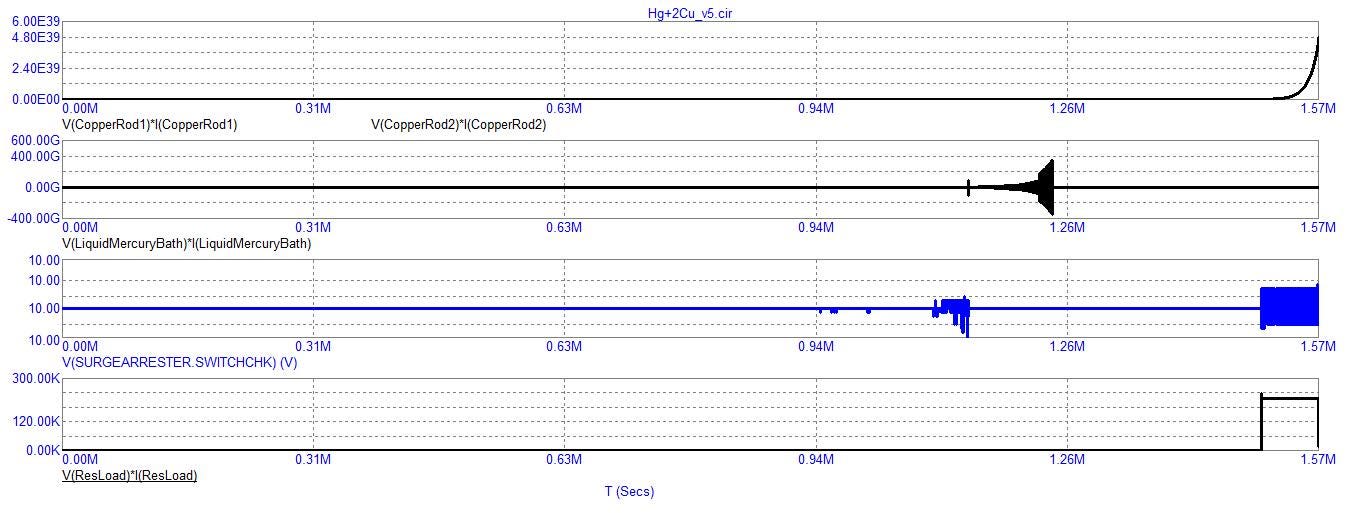
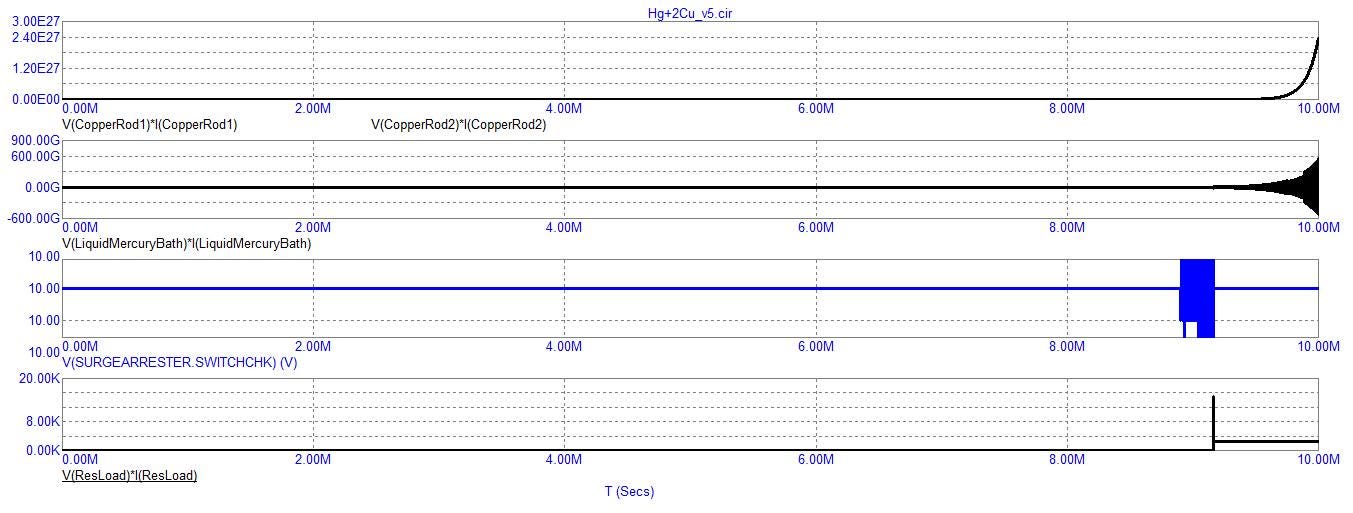
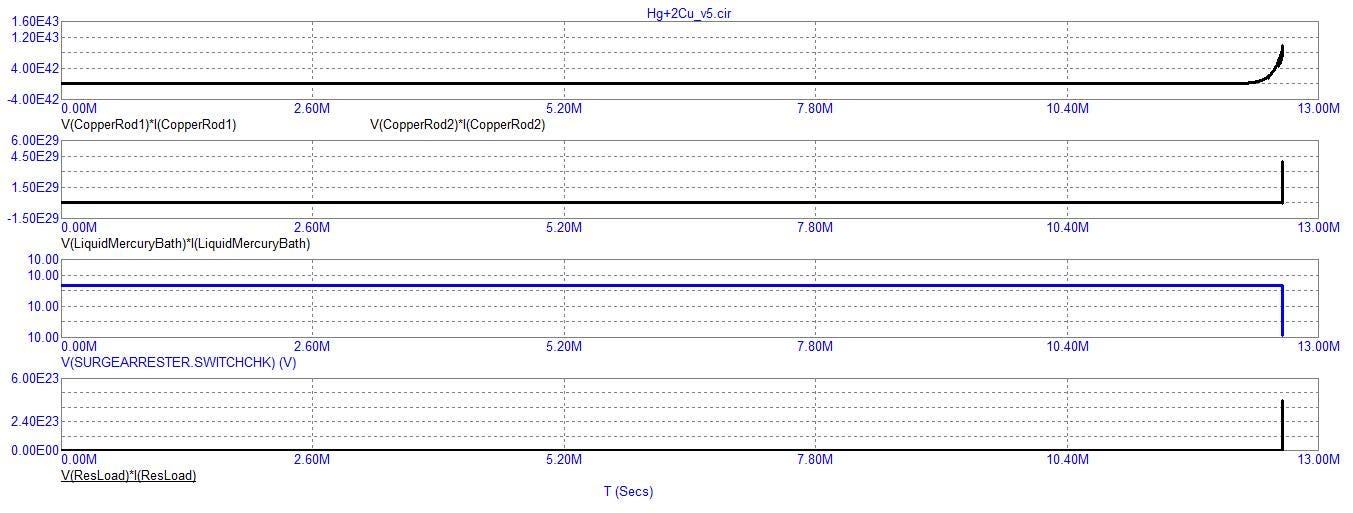
By increasing the capacitive reactance of: “CopperRod1” and “CopperRod2”, I’ve been able to slow down the rate of escalation of “free energy” (energy I don’t have to pay for), and -thus- slow down when this circuit will suddenly explode. This makes it more likely that regulatory methods other than those which are herein simulated could be employed to thwart the self-destruction of this device.
Here are some examples of output tracings wherein I slowly increase the capacitances of “CopperRod1” and “CopperRod2” (but keep steady the inductance of the lone coil in this circuit since raising its inductance any further than 1e-6 Henrys (“.define ind 1e-6”) would kill the apparent overunity of this circuit:
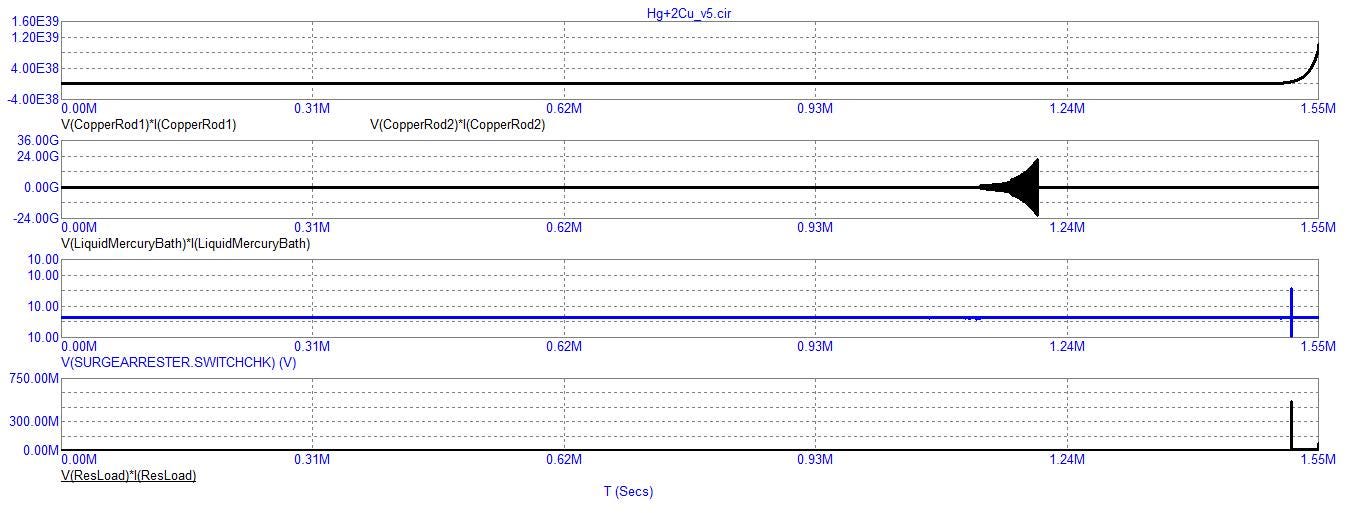
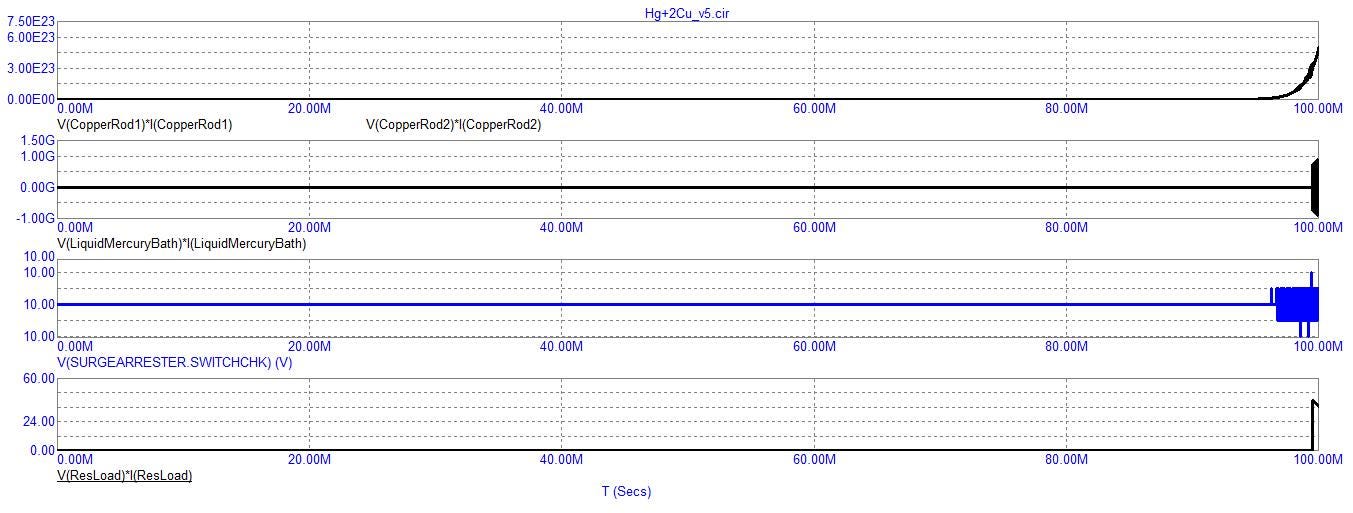
This is exactly what happened in two previous posts.
Continuing with demonstrating the increase of the two capacitances of this circuit to 10 microFarads, each, which severely dampens this circuit’s tendency to surge (but does not kill this tendency):
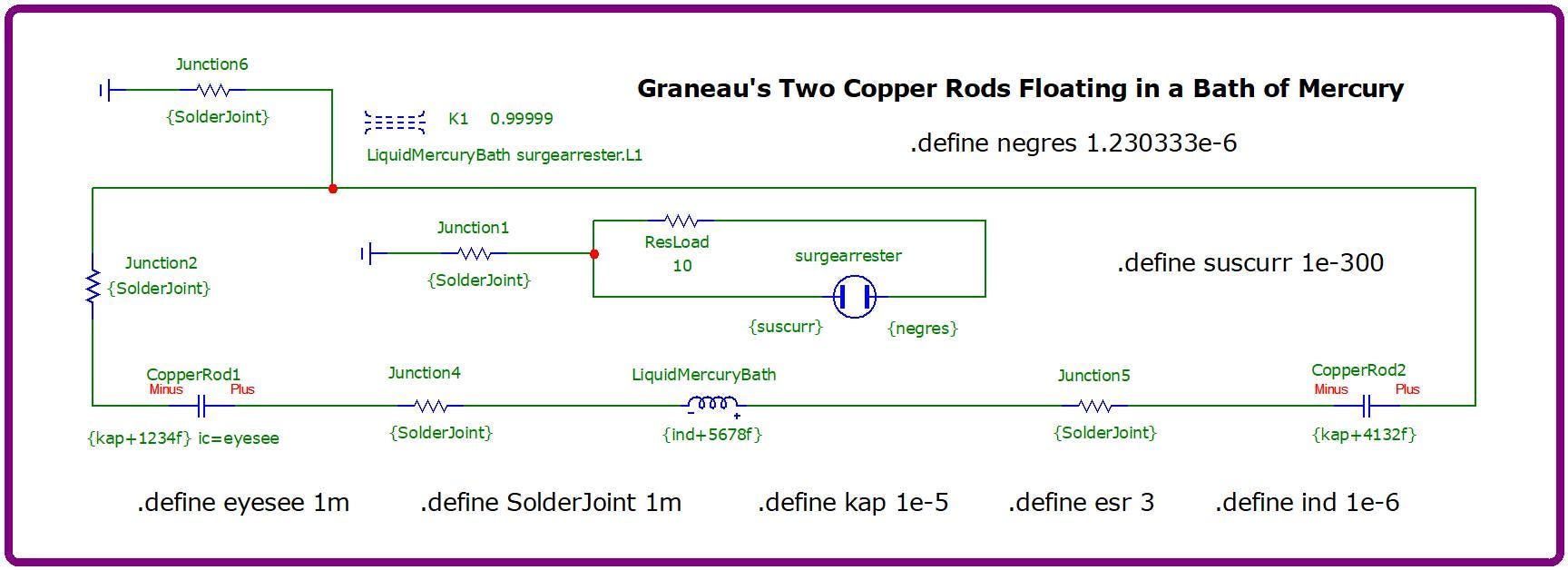
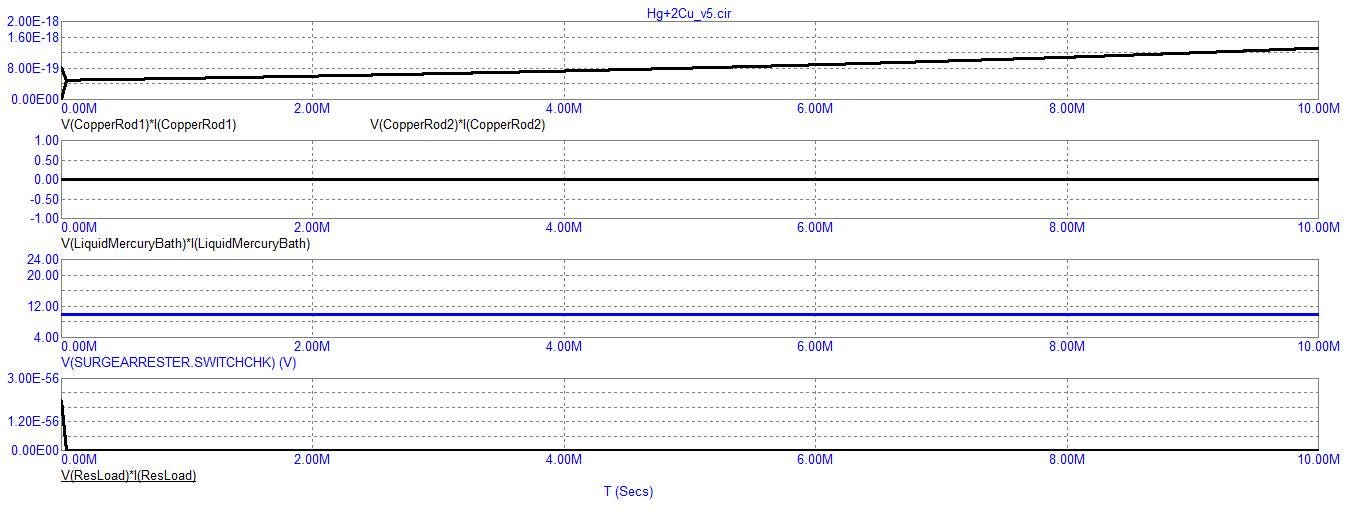
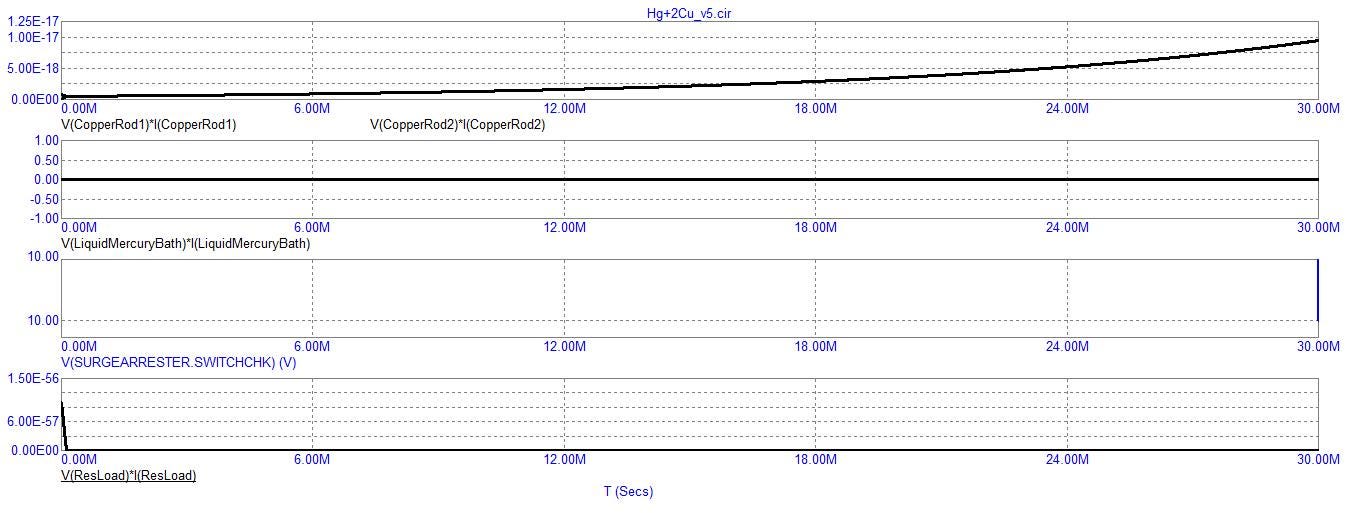
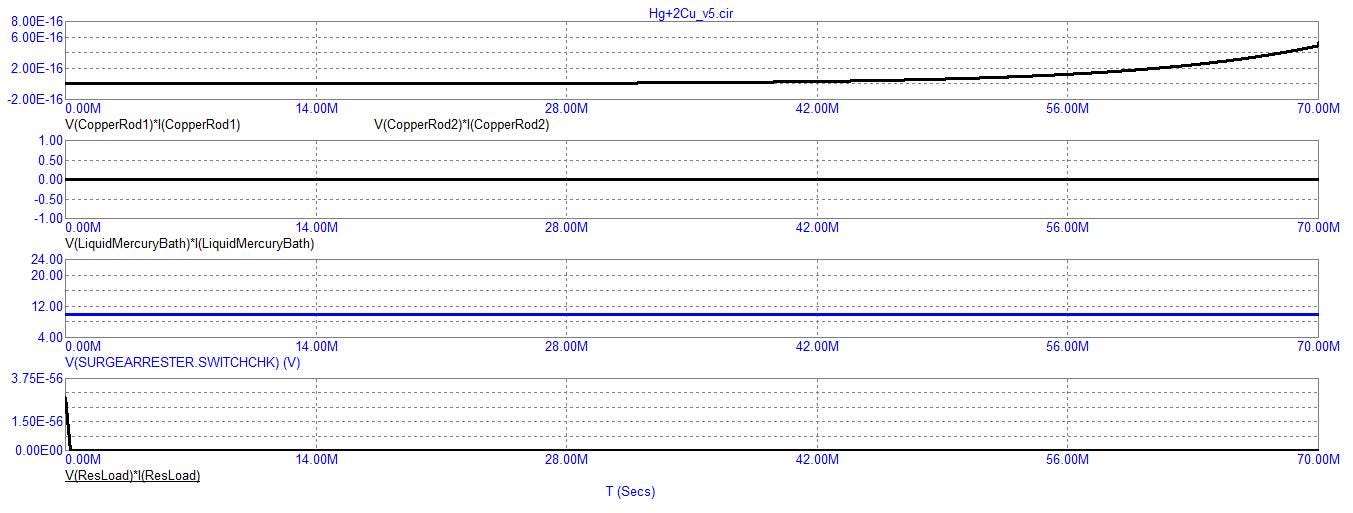
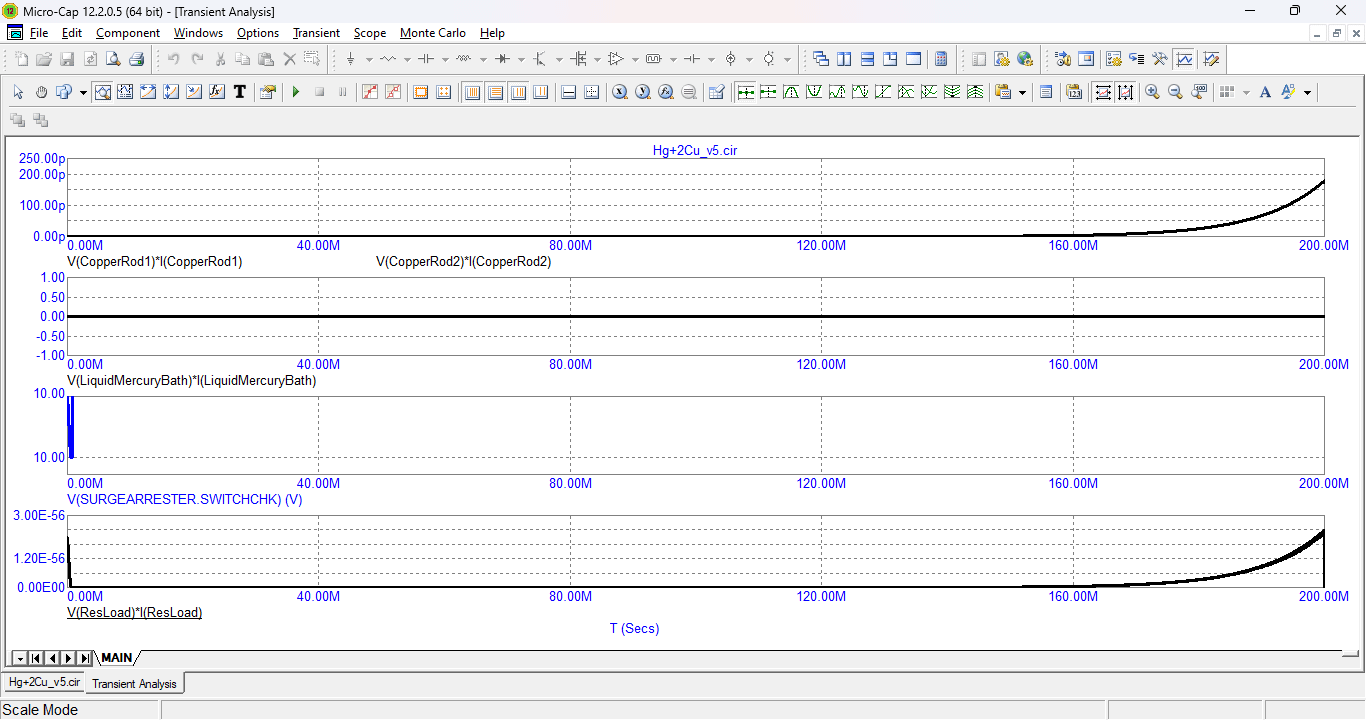
Download this exercise from my website or from my Google Docs account.
Comments
Nothing yet. Say the first thing.
Sign in to join the conversation.