
Last week I went to the galleries on Julia Street and across town in the St. Claude District. After, I felt really low. Why does so much art look like it was motivated by the desire to have an art show, rather than some deeper, urgency to express something essential? Much of the art I saw looked dashed off then put on the wall as if by force of habit. I thought about the words “half-hearted” and “disheartening” then I watched “The Dawn Wall” again.
A digital autopsy of my electronic devices would reveal the fact that I’ve watched “The Dawn Wall” more than a dozen times. The documentary tells the story of Tommy Caldwell and Kevin Jorgeson’s historic climb on Yosemite’s El Capitan. Until 2015, no one had even attempted to free-climb The Dawn Wall. In 2007, Caldwell began plotting the climb – this was after losing part of his index finger to a table saw, which most people believed meant the end of his climbing career. He studied the wall, climbing it in sections, and mapping out a possible (but still unlikely) route. Jorgeson joined him in 2009 and on December 27, 2014 the two began their ascent.
“Free climbing” means that ropes are used for safety but not to assist the climb. A portion of the route known as Pitch 16 required a 8.5 foot “dyno” a sideways leap across sheer rock. Caldwell had practiced the move hundreds of times on the mountain and on a replica he’d built on the side of his shed but had never landed it when they began their ascent. After several failures, Caldwell stared at photographs of the mountain and noticed some subtle grooves in the rock that suggested there might be another way. He plotted a 200-foot navigation – which included a difficult down-climb – around the 8.5-foot dyno that had him stuck. Jorgeson said, “This thing that had been shutting him down for all these years, he just looks at it with a new set of eyes and finds a solution.”
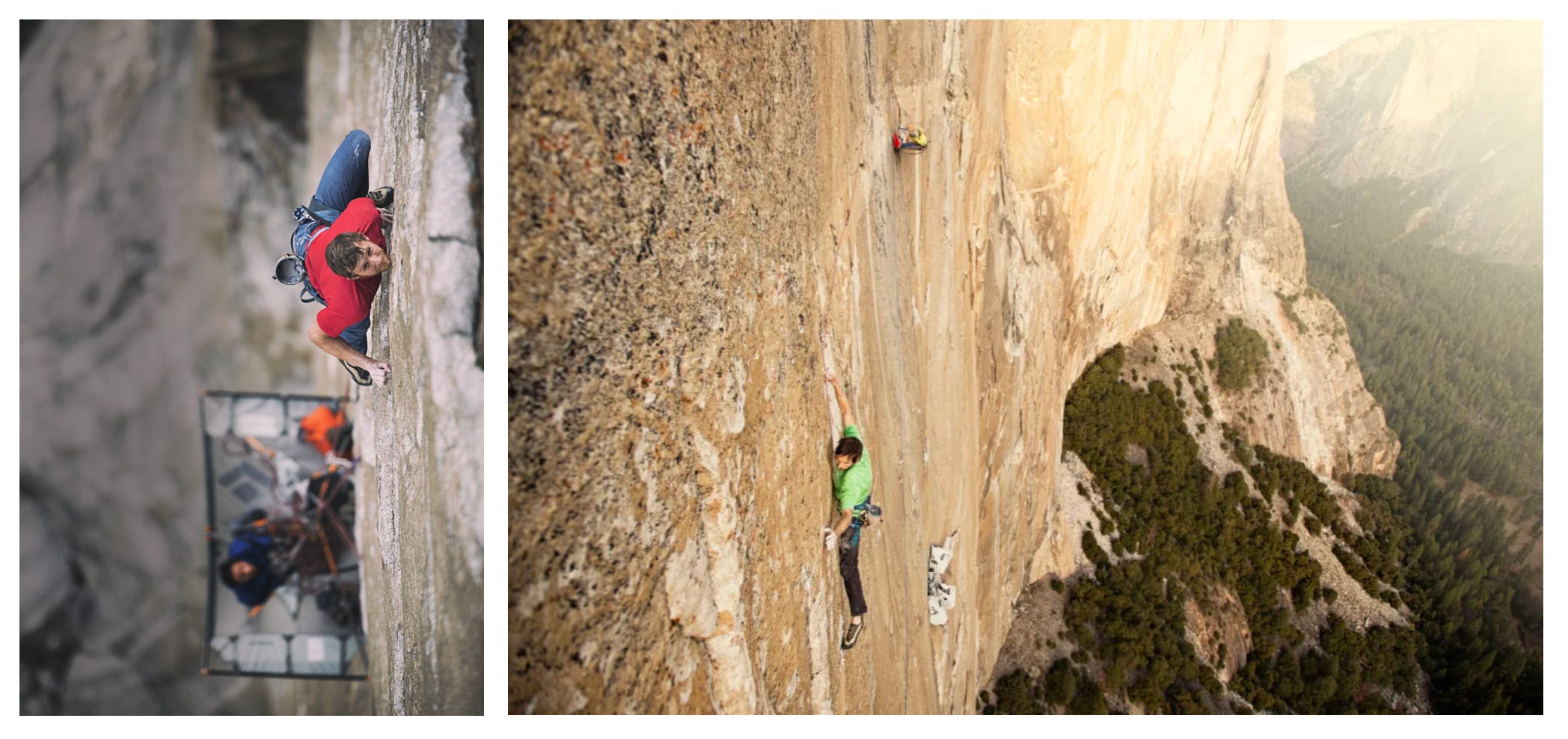
In bouldering – a form of unroped often indoor climbing – a route is called a “problem.” The beautiful thing about a problem – in bouldering or anything else – is that it can be figured out. Once a problem is identified, stated, or brought into form, it’s easier to see solutions, the moves that will get you through or around it.
Anyway…
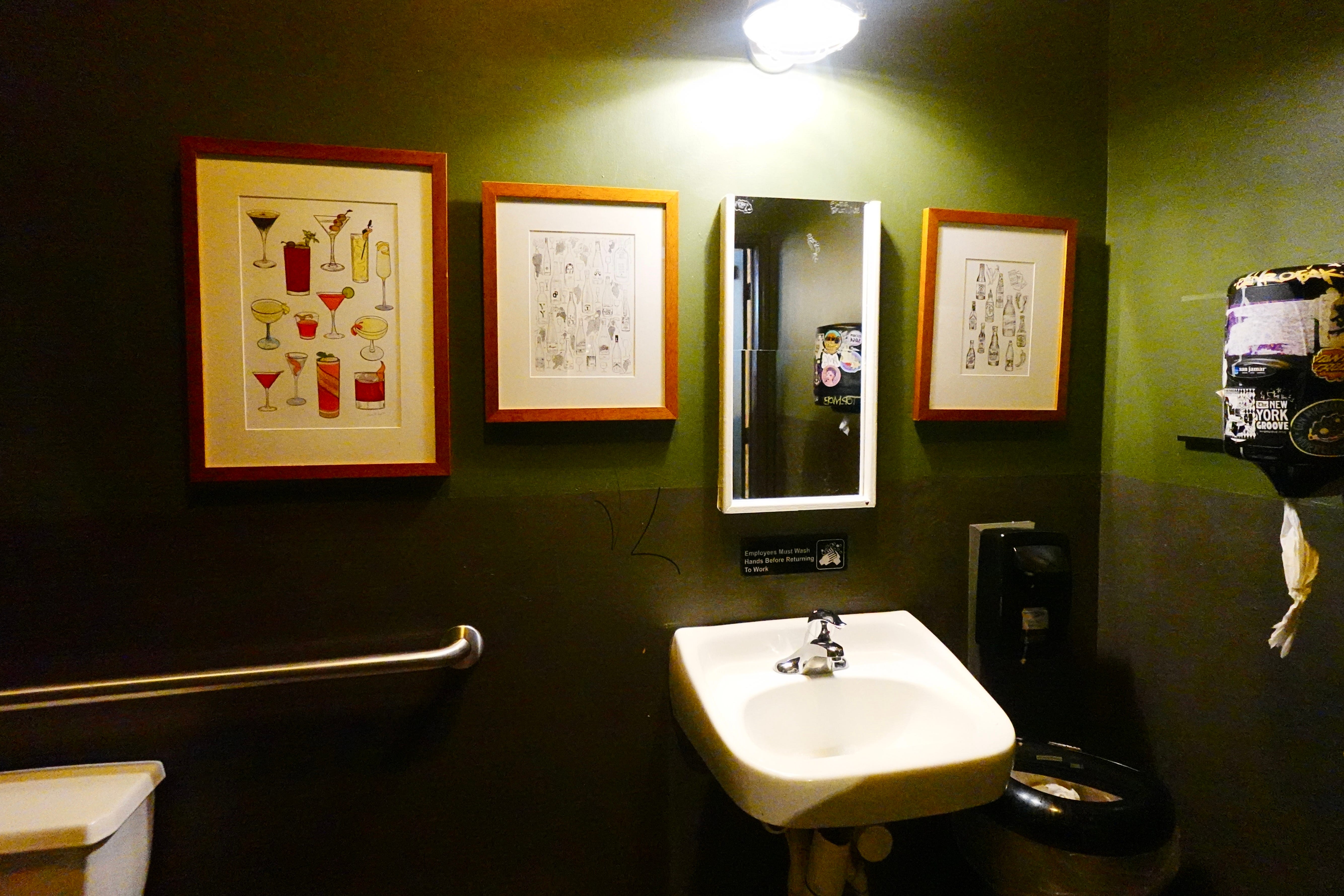
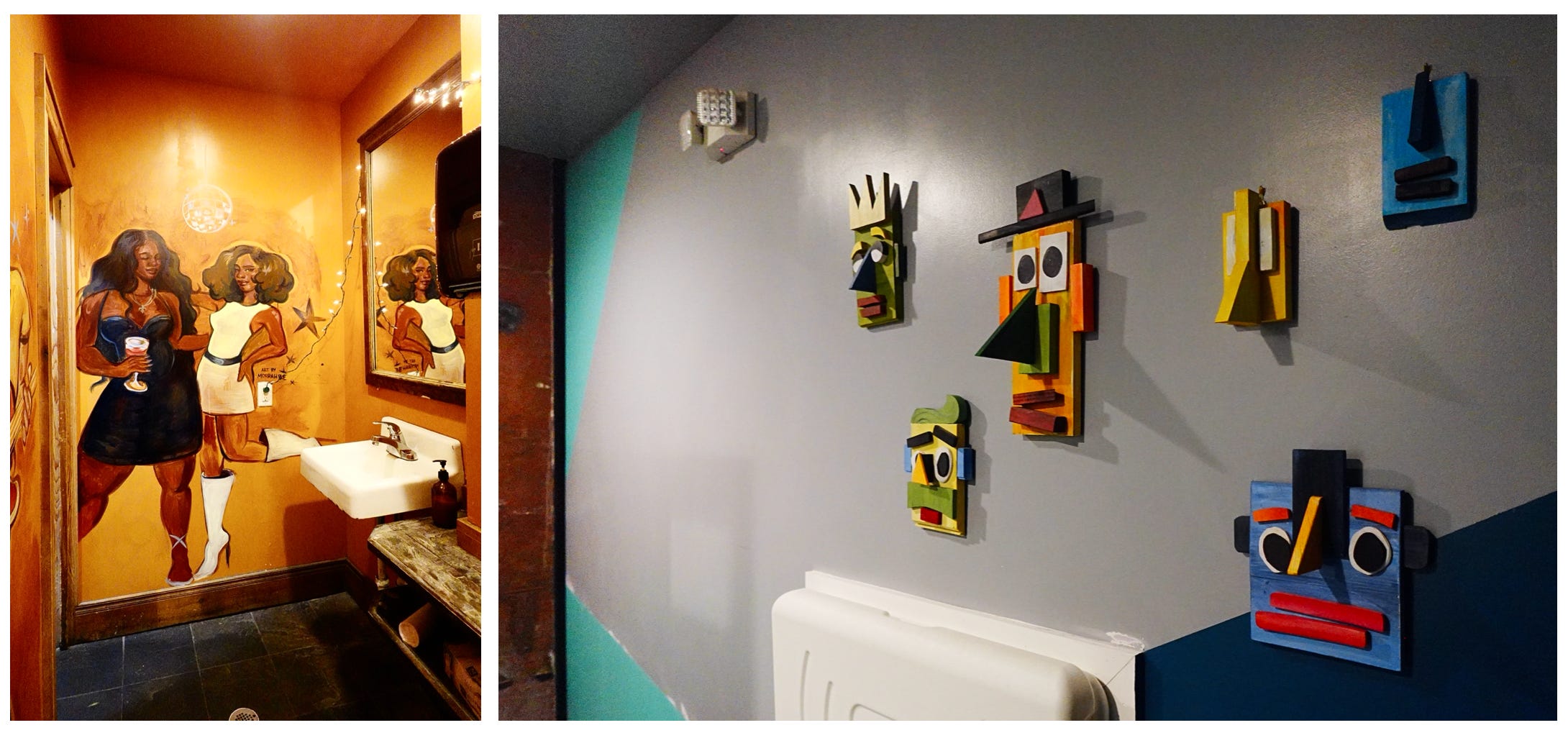
I keep hearing about and reading about the seismic shifts or the sense that things are about to shift in the art world and society in general. (“The monastery refuses to say where it is taking us.”) After the disappointment in galleries, the best art I saw last week was in a coffee shop. I also visited a series of “art installations” in Bywater bathrooms. Here’s the breakdown:
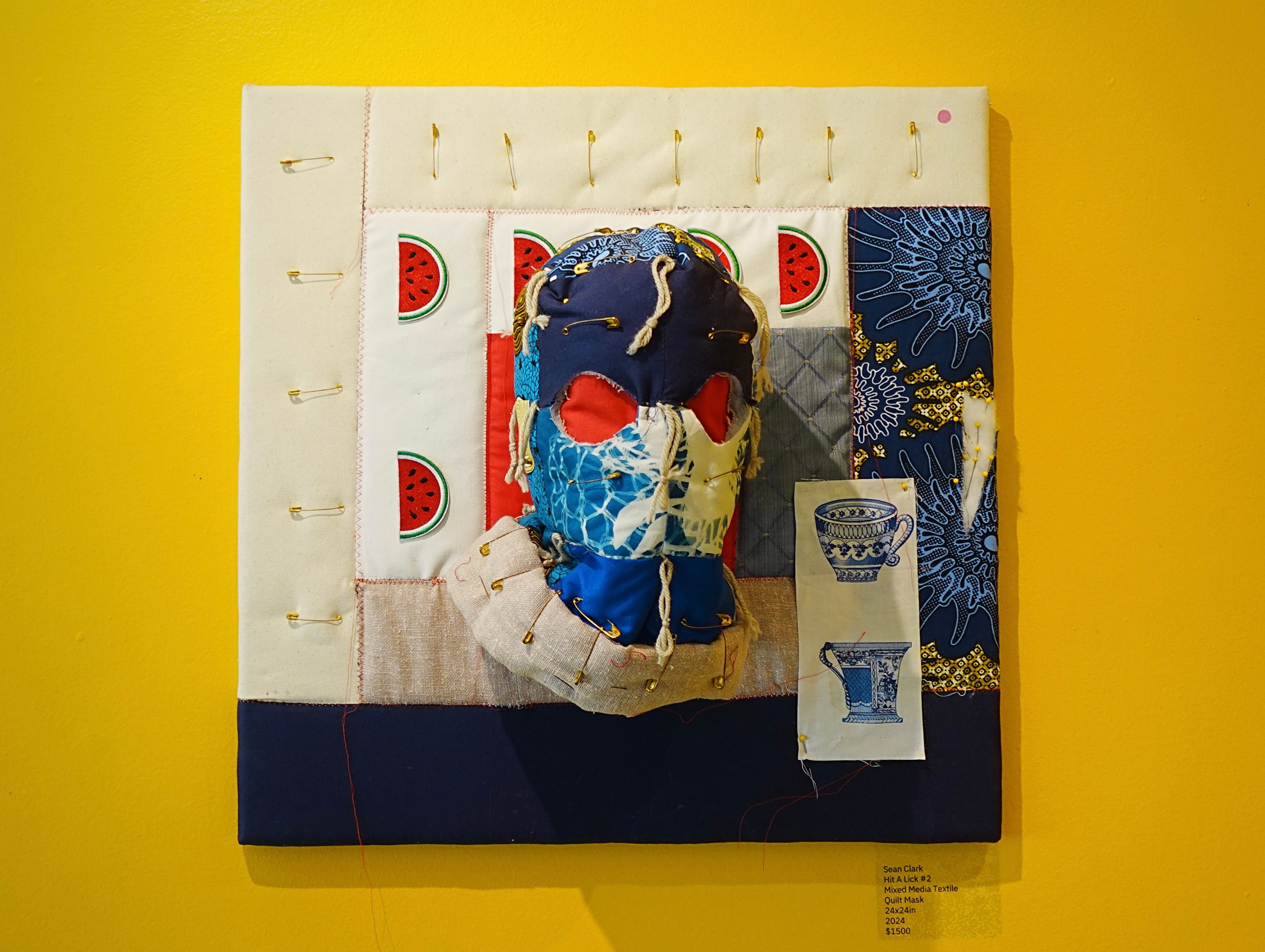
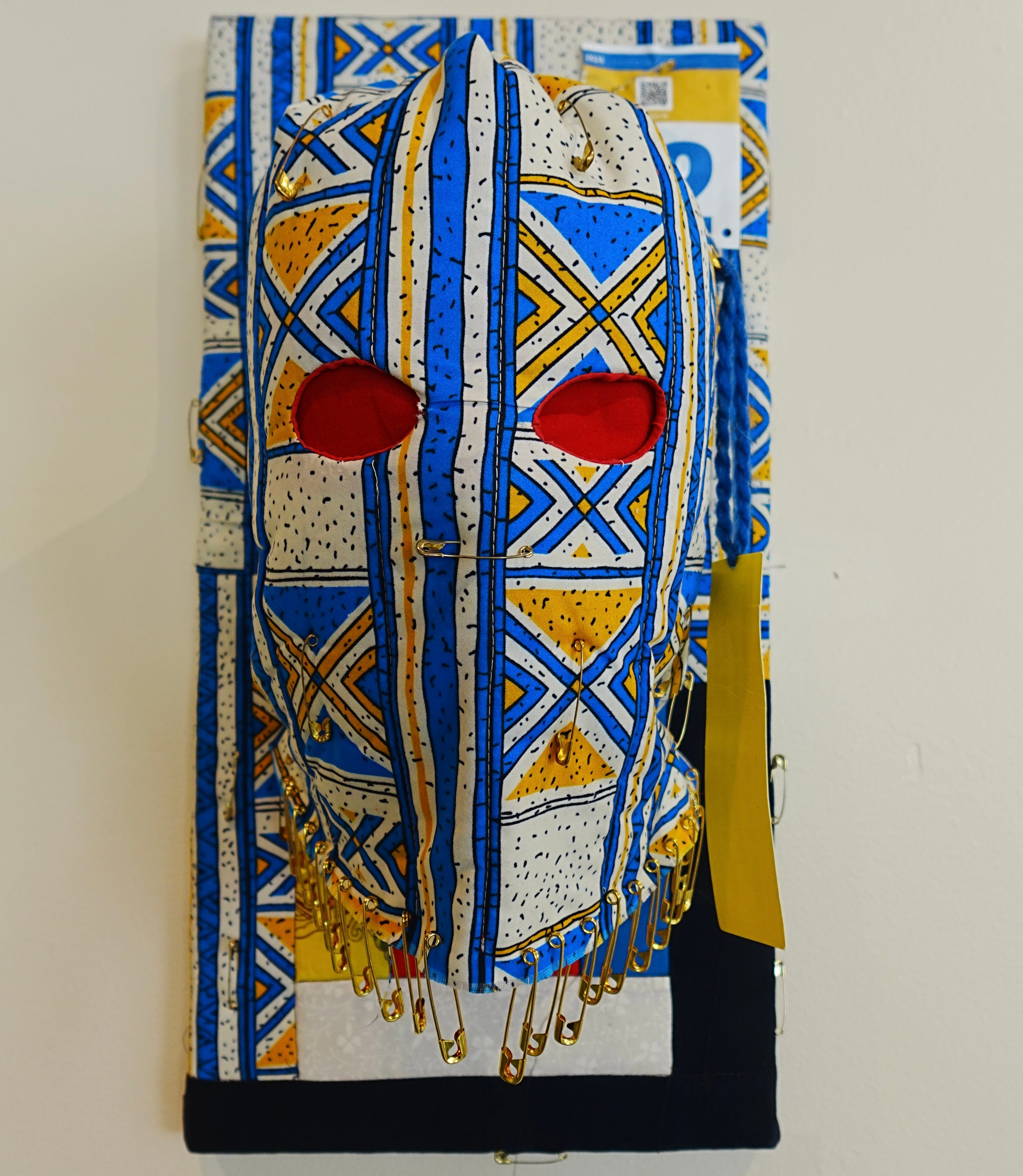
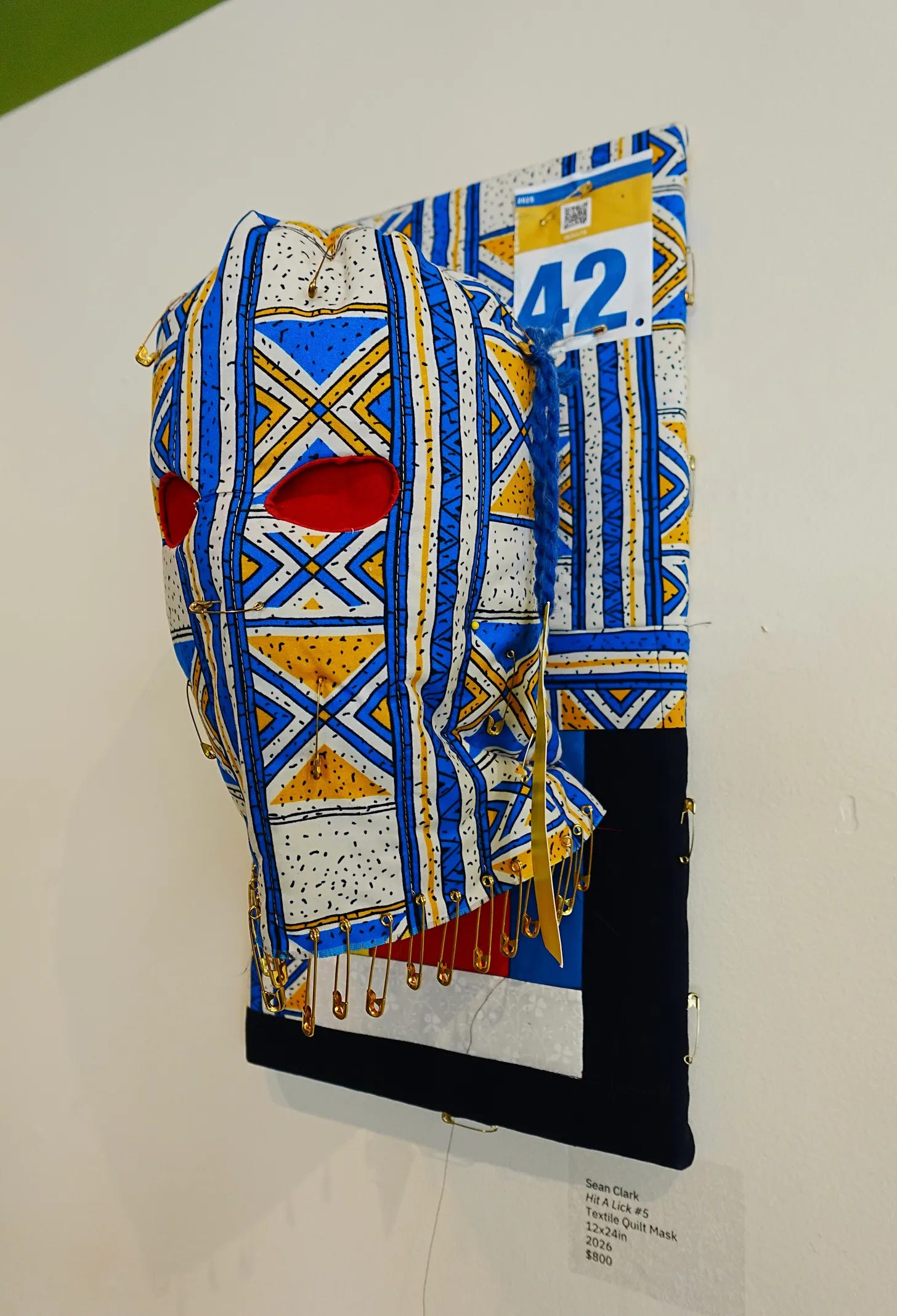
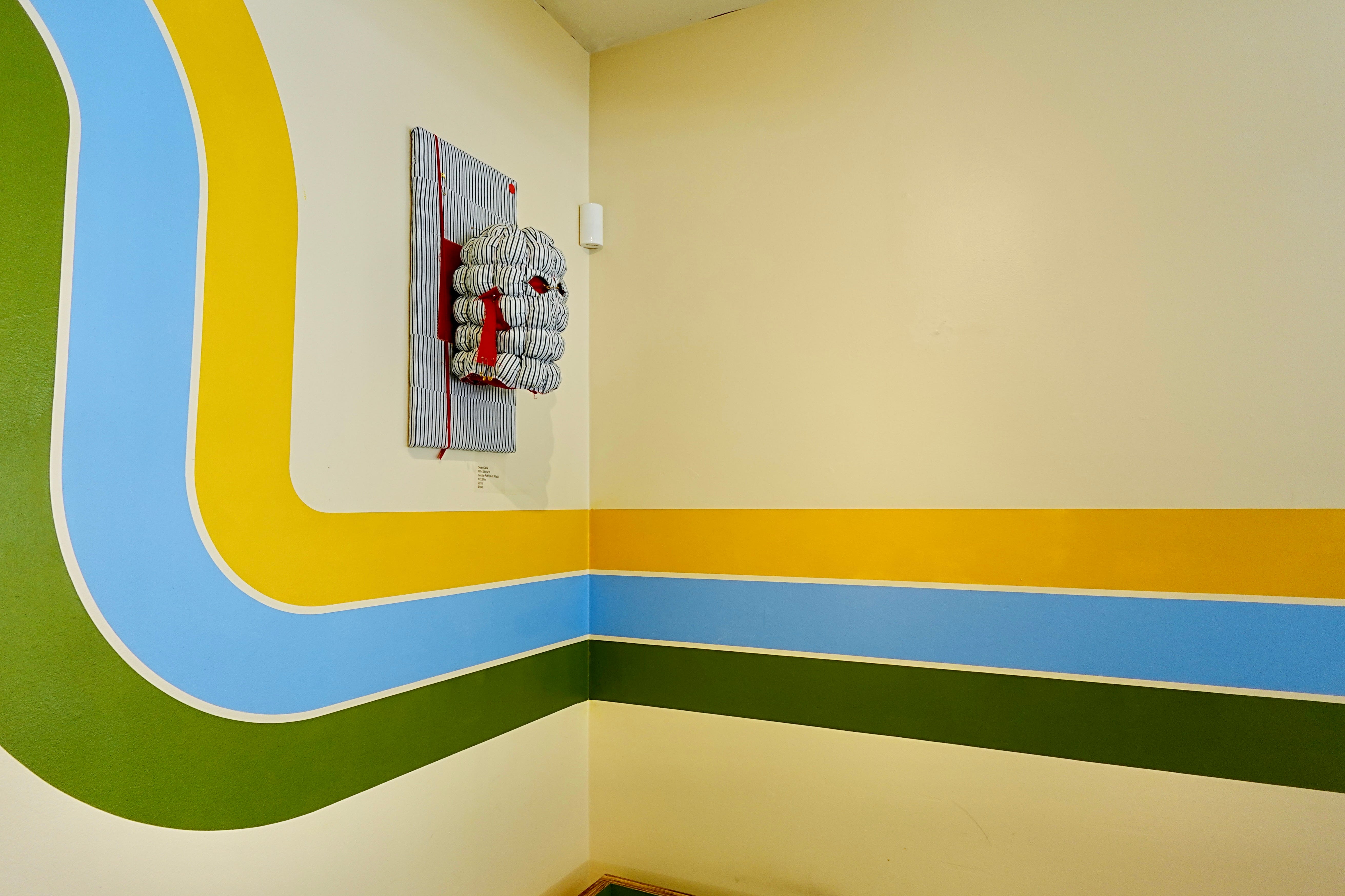
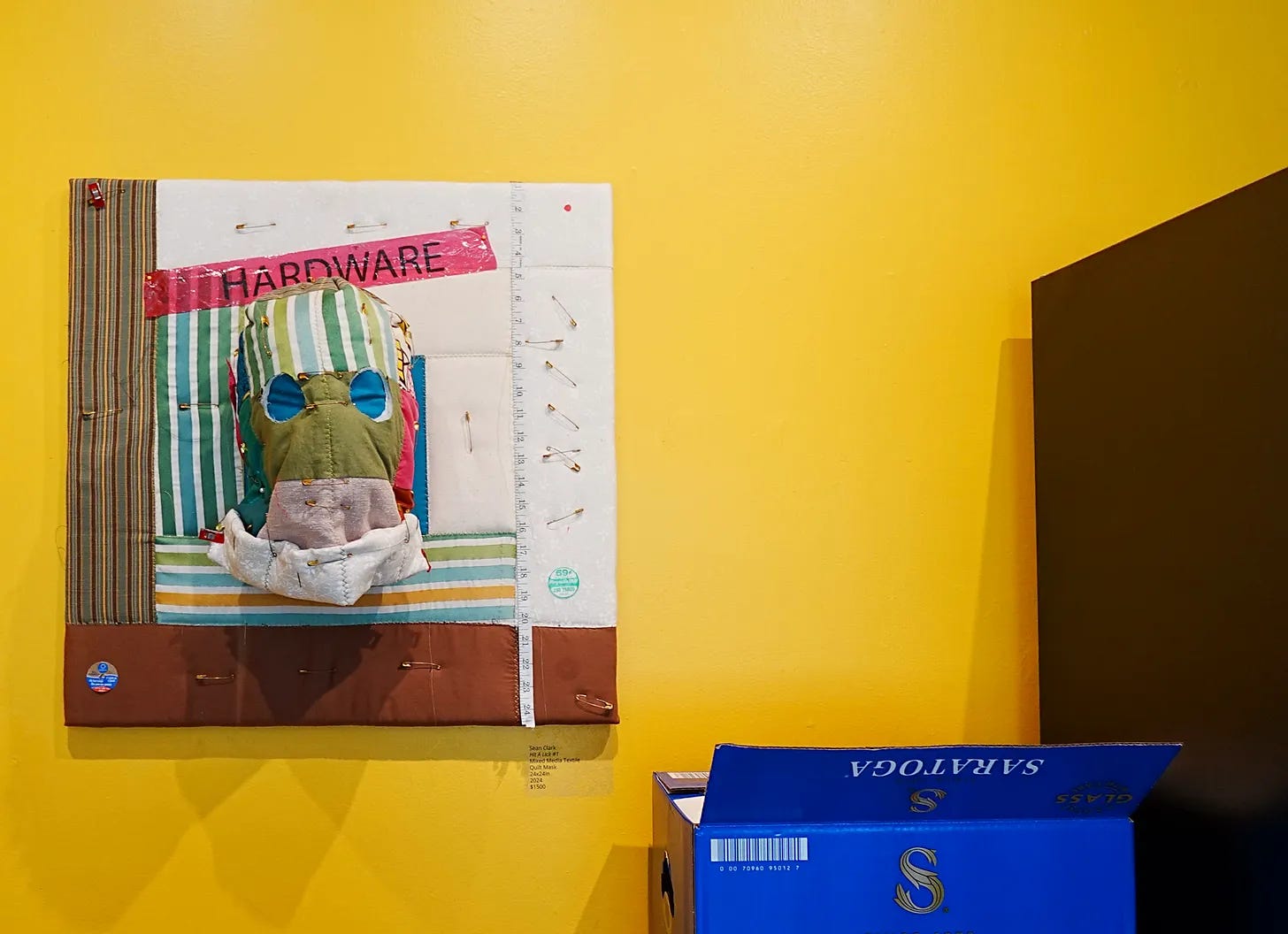
Coffee shops displaying art works is something of a tradition. These are (usually) modest-sized, two dimensional objects. They are (usually) modest-priced offerings by local artists that give a space an artsy anti-generic feel, but are not (usually) asking for prolonged contemplation or to participate in a larger critical dialogue. These are unusual times with unusual problems. I think Sean Clark’s work at Lowpoint is worth prolonged contemplation and it belongs in the discussion of contemporary art.
One criticism: Having gotten out of the hyper-verbal, semi-academic, sleepwalking mindset that often plagues galleries, I was bummed to read the artist statement on the wall. Atypical work in an atypical setting could take a more radical approach to the artist statement (including a hard “No”).
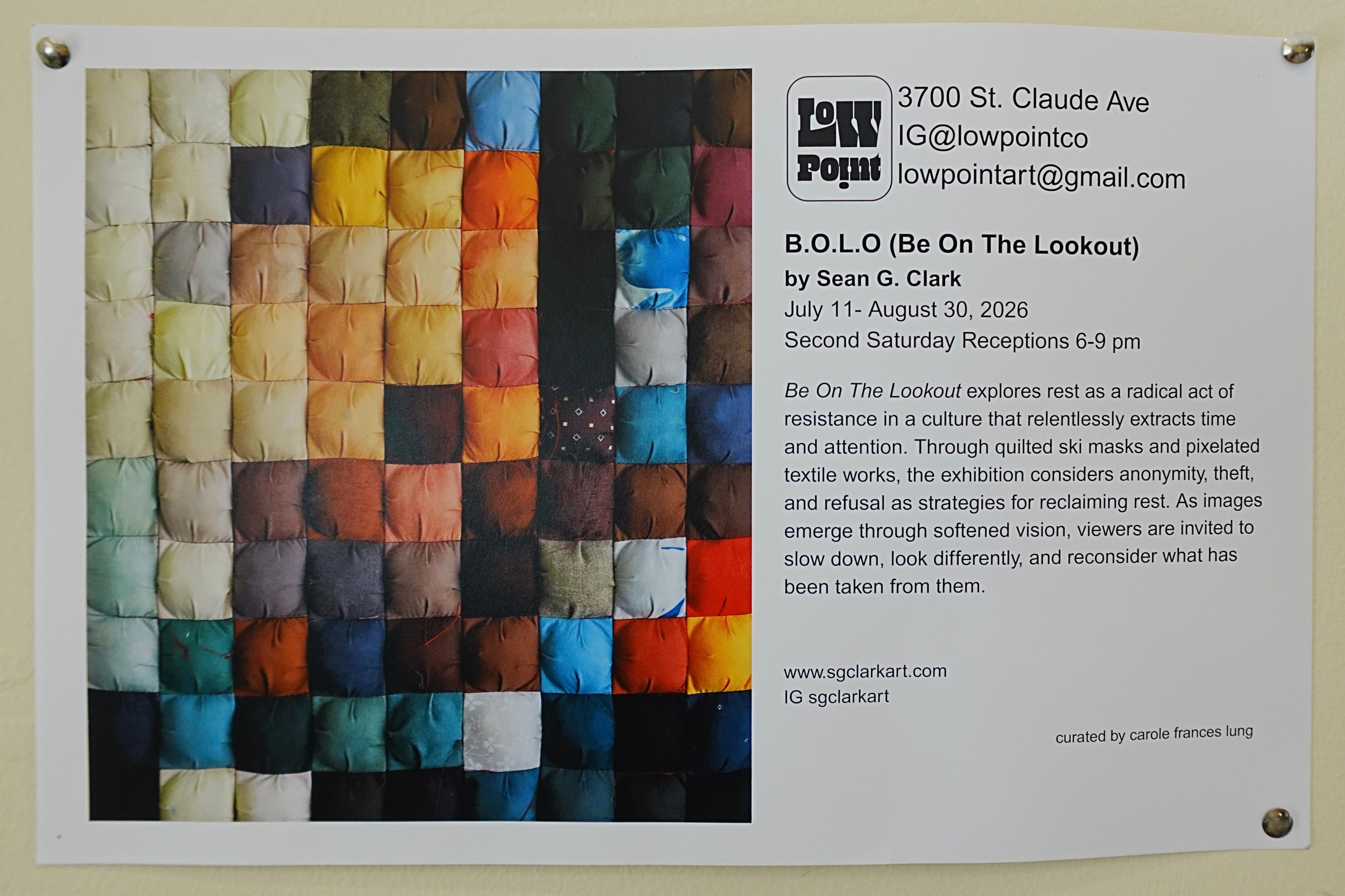
I’ll just keep saying it: there is ample space in the title and materials list to embed a few ideas without talking over the actual art, which IS the artist’s statement. The fact that artists have had to grovel with words for access to galleries, grants, and other opportunities has resulted in the Grant Writing Effect on art and discussions around it. Alternative venues could offer new opportunities to rethink tiresome habits and conventions. Including abolishing them.
The art itself is so good and the curation by Carole Frances Lung is quietly smart. While a coffee shop is not a white cube (I like white cubes) it’s a place whose walls have something else to offer. Disappointment drove me to think about what galleries are for. This show kicked that can a little further down the road.
🪨 🪨 🪨
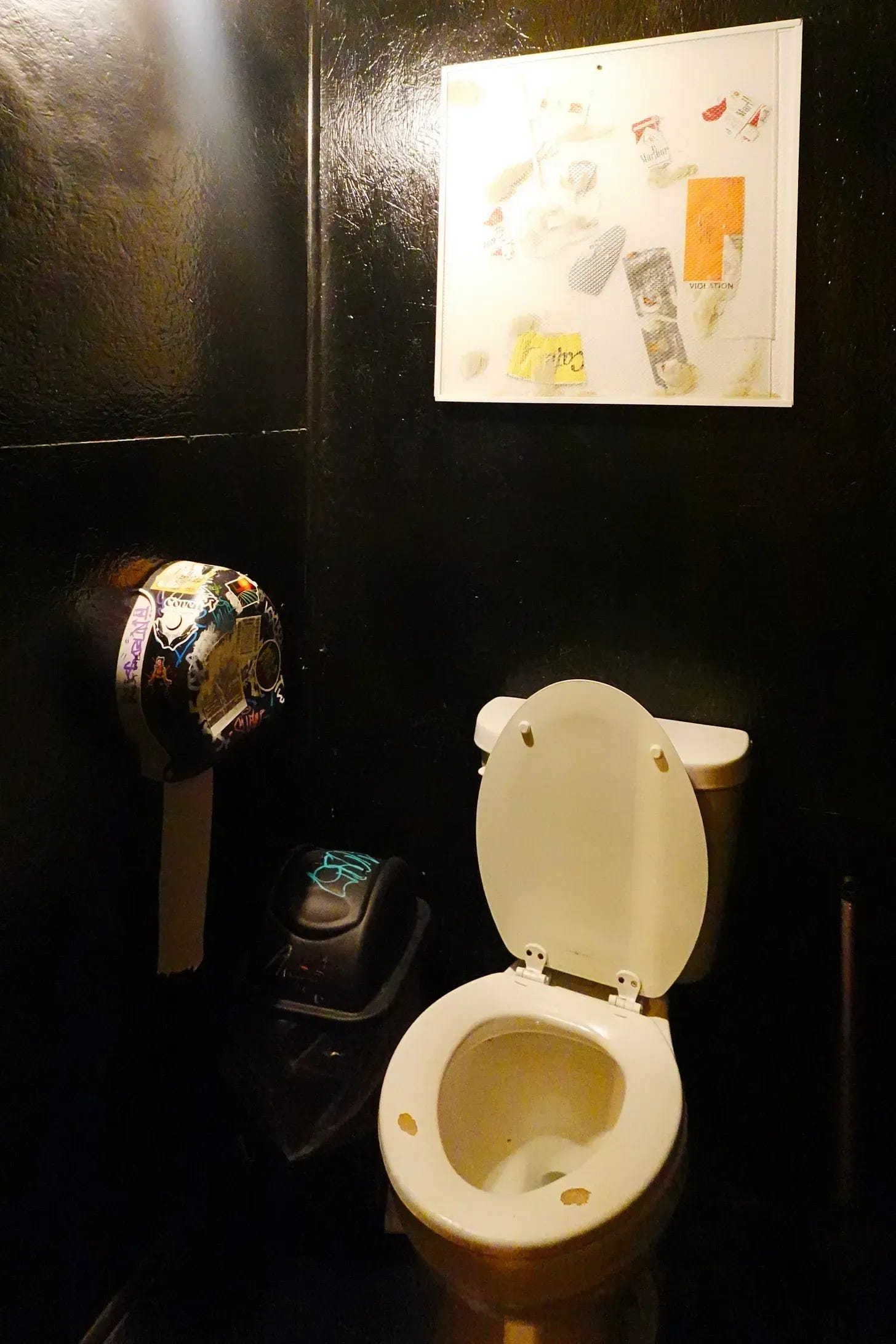
This series of exhibits organized by Anna Giordano (of Anna’s) is taking place in the bathrooms of bars in the Bywater. So far, I’ve seen four of the eight. Three functioned as viewing stalls with pictures or sculptures on the wall. In one, the artist had painted a mural. The website calls them “art installations” so I was expecting something more Yayoi Kusama, but the art (so far) appears in traditional art formats. I‘m keeping my fingers crossed for something weird, an unpredictable medium like sound or light, or something Duchampian that interacts with the theme and setting. Anyway, I didn’t have the gallery blues after visiting.
It’s a comical errand, going into a bathroom to look at art (especially because with two friends, I went in, looked at the art, and left, moving on the the next spot. It’s fun, but what I really appreciate about the project is it demonstrates the radical act of creative thinking. It pushes against habit and expectations of what an art space is. Or a bathroom space is. And the other great thing is…there are no artists statements.
🪨 🪨 🪨
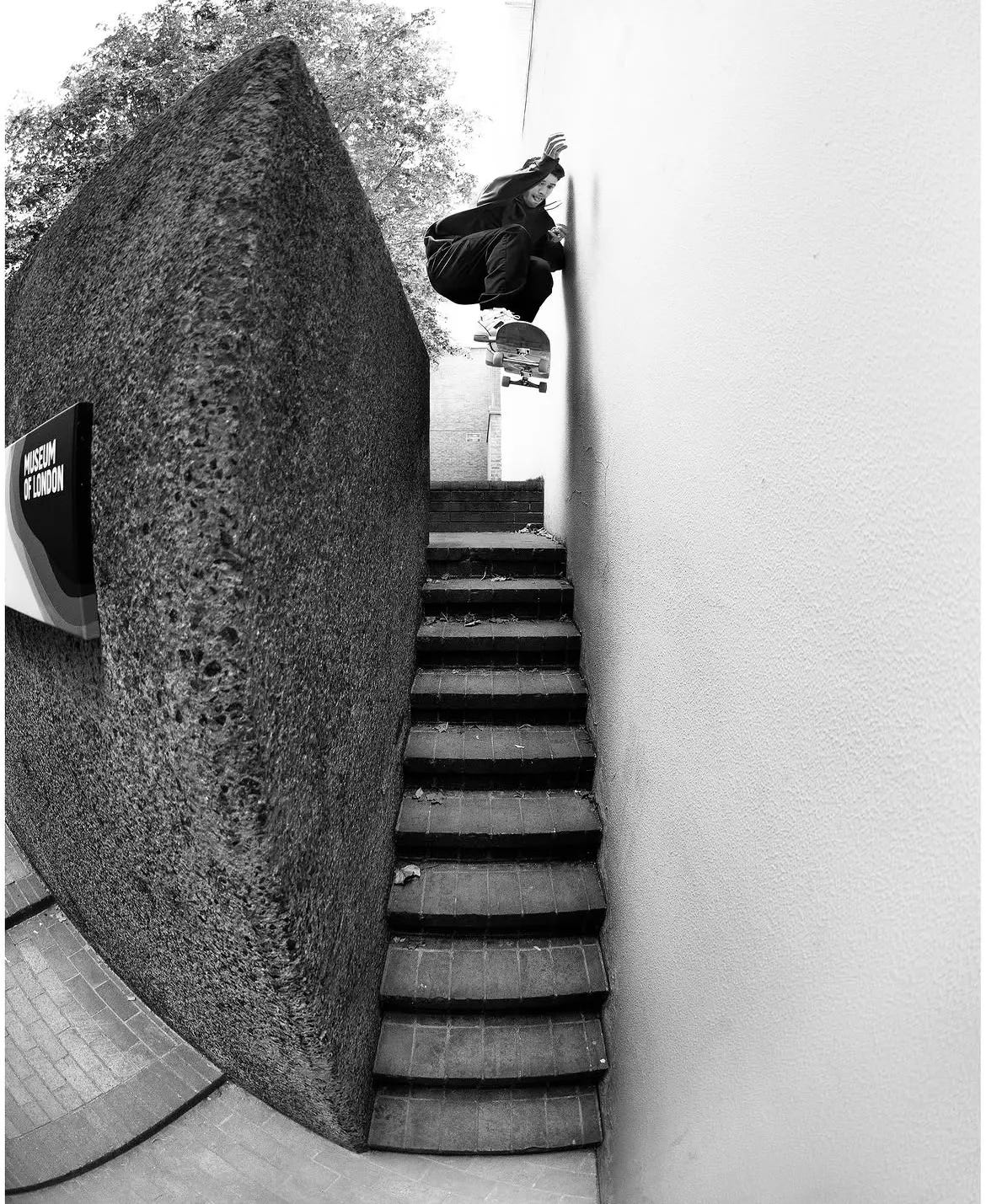
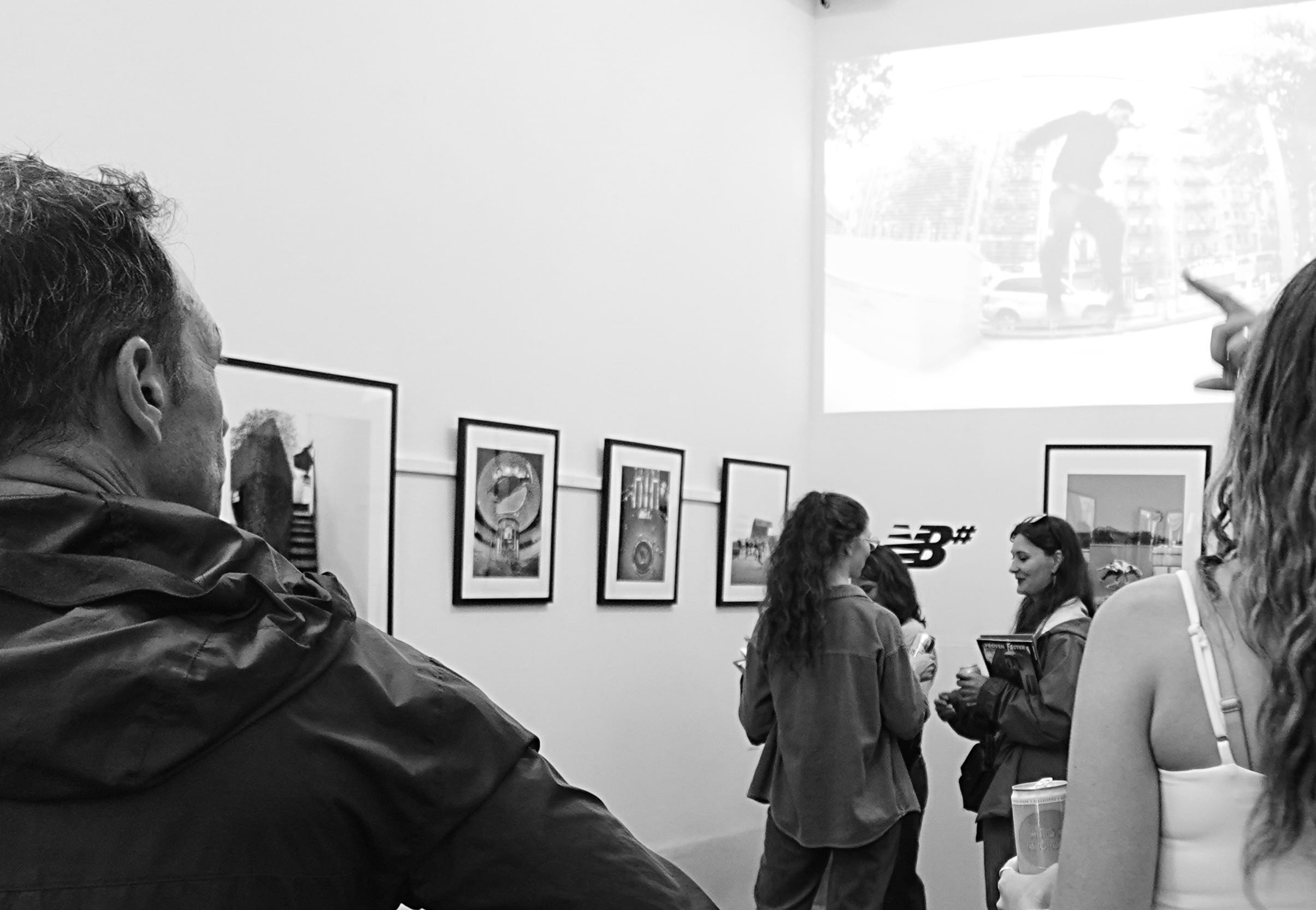
According to Philip Santosuosso the last time we spoke, what this space is and what’s it’s for is to some degree still open-ended. Regardless, I’m here for it. The walls of a gallery are not the typical landing spot for Jake Darwen’s photographs of skateboarding, but in this meticulously hung show, they functioned as the art and the natural launch point for conversation.
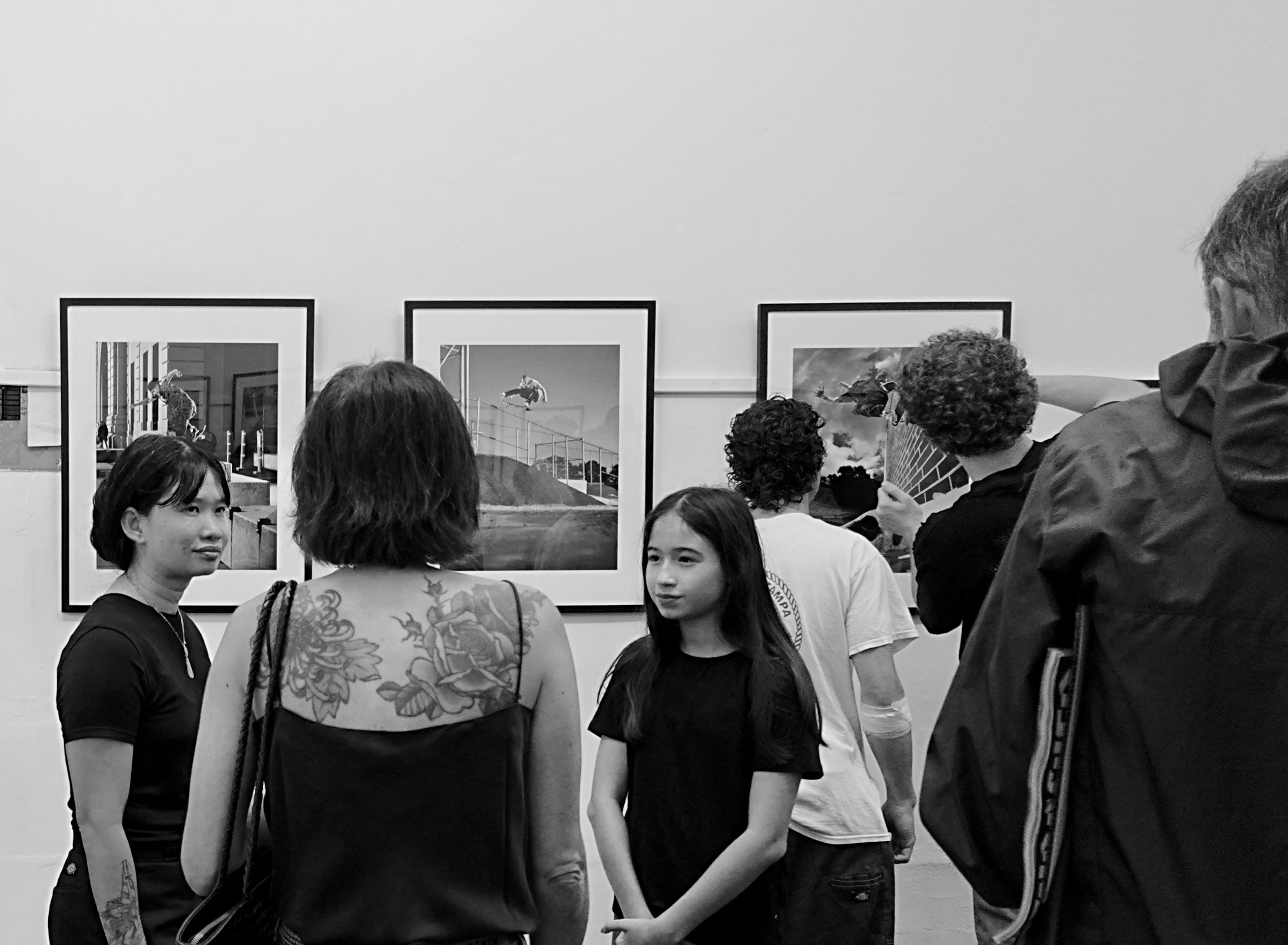
In skateboarding, an “obstacle” is the object used to do a trick. A ledge, stair set, or rail is similar to a “problem” in bouldering. An obstacle, like a problem, not a bad thing, not something to shut you down. A problem or obstacle invites you to level up.
That’s all for this week. Please message or comment with your art-problems art-beta and thank you for being here.
xx,
🪨 🪨 🪨
Open up
Everything's waiting for you…
(I love covers so much.)
Comments
Nothing yet. Say the first thing.
Sign in to join the conversation.