
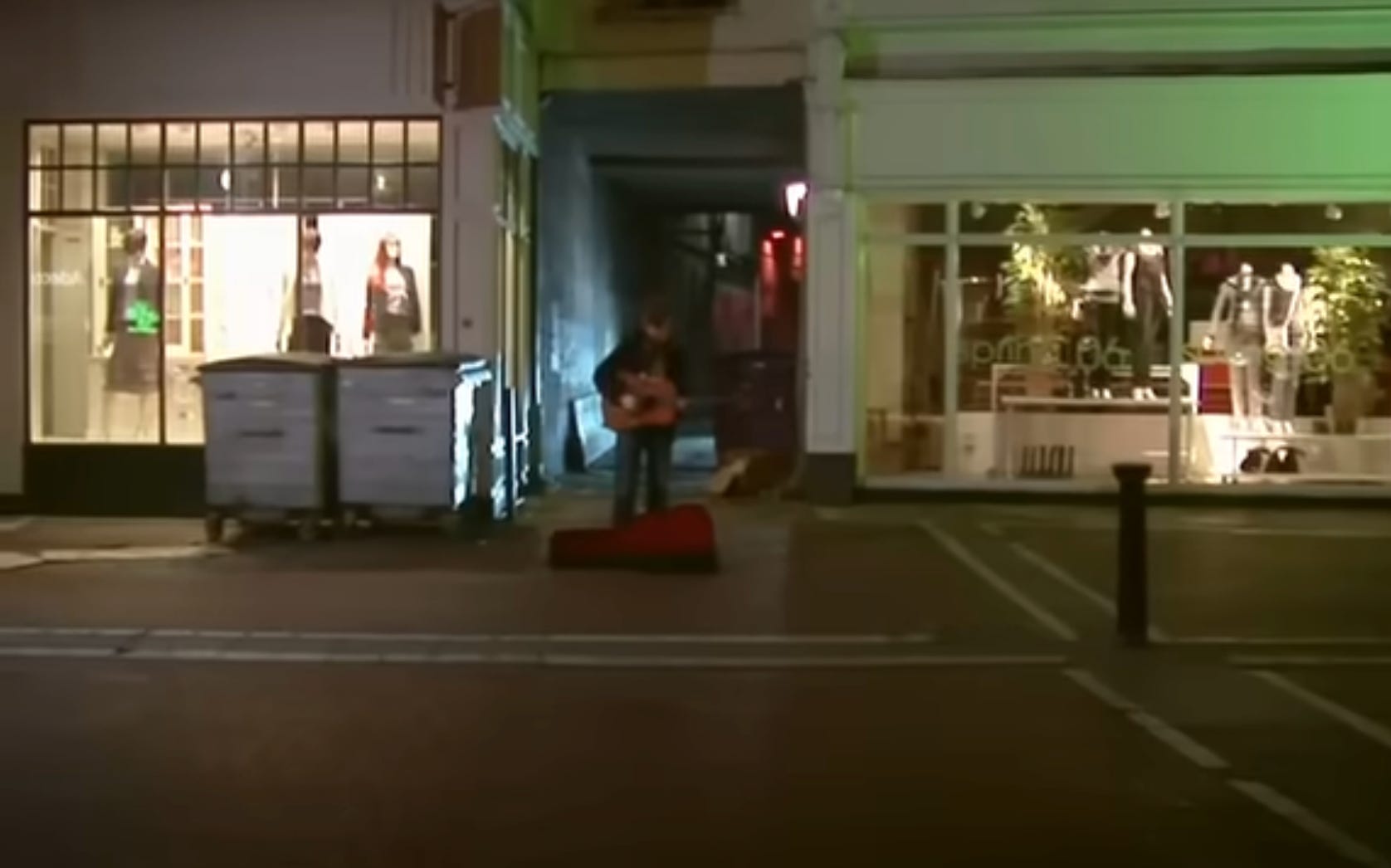
The post I was writing last week refused to come together. Instead it expanded until it broke into several pieces. The smallest piece was a line from an unpublished poem by an undergraduate classmate, a line that has stayed with me for decades and gradually became something of a credo. Another piece—and I think they are related—was about Glen Hansard and the Irish word, meitheal.
Writing about both of these things without sounding twee was harder than than I expected. Putting them both in a single post—I feel like I’m trying to paint a mural on a grain of rice, I thought. Welcoming distraction, I searched the internet for “Last Supper painted on a grain of rice.” The image I found claimed to be (but didn’t appear to be) a grain of rice. The image was nonetheless captivating.
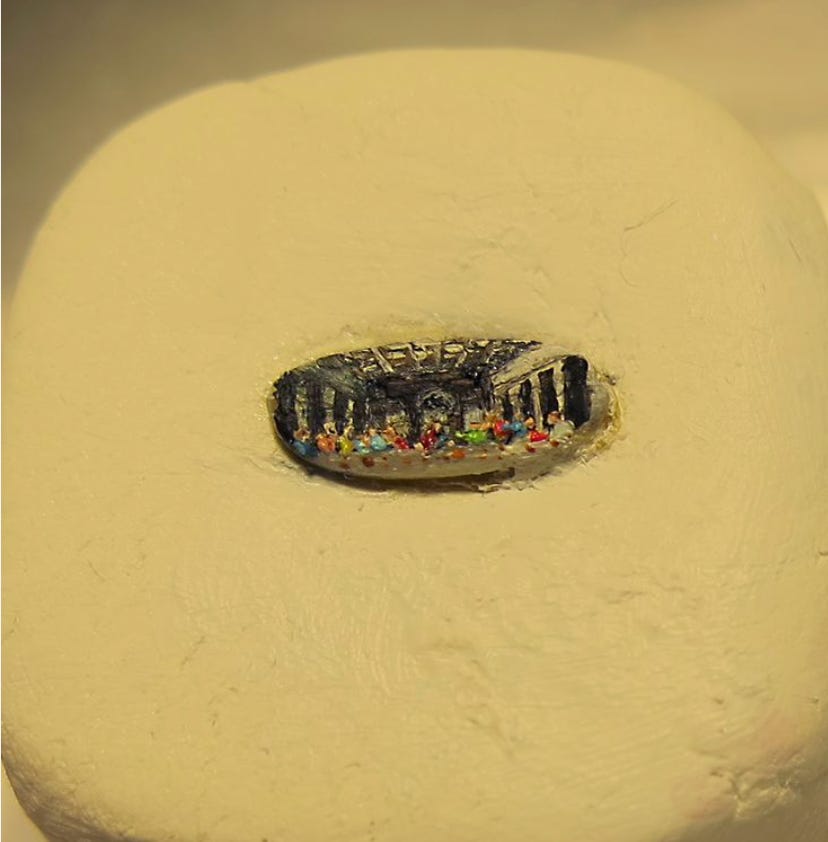
And it reminded me of something I heard once in a church. The priest was saying—I’m paraphrasing—Never mind the rest of the Easter story: the betrayal, the execution, the empty tomb. That Thursday night there was a dinner with close friends. It was the last time they would all be together before the grief of the upcoming days.
All this to say, I’m sorry for the late post, but I wanted to get it right. I’m not saying I did or could, but I here it is. So much mixed metaphor to paint on a grain of rice.
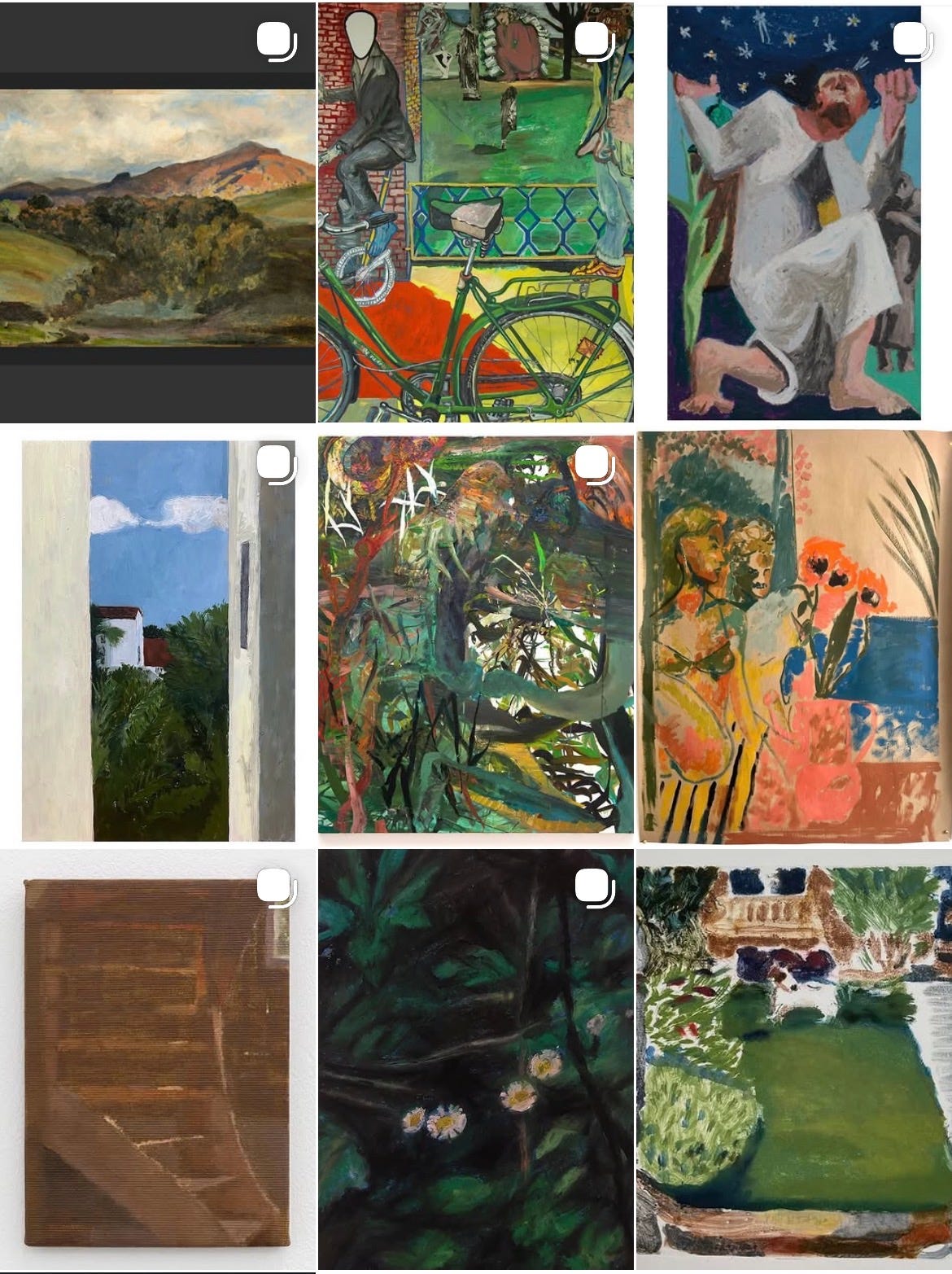
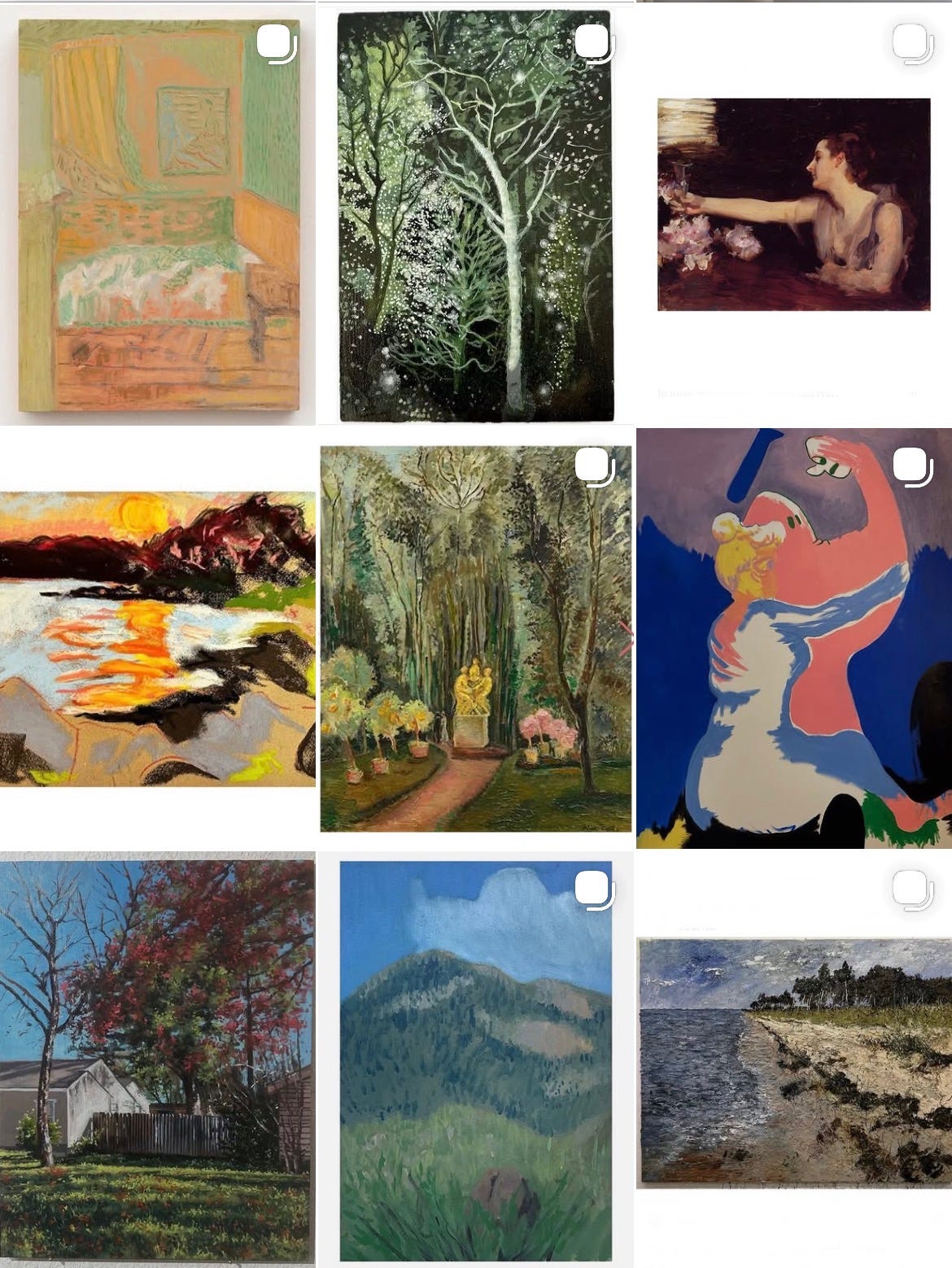
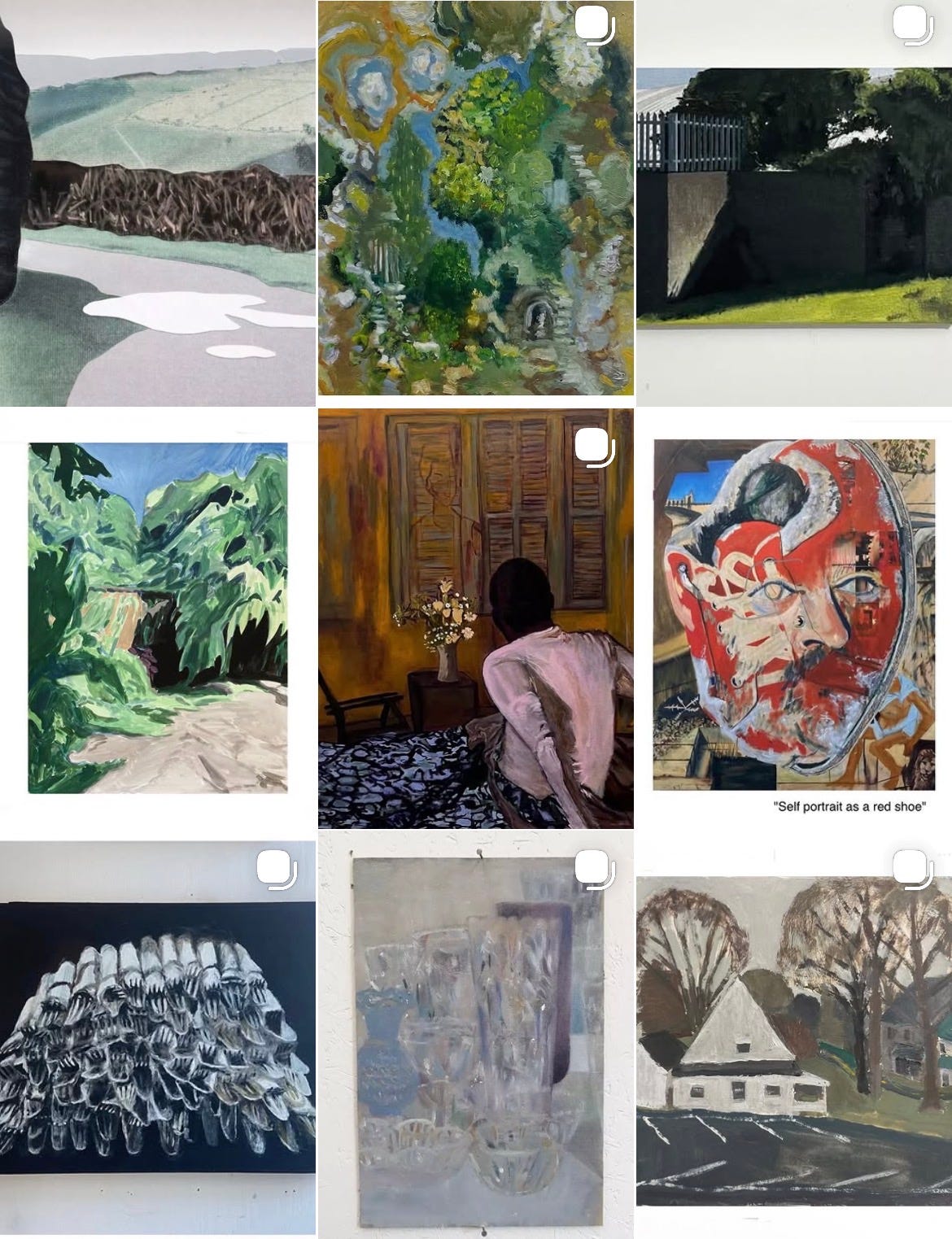
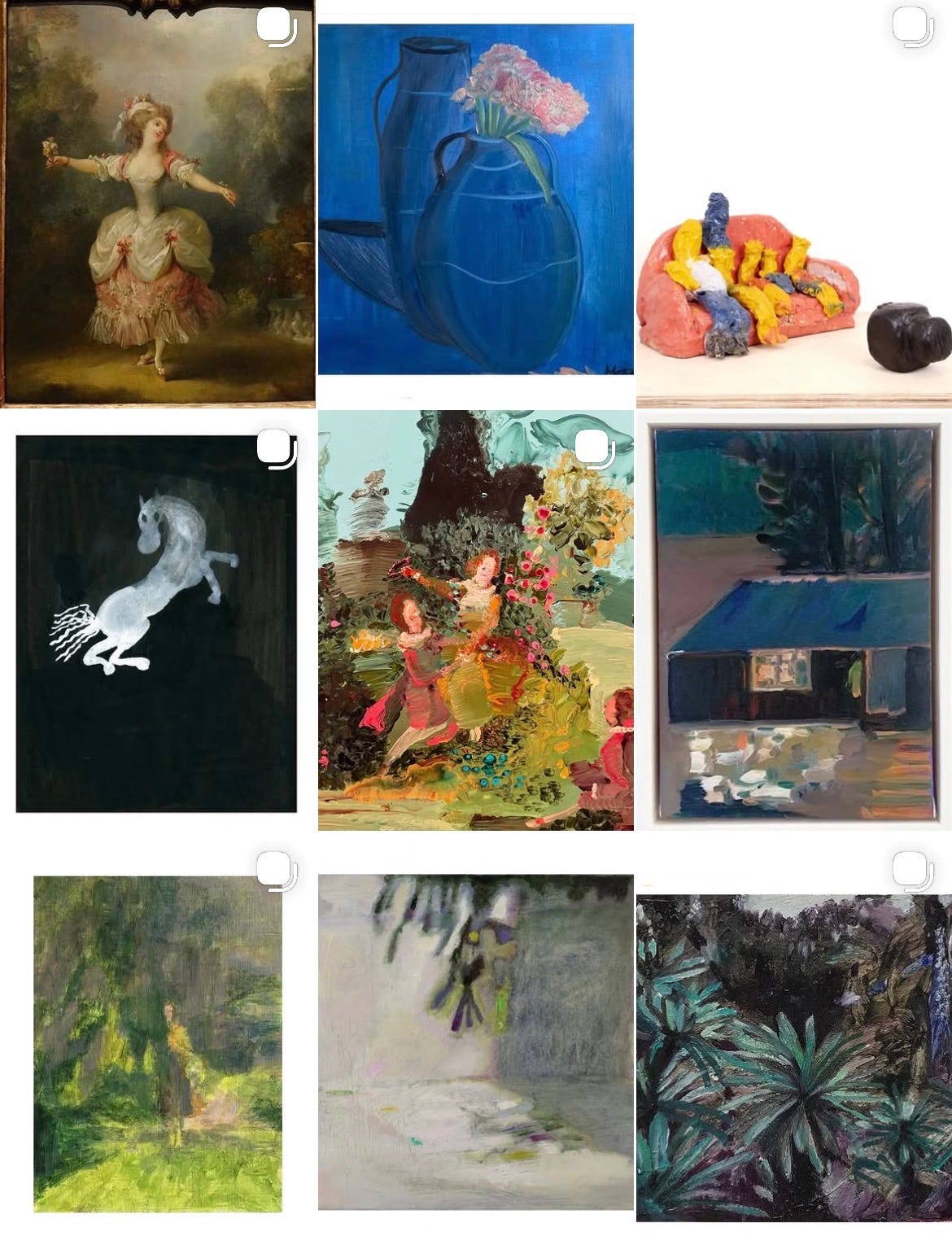
Until 2020 and the pandemic lockdown, I wasn’t on social media. Now, I spend a lot of time on Instagram looking at art. There is something intimate about witnessing an artist’s practice over time. I like looking for and sharing art, especially by those working in relative obscurity. When an artist sends a message saying “thank you for sharing my work,” I write “my pleasure” and mean it literally. There is another response that crosses my mind:
“Let’s everybody run until we lift off.”
This is the last line of a poem Amy Dickinson wrote for a poetry workshop at Syracuse two decades ago. I’ve thought about that poem many times over the years. Now, I think of that line almost every day.
In the early 2000s, I was an MFA Painting candidate, defecting to take classes in the English department whenever possible. Amy was an English undergrad and we met in Chris Kennedy’s poetry workshop. She worked at the Byrne Dairy, one of the few students I knew with a non-academic day job. I loved the affection in her stories about the Byrne Dairy and the people she worked with. My brother Joey and I called her “Lil Byrne” (after Big Worm from the movie Friday). Amy was small and her eyes squinted when she smiled, which was often. She loved the album Mermaid Avenue by Billy Bragg and Wilco. When I finally saw Napoleon Dynamite, Deb reminded me so much of Amy, fact and film have merged. Amy was a specific person and she left an impression on me.
Like swings on a swing set, we were in sync for a soaring moment before before the timing slipped and the semester ended. I got my MFA and left for France. We lost touch and many years passed.
Not too long ago, I found Amy again, emailing an address I had found online. It turned out to be one she no longer used but luckily, she checked it and found my message there. Now, we’re in touch again which makes me think of the swing set. Amy gave me permission to share “Hesitating Beauty” (titled after a song on Mermaid Avenue). I have kept this piece of paper all these years.
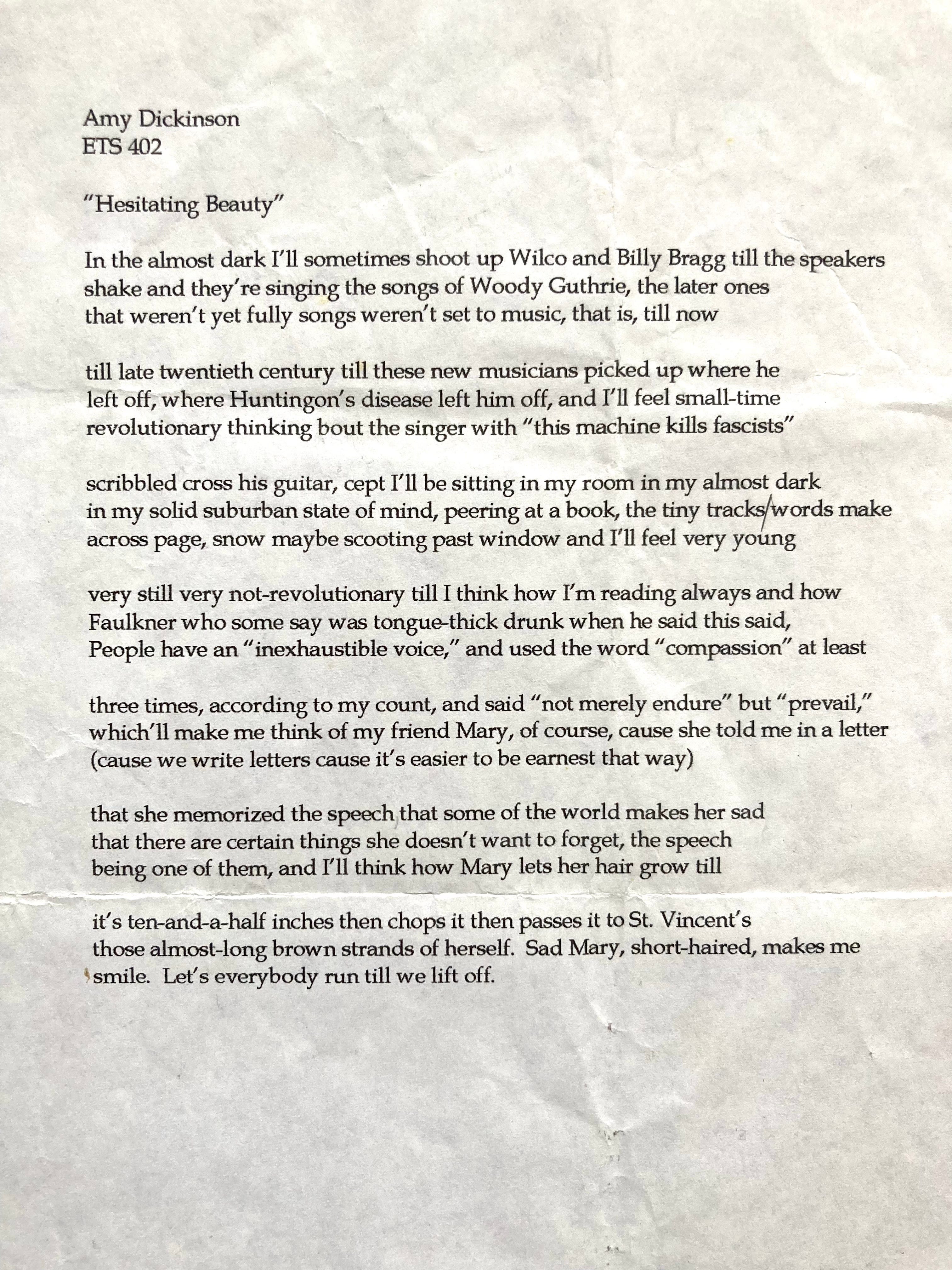
That last line is something I believe and the words feel good in my mind. We are here to care for each other. How to do that in the lives we live with the skills we have is the open question, the question I think about all the time.
Glen Hansard, musician, song writer, and maybe the most famous busker in the world, died in a motorcycle accident in Dublin last week. Like many people, I was introduced to him by the 2007 film Once.
My favorite scene might be the one set in a recording studio. The jaded sound guy Éamon (Geoff Minogue) is mildly annoyed by the raggedy group of buskers who clearly have no “professional” experience. When they are ready, he hits record, picks up a magazine, and puts his feet up, disengaged as the song begins.
The band, led by Guy (Glen Hansard), plays as if their lives depend on it (which is how Glen Hansard always played). At one point, hearing something unexpected Éamon, looks up. The music swells and in the bleeding out moment of the song, jaded Eamon sits forward, adjusting something on the sound console, and smiles in spite of himself. That smile is my favorite four seconds of the film because this is what feels like when art, raw and unbranded, gets past the guards and reaches us.
The plot of Once follows a familiar arc of struggle and breakthrough. It also describes the creative trajectory of Glen Hansard who wrote all the songs for the film and had been busking on the streets of Dublin since he was thirteen. The real-life plot twist is that he never quit busking, even after winning an Oscar for Best Original Song.
“Being out on the street, everyone is equal,” Hansard said. “You’re at the bottom rung, but one step above begging. You’ve completely humbled yourself because you’re not in any way a rock star. Your currency is at zero. But also your debt is at zero. So nobody can either judge you or slag you. It’s a great honor being a street musician.” - Esquire
The stories that flooded my Instagram feed were of how Glen Hansard lifted up those who were unknown, inviting them into his spotlight. Just as importantly, he brought those who had risen in their careers and fame back into the ground-level urgency of art.
In 2010, he spontaneously started the Christmas Eve Busk on Grafton Street to raise funds for The Dublin Simon Community, which supports the homeless. The annual event grew and over the years he welcomed Bono, Sinéad O’Connor and others. They sang not on a stage but on the street to the people.
The word meitheal (pronounced meh-hal or meh-hill) is an Irish word for work party. It comes from the community exchange of labor, especially in agriculture. We can always be rich in community when we help each other generously. We can bypass paid transaction and lift each other up. Glen Hansard, by all reports, lived his life in this spirit and spoke about it in February at a show in County Cork.
The Frames played a tour of small venues around Ireland to highlight the importance of such spaces to the Irish music scene.
“We must keep community alive. Keep meitheal alive,” Hansard had told the crowd…” (Irish Examiner)
There is only so much room on this grain of rice, but here is one last share, relevant to all who make art of any kind. There is a video of Glen Hansard playing the song “Say it to Me Now.” He breaks a string, and, as the narrator beautifully articulates, he keeps playing through all the messiness of a suddenly out of tune guitar. It makes the song better, more real, more life-like.
The song Glen Hansard is playing in the above video is in the opening scene of Once. When he won Best Original Song with Markéta Irglová, the last words of his acceptance speech at the Oscars, were said with humility, urgency, and authenticity that would not be corrupted by fame or success:
“Make art. Make art.”
Let’s everybody run until we lift off.
Comments
Nothing yet. Say the first thing.
Sign in to join the conversation.