
What does it mean to grow as an artist?
At 3:33 AM I woke up with this question on my mind. It hovered in the darkness of the room in a translucent light grey font.
There is a difference between growing “as an artist” and growing an art career. Through a series of failures, micro-rebellions, and intuition, I have abandoned many notions of “a successful art career.” I picture these words – successful, art, and career, in neon, flickering between conventional and alternate notions. I see them late at night.
(Neon, by the way, flickers with age – when gas within the tubing has leaked out – or from low current. Layer 2 of metaphors can be surprisingly useful.)
I have abandoned many notions of “career,” steered by a different (not always visible) lodestar. I have seen artists grow as a direct result of success – the time and opportunities it creates – and I have seen artists stagnate because of commercial or institutional achievement.
For a few minutes I lay there in the dark thinking about all this, then posted the question on Instagram and went back to sleep.
What does it mean to grow as an artist?
I received many responses about self-trust, facing discomfort, perseverance, risk, and authenticity.
(Incidentally, I am so grateful when this effort to write becomes a dialogue, spurring on the inquiry.)
Artist Susan Furlong Kiggins sent this response:
I have been finding myself coming back and back again to this take on the etymology of the word sincere I read in a Louise Erdrich novel…She said one interpretation is “sine cera” without wax. For me, my job of growing feels like it’s to scrape away the wax- the wax that accumulates because of pressure we put on ourselves or directions we get excited about that aren’t really relevant to what we’re trying to express, or all the unconscious “shoulds” we can’t see that are boxing us in…So to continue to paint more and more “sincerely” in that sense of the word.
I realized there is something dodgy and vague about the phrase “to grow as an artist.” The origin (Old English, Middle English, Proto-Germanic) and early use of “grow” was limited to plants—flourishing, getting bigger and turning green. The word moved on to include other living things and then, like a metaphor absorbed into a full-time position, it came to describe immaterial augmentation and thriving. The way we are using it here, it’s a transitive verb, a verb with no direct object. Our indirect object is murky: “as an artist.” But in the definition of “grow,” I found a useful breakdown that could be applied to our question:
– to cause to grow
– to let grow
– to promote the development of
Cause, let, promote. It’s gentle work. The right amount of doing and not doing. Not to micromanage the 3 AM ghosts or my subconscious, but cultivate might have been a better word.
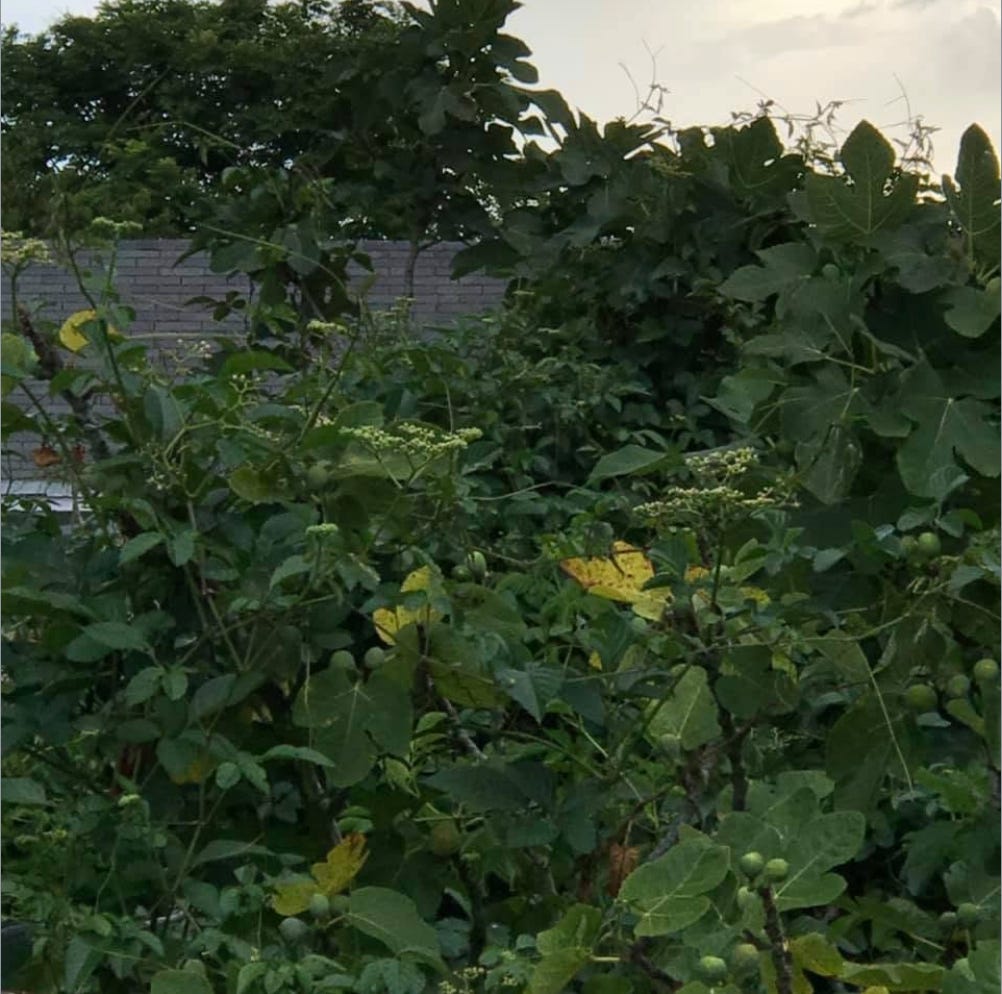
In part due to my forementioned skittishness around conventional ideas of success, I spent the week working in Louisiana heat as a landscaper. There was one yard, the entirety of which had been consumed by Cayratia japonica, also called Bushkiller. The ground, the fences, the string lights, a small shed were completely covered by it. Underneath this layer of vine, we discovered a fig tree. The tree was flat on top, growing horizontally like a carousel, being shaped by the weight of the vine, trying to grow out from under it. So I’m thinking of that fig tree as an art practice. It needs water and light, time, and some intervention when it comes to invasive influence.
My own growth as an artist has been – like painting itself – a combination of deliberate action and fortunate accident. The deliberate actions that have contributed to my growth have usually involved failure or the acute (and troubling) recognition that I was treading safely in the bounds of what has previously “worked,” meaning pleased myself or pleased other people. Many of those who answered my 3 AM Instagram query mentioned discomfort. Scanning the history of my own practice, I too have grown – which is to say moved toward greater honesty, authenticity, and risk of rejection – as a result of discomfort and risk. Growth can be a risky, lonely row to hoe.
Maybe this is why I love to see in artworks evidence of struggle over evidence of habit.
For artists (though I think it’s also worth asking these questions in any endeavor including the human one):
How do you know if you are “growing” as an artist?
Is growth inevitable or intentional?
What does growth look like in your creative practice?
(If you would rather message me privately, you can do it here or on Instagram or by text if you have my number.)
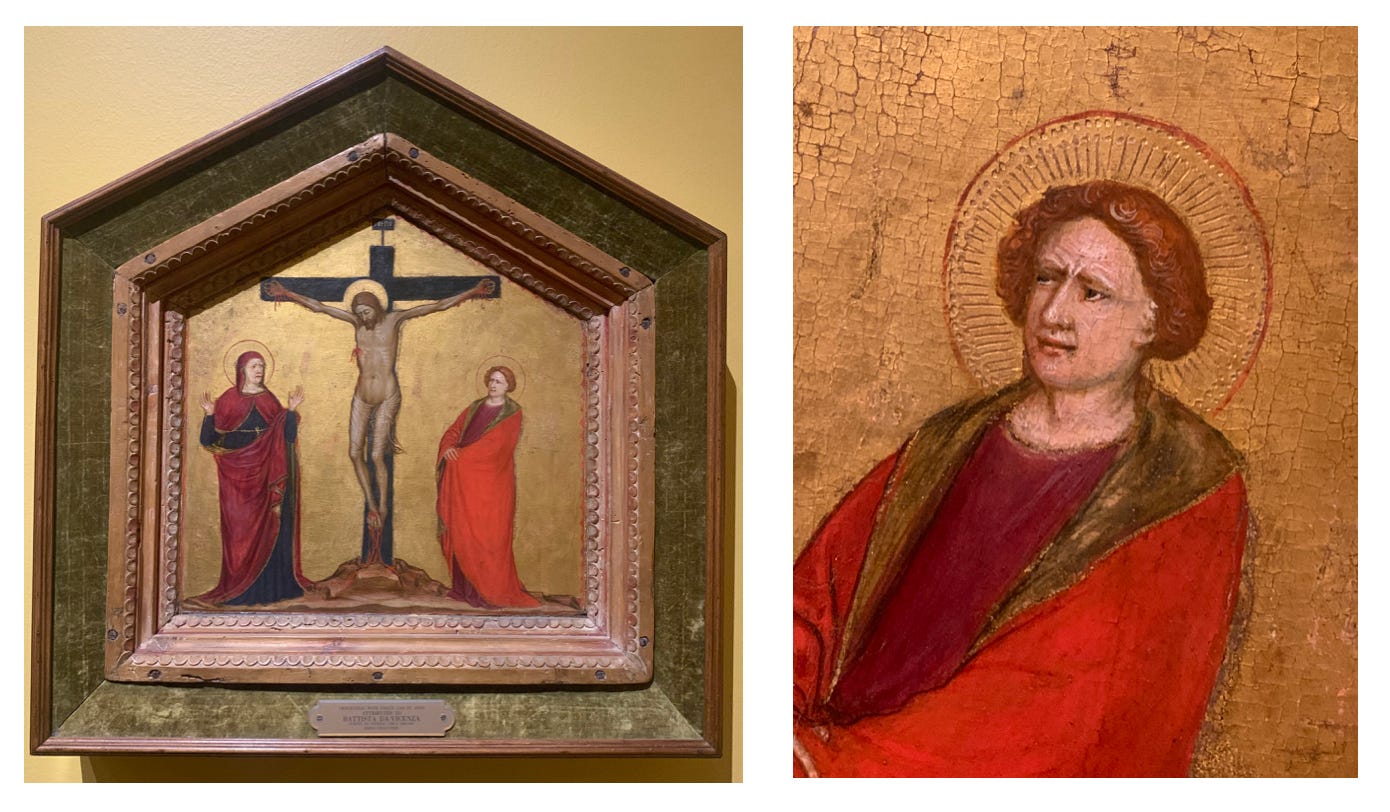
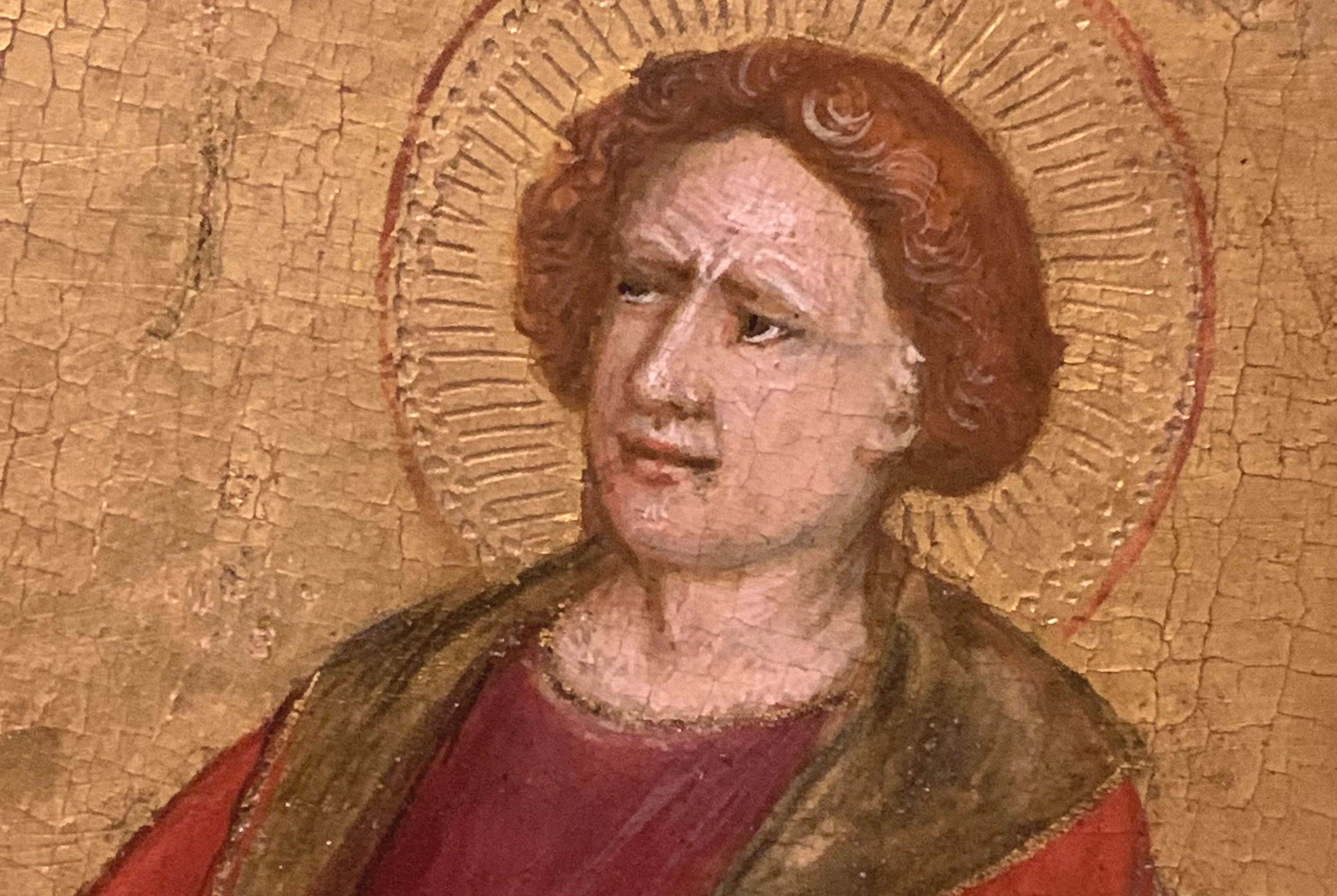
Yesterday I went to NOMA. (It’s free on Wednesdays and I like to see – believe in seeing – art without transaction. There is so much to see in any museum and some of it is really funny. Look! The expression on St. John the Evangelist’s face. The wall label calls his expression grief. I laughed aloud. But I’m also thinking about how grief haunts so much artwork, even in works not trying to illustrate it. Have you ever seen a still life with an atmosphere of grief? I have.
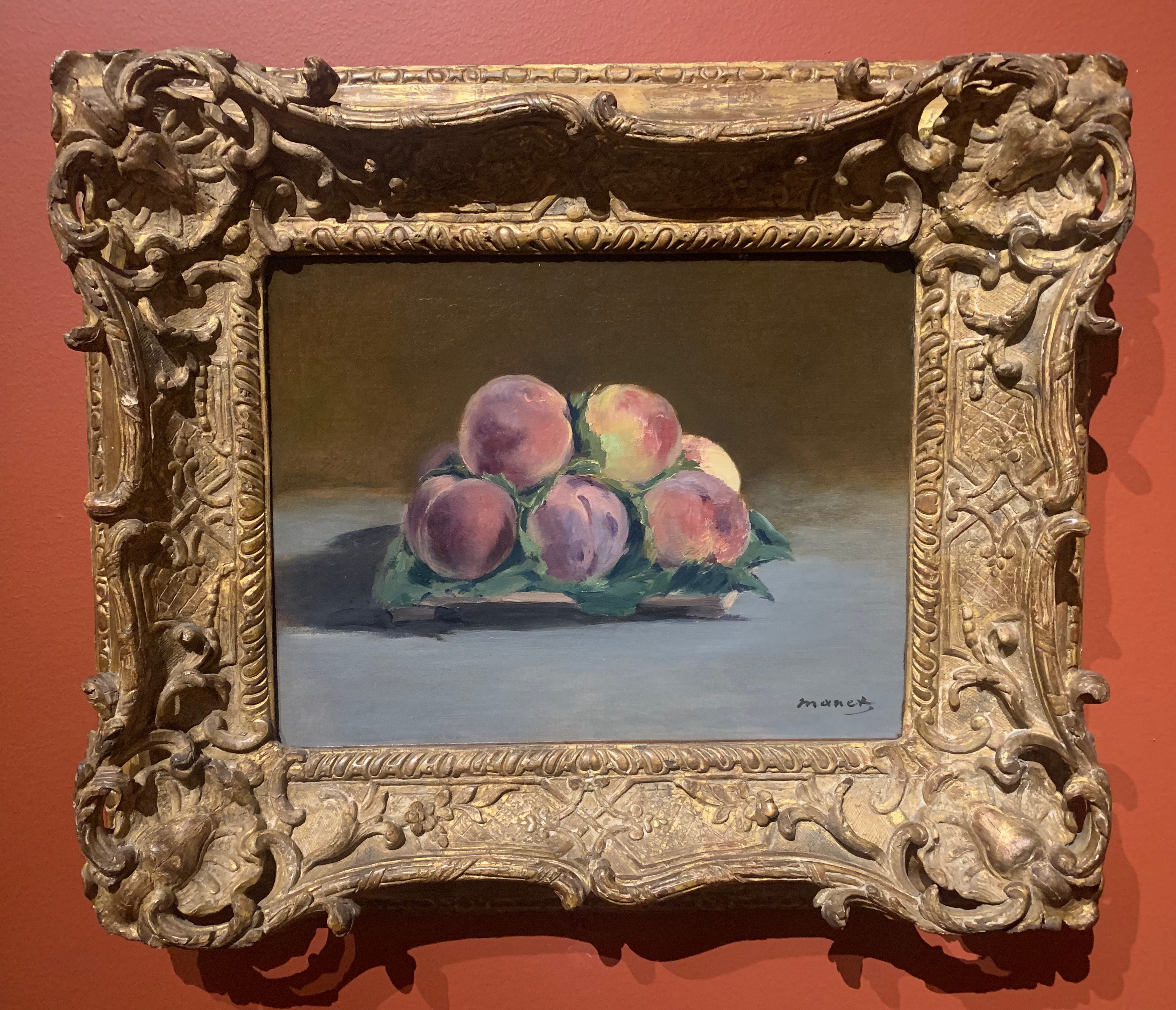
And always, I stop to see Manet’s peaches.
And I saw a beautiful turtle in the fountain in front of the museum.
That’s all. Thank you for reading, commenting, sending me messages and being here.
“The ocean is bright and blue
And it opens to you every day.”
Comments
Nothing yet. Say the first thing.
Sign in to join the conversation.