

This “survey” is not an indictment of the status quo, nor is it an exhaustive audit of corporate balance sheets; rather, it is an invitation to a more rigorous and meaningful conversation between four pillars of North American strength—
Corporate America: US and Canada;
Federal and State / Provincial Governments;
The Veteran Nation; and
The Institutional Investment community.
For decades, the relationship between these entities has been defined by a “charity-first” mindset—a world of 10% retail discounts, patriotic marketing, and fragmented transition programs that, while well-intentioned, collectively function as band-aids on a “Prosperity Paradox.”
The core tenets of The Prosperity Paradox, authored by Clayton Christensen, Efosa Ojomo, and Karen Dillon, challenge the traditional “giving” paradigm of global development, arguing that sustainable growth is not born from injecting aid into a system, but from the creation of market-creating innovations. These innovations transform “non-consumers”—those who lack access to a product or service—into a new market of consumers, thereby igniting a cycle of self-sufficiency and infrastructure building.
The Veteran Nation stands as the ultimate “Green Field” and “Blue Ocean” opportunity for this philosophy within North America. Currently, the civilian market views the Veteran through a lens of product consumption thinking: offering them goods and services (discounts) or managing their “needs” (charity). This is a reactive, low-yield approach that treats the Veteran as a passive recipient of existing market surplus.
In contrast, non-consumption thinking recognizes that there is a massive, untapped “Hidden Nation” of 20 million individuals whose 800+ specialized disciplines are currently under-utilized by the civilian economy. By shifting the focus to these “Green Fields,” we move away from competing for scraps in the “Red Ocean” of traditional job boards and retail promotions.
Instead, we look toward a “Blue Ocean” strategy: developing new markets—such as automated industrial hubs or upscaled housing enclaves or renewable energy modules or vertical agronomy units, etc—where the Veteran is the primary producer and manager. This is the pivot from providing short-term aid to empowering a market-creating class that builds its own prosperity shield, effectively solving the paradox by turning potential into a self-sustaining economic engine.
As we look under the hood of our current economy, we find a Veteran Nation that—despite some very real challenges—is not entirely a community in need of a rescue, but at the core, is a sophisticated, 20-million-strong “Ghost State” possessing the 800+ technical disciplines required to run a sovereign economy.
This opening inquiry seeks to move past the mundane “lip service” of the past and find the gritty common ground where Veteran competency meets institutional capital.
It is time to stop viewing the Veteran as a consumer to be courted and start recognizing them as a powerful, disciplined, well trained “engine” for the next era of North American infrastructure and industrial sovereignty.
This is not about judgment; it is about acknowledgment, alignment, and the opening of a new frontier in wealth creation and national preparedness.
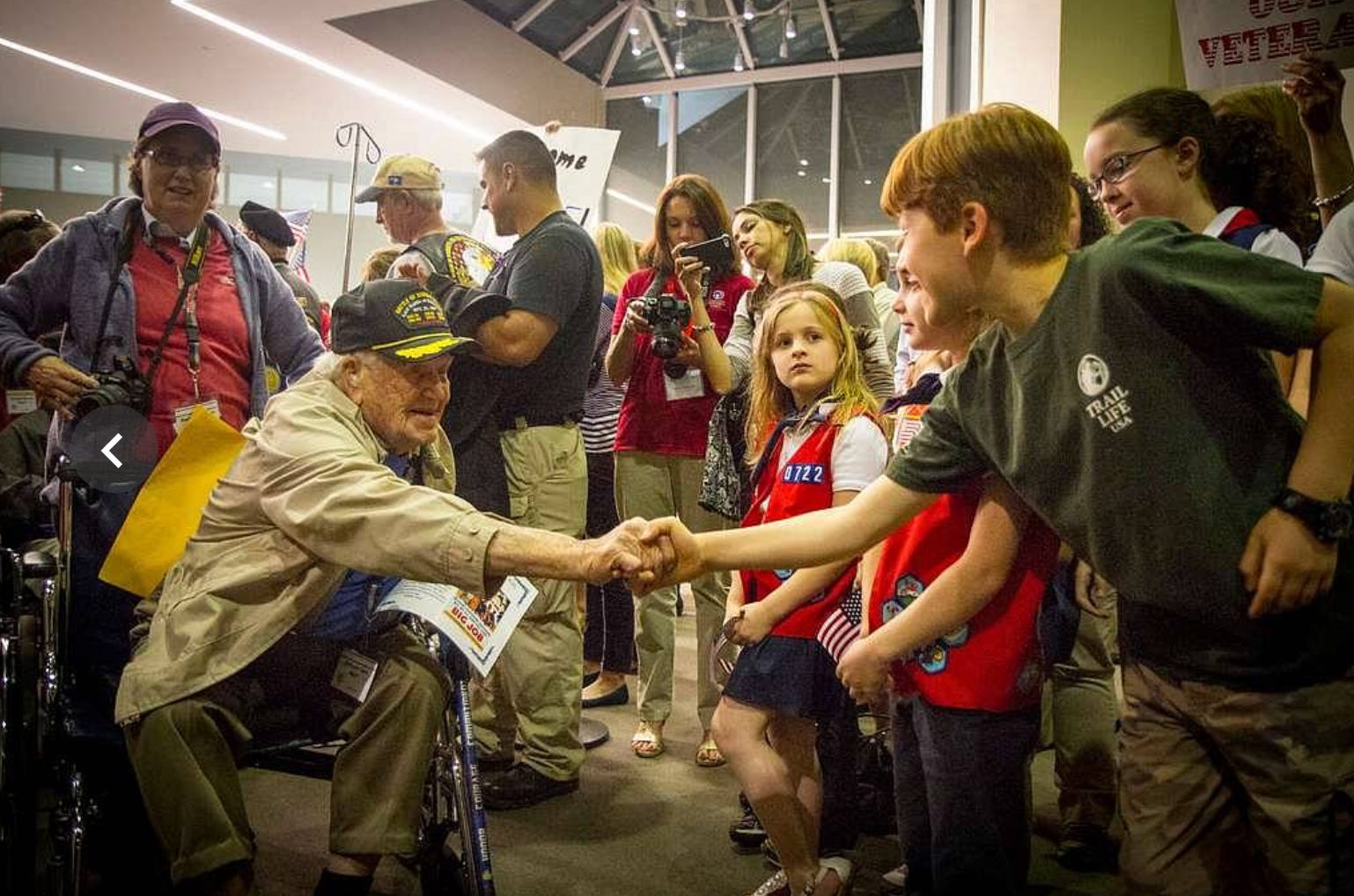
At the most visible level, we find the “Everyday Military Discount.”
Brands like Home Depot, Lowe’s, Nike, and Apple all offer a standard 10% price reduction for Veterans.
The Reality: While these programs are widely utilized, they often function as a “Consumer Trap.” For example, Home Depot caps its annual military savings at $400, and Lowe’s excludes “on-sale” items from the discount.
The Lip Service: A 10% discount is a promotional tool designed to capture market share. It is a “band-aid” for the cost of living, not a solution for the “Prosperity Paradox.” It treats the Veteran as a customer to be incentivized rather than a specialized asset to be empowered.
True service to the Veteran Nation is found in the brands that bypass the “civilian filter” and integrate Veterans into their core operational architecture. Here are a few samples (not an exhaustive treatment by any measure) —
Amazon’s “Cognitive Job Architecture”: Moving beyond a simple hiring pledge, Amazon is retraining Veterans for roles that manage their 75% automated warehouse operations. This is “Gritty Traction”—it recognizes that a Veteran’s ability to manage complex systems is more valuable than their ability to move boxes.
Microsoft’s Software & Systems Academy (MSSA): This is a direct strike against the transition gap. By taking Veterans through a 17-week intensive re-tooling for cloud and AI roles, Microsoft is responsible for a meaningful “Bottom Line Impact,” often doubling a Veteran’s income potential from day one of civilian life.
JPMorgan Chase’s Billion Dollar Roundtable: This is where the transition moves from “Jobs” to “Equity.” By committing over $2 billion annually to diverse suppliers—including Veteran-owned firms—JPMorgan is doing something about building the “Capital Rails” that allow the Veteran Nation to own the means of production rather than just being a cog in the machine.
Marriott International: Within the hospitality sector, Marriott is attempting to transition from a “charity-first” mindset to a model of Structural Service. Through its “Marriott Military University,” the brand bypasses the “civilian filter” by mapping several of the military disciplines—specifically high-stakes logistics and human capital management—directly into its management-track roles. Marriott also incentivizes ownership through its “Diversity Ownership Initiative.” This program provides qualified Veterans with specialized capital incentives, including application fee waivers and flexible “room key” credits (up to several hundred thousand dollars) to offset initial development costs. By lowering the barrier to entry for franchise ownership, Marriott moves beyond the “mundane” retail discount, offering Veterans a “Green Field” opportunity to own the equity in the very infrastructure they are trained to lead.
These are a few samples, by no means exhaustive, and there are many others, but collectively they are still just scratching the surface of the latent potential trapped within the Veteran Nation. It’s a bit like the difference between a field of windmills and the velocity and volume of the wind itself.



While many major brands are excellent at hiring, the bridge from Veteran consumers to “harnessing the wind” has not yet been conceived.
The Turnover Crisis: Tech and Retail sectors see turnover rates between 30% and 60%. For Veterans, this is often due to a “Culture Mismatch”—a lack of “Mission-Driven” work.
The “Support” Paradox: There are over 20,000 public and private Veteran programs, yet most remain “passive and low-intensity.” They offer job boards instead of career coaching; they offer housing aid instead of housing equity.
The difference between serving and giving lip service is found in the ROI (return on investment) for the Veteran.
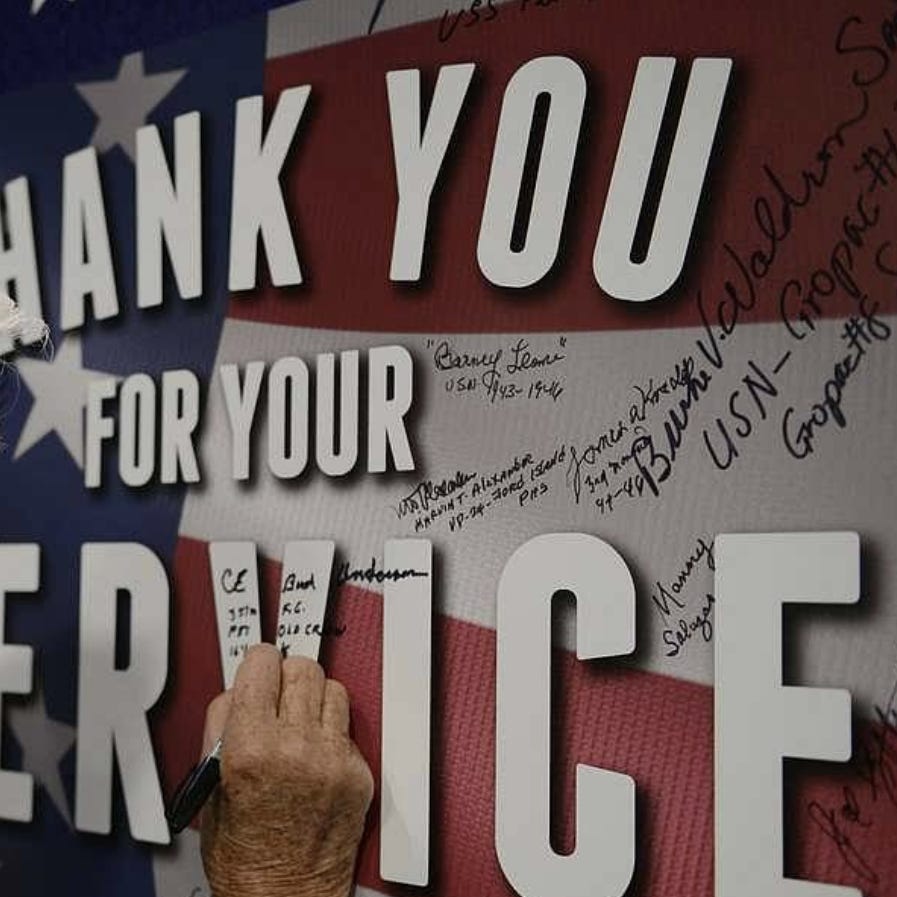
Lip Service is a 10% discount and a “thank you for your service” banner. It is a one-way transaction that benefits the brand’s image more than the Veteran’s bank account.
Real Service is the creation of a “Veteran Tax Shield” to attract large scale investment to Veteran-oriented infrastructure, or “Day One Equity” in new homes for Veterans, or an “Energy Shield” that delivers reliable on demand energy at an affordable price not subject to price spikes, and so on.
Infrastructure Investment. It is the implementation of automated industrial hubs that are deliberately designed to leverage the 800+ military disciplines to create a self-sustaining Veteran economy, not merely brands adapting their existing systems to create some kind of accommodation for Veterans.

These two brands represent the highest volume of Veteran integration in the private sector.
Walmart (500,000+ Hires): Since 2013, Walmart has hired over half a million Veterans and military spouses. Their contribution is centered on “Career Navigation;” they recently launched a “Skills Translator” tool that aligns military MOS codes directly with high-impact roles in their $600B+ logistics and distribution network.
Amazon (45,000+ Active Veterans): Amazon focuses on “Operational Velocity.” Through the DoD (DoW) SkillBridge program, they allow service members to spend their final 180 days of active duty training in Amazon fulfillment and data centers—ensuring that transition “friction” is replaced by an immediate, high-income trajectory in the digital economy.
These brands are focused on moving Veterans from “Labor” to “Intellectual Capital.”
Microsoft (MSSA): The Microsoft Software and Systems Academy (MSSA) is a 17-week “high-intensity” program that takes Veterans with zero technical background and places them in high-demand roles like Cloud Administration and Azure Development. This is a direct contribution to Veteran income, moving individuals into brackets that average $85k–$120k annually upon entry.
Google (Gen AI Certification): In 2025, Google launched a no-cost Generative AI certification specifically for Veterans. By providing $200M in AI/Cloud support to the DoD (DoW), they are effectively training the Veteran workforce to manage the very systems (Gemini, Vertex AI) that will run future civilian infrastructure.
Part of JPM’s contribution is to focus on access to capital and suppliers to Veteran Nation entrepreneurs.
JPMorgan Chase (Veteran Jobs Mission): They spearhead a coalition that has hired nearly 1 million Veterans. More importantly, they provide “Capital Rails” for Veteran entrepreneurs through the IVMF CEOcircle, a 12-week program that offers growth-stage resources and access to the supplier networks of the world’s largest bank.
These groups provide the “Safety Net” that ensures the transition doesn’t lead to a “fall.”
UnitedHealth Group ($1.2B in Housing): Recognizing that “homelessness is a health disparity,” UnitedHealth has invested over $1.2 billion in affordable housing specifically targeting Veterans. This is not charity; it is a stabilization of the Human Infrastructure required for Veterans to enter the workforce successfully.
CVS Health (Purpose-Driven Transition): Through their BRAVE resource group, CVS focuses on the “Purpose Gap.” They prioritize hiring Veterans for 25% of all new roles in their logistics and distribution centers, viewing the Veteran’s discipline as a competitive advantage in the healthcare supply chain.
Comments
Nothing yet. Say the first thing.
Sign in to join the conversation.