
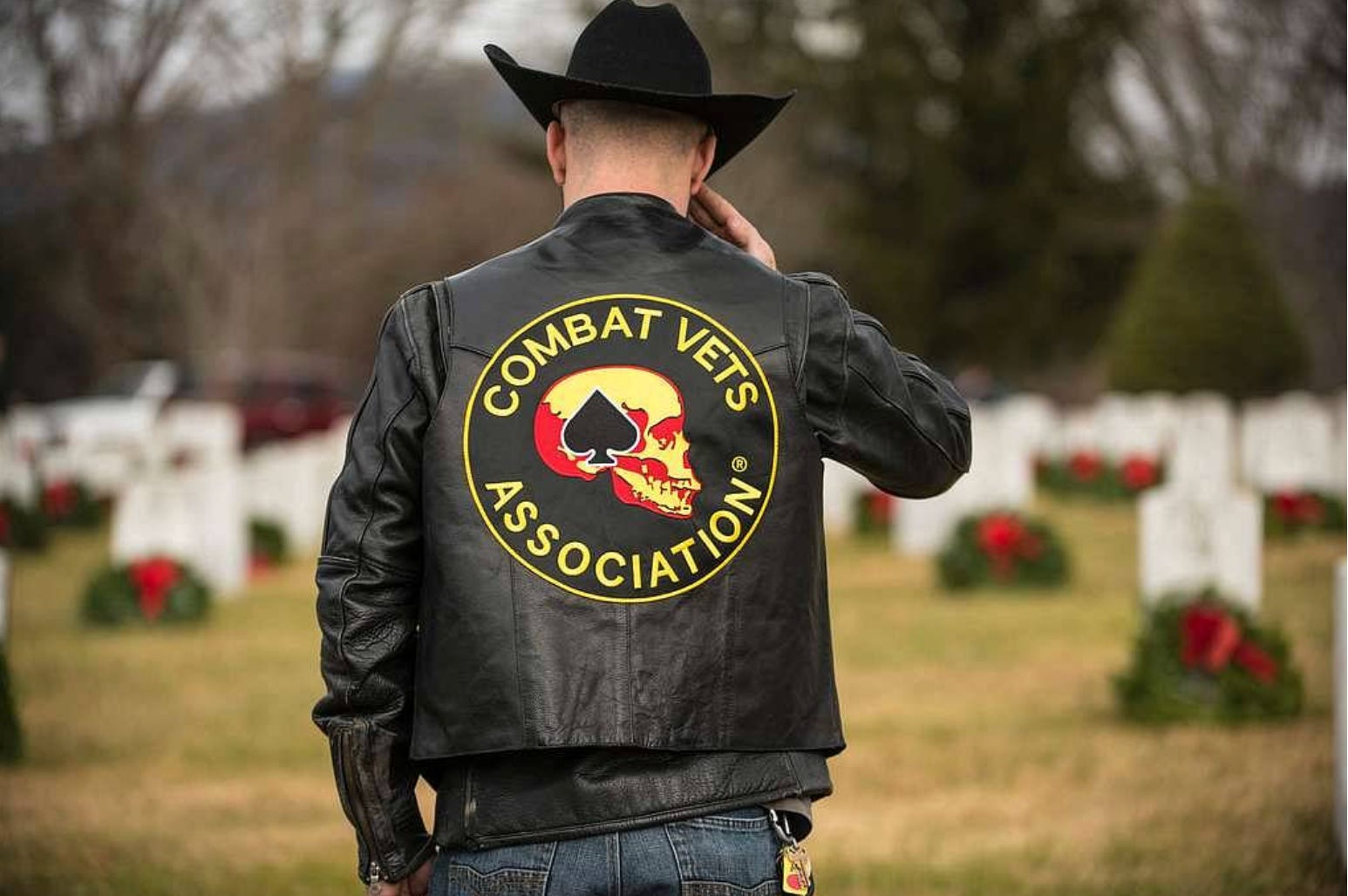
The true strength of this “Hidden Nation” is not merely found in its staggering capital base, but in the sheer breadth of its human capital. Military personnel are trained in over 800 distinct specializations, ranging from high-level executive leadership and complex logistics to advanced technical engineering and medical operations.
These disciplines are not merely academic; they are forged under the highest stakes imaginable. In the civilian world, this translates into a workforce that is uniquely prepared to serve and deliver:
Logistics & Supply Chain: Managing the movement of millions of tons of equipment across hostile terrain.
Technical Engineering: Maintaining advanced avionics and specialized mechanical systems in isolated environments.
Medical Operations: Delivering trauma care and public health initiatives under extreme pressure.
Leadership & Management: Coordinating thousands of personnel with a focus on mission-critical outcomes.
If one were to imagine a country inhabited solely by these 20 million Veterans, the overlap with the needs of a modern civilian economy would be near-total. Unlike traditional labor pools that may have “gaps” in specialized training, the Veteran Nation possesses a redundant and robust architecture of skills. Their training is a mirror image of the infrastructure required to run a sovereign state: they have the engineers to build, the administrators to govern, the technicians to power, and the leaders to inspire.
However, there is a profound “Prosperity Paradox” at play. Despite being an economic superpower “hiding in plain sight,” nearly 50% of post-9/11 Veterans report significant difficulty transitioning into civilian roles that actually match their leadership and technical capabilities. The skills are there, but the civilian market often fails to translate military “shorthand” into the professional equivalent.
Behind the metrics of GDP and specialization counts lies the human interest story of the Veteran transition. A Veteran is more than a set of 800+ disciplines; they are individuals who have lived by the ethos of “No One Left Behind”. This isn’t just a slogan; it is a psychological and social framework that defines how they interact with their community.
Take, for instance, the transitioning service member who managed a $100 million equipment manifest in a desert outpost, only to be offered an entry-level inventory role upon returning home. The frustration is not just financial; it is the loss of a “mission-driven culture”. The Veteran Nation doesn’t just want a “handout”—they are looking for a “pathway” to continue their service in a new theater. They possess the talent and the discipline to solve their own challenges, provided the civilian world learns to recognize the superpower standing right in front of it.
To understand the Veteran Nation as a “Ghost State,” one must look at the diverse industrial and operational DNA distributed across the various branches of service. Military personnel are not merely “soldiers”; they are practitioners of the skills and experience that mirror the infrastructure of a modern civilian economy.
While every branch produces leaders and logisticians, each branch of the military functions as a specialized “industry hub” that feeds specific sectors of the civilian world:
Army: Infrastructure | Logistics | Engineering: Heavy construction, telecommunications, civil engineering, disaster response, and large-scale ground logistics, food, energy, entertainment, etc.
Navy: Energy | Maritime Trade | Nuclear Ops: Nuclear power plant operation and other energy systems, marine engineering, global supply chain management, and advanced electronics.
Air Force: Aerospace | Tech | Cyber Security: Systems engineering, avionics, cybersecurity, data analysis, and high-tech manufacturing oversight.
Marine Corps: Operations | Security | Rapid Deployment: Crisis management, security architecture, personnel training, and high-stakes operational leadership.
Coast Guard: Environmental Safety | Port Ops: Search and rescue coordination, environmental protection, law enforcement, and maritime safety.
These disciplines are not isolated skills; they are grouped into “Occupational Codes” that translate directly into the “Architecture of Survival” required for a functioning society.
Executive & Managerial (The 1% of the 1%): Veterans possess leadership capabilities that are often underutilized in the civilian sector. This includes project managers who oversaw multi-billion dollar asset deployments and executive officers who managed thousands of personnel.
Technical & Industrial: This group includes the “Hardware” specialists—those trained in advanced material science, precision-engineered galvanized steel framing, and “Lego-like” automated assembly.
Life Support & Sustainability: Veterans often hold specializations in “Resource Sovereignty”—managing closed-loop systems for energy and nutrition, and fitness.
Financial & Digital Intelligence: The modern military operates on “digital economic rails,” utilizing AI-driven financial intelligence and distributed ledger technologies to manage complex sovereign-backed income streams; Veterans are experts in these systems.
If the Veteran Nation were a sovereign country, the overlap of these 800+ disciplines would create a Circular Economy. The training is so broadly dispersed that they possess the internal talent to build their own housing, manage their own utilities, and grow their own food.
“The truth of the Veteran Nation is that the money is already there, as is the talent, and the discipline... to solve the majority of its own problems”.
The challenge is not a lack of training, but the “Friction of Transition”—the structural failure of the civilian market to recognize that a Veteran with a specialized military code is, in fact, a ready-made expert in civil infrastructure or industrial arbitrage.
Consider a Chief Petty Officer—let’s call him Elias—who spent fifteen years in the Navy’s nuclear power program. In the military, Elias was a practitioner of “Resource Sovereignty.” He didn’t just “fix engines;” he managed a multi-megawatt pressurized water reactor, overseeing a closed-loop system that provided propulsion, electricity, and desalinated water for five thousand people while submerged in a high-pressure environment.
Elias is a master of the very “Hardware” and “Software” the civilian world currently struggles to scale:
Energy Sovereignty: He is one of the world’s leading experts in high-density energy modules and power clusters.
Infrastructure Logistics: He has managed supply chains where “out of stock” was not an option, mirroring the precision required for automated industrial assembly.
Human Capital: He has mentored hundreds of junior sailors, a living example of the “Community Lift” and leadership training that defines the Veteran Nation.
When Elias returned to the civilian world, he encountered the discipline-disconnect, firsthand. Despite his specialized training, civilian recruiters saw a “mechanic.” They looked for a specific degree or a narrow certification, failing to recognize that his military discipline was actually a Triple-Alpha-Asset.
He found himself among the 50% of post-9/11 Veterans who struggle to find employment that matches their true leadership capabilities. His piece of the “800+ disciplines” was compressed into a single, entry-level box. The “velocity” of his talent was stalled by a civilian infrastructure that leaks human potential at an unsustainable rate.
The human interest story of the Veteran Nation is not one of “need” or “charity”. It is the story of an economic superpower hiding in plain sight. For Elias, and the 20 million like him, the goal is not a handout; it is the opportunity to apply the “discipline of military life” to the “wealth-building potential of a high-tech industrial guild”.
When we talk about “No One Left Behind,” we aren’t just talking about the battlefield. We are talking about ensuring that a man who can power a carrier strike group is not left to “rent his life” from a market that doesn’t understand his worth.
The Veteran Nation is not a community in need of a rescue; it is an industrial and economic powerhouse in need of a mission. The transition from active duty to the civilian world should not be viewed as a “step down” into a fragmented labor market, but as a “lateral move” into the leadership of a new era.
When we account for the widespread disciplines—and discipline—the nuclear technicians, the logistical architects, the cyber-security wardens, and the heavy-lift engineers—we are looking at the essential DNA of a self-sustaining society. This “Hidden Nation” already possesses the capital, the character, and the technical competence to serve as the primary engine for North American infrastructure and innovation.
The ultimate human interest story of the Veteran is one of Autonomous Maturity. It is the evolution from being a defender of the state to becoming a builder of the future. The “Portrait of the Hidden Nation” reveals a collective power that is unmatched in the civilian world: a workforce that does not require “retraining,” but rather deployment into the sectors that define a nation’s strength—energy, housing, technology, and trade.
To leave this talent on the sidelines is more than a social failure; it is an economic absurdity. The Veteran Nation is ready to deliver. They have been trained to operate at the highest level of human endeavor, and they carry with them an unbreakable code of “No One Left Behind.”
As this “Ghost State” moves from the shadows into the light of the civilian economy, it brings with it the promise of a more resilient, disciplined, and prosperous North America. The message to the civilian world is clear: The Veteran Nation is not asking for a place at the table—they are the ones who know how to build the table, the house it sits in, and the systems that power it.
Comments
Nothing yet. Say the first thing.
Sign in to join the conversation.