
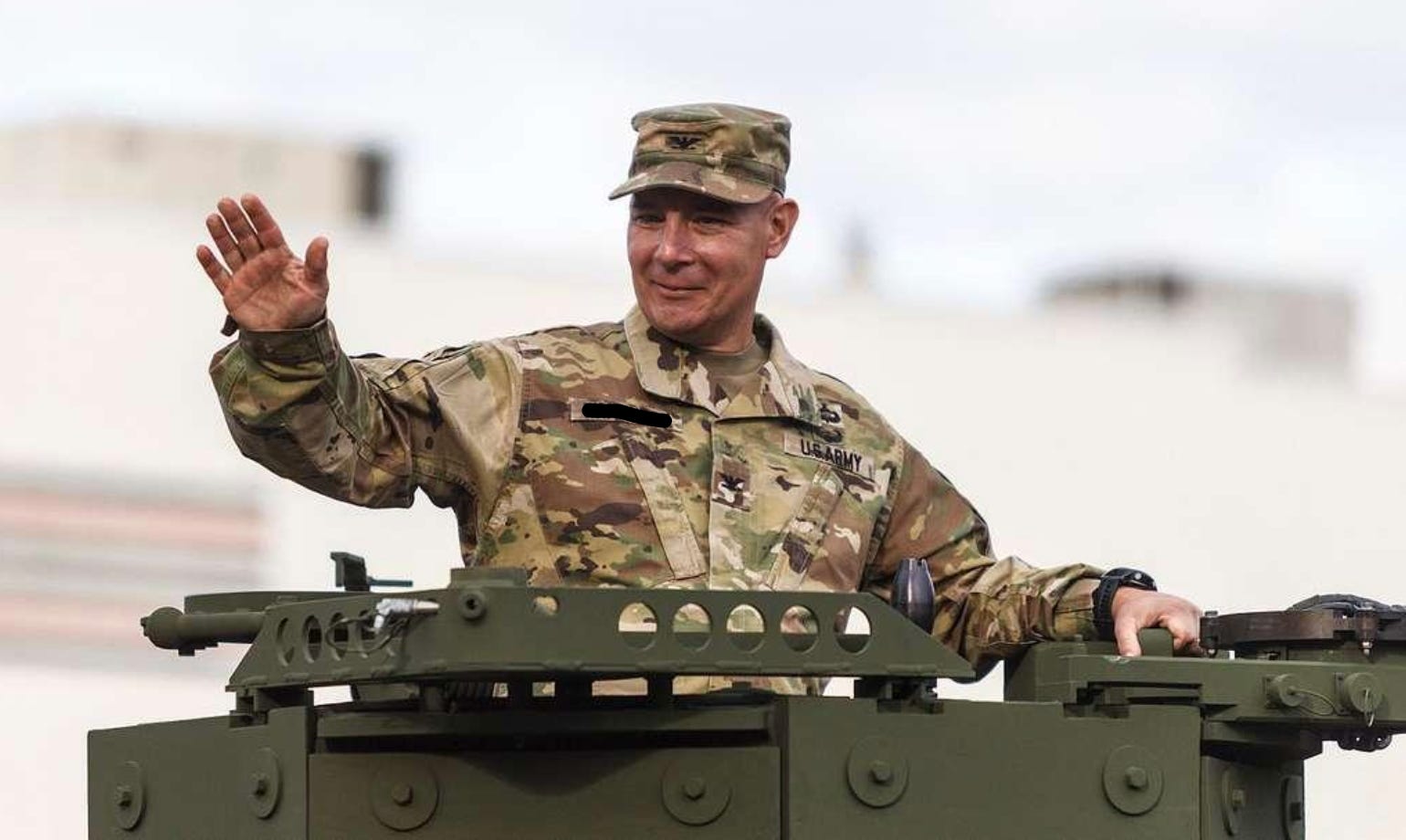

In the early morning quiet of a suburban kitchen, “Sarge” Steele sits with a cup of coffee and a weathered notebook. He is forty-two, fit, and possesses the kind of focused posture that twenty years in the infantry cements into a man’s skeleton. Through the thin walls of the hallway, he hears the rhythmic, soft breathing of his ten-year-old daughter, Maya, and the occasional restless stir of his seven-year-old, Leo. His wife, Sarah, will be up in twenty minutes, starting the coordinated chaos of the school run before heading to her own shift.
In the military, Steele was an E-6—a Staff Sergeant. To the uninitiated, that title might sound like a mid-level designation, but in the hierarchy of the armed forces, a Staff Sergeant is the connective tissue of the nation’s defense. He was responsible for the lives, training, and welfare of dozens of young soldiers, the maintenance of millions of dollars in sensitive equipment, and the execution of complex logistics in environments where the margin for error was non-existent.
Yet, as the sun rises over a civilian landscape, Steele is feeling a peculiar, grinding friction. He is healthy, disciplined, and highly capable, but he is discovering that the civilian world is not a smooth transition from the military one. Instead, it is a maze of mismatched expectations and economic pressures that often leave even the most seasoned Veterans feeling like they are treading water in a rising tide. To understand why men like Steele, and especially the younger ranks he once led, are struggling, one must look at the three conjoined issues that define the modern Veteran experience: the scarcity of housing, the erosion of benefits by inflation, and the profound mismatch between military expertise and civilian employment.
To understand the Veteran, one must first understand the ladder they climbed. The military structure is divided into two primary paths: the Enlisted (E) and the Officer (O). The Officers, ranging from the young Second Lieutenants (O-1) to the four-star Generals (O-10), are the strategic planners and executive leaders. They hold university degrees and operate in the realm of high-level policy and command.
However, the “Engine Room” of the military is the Enlisted ranks. It begins with the E-1 through E-4—the Privates, Airmen, and Seamen. These are the young men and women who do the heavy lifting. They are the technicians, the mechanics, the infantrymen, and the clerks. They are often in their late teens or early twenties, learning the meaning of discipline and the weight of responsibility for the first time. Above them sit the Non-Commissioned Officers (NCOs), the E-5s through E-9s. These are the Sergeants, the “backbone” of the service. They are the practitioners who take a General’s strategic vision and turn it into reality on the ground. Sarge Steele, as an E-6, was a master of this craft. He wasn’t just a “manager”; he was a mentor, a technical expert, and a leader of leaders.
In the military, this hierarchy provides a sense of absolute clarity. Your pay is fixed, your housing is often provided or subsidized, and your “rank” tells everyone exactly where you stand and what you are capable of. When a Veteran leaves that structure, that clarity vanishes, replaced by the first of the three great frictions: the housing crisis.
For a young E-4 transitioning to civilian life, the housing market is a shock to the system. While on active duty, service members receive a Basic Allowance for Housing (BAH), a stipend tailored to the local cost of living. It is a safety net that ensures the soldier always has a roof, regardless of market volatility. But upon discharge, that safety net is folded up and put away.
The Veteran enters a civilian market defined by a systemic shortage of supply and skyrocketing costs. For an E-1 to E-4, whose savings might be modest, the requirement for first and last month’s rent, security deposits, and credit checks can feel like an insurmountable wall. They are moving from a world where housing was a functional right to one where it is a speculative commodity.
Sarge Steele, looking at the numbers in his notebook, feels this weight differently. He isn’t just looking for a roof; he is looking for a neighborhood where Leo can play outside and Maya can stay in the same school district. Despite his higher rank and more substantial legacy benefits, he finds himself in a similar bind. He wants to buy a home, but he is competing against institutional investors and a market where prices have outpaced wages for decades. The stability he earned through twenty years of service feels strangely fragile when faced with a rental market that demands half of his family’s combined income.
This brings us to the second friction: the pressure of inflation on the very benefits promised as a reward for service. A Veteran’s pension and disability benefits are often the “legacy” of their career—a deferred payment for the physical and mental toll of the job. For the layperson, these benefits might seem like a comfortable “extra,” but for many Veterans, they are the baseline for survival.
The problem is that these benefits are often adjusted at a rate that fails to capture the true cost of modern living. When the price of fuel, groceries, and insurance climbs, a Veteran on a fixed benefit feels the walls closing in. For the young E-4 who may have left the service with a minor injury, their disability check doesn’t buy the same amount of milk or eggs it did five years ago.
Steele looks at the grocery receipt on the counter. Sarah had circled the price of the kids’ cereal—nearly doubled in two years. His retirement pay is a point of pride, but as inflation eats into its purchasing power, he realizes that the “comfortable retirement” he had anticipated is being slowly hollowed out. He is forced to work a second, mostly unfulfilling job just to ensure his children don’t feel the pinch of a tightening belt.
Perhaps the most frustrating friction, however, is the mismatch between military training and civilian systems. This is the “underemployment” trap. Sarge Steele has managed logistics chains that would make a corporate COO sweat. He has led people through life-and-death crises. He is a technical expert in advanced communications. But when he sits across from a civilian HR manager, his twenty years of mastery are often reduced to “military experience”—a vague category that the hiring coordinator doesn’t know how to translate into a corporate spreadsheet.
The civilian world often views the Veteran through a lens of “entry-level” potential rather than “advanced-level” capability. An E-4 who spent four years maintaining the multi-million dollar turbine engines of a jet fighter might find themselves being offered a job as a basic mechanic’s assistant. The certifications don’t always cross the border between the military and civilian sectors, creating a language barrier where the Veteran speaks “Outcome and Mission” and the employer speaks “Quarterly Benchmarks.”
This mismatch leads to a profound sense of underemployment. Veterans find themselves in jobs that utilize perhaps ten percent of their actual capacity. They are bored, undervalued, and financially strained, not because they lack skill, but because the civilian system lacks the “translator” to understand the goldmine of talent standing in front of it.
These three issues—housing, inflation, and underemployment—do not exist in isolation. They conjoin to create a heavy, invisible weight on the shoulders of those who served. When Sarge Steele sits in his kitchen, he isn’t looking for a handout; he is looking for a way to apply the immense capacity he knows he possesses. He is a man who can move mountains, but he is currently stuck trying to figure out how to bridge the gap between his capacity and his current reality.
Sarah walks into the kitchen, rubbing sleep from her eyes. She sees the notebook, the coffee, and the familiar line of tension in his shoulders. She puts a hand on his back. “How’s the plan coming along?” she asks softly.
Steele nods, a small, determined smile touching his face. “Hmmm, the plan, I just need to make sure the plan is as big as the problem.”
To understand the Veteran is to see past the uniform and the “thank you for your service” slogans. It is to recognize that we have an entire population of highly disciplined, technically proficient leaders who are being hampered by systems that were not built to receive them. The challenge for the civilian world is not just to “help” Veterans, but to learn how to integrate them—to build the housing, protect the benefits, and translate the skills that will allow the Engine Room of the military to become the Engine Room of our communities.
Sarge Steele finishes his coffee and closes his notebook. Indeed, he has a plan, as he always does—not just for himself, but for the kids still sleeping down the hall and maybe even for the young E-4s that stay in touch with him, who are just beginning their own quiet struggle. §

To understand the financial landscape a Veteran navigates, one must first decode the structural blueprints of military pay. While the rank names differ between the United States and Canada, the underlying architecture follows a similar progression of responsibility and time in service. The figures below represent estimated monthly base pay for 2026. It is important to note that these are “base” figures; they do not include the various allowances for housing, subsistence, or hazardous duty that often comprise a significant portion of a service member’s total compensation.
These individuals are the technical experts and primary leaders of the force. In the United States, these are designated as E-1 through E-9. In the Canadian Armed Forces (CAF), they are referred to as Non-Commissioned Members (NCMs).
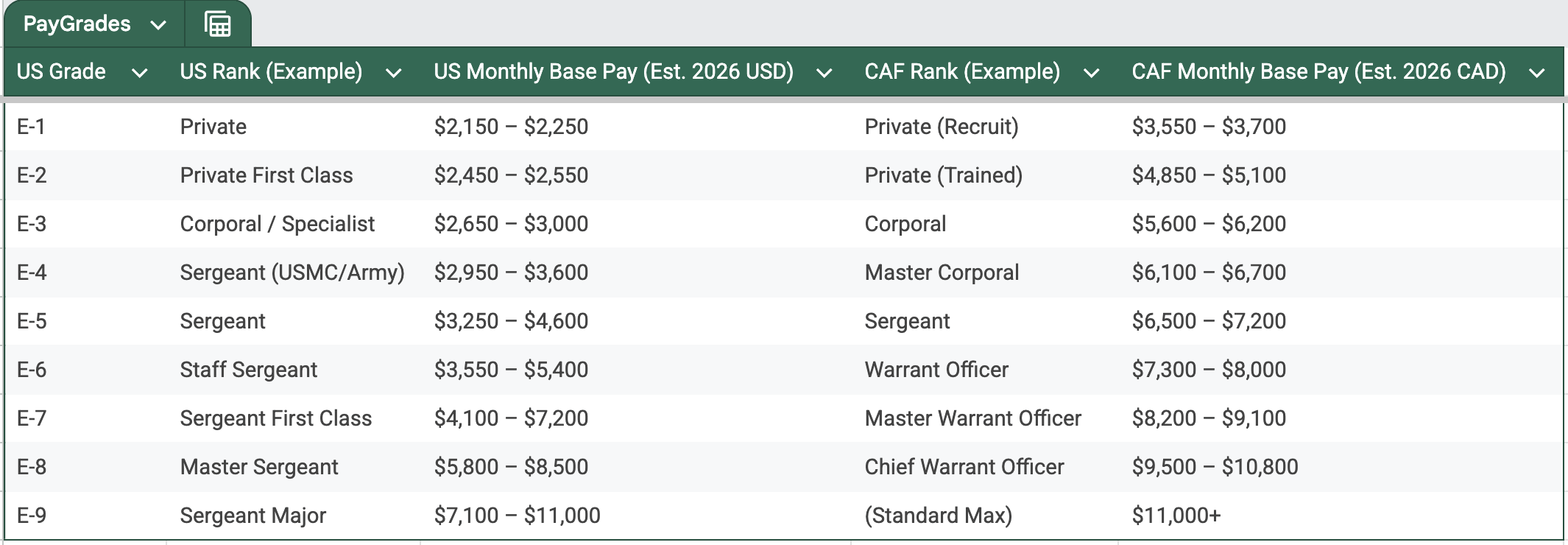
Note on the “Sarge Steele” Bracket: An E-6 in the US system (like our Sarge Steele) with 20 years of service earns a base pay at the higher end of that bracket ($5,400 USD). While this is a respectable middle-class wage, the “friction” occurs when transitioning to a civilian market where that same level of responsibility often commands six-figure executive salaries.
Officers are the strategic and executive leaders of the military. They are designated as O-1 through O-10 in the US and range from Officer Cadet to General in Canada.
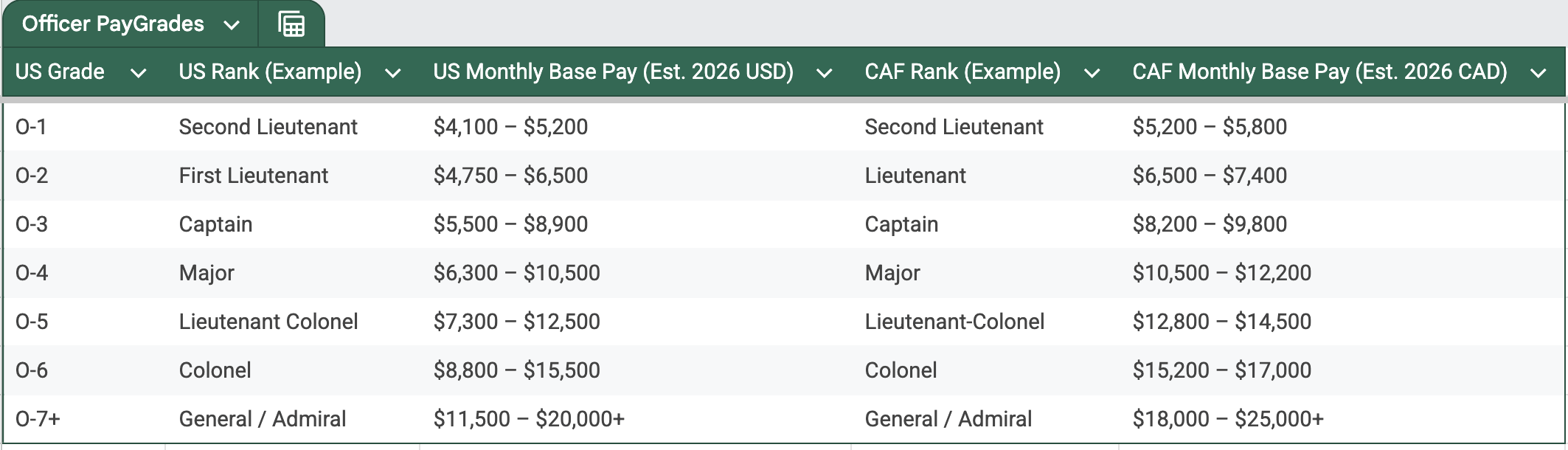
To truly understand these scales, one must look past the raw numbers:
The “Junior Enlisted” Lift: In 2025 and 2026, the US military implemented significant targeted raises for the E-1 through E-4 ranks to combat the “housing and inflation friction” described in our narrative. This was intended to bring junior service members closer to a “living wage” in high-cost-of-living areas.
Allowances vs. Base Pay: A Veteran transitioning to civilian life often forgets that 30-40% of their “wealth” in the military was non-taxable (Housing and Food allowances). A civilian salary of $70,000 often results in less take-home pay than a military compensation package of $55,000 because of this tax-advantaged structure.
Currency & Cost of Living: While the Canadian figures appear higher on paper, the exchange rate (USD vs CAD) and the generally higher cost of living and taxation in Canada mean that the “purchasing power” of a Canadian Sergeant and a US Staff Sergeant is remarkably similar.
The notebook Sarge Steele keeps on his kitchen table is more than a budget; it is a map of a contract. In the military, benefits are rarely viewed as “perks.” They are understood as deferred compensation—a portfolio of promises bought and paid for with twenty years of missed birthdays, physical toll, and the absolute surrender of personal autonomy. For the Veteran Nation, these benefits form the baseline of civilian survival, yet they are governed by a complex architecture of rules, wait times, and economic variables that often create a “friction” unseen by the civilian world.
The centerpiece of the Veteran legacy is the pension. For a career Veteran like Sarge, who served twenty years to reach the “retirement cliff,” this is a guaranteed monthly check for life. For an E-6 (Staff Sergeant), this typically amounts to approximately 40% to 50% of their final base pay.
While this sounds like a comfortable cushion, the reality is a math problem that never quite settles. In 2026, an E-6’s retirement pay provides a “floor”—a baseline that covers perhaps the mortgage and basic utilities in a modest market. It does not, however, cover the full cost of raising a family, saving for college for children like Maya and Leo, or hedging against a volatile economy. This creates a mechanical necessity for a second career, pushing Veterans into a civilian job market that often fails to translate two decades of high-level leadership into a comparable corporate salary.
Parallel to the pension is VA Disability Compensation. This is not “welfare”; it is a tax-free monthly payment designed to compensate for the physical and mental “wear and tear” incurred during service. It is a sliding scale, from 0% to 100%, determined by a rigorous and often lengthy clinical evaluation process.
For many Veterans, this check is the “tax-free anchor” of the household. It is the only part of their income that is shielded from federal taxation, providing a vital buffer against the rising cost of living. However, because these rates are tied to federal Cost of Living Adjustments (COLA), they can lag behind the “real-world” inflation seen at the grocery store or the gas pump. When the price of Sarah’s groceries jumps 10% in a year, a 3% COLA increase feels less like a raise and more like a slow retreat.
The VA Home Loan is perhaps the most famous of all Veteran benefits, offering the ability to purchase a home with 0% down and no private mortgage insurance (PMI). In a housing market defined by scarcity and high entry costs, this is theoretically a “golden key.”
The friction arises in the execution. In a competitive 2026 real estate market, Veterans often find themselves at a disadvantage. Sellers, looking for the fastest and least complicated closing, may favor cash buyers or traditional 20%-down conventional loans over the VA’s strict appraisal requirements and “no-money-down” profile. For a family like the Steeles, the VA loan is their only path to a 1,600-square-foot home in a safe school district, yet they are often forced to bid against institutional investors or buyers who don’t have the same regulatory hurdles. The benefit exists, but the “access” to it is frequently throttled by market mechanics.
One of the most significant, though invisible, assets in the Veteran portfolio is TRICARE or VA Healthcare. For a career retiree, this provides a lifetime of medical coverage that effectively removes one of the largest expenses from the civilian family budget.
In the civilian world, a family of four can easily spend $1,500 to $2,000 a month on premiums, deductibles, and out-of-pocket costs. By retaining military-affiliated healthcare, the Steeles “save” nearly $20,000 a year in avoided costs. This is the “hidden equity” of the Veteran experience. However, navigating this system requires a high degree of administrative stamina—managing referrals, finding providers who accept the coverage, and dealing with the bureaucratic wait times that characterize large-scale government systems.
Finally, there is the Post-9/11 GI Bill. For a career Veteran, the ability to transfer this benefit to their children is the ultimate tool for generational mobility. It covers 100% of tuition at public institutions, provides a housing stipend, and includes a book allowance. For Maya and Leo, this represents a debt-free start to their adult lives. It is perhaps the most successful “wealth-building” tool in the Veteran arsenal, yet it requires the Veteran to have served at least ten years and committed to even more, making it a benefit born of long-term sacrifice.
To the layperson, Sarge Steele is a man with a “guaranteed” life. He has a check, he has healthcare, and he has a path to a home. But when you look at the notebook on his table, you see the reality: these benefits are a foundation, but they are not a complete structure.
The “Invisible Friction” is the gap between these legacy promises and the actual cost of a 2026 lifestyle. The pension is a floor, but the walls are expensive. The VA loan is a key, but the door is often barred by market competition. The disability check is an anchor, but the tide of inflation is rising. For the Veteran Nation, the struggle is not a lack of benefits, but the daunting task of making those benefits “work” in a civilian world that was not built to accommodate the unique trajectory of a life in service.
While the career Veteran navigates the erosion of a legacy, the Junior Enlisted—the E-1s through E-4s who comprise the “Engine Room” of the force—face a different, more abrupt kind of friction. These younger Veterans typically transition after a single four-year term, often before the age of twenty-five. Unlike the Sarge Steeles of the world, they do not walk away with the “floor” of a lifetime pension. They move from a highly structured environment where housing and subsistence were functional certainties into a 2026 civilian market that is aggressively indifferent to their service. For a twenty-three-year-old Veteran who spent four years maintaining the precision avionics of a fighter jet or leading an infantry squad through complex maneuvers, the lack of a “Legacy Portfolio” means they are starting from zero in a high-cost-of-living economy with minimal savings and no recurring safety net.
This demographic is particularly susceptible to the “Underemployment Trap.” Because their mastery was forged in a military context, civilian recruiters often fail to translate their technical and leadership skills into a corporate equivalent, frequently funneling them into entry-level roles that utilize only a fraction of their actual capacity. Without the anchor of a retirement check, these junior Veterans are forced to bridge the gap between their modest wages and the skyrocketing costs of “middle class” family living entirely on their own. For many, middle is not possible, lower end living is often the result. It is derived from a precarious “treading water” existence where the stability they were promised in recruitment posters is replaced by the reality of being one missed paycheck or one unexpected car repair away from financial instability. For the junior Veteran, the “Invisible Friction” isn’t just a budget line item; it is an impassable chasm between their proven capability and their civilian opportunity. §
Comments
Nothing yet. Say the first thing.
Sign in to join the conversation.