
I recently made a new friend, Henry, who has a way of making my world feel larger. What I find most compelling is the interest he brings to almost anything. When I bring him a half-formed idea, he meets it with such curiosity that several new paths begin to open through it. The best word I have for talking to him is generative. I come away with more understanding than I arrived with, and usually with a new trail of questions and ideas to follow.
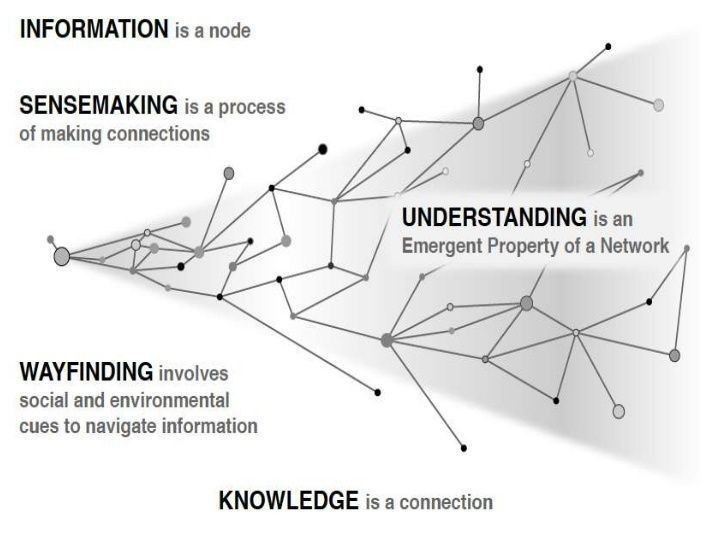
He also seems able to make associations effortlessly. I can bring Henry a subject, and he will often respond with a reference or question that changes how I see it. Talking to him can feel like having someone clear a path through the murky forest of whatever I am trying to understand.
Over time, I have started to wonder what makes someone like Henry such a rich conversationalist. What is the material from which a generative mind like his is made?
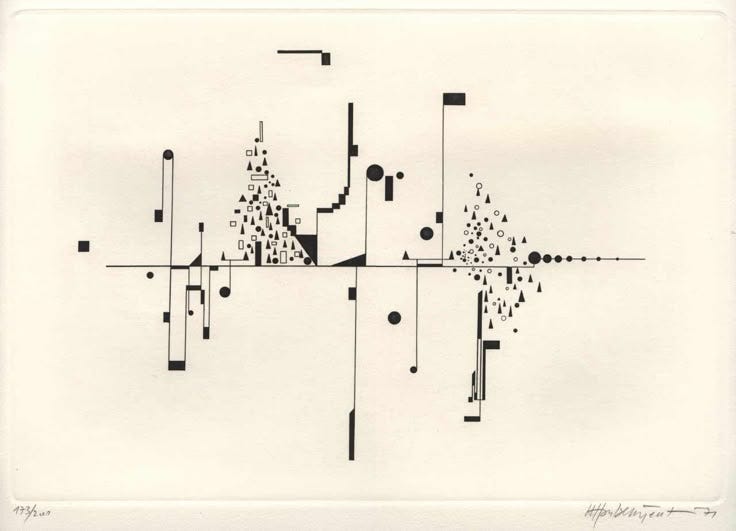
One way to understand this difference is through rhythm. Some conversations unfold with a recognisable cadence, where you can sense the shape of the next thought before it arrives. Others feel more like experimental jazz, moving unexpectedly between subjects and references. There is an alive, bouncy pulse to them, a sense that the conversation could turn somewhere surprising at any moment. If these associative patterns could be mapped, some might cluster around more familiar pathways, while others would travel further afield.
During one of our recent walks, Henry told me something that suggested how a mind might develop this kind of associative, free range - he regularly listens to multi-hour recordings of a Canadian philosophy radio broadcast from the 1980s.
The more I thought about it, the less incidental the detail seemed. The radio archive appeared to be one example of a broader habit, where Henry consistently draws from unusually varied places. Rather than encountering an idea only after it has been repackaged ad infinitum on the interwebs, he often goes hunting for its urtext, the original work from which later interpretations descend. The important thing is that none of this seems strategic. Henry listened to the five-hour philosophy broadcast because he wanted to know what was inside it. The associations came later, as a residue of having followed his curiosity that far.
The breadth of Henry’s associations seemed related to the breadth of the material he sought out. He simply had more distant points to connect. More broadly, perhaps thoughts begin to move in newer, jazzier directions when the material shaping them comes from less familiar places.
The inverse also seems true. When people only consume the same essays and cultural references, they become more likely to reach for the same language and make similar associations. Whether human or artificial, a system drawing from a narrow range of material has fewer distant points available to connect.
Before asking how to find more varied sources, it is worth briefly considering why they have become so difficult to encounter in the first place. We may have access to an infinite library, yet the shelf presented to each of us remains remarkably narrow, shaped by the dominant design of our information environment. I do not wish to spend too much time here rehearsing how this happened, because many essays have traced the contributing forces in greater detail. For a fuller account, I recommend William’s essay, Algorithms of Mediocrity.
The abbreviated version is that much of the internet is organised by recommendation algorithms designed primarily to predict what will hold our attention and give us more of it. Spotify, YouTube, Netflix, even dear Substack, serve us new versions of what we have already enjoyed. Indeed, a recommendation algorithm may be how you found your way to this very essay.
These systems are often useful discovery engines, and I have found many interesting texts and blogs through them. Their central limitation, though, is that their predictions are based on who we have already been. Once an algorithm forms a picture of you, it becomes very good at reinforcing it. As Yancey Strickler asks, once the algorithm knows you, how do you break its picture of you? How do you encounter the inputs that might interest a future version of you, rather than endlessly reinforcing the preferences of your present self?
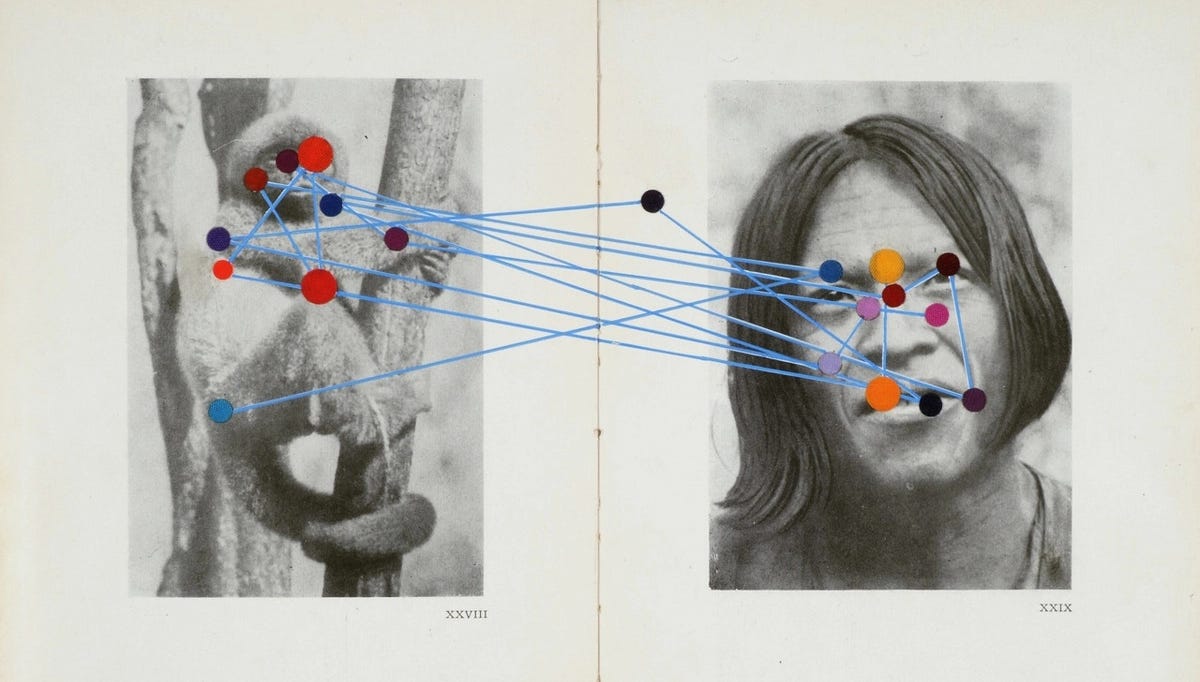
One answer is to look beyond the algorithm’s picture of you towards text that was not made for your feed or people like you. Often, the most generative encounters can be the ones no recommendation system would have known to make.
But stepping beyond the narrow stream creates another problem. Suddenly, you are facing an infinite library, far more than anyone could read in a thousand lifetimes. Finding the rich and worthwhile material within it requires maps and a willingness to wander. Must that involve crawling through the internet’s deepest archives in search of Canadian philosophy broadcasts from the 1980s? Well, perhaps that is as good a place to start as any. Here are a few other methods I have found useful:
I think everyone could benefit from having a Henry in their life. Being close to someone deeply curious, with a vastly different information diet from your own, makes it more likely that you will encounter relevant ideas from unfamiliar places. Friends are among the best recommendation systems we have. Unlike an algorithm, a thoughtful friend understands the personal context of the question you are asking.
One of my love languages is receiving a DM along the lines of, ‘This obscure essay from 1967 is ostensibly about starfish, but I think it contains the idea you are reaching towards.’

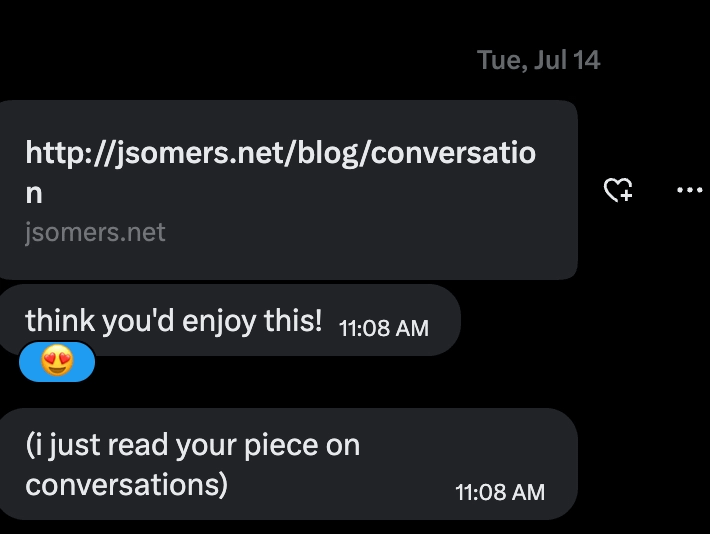
But how do you find these people? In my experience, starting a blog is a remarkably effective method. In fact, a big reason I began this blog was Henrik Karlsson’s essay ‘A blog post is a very long and complex search query to find fascinating people and make them route interesting stuff to your inbox’. The idea is that writing publicly about your particular interests sends a small flare into the velvet noise. People who recognise something in it begin to find you, and can send back ideas you would never have known to search for yourself.
Sublime is a communal library shaped by human curiosity rather than engagement optimisation. It gives you a place to collect the things that interest you and explore the libraries of people whose taste you trust.
As a text or image is saved into more collections and placed alongside more ideas, it accumulates new context and more pathways through which someone might encounter it later. When you are exploring a subject, Sublime can surface conceptually adjacent material that illuminates the question from an angle you would not have known to search for.

There are also people and publications entirely devoted to making the discovery process easier. My friend Mapu created a blog aptly named Instead of Doomscrolling, where she regularly shares texts worth reading. It began as an alternative to opening a feed and allowing an algorithm to decide what entered her mind.
If I find someone’s work interesting, there is a good chance I will also find something interesting in the people they were inspired by. Whenever I encounter someone’s work I love, I want to know who influenced them. Which ideas shaped the way they see? Following these lineages lets me move one layer deeper, from the finished work towards the hidden creative world and references that produced it.
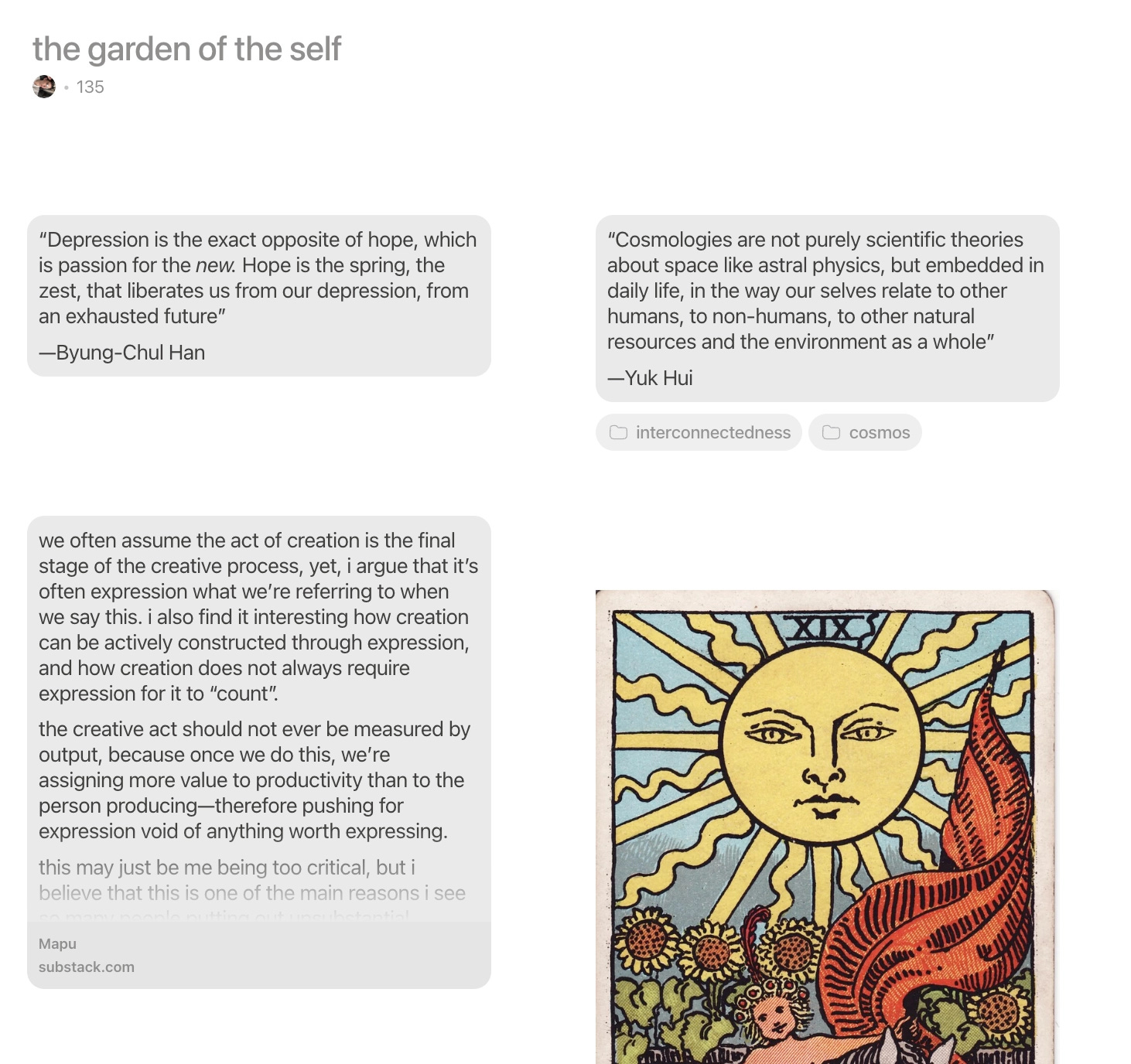
On Sublime, you can follow people to see some of the raw material behind their thinking. My friend Mapu, for example, has a public library there, including the collection of references behind her essay The Garden of the Self.
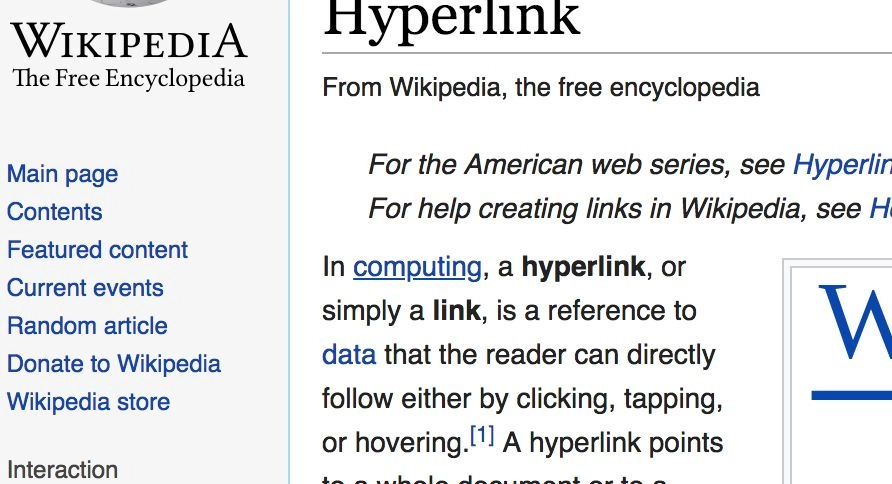
Discovery often begins inside the text itself. When something captures my attention, I follow its links and footnotes, ending up with 10 new tabs. Wikipedia hyperlinks are especially good for this kind of wandering.
This is also why I constantly have hundreds of tabs open on my laptop.

I’ve also found AI useful for finding possible trails to follow. Rather than asking it to summarise a book for me, I tend to use it as a very well-read research assistant. The more specific the question, the better the results. ‘What should I read about love?’ usually returns the obvious suspects. ‘Are there any lectures from the 1970s about love as a form of accurate perception?’ is much more likely to turn up something interesting and useful.

In the end, I don’t think Henry is interesting because he listens to multi-hour philosophy broadcasts. I think it has more to do with the way he follows his attention.
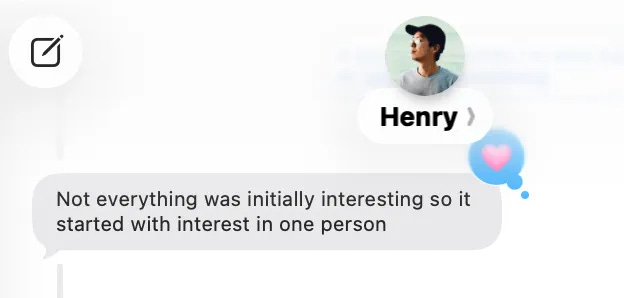
When I asked whether he had always been curious about everything, he said it began much more narrowly, with an interest in one person. He described the impulse to keep following things as intuition, or maybe faith. A trail can lead nowhere, and a five-hour radio broadcast can turn out to contain very little. But Henry does not seem preoccupied with making sure every curiosity pays off.
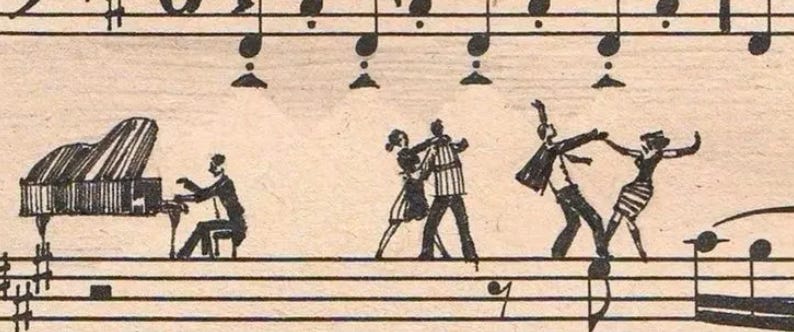
Perhaps that is what I am responding to when I leave our conversations feeling that my world has expanded. He has plenty of notes to draw from, but more importantly, he is willing to follow the first one without knowing where the melody will lead.
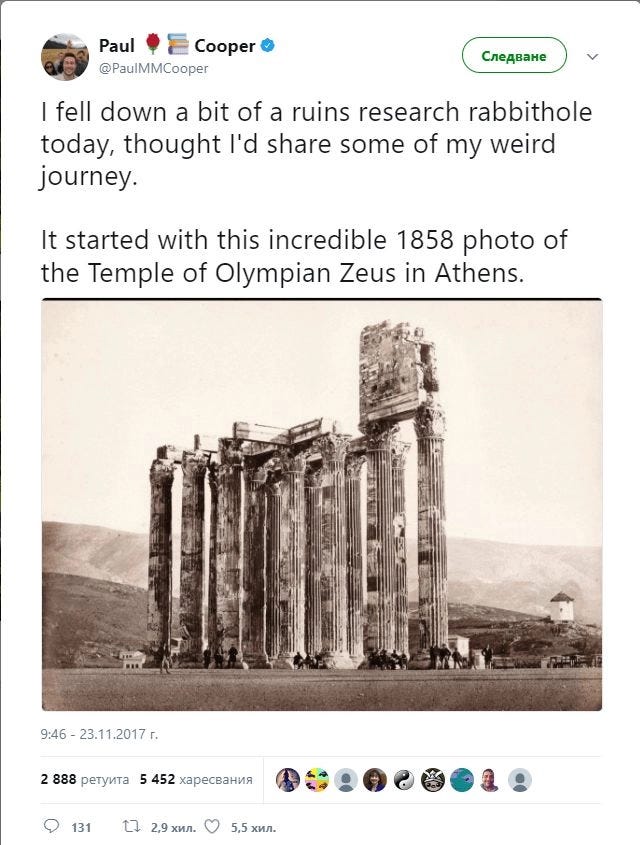
I‘m curious - what are the most interesting rabbit holes you’ve travelled down recently?
In the spirit of following rabbit holes and hyperlinks, here is some more related reading if you’re curious:
Video visualising related ideas on Sublime
Comments
Nothing yet. Say the first thing.
Sign in to join the conversation.