

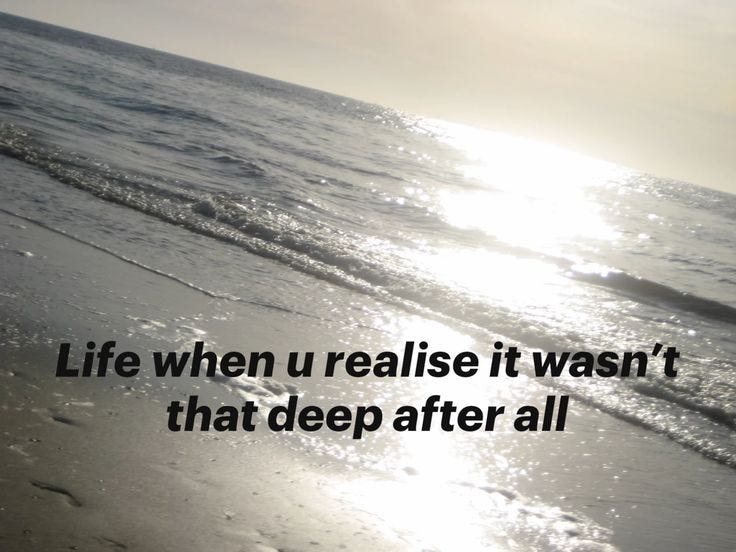
When someone publicly conducts an analysis of a seemingly innocuous matter, there is a common cultural refrain: ‘it’s not that deep.’ Sometimes this is accompanied by a ‘chill bro,’ a general shaking of the head, and the suggestion that they simply stop thinking so much. If only the person could relax and see how simple everything is, they might finally be released from their exhausting overthinking tendencies. Their words convey a sense of: Silly thinker, such things are neither serious nor deep. You concern yourself with the wrong things.
To be sure, thinking can be exhausting and bothersome. Sometimes it truly is neither the time nor place for a long analysis. Indeed, some intellectual types would probably benefit from thinking less about certain matters and chilling out. Overthinking is not a virtue in itself, and life is simple in many ways that we eagerly complicate. Still, here I wish to make the case for careful consideration, enquiry, and looking deeply at something until it begins to reveal what it actually is. Because, in most cases, it really is that deep. In fact, it is usually far deeper than we have the capacity to perceive at first sight.
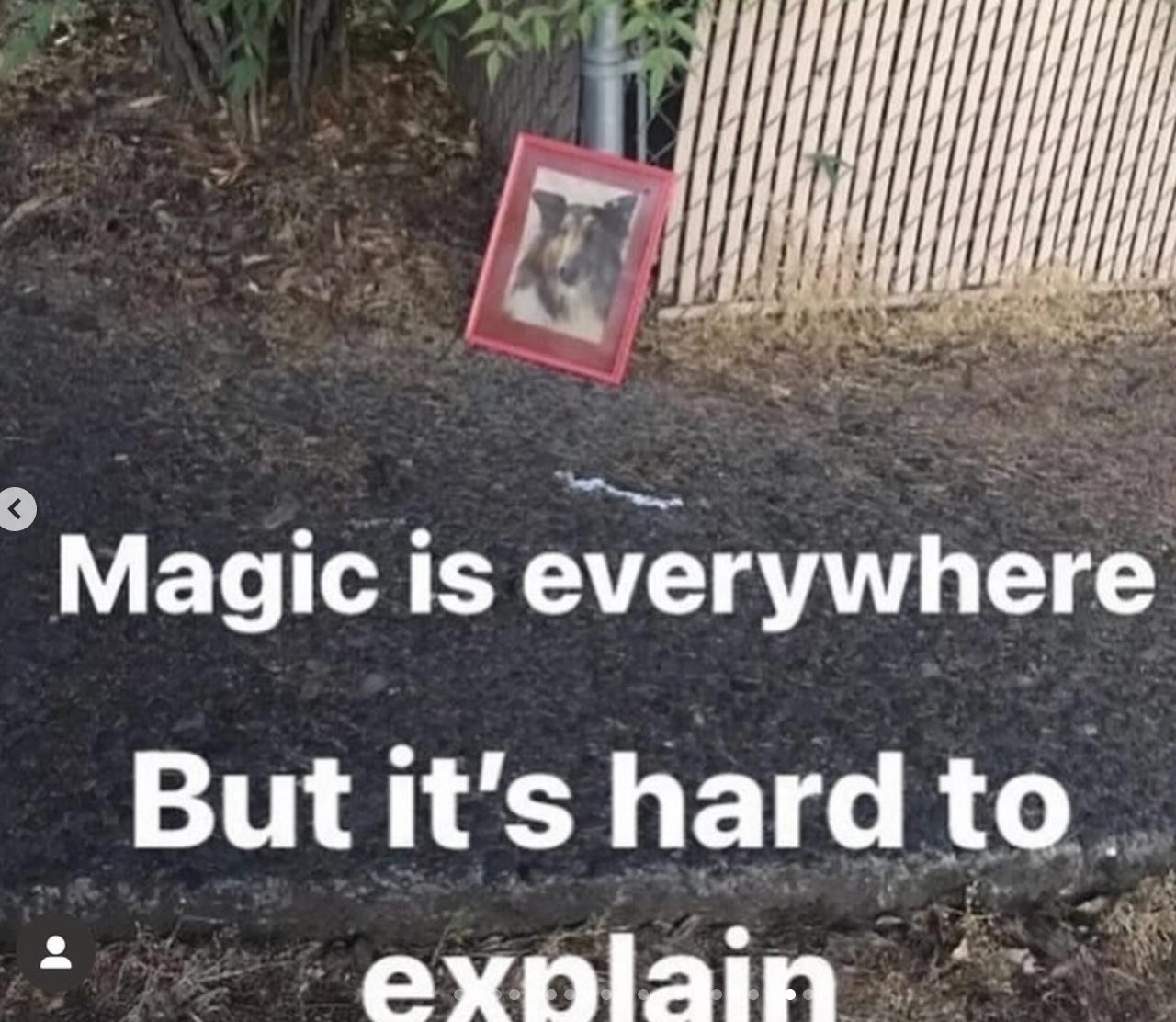
There are invisible oceans beneath every breadcrumb, passing glance, chair, headline, lyric, meme, and apparently meaningless event. In fact, things are rarely as simple as they first appear. Illusions fade through careful attention, and more slowly comes into view.
Those who cultivate their attention begin to see the infinite depth in things. Once you internalise this, life has the possibility to appear richer, and more alive. Everything brims with implication. The world no longer resembles a flat plane of isolated facts, but rather becomes a dense, moving fabric.
But, importantly, this seeing is not a simple or automatic capacity. We must be helped to learn to see. It must be cultivated, then practised and taught, generously transmitted between one another. Sharing this cultivated attention can help reality become more available to others. They say: look here. Listen to this. Do you see what is happening?
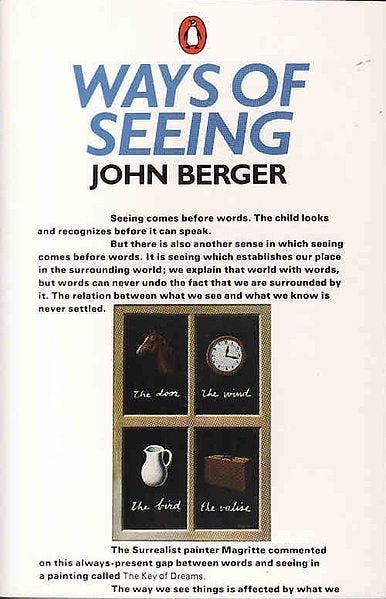
As John Berger wrote, ‘Reality is not a given; it has to be continually sought out, held, salvaged.’ So, it may be that ‘it’s not that deep’ is often less a description of reality than an admission that someone has stopped looking or somehow failed to perceive.
Here, I want to illustrate this point through a few examples across emotions, lyrics, celebrity culture, language, and ordinary objects. These may appear to be unrelated subjects, but each reveals the same underlying principle: almost anything becomes more expansive when met with sustained attention. Look closely enough and the apparently trivial begins to disclose entire worlds.
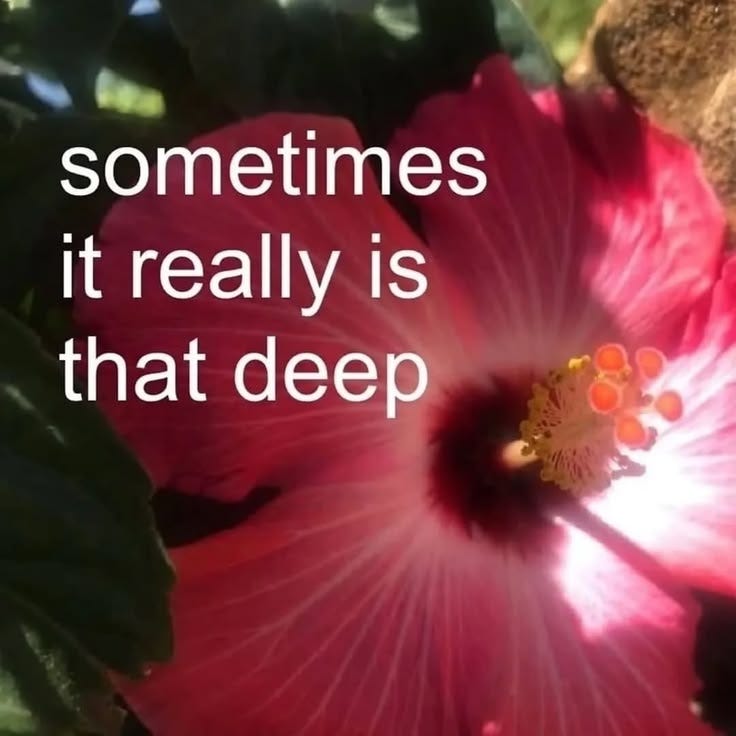
Firstly, personal experience will show that emotions are rarely just what they initially announce themselves to be. As written in an earlier essay, emotions often arrive in disguise. What we thought was joy turns out to be hope. What felt like heartbreak might have contained relief. The lighting shifts and the sun turns. Years pass, then shadows fall differently and the shape of the story warps, just enough that we have to tell it all over again.
A friend and I once talked about how the past changes the further we get from it. The colours we experience in the moment, vivid and chaotic, overexposed, inevitably fade or mutate. Sometimes they soften into warm sepia. Other times they dissolve into murky grey. Faces blur, perhaps characters trade places, then details smudge like wet ink. The version of the past we hold is no longer precisely the one we lived, but the one we have reassembled1.
It is almost a magic trick, the way time can sweeten what once stung or obscure what once felt certain. Of course, I couldn’t see the gravity of the moment at the time. That’s the way these things happen.
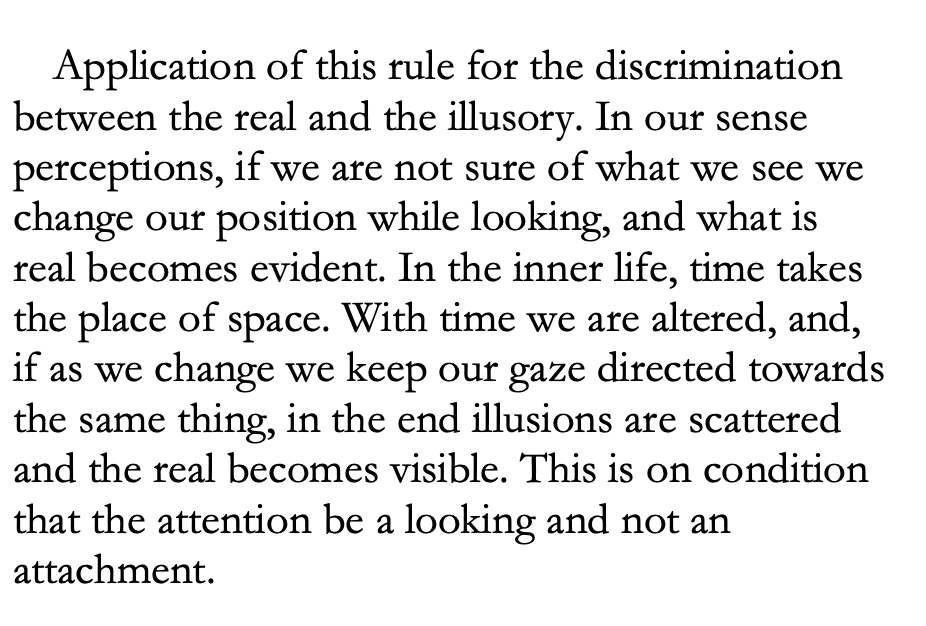
It would appear memory is alive and mutable, constantly revised. We are always reassembling our stories of what happened with new context and the renewal of distance. The brain remakes the scene whenever we revisit it, carefully subconsciously editing for narrative coherence. What we remember is shaped by what happened, but also by who we are when we remember it and everything that has unfolded in the spacetime since.
Sometimes it feels like time is sending letters in invisible ink. I shake the paper and squint, then eventually, some truth begins to appear. The image is still developing, I turn it over like a stone in my palm. I move the frames, trying to draw meaning from the blur. Maybe one day we will all be looking at the same image. For now, each of us is still stepping forward and backward as the pixels unfold.
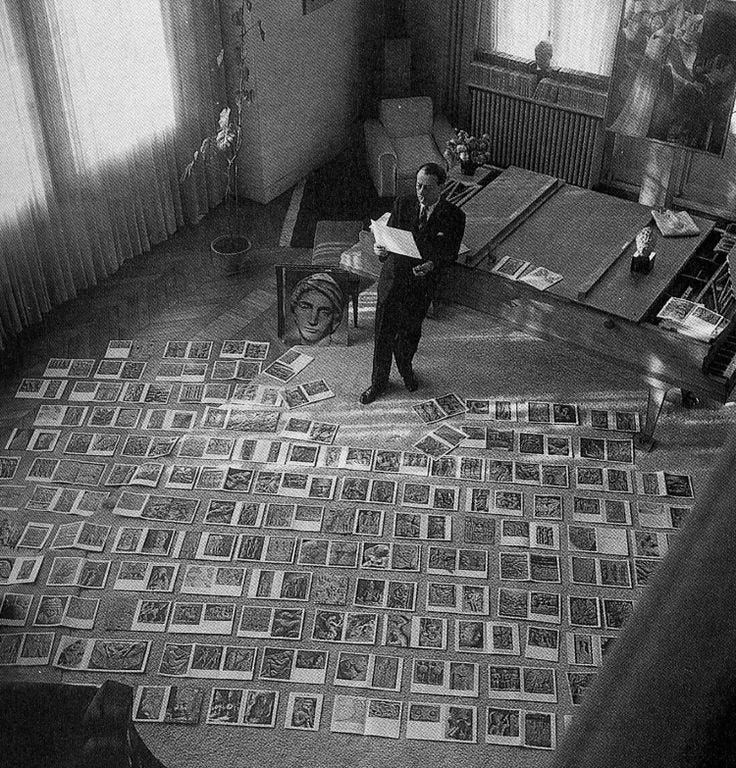
Now, let us speak of songs, and more specifically, lyrics. A friend, P, once told me that I had influenced him to start listening to lyrics more closely. This made me overjoyed, as though he had suddenly gained access to a hidden layer of reality.
I once assumed everyone listened to lyrics the way I did, as if they were coded transmissions from the emotional underworld. I’ve since learned there are three kinds of people: sound people, lyrics people, and, occasionally, people who are both. I was initially shocked to discover that some people let music wash over them without analysing the words. No thoughts, head empty, just riding the rhythm.
Meanwhile, I am pausing at 2:42 to look up a cryptic line on Genius, attempting to reverse-engineer the precise cocktail of emotion that made those particular words feel necessary to write. Lyrics have always felt like a shortcut to understanding, time capsules of someone else’s interiority distilled into minutes of melody, a cheat code to wisdom worn by another soul. Listening closely can feel like being handed the key to someone else’s diary or a secret portal into thousands of lives I will never get to live, a brief and beautiful peering in.
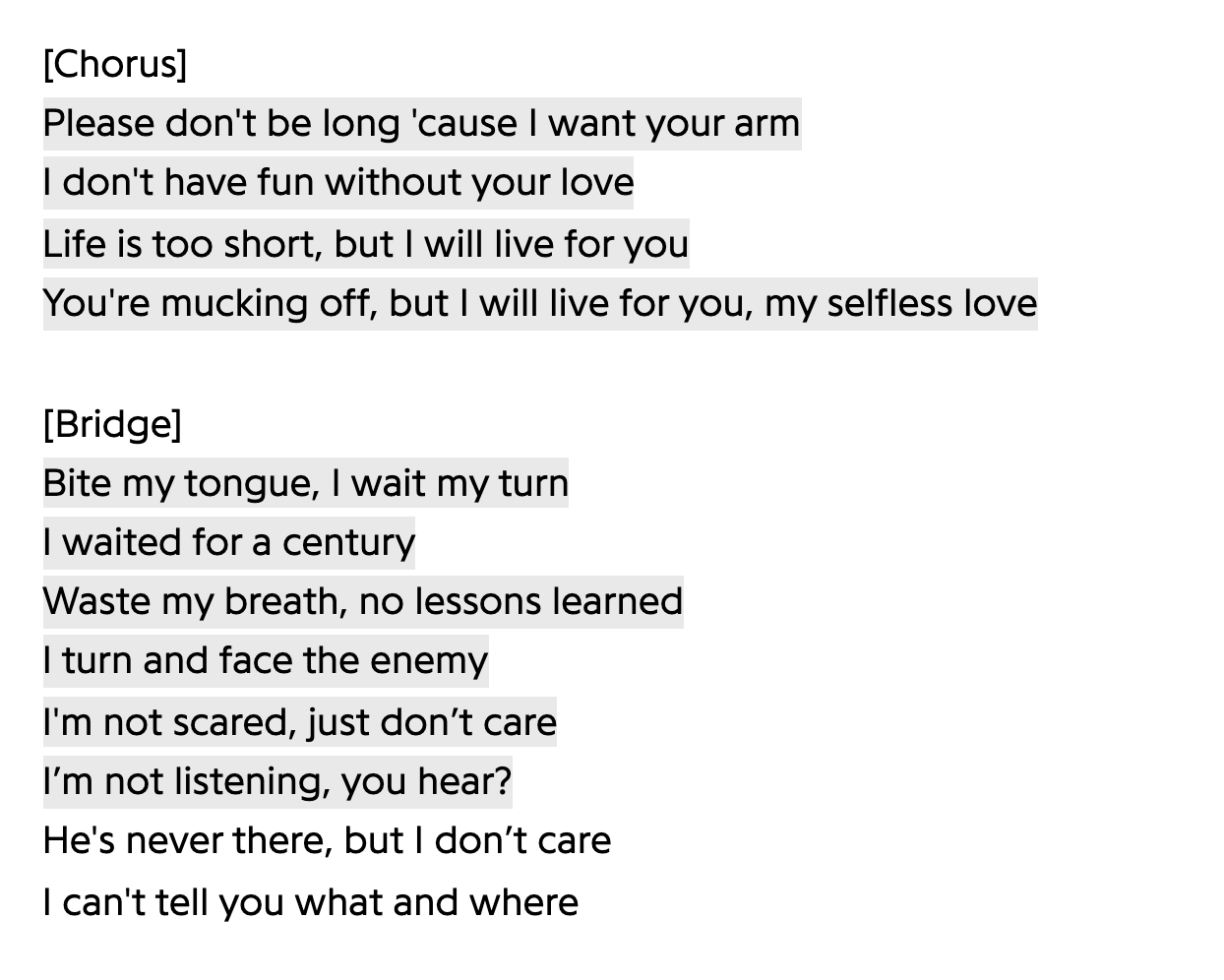
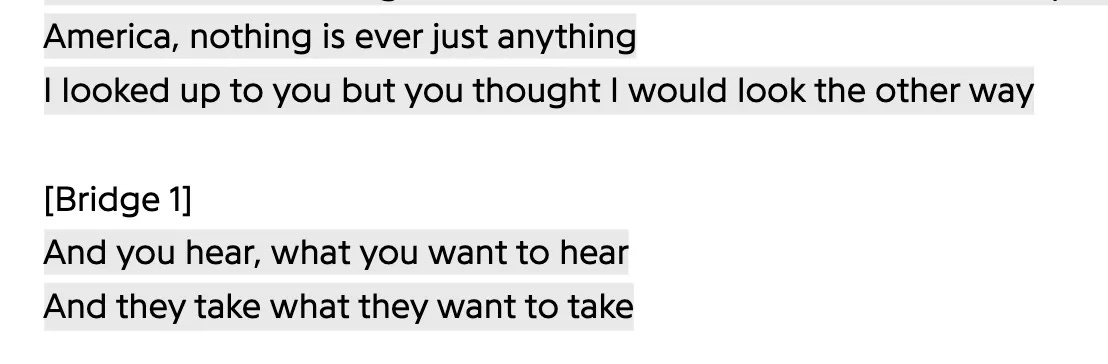
This is because songs are written by artists (commonly unusually sensitive people) at often emotional boiling point, sharing stories you usually say only to a close friend, if you can say them at all. Take Selfless by The Strokes. I will likely never be a middle-aged man experiencing divorce to a long love, but for a few minutes I am given some glimmer of what that might feel like:
Other songs help me see other people more clearly. Tame Impala and Mac DeMarco, for instance, have helped me make some sense of a specific archetype of man. Songs allow me to understand versions of people I could not quite grasp at the time, filling in blanks I did not know were missing. Sometimes I hear a lyric and wonder whether that is what someone felt, even if they never had the language to tell me.

Now zooming out beyond the personal, what is the use of celebrity culture, its happenings, and apparently meaningless headlines? These things are often written off as silly passing distractions, signs of a vacant mind. Yet, in some sense, they are also emergences of the moment, symbols of larger swirls and dominant energies moving through the world.
A celebrity is someone about whom we possess an unusual amount of information despite never having met them. We may know where they grew up, what their childhood was like, who they date, what they wear, which artists they admire, and what they have said across years of interviews. We develop an impression of them that is, of course, entirely distinct from knowing them personally, but still built from an asymmetric accumulation of detail. This is the bizarre parasocial condition of celebrity - this person does not know we exist, yet we are given enough fragments of their lives to construct a character.
That character may be distorted, or carefully manufactured. Still, if we pay attention to the information surrounding celebrities, we can arrive at a richer understanding of the culture that selected them for attention. The point is less to discover who a celebrity ‘really is’ than to ask what their public meaning reveals. Why does this person fascinate us now? What do they represent? What kinds of lives and values does their image make imaginable? A fandom can be understood as a swell of collective attention, a cluster of energy and identification revealing something about who people want to be, who they want to desire, and which forms of personhood currently feel compelling.
When large conflicts play out on this global stage, they quickly become about far more than the individuals involved. The characters become symbols, whether fairly or unfairly, of larger cultural modes. This is part of why the battle between Kendrick Lamar and Drake was so fascinating to watch.

Looking more closely, one might intuit that Drake represents a certain optimised ideal of the streaming era. One of his superpowers could be seen as easily becoming what the moment wants, and he has reaped the commercial rewards this skill enables. Drake is the master of commercial and platform fluency, a powerful algorithmic omnipresence. Yet, the shadow side of being able to become anything is that, at a certain point, people begin to wonder whether you are anchored in anything.
Kendrick, by contrast, can be perceived through his poetic raps as presenting more of an anchored intentionality, with homage to careful constraint, consequence, and a moral seriousness. His power comes from the sense that he is speaking from a specific understanding of who he is. Kendrick possesses the power of appearing to have a real centre.
Part of what made the battle so culturally charged was the larger question beneath it: which model of personhood still feels trustworthy? The battle became a referendum on charm as a sufficient defence. It turns out being famous is not the same as being respected.
Kendrick’s apparent victory suggested that many people want artists who can carry judgement and seem to have paid a price for their point of view. Perhaps, ‘Not Like Us’ became a cultural moment because it gave people language for the sense that there is still such a thing as being from somewhere, people who can adapt to every room but seem responsible to no particular world. One might opine that this extends beyond music, that it channelled a wider exhaustion with prevalent smoothness and optimisation. Perhaps parts of culture currently feel suspicious of things that are over-optimised and under-rooted, such as corporates that say everything while believing nothing or people who enter every scene while belonging to none. Within this frame, Kendrick’s victory could be interpreted as part of a wider correction, a reminder that charisma eventually has to answer to character. Culture is always choosing the worldview with the melody attached.
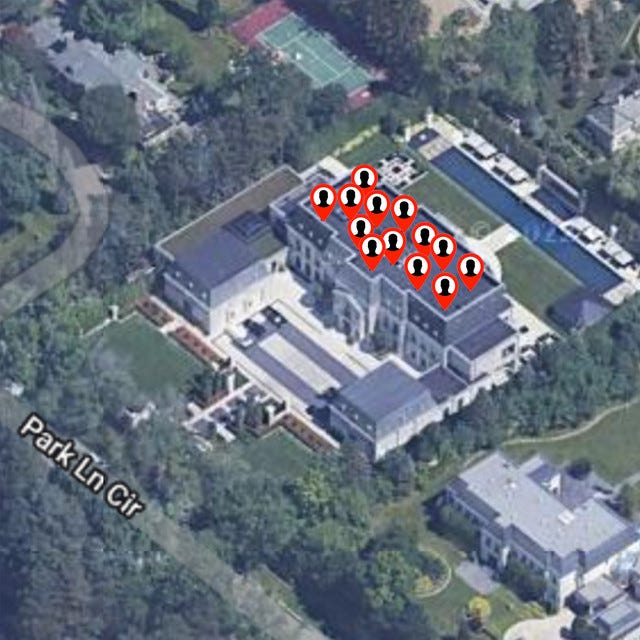
Looking elsewhere in the realm of celebrity, you might come to see that Phoebe Bridgers dating Bo Burnham makes complete sense. Timothée Chalamet enjoying Kid Cudi makes sense. Olivia Rodrigo being seen with Cameron Winter makes sense. These are meaningless celebrity headlines, except that they are also filled with meaning, mini clues and signals about the worlds we inhabit.
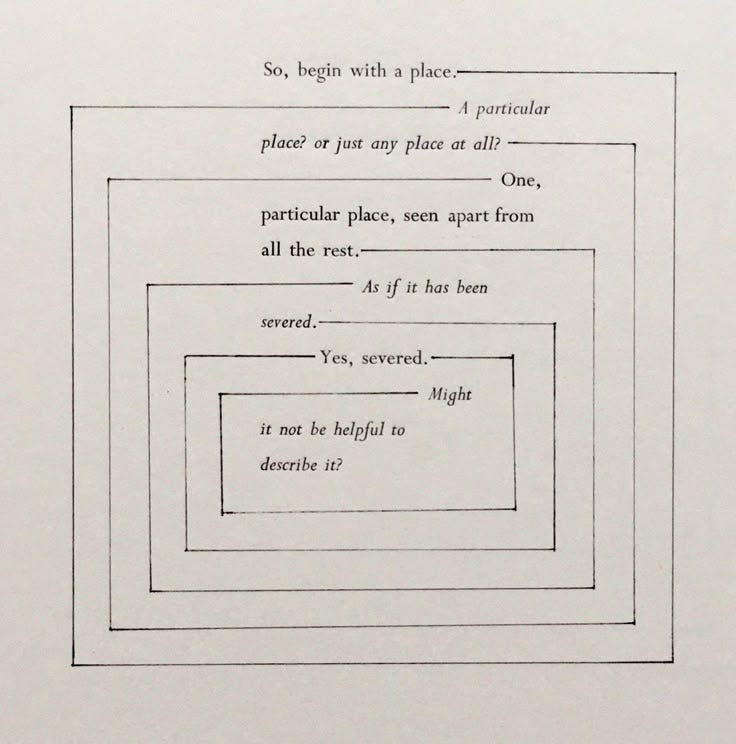
Now, let us consider a chair.
At first, it is simply a chair, an ordinary object so familiar that it almost disappears from perception. We see the category before we see the thing itself.
Now, look a little longer.
Someone designed its careful shape. Their cultivated idea of beauty, an impression of the human body entered its form. A tree grew somewhere for years before becoming its wood. Then someone cut it down.
The chair can be seen to contain forests of the past, tools, worn hands, the whirs of global commerce, some design history, bodily needs, and domestic rituals, amongst many other things. It also bears the traces of everyone who has sat there before us. Someone may have waited for devastating news in it, fallen in love beside it, eaten breakfast on it every morning for twenty years, or dragged it across a room during an argument.
The object appears still, while its history is moving through it.

Now comes the nuance. It is probably helpful to remain cautious about converting fragments of information into totalising accounts of another person. A pairing or preference does not reveal an entire interior life.
Still, it is alarming once you realise how much we inadvertently and subconsciously reveal ourselves to anyone paying close attention. The difference between being neurotic versus perceptive is sometimes simply how accurate your reads are.
When you are attuned, hidden truths can run below a conversation like subtitles. A person says they believe one thing (stated preferences), while their timing and acts ays another (revealed preferences). Perhaps their sudden irritation might guard a tenderness they do not yet know how to name.
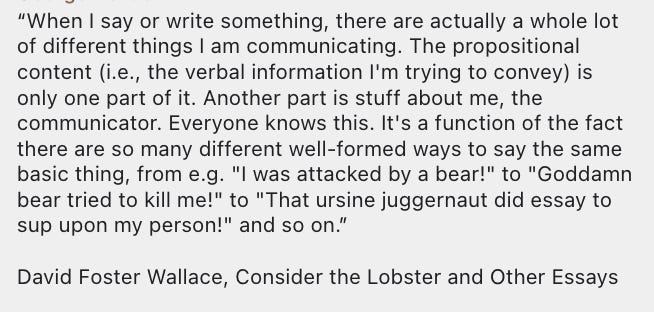
Still, it’s worth treading with caution. Perception without humility quickly becomes projection. We see through the accumulated lens of our own experience, and sometimes the subtitles are ours rather than theirs. The practice is to look closely without believing ourselves omniscient, holding our interpretations lightly enough that reality can still correct us.
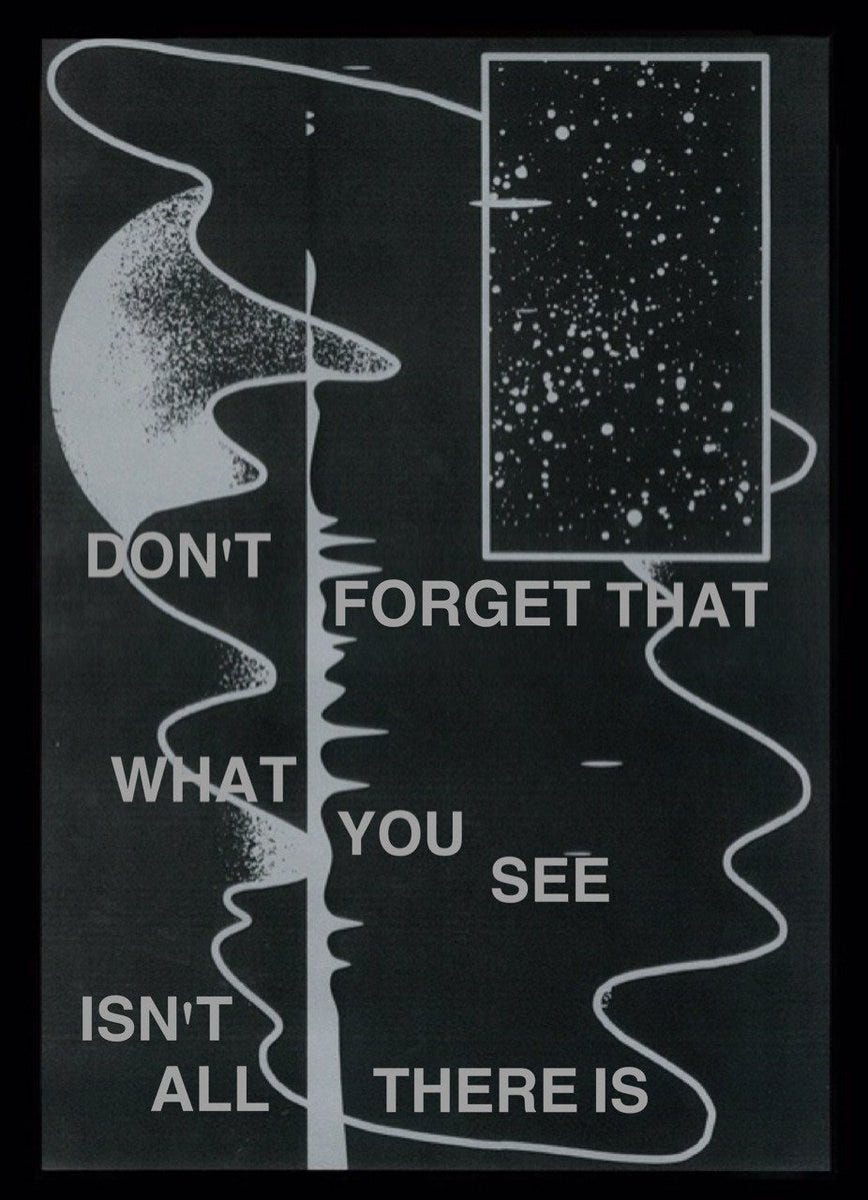
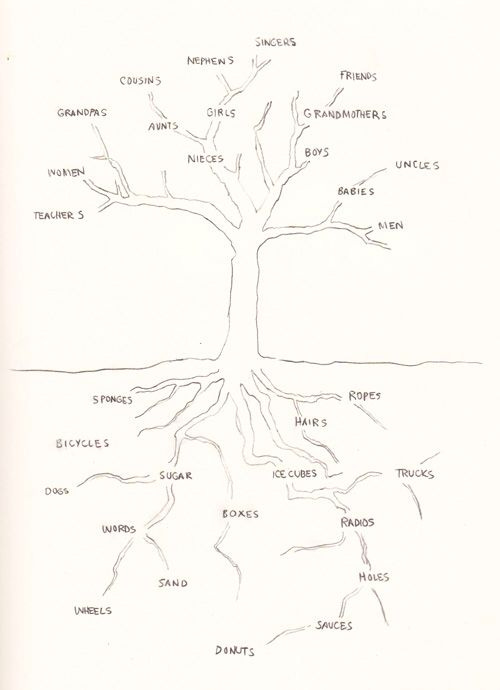
Follow almost any thought for long enough and it eventually touches something that may have initially seemed faraway. What appears to be a collection of separate subjects slowly reveals itself as one continuous conversation. It seems there is often an underlying order to seemingly random events, or at least the possibility of one. It reminds me of the way trees communicate across long distances through underground fungal networks, invisible to us on the surface. Above ground, each tree appears separate. Beneath it, exchange is always taking place.
The comical meta-irony is that I have written an entire essay about the phrase ‘it’s not that deep.’ With attention, the phrase itself turns out to be infinitely deep, containing within it smuggled beliefs about seriousness and restraint, intelligence and attention, as well as which parts of life are worthy of examination. It implies that certain things are beneath thought. It imagines that simplicity is more mature than curiosity, that detachment is wiser than fascination, and that the person who notices too much should learn to notice less.
Indeed, as discussed, sometimes they probably should! There are forms of analysis that estrange us from experience, moments when we need to stop interpreting life and simply live it (as spoken in the case for no thoughts, head empty). It is possible to become so preoccupied with the significance of a moment that you miss the moment itself. But I worry more about the opposite tendency, the casual flattening of a world that is already difficult to see clearly and the dismissal of attention as overthinking. The reflex to call curiosity cringe, analysis pretentious, sincerity embarrassing, and depth something imagined by people who have failed to chill.
I do not wish to wrench a lesson out of every spilled drink or force every passing glance to bear the weight of fate. I want to remain open to the possibility that the world contains more than its first appearance. Berger, again, for good measure: reality is not a given. It has to be continually sought out, held, salvaged.
Yet, attention is how we do that. The world keeps offering itself to us, singing loudly in every moment, asking again and again:
do you see?
do you see?
If you find some value in my writing, you can buy me a coffee. Other ways to support are just as meaningful: subscribing or pledging to my Substack, leaving a comment, or sharing this with someone you think would enjoy it. Each small signal helps others find their way through the noise.
Related:

clap when the plane lands
·
May 16, 2025
The real voyage of discovery consists not in seeking new landscapes, but in having new eyes.
Kevin Parker captures this well in his song ‘Lost in Yesterday’: When were living in squalor, wasn’t it heaven … Now even though that was a time I hated from day one, eventually terrible memories turn into great ones
Comments
Nothing yet. Say the first thing.
Sign in to join the conversation.