

⛔️ Cosmic Disclosure Warning ⛔️
Many, many moons 🌗 ago, when Nemo ⚓️was just a minnow. I ventured out into the world fearlessly. I used the skills that served me within my family; I had a good sense of humor, I was hard-working, and I tried hard to make myself indispensable to whatever group of people I was interacting with. Based on my experiences up until that point, that seemed like a very good decision.
It was based on sound logic…
But in the world of finance and technology, you sometimes come across people who are not quite as good-natured as your family. You come across sociopaths and narcissists, who either latch onto you? Or see you as a threat, or both... My early experiences in various companies and businesses that I was involved in were that these types of people can see your skill set and will utilize you for as long as you are non-threatening. If you start to rise too high, or you start to become a threat, then they very quickly change the narrative from you being the rising star to the scapegoat.

I believe this Dynamic played out between Carl G. Jung and Sigmund Fraud, Whoops, I haven’t done that one in a while. Sorry, that was a Freudian slip. At first, Carl G. Jung was Freud’s heir apparent, but he did not automatically agree and diminish himself to Freud’s theories. The change in Freud’s perception of Jung began to change. Jung quickly found himself on the outside, ostracized from people he once felt very close to. This really sent Carl G. Jung into a professional and psychological crisis of sorts.
Of course, I don’t know what really happened between the two of them, but here is my best effort to explain it. The dispute between Sigmund Freud and Carl Jung was one of the most influential disagreements in the history of psychology. Freud, the founder of psychoanalysis, believed that human behavior is largely driven by unconscious sexual and aggressive instincts, with childhood experiences playing the central role in shaping personality. Jung, who was initially Freud’s close colleague and considered his intellectual successor, admired many of Freud’s ideas but gradually rejected the narrow emphasis on sexuality as the primary motivation for human behavior. Instead, Jung argued that people are influenced by a broader range of psychological and spiritual forces.
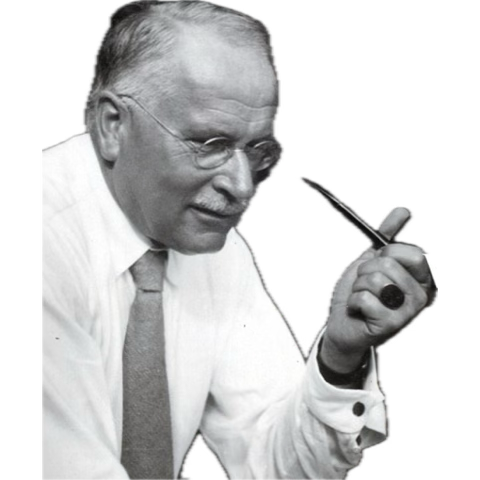
Carl G. Jung introduced the concept of the collective unconscious, a layer of the unconscious mind shared by all humans that contains universal patterns, or archetypes, such as the Hero, the Mother, and the Shadow. Jung also believed that psychological growth involves a lifelong process of individuation, in which people integrate different aspects of themselves to achieve wholeness.
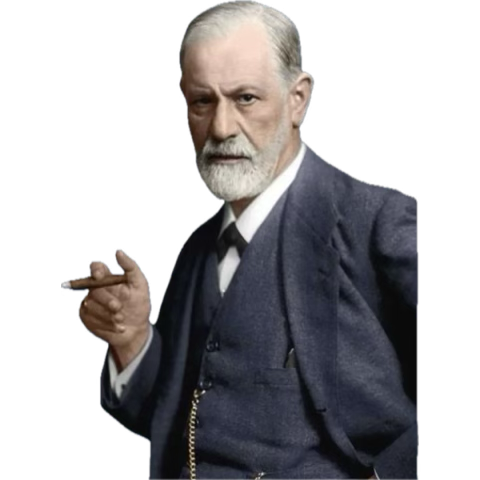
Freud viewed religion and mythology mainly as expressions of unconscious wishes and conflicts, whereas Jung saw them as meaningful symbols that could promote personal development and psychological health. Their theoretical differences were accompanied by growing personal tensions, disagreements over leadership within the psychoanalytic movement, and conflicting visions for the future of psychology. By 1913, their friendship had ended, and they pursued separate intellectual paths. Freud continued to develop classical psychoanalysis, while Jung founded analytical psychology, establishing a distinct school of thought. For Jung, the split at first lead to crisis, but it ultimately broadened the field of psychology by encouraging diverse approaches to understanding the human mind. Today, Freud is remembered for emphasizing unconscious conflict and psychosexual development. At the same time, Jung is celebrated for his exploration of symbolism, personality, dreams, and the deeper cultural and spiritual dimensions of human experience.
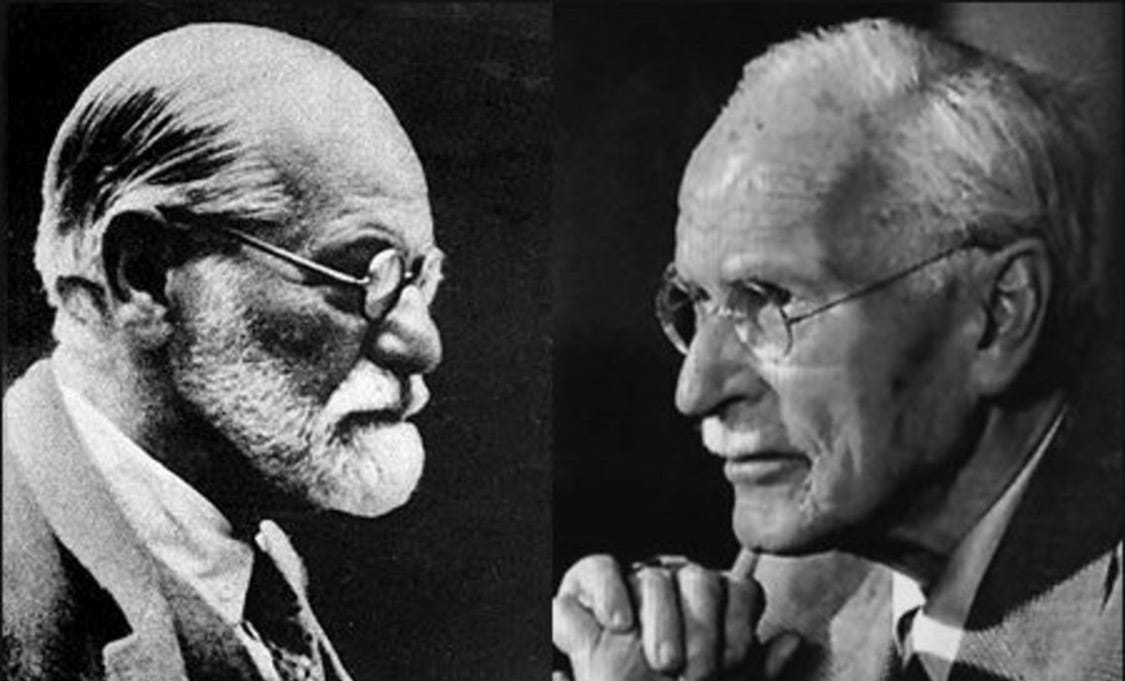
This famous split illustrates the dynamic we will be talking about today. At first, Freud viewed Carl G. Jung as a tremendous asset to the movement he was tirelessly working to create (he wanted to be viewed as the father of Psychology). But then a potential rival. Carl G. Jung called it intellectual honesty, but Sigmund Freud just saw it as a threat to his dominance of the field of study that he believed he created. Then ultimately, he did everything in his power to ostracize and diminish Carl G. Jung and his theories. This actually sent Carl G. Jung into crisis, which ultimately resulted in the Red Book 📕.
Carl G. Jung did eventually get his where the main body of work centered for the rest of his life.
On that note, let us begin today’s adventure.
Here's a question worth sitting with.
What if the very thing that makes you valuable is also the thing that makes you a target?
We're taught to chase indispensability.
Be the one they can't replace.
Be the one they need. And that's true… necessity is power, dependence is loyalty's quiet cousin. But there's a darker side to this that almost Nobody (except me, Nemo⚓️the Nobody) talks about. Because being needed is not the same as being safe. Sometimes, the more valuable you become, the more dangerous your position gets. Not despite your value. Because of it.

Machiavelli knew this better than almost anyone in history. And he learned it the hard way.
Let me tell you something about the man himself, because it matters here. Machiavelli wasn't just a theorist scribbling advice from a comfortable study. He was a diplomat, a civil servant, a man who served Florence faithfully for years. He was skilled. He was useful. He negotiated with popes and kings. He was, by every measure, indispensable to the government he served.
And then the Medici family returned to power in Florence. And Machiavelli (the same brilliant, valuable, indispensable man) was stripped of his position, imprisoned, and tortured. Not because he failed at his job. Because his usefulness was tied to a regime that no longer existed, the moment the ground shifted beneath him, all that value he'd built meant nothing. Worse than nothing… it made him suspicious. A man who knows too much, who was too close to power, is exactly the kind of man a new power wants gone.
That's the paradox hiding at the center of everything he later wrote. Being essential to someone doesn't protect you. It only protects you as long as someone stays in power, stays grateful, and stays convinced they need you more than they fear you.
Think about how this shows up in ordinary life, because it's not just a story about princes and courts.
The employee who becomes so good at their job that they become the only one who understands the system… and then gets quietly resented by a boss who feels exposed by their own dependence.
The friend who is always the one holding everyone together, the fixer, the therapist, the shoulder (until the group starts treating that person less like a person and more like a utility), something to be used, not someone to be cherished.
The advisor who gets too close to the throne, who knows too many secrets, who becomes so useful that they start to look like a threat instead of an asset.
There's a strange tipping point in every relationship built on necessity. Up to a certain level, being needed makes you safe. Past that point, being needed makes you dangerous… to the very people who depend on you. Because dependence isn't just gratitude; it can curdle into resentment. It can curdle into fear. And people do strange things when they fear the person they depend on.

Machiavelli understood this dynamic from both directions… as the fallen advisor, and as the observer of princes. He wrote that a wise ruler should be cautious of any single person who becomes too powerful within their court, because that person, however loyal today, represents a risk tomorrow. Not because loyalty is fake. Because circumstances change, and people change with them.
Read between the lines, and you'll find a warning meant not just for princes, but for anyone who has ever made themselves the center of someone else's operation.
If you become too visible in your usefulness, you stop being seen as a partner and start being seen as a variable. Something to manage. Something to control. Sometimes, something to remove.
This is the part that feels almost cruel to say out loud, but it's true: being irreplaceable to the wrong person is not safe. It's a kind of exposure. You've made yourself central to their world, but you have no control over how they choose to feel about that.
So how do we hold both of these ideas at once? Because last time, we talked about how necessity builds real power. And now we're saying that same necessity can become a trap. Which one is true?
Both. That's the uncomfortable answer.
The difference lies in one thing: who you're becoming indispensable to.
If you make yourself essential to a person or a system built on fear, insecurity, or a fragile ego, your value will eventually threaten them. They will feel your usefulness as a debt they owe you, and people rarely enjoy owing debts forever. Somewhere down the line, they start looking for a way to even the score. Sometimes that means pushing you out. Sometimes it means quietly diminishing you so the debt feels smaller.
But if you make yourself essential to a person or a system built on security and shared purpose, your value becomes something they protect, not something they resent. The difference isn't in your usefulness. It's in the character of the one depending on you.
Machiavelli's own downfall is proof of this. His value was real. His usefulness was real. But it was tied to people whose grip on power was insecure, and insecure power always eventually turns on the things closest to it… the same way an anxious person sometimes pushes away the very people who are holding them up.
So what do we actually do with this?
First - pay attention to who you're becoming indispensable to. Not just what they offer you today, but how they handle their own insecurity. Insecure power will use you until it fears you. Secure power will use you and thank you for it.
Second - never let your entire value collapse into one relationship, one boss, one system. Machiavelli's tragedy wasn't that he was skilled. It's that his skill had nowhere else to go once Florence turned against him. Keep a piece of your usefulness independent. Keep a door open that isn't controlled by the person who depends on you most.
Third - watch for the subtle shift, the moment gratitude starts to sound like resentment. It rarely announces itself loudly. It shows up in small ways - a compliment that used to be warm now sounds sharp, a request that used to be a favor now feels like an entitlement. That shift is information. Don't ignore it because it's uncomfortable.
And fourth - remember that being valued and being safe are two entirely different things, and confusing them is how good, competent, loyal people end up blindsided.
So let's return to where we started.
What if the very thing that makes you valuable is also the thing that makes you a target?
Machiavelli's life answered that question before his writing ever did. Being needed gave him power for a while. But it also gave someone else, someone threatened by his closeness to the old regime, a reason to want him gone.
The real lesson underneath all of this isn't to stop being valuable. It's to be thoughtful about where you plant that value. Because indispensability is not loyalty, and it is not safety. It's leverage… and leverage can be pulled in either direction, by the person holding it, or by the one who feels threatened by it.
So maybe the real question to ask isn't, “How do I become indispensable?”
Maybe it's this: indispensable to whom, and what happens to me the day they no longer need what I have to give?
That's the question worth sitting with. Long after the applause fades, and long before the danger arrives.
With Love Always🙏🕊️,
Nemo ⚓
The Nobody
Comments
Nothing yet. Say the first thing.
Sign in to join the conversation.