
⛔️Cosmic Disclosure Warning⛔️
My relationship with the philosopher Friedrich Nietzsche will always be flavored by the long, deep philosophical conversations with my on-again, off-again Graduate School Girlfriend, Anna. Sadly, Anna and I would break up, and she would sink deeper and deeper into depression. I might have inappropriately blamed poor Friedrich Nietzsche and his dark philosophy for it all.
I put down his books for many years after I had heard from my friend Jan that Anna had killed herself. I knew she had lots of trauma in her life; I knew she was looking for answers in philosophy, and I also knew she was way more emotionally aware than I was at this point in my life. I found myself ill-equipped to try to help her. I also realized that, for me, this might have been the right decision at this moment in my life.
The suicide of my ex-girlfriend from Graduate school shook me to my core. I was young and needed to blame her death on something or someone. I was looking for meaning in death, the death of this beautiful young girl who was, frankly, far more intelligent than I at this moment in my life. Her death scared me, and confounded me. I ask myself over and over why someone would choose to end her own life.
I choose to blame it all on Friedrich Nietzsche.
I put his books 📚 back on my bookshelf and filed him away under dark, depressing, nihilistic Philosophy. 🙃😉🤣
In a way, I’m glad I did, because at that moment I was not ready to look at his work from an honest, objective standpoint (my experience with Anna had tainted my opinion of his work). Anyway, many years went by, and of course one of the many benefits of having children is that they eventually go to school and revisit some of the experiences and subjects we didn’t fully understand when we were first exposed to them as young people.
Now my fear and concern about reading Friedrich Nietzsche required me to read it and understand it so that I could protect my children from its potentially depressive material. I did not want them to be infected with the mind virus of nihilism that had gotten Anna. When I actually sat down to read his books again, they hit me in a completely different way. Now, as a man with a lifetime of experiences, his words struck me differently.
I could see that what he was searching for was meaning. That meaning made suffering have a purpose.
A meaningful life. Was the key 🔐
(For me, my faith and having children and a family helped to provide meaning to my life. It has been the source of my strength even during my divorce)
That what he was warning against was nihilism, that he was giving his best attempt at solutions.
How he saw this at the turn of the century is beyond me, but he did…
How to find meaning in suffering, and how being able to do so is what eventually makes you stronger.
Have you ever wondered why the moments that broke you are also the moments that made you?
Think about that for a second, go there, to those difficult moments of your life… go there in your mind’s eye.
Don’t take the easy answer… not "everything happens for a reason." I mean, really wonder about it.
Everything does happen for a reason, but think about what really happened and why.
Because Friedrich Nietzsche spent his entire life obsessed with that question, it might have contributed to him having a severe mental breakdown. He ended his life being cared for by his mother and sister in a state of mental breakdown. Certainly not the healthiest success story you might have been expecting.
Friedrich Nietzsche’s answer is stranger, harder, and more honest than anything you'll find in a self-help book. He gave us a phrase that most people have never heard: “die große Gesundheit”-"the great health."
Not healthy like your doctor means it. Not eight hours of sleep and a green detox smoothie. Nietzsche's great health is something else entirely. It's the strength to face life exactly as it is (brutal, chaotic, unfair, beautiful) and not just survive it, but want it. All of it. Again.
Let me explain what I mean, because this is where it gets interesting.
Most of us are taught that the goal of life is comfort. Avoid pain. Minimize risk. Find safety and stay there. And when suffering comes anyway (because it always does), we treat it like a malfunction… something to medicate, distract from, or apologize for.
Nietzsche looked at that entire framework and said, “This is what’s actually making people weak.” Not the suffering itself - the fear of it. The flinching.
Special Note - Look out for a future essay on the power of Language. The Casting of Spells 🪄 built into Spelling. How the definitions and meanings of words shape our reality. The title of this book will definitely be part of that article. 🙃😉🤣
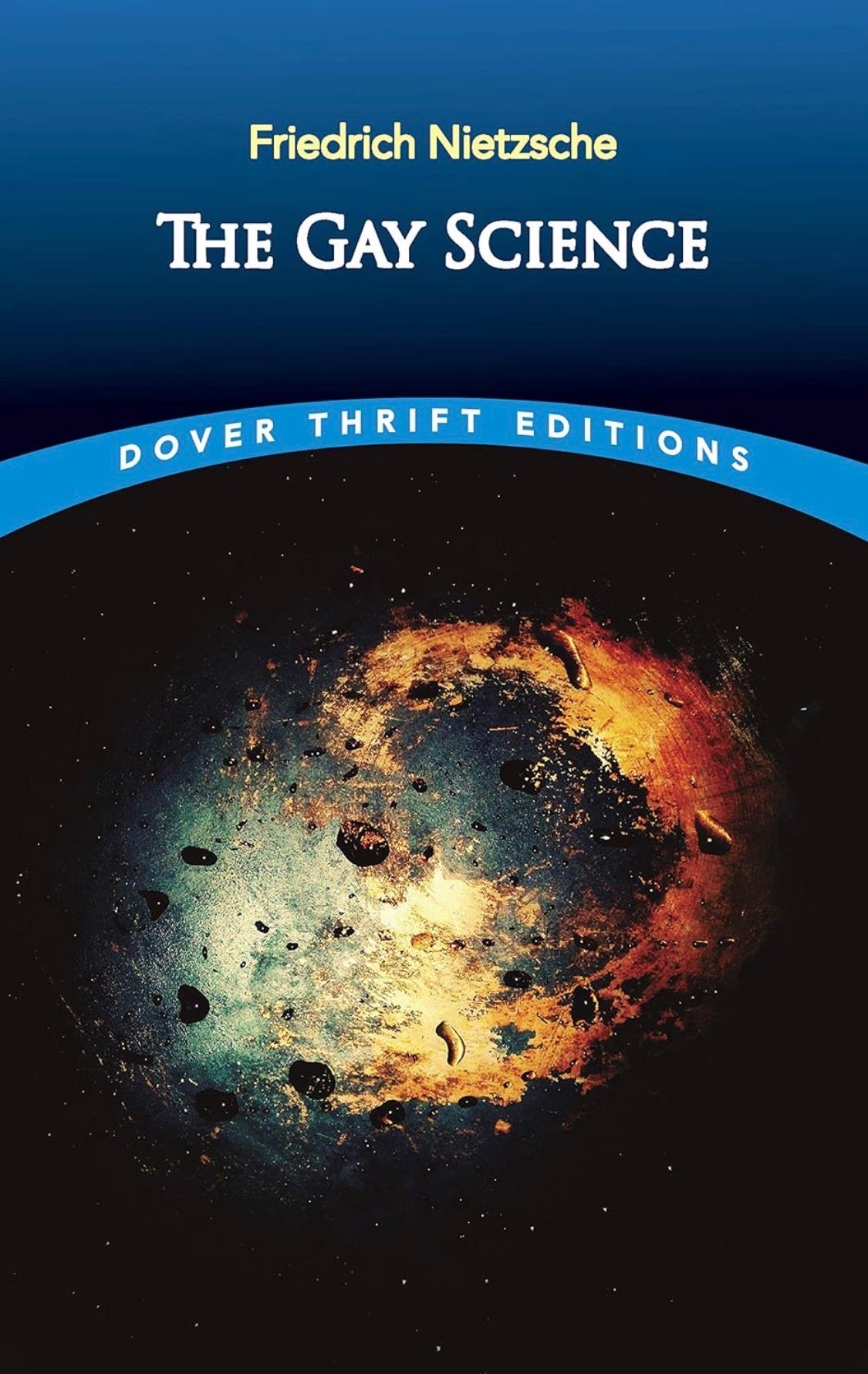
He wrote in The Gay Science about a thought experiment he called eternal recurrence. Imagine a demon comes to you in your loneliest moment and says: everything you have lived, you will live again (the same order, the same pain, the same joy) forever, on an endless loop, with nothing new: no escape, no edits, no do-overs.

Now here's the question Nietzsche actually wants you to sit with: would you curse that demon? Or would you fall to your knees, because it's the most wonderful thing you've ever heard?
That's not a riddle. That's a diagnostic tool. It tells you exactly how you're living right now. If the thought of reliving your life terrifies you, it means part of you is at war with your own existence. And if any part of it would feel like a gift- that's the great health showing itself. Not happiness. Not positivity. A kind of fierce, clear-eyed yes to life, including the parts that hurt.
He had a phrase for this, too: amor fati. Love of fate.
Not resignation - not "I guess I'll deal with it." Love.
He wrote that the highest state a person can reach is to want nothing to be different - not forward, not backward, not for all eternity. To not just endure the necessary, but to love it.
And I think this is where people get Nietzsche completely wrong. They hear "will to power" and "beyond good and evil," and they picture some cold, dominating figure who's crushed his own tenderness. But that's backward. Nietzsche himself was sick for most of his adult life - migraines that left him blind for days, a stomach that rejected almost everything he ate, isolation, rejection, and poverty. He wasn't writing from a mountaintop of triumph. He was writing from a body that betrayed him constantly. And out of that, he built this idea that suffering isn't the opposite of a good life… it might be the very material a good life is built from.
Think about the people you actually admire. Not the ones who look flawless on a screen - the ones who feel solid. Who doesn't crack under pressure? Almost none of them got that way by avoiding hardship. They got that way by going through something (a loss, a failure, a collapse) and coming out the other side without becoming bitter.
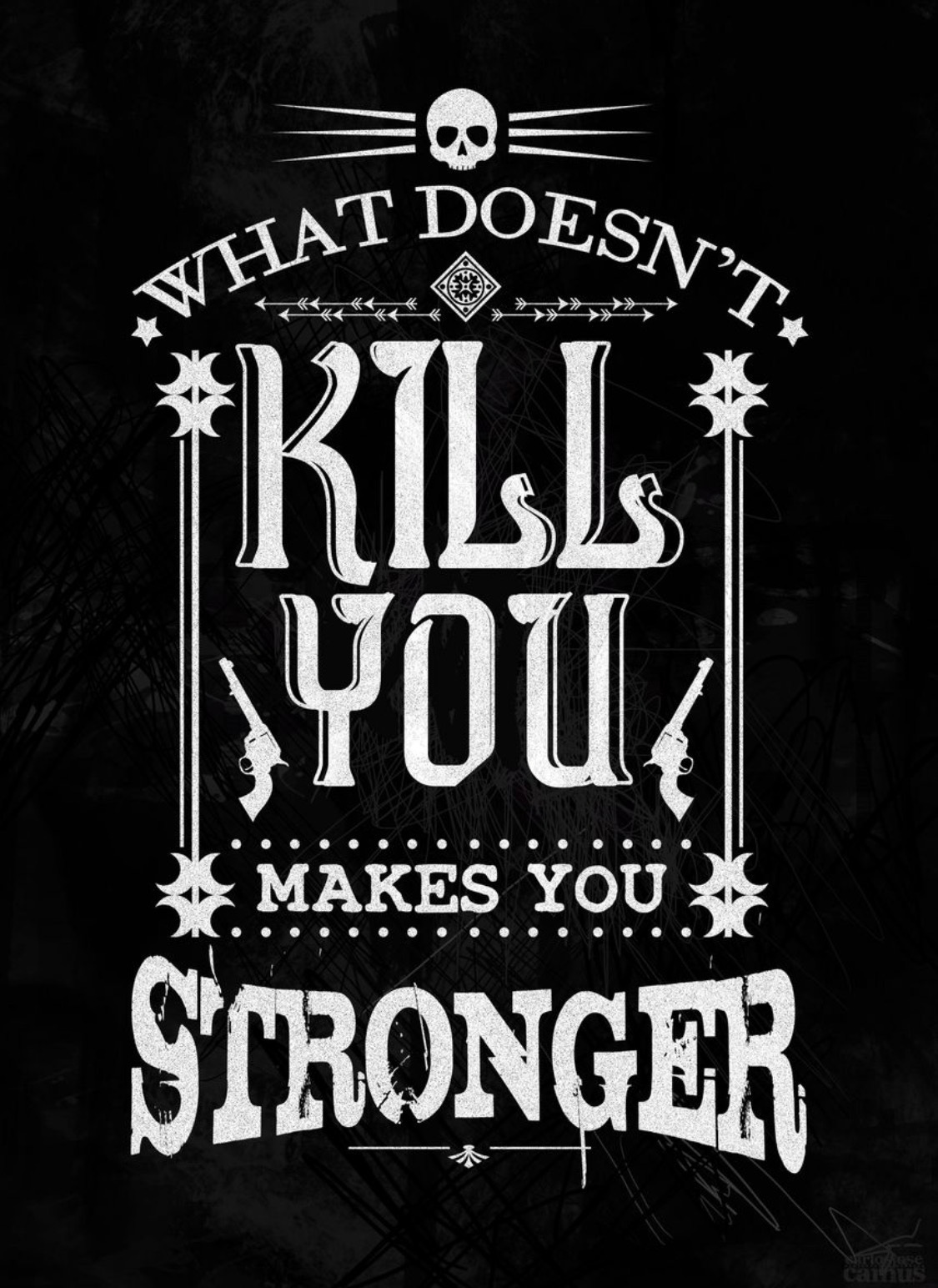
Nietzsche has a line for this too, the one everyone's heard even if they don't know where it's from: "What does not kill me makes me stronger." People quote it like a gym poster. But he meant something more precise. He meant that pain, properly metabolized, doesn't just leave a scar… it leaves capacity. It teaches your nervous system, your character, your whole way of meeting the world, that you can take a hit and remain yourself. That's not toughness for its own sake. That's freedom. Because once you're not afraid of being broken, you stop making all your decisions from fear.
Here's the part that I think matters most, though, and it's the part that gets lost. Nietzsche wasn't telling us to seek out suffering, to become martyrs, to prove how tough we are. That would be a new kind of performance, a new mask. What he was after was something much more humble: stop lying to yourself about what your life actually is. Stop pretending the hard year didn't happen. Stop editing your story to make it sound nicer at dinner parties. The great health isn't about having no wounds. It's about being strong enough to look them directly in the eye without flinching, and asking…What do I do with this, now that it's mine?
Because that's really the whole idea underneath all of it: your life is yours to make something out of… not despite the difficulty, but with it, using it as raw material.
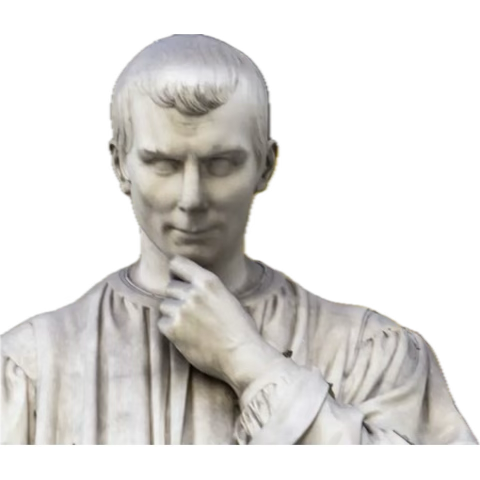
A sculptor doesn't resent the resistance of the stone.* The resistance is what lets something get carved out at all.
*Nobody really likes this line…🙃😉🤣 It sounds like something Machiavelli would say to Nietzsche would say… to get him to snap out of his mental breakdown.
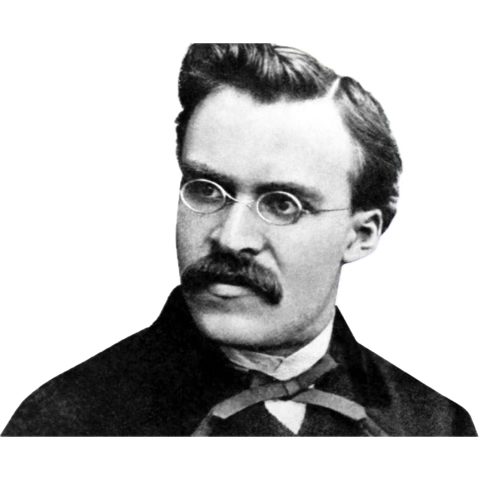
Nietzsche imagined a kind of person (he called them different things at different points, the free spirit, the one who becomes who they are) who could take everything that happened to them, the good and the genuinely terrible, and shape it into a life that has weight. A life that means something, precisely because it wasn't handed to them soft and easy.
So let me bring this back to the question I opened with. Why do the moments that break us also make us? Nietzsche's answer, I think, is this: because breaking is where the lie of invulnerability finally cracks open, and what's underneath (if you let it) is something truer and sturdier than the mask ever was. Not because pain is good. It isn't. But because a life that has never been tested doesn't know its own strength, and a person who has never said yes to their hardest moments hasn't really said yes to their life at all.
Great health, in the end, isn't the absence of struggle. It's the capacity to stand fully upright inside it - scarred, honest, and somehow, still grateful to be standing there at all.
So maybe the real question isn't whether your life has been hard.
It's whether you're strong enough yet to love it anyway.
With love always…
Your φίλος (phílos) - masculine: “friend,” “beloved,” or “dear one.”
Of σοφία (sophía) “wisdom.”
Wisdom - sound judgment, insight, or deep understanding.
Skill or expertise - craftsmanship or excellence in an art or craft.
Learning or knowledge - particularly the kind that leads to good judgment.
Your Friend who loves to share Wisdom
Nemo⚓️
The Nobody

Comments
Nothing yet. Say the first thing.
Sign in to join the conversation.