
⛔️Cosmic Disclosure Warning⛔️
I’ve heard this saying most of my life, And It didn’t fully register until recently, when rereading the books of Friedrich Nietzsche. I did not realize where it actually came from or what he actually meant by it.
I have seen it re-quoted and paraphrased so many times that the saying has started to sound a bit cliché to me.
So today I wanted to take an in-depth look at that saying that we have all seen and heard so often.

What did Friedrich Nietzsche really mean by it? In some way, Nietzsche ended his life alive but broken from his trauma. Does his life experience fly in the face of what is arguably one of his most famous quotes?
So that’s what our adventure for today… I will do my best to do justice.
So on that note, let us begin…
Have you ever wondered why some people walk out of hell and become unshakable... while others walk out of the same hell and never stand up straight again?
Same fire. Two different people. Two completely different endings.
We've all heard the phrase. It's tattooed on the shoulders. It's in graduation speeches. It's the caption under someone's gym selfie after a bad breakup. What doesn't kill you makes you stronger. It sounds like a warm hug. A pat on the back. Something a coach yells at you before you throw up on the last lap.
But here's the truth: Nobody is telling you that Friedrich Nietzsche didn't write that line to comfort you. He wrote it to warn you.
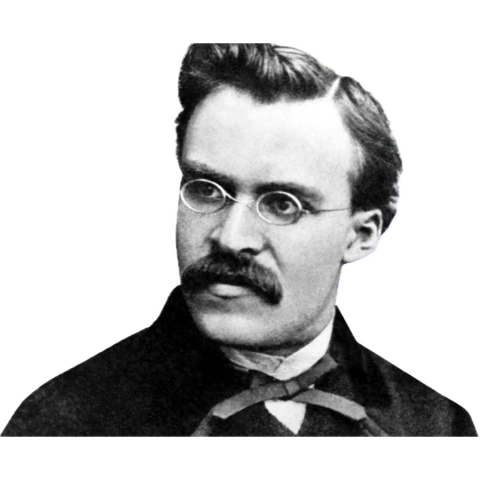
Let's actually sit with this man for a minute. Nietzsche wasn't some mountaintop guru handing out inspirational quotes for a living. He was, by most accounts, a deeply suffering human being. Chronic migraines left him blind with pain for days. Digestive illness that never lets up. Loneliness so total that his most intimate relationship was arguably with the blank page in front of him. He wrote the line "was mich nicht umbringt, macht mich stärker" - what does not kill me makes me stronger - in a book called Twilight of the Idols, in 1888. One year before his mind gave out completely, he spent the last eleven years of his life in silence, cared for by his mother and sister, never writing another word.
Sit with that irony for a second. The man who told the world that suffering builds strength... was, by the end, broken by his own mind.
So was he wrong?
I don't think so.
I think we just misunderstood him.
We took a scalpel and turned it into a bumper sticker.
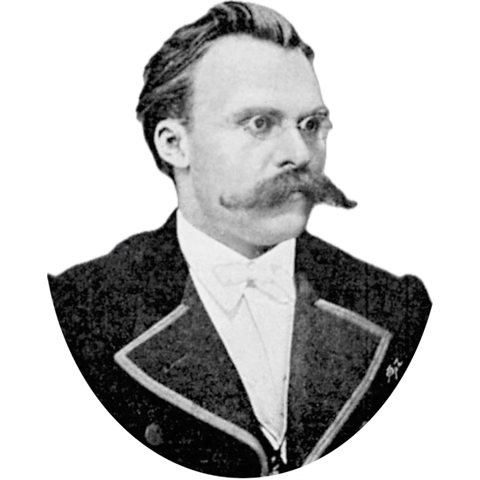
Here's what Nietzsche was actually getting at, and it's darker, and stranger, and far more honest than the poster version we've all absorbed.
Nietzsche believed that pain is not an enemy to be avoided. It is information. It is a teacher who doesn't ask your permission before the lesson starts. He believed that a soft, comfortable, suffering-free life doesn't build a human being… it hollows one out. Give a person everything they want, protect them from every hard thing, and you don't get someone stronger. You get someone who has never had to find out what they're made of.
He had a phrase for the kind of person who survives and grows from pain. He called it amor fati - the love of fate. Not tolerating your suffering. Not gritting your teeth through it and loving it. Choosing to say: this too, this wound, this loss, this humiliation - I would not erase it, because it is mine, and it made me.
That's not a soft idea. That's almost violent in its honesty. Because most of us don't love our pain. We hide it. We medicate it. We scroll past it. We build entire personalities designed to ensure nobody, including ourselves, ever has to look at them directly.
But here's the part of the philosophy that the tattoo and the T-shirt always leave out.
Nietzsche never said suffering automatically makes you stronger. Read the actual quote again. It's not a promise. It's a possibility. What doesn't kill you can make you stronger… but it can just as easily make you bitter, hollow, cruel, or numb. Trauma doesn't come with a guarantee. Nietzsche knew this better than almost anyone, because he watched people around him (and eventually himself) get crushed by the very forces that were supposed to forge them.
So what's the difference? What separates the person who is broken by suffering from the person who is built by it?
I think it comes down to one dark, uncomfortable psychological truth: meaning.
Pain without meaning is just damage. Pain with meaning becomes character. The same broken bone, in a soldier who understands why he fought, heals into a story of courage. The same broken bone, in someone who feels it was senseless and random, can heal into a lifetime of resentment. The wound is identical. The psychology around it is what determines whether it becomes a scar you're proud of or a scar that owns you.
This is dark because it means suffering alone isn't noble. Suffering alone isn't a virtue. There is nothing inherently beautiful about pain. What Nietzsche is actually demanding of us is much harder than "just push through it." He's demanding that we take ownership of our suffering. That we refuse to be a victim of our story and instead become the author of it. That instead of asking "why did this happen to me," we ask, "what will I now do, because this happened to me."
That's not motivational poster material. That's psychological warfare against your own self-pity.
And I think that's why so many people who quote Nietzsche have never actually read him… because his ideas are not comfortable. He is not telling you that hardship is a gift. He's telling you that hardship is neutral, and you are the one who decides what it becomes. Which means, if you stay broken, some part of that is now on you, too. That is a heavy, almost cruel weight to hand someone who is already suffering. But it's also, strangely, an act of respect. Nietzsche isn't pitying you. He's treating you like someone strong enough to be handed responsibility for your own reconstruction.
Think about the people you know who went through something brutal (a divorce, a diagnosis, a death, a failure that gutted them publicly) and came out the other side somehow more themselves than before. Not happier necessarily. Not lighter. But denser. More solid. Like the fire didn't just burn them, it fired them, the way clay is fired into something that can hold water and withstand a fall.
And then think about the people who went through something similar and never really came back. Who are still, years later, telling the story like it happened yesterday, still waiting for someone to make it right.
The event wasn't the difference. The relationship to the event was the difference.
So maybe the real question this quote should leave you with isn't "has something bad happened to me." Something bad has happened to all of us, or it will. The real question is: what am I doing with it right now? Am I letting it become the villain of my story, or the reason my story got interesting? Am I hiding from what it taught me, or am I willing (even just a little) to love the fact that it happened, because of who I became on the other side?
Nietzsche never promised that pain would make you stronger. He handed you the pain, looked you in the eye, and said: That part is up to you.
So - what doesn't kill you... What are you going to let it make you?
Comments
Nothing yet. Say the first thing.
Sign in to join the conversation.