
This week’s issue explores the AI hiring freeze (and what it really means for UX roles), invisible AI done right, and the growing weirdness of job title inflation.
But here’s a special note before we dive in…
I recently migrated this newsletter to Substack. I wrote about the reason why here, but Substack isn’t just an email tool. It’s a place where we can actually talk to each other.
You’ll still get every issue right in your inbox (like this one), but now there’s a more natural way to leave a comment, highlight something that resonated, or DM me directly—especially if you download the Substack app. It makes engaging feel more like a conversation than a broadcast.

Available for iOS and Android
👉 Heads up: If you're reading this via email, you might technically not have a full Substack account yet. You’re subscribed, but to leave a comment or interact with the post, you’ll need to log in or create an account. It’s quick, free, and honestly worth it.
I personally have replaced my Instagram habit with Substack and my brain is better for it. I’m also looking to do a deep dive on Substack’s UX in a future newsletter.
Anyway, on with the issue!
The story:
Financial Times reported that hiring has slowed due to companies preparing for AI to replace certain jobs:
“According to Zeki Data, the top 15 US AI companies had been frantically hiring software engineers at a rate of up to 3,000 a month, recruiting a total of 500,000 between 2011 and 2024. But lately their net monthly hiring rate has dropped to zero as these companies anticipate that AI agents can perform many of the same tasks.”
On paper, this looks like AGI is right around the corner, with AI agents poised to replace software engineers. But the story isn’t quite that linear:
42% of companies also abandoned AI projects in 2025, up from 17% the year before, largely due to poor implementation, lack of user understanding, and broken workflows. Source: CIO Dive
Companies aren't just slowing hiring because AI has replaced humans. Their pause is also in part due to failed AI initiatives. Billions wasted, trust eroded, and teams burned out by hype cycles.
There's a growing disconnect between how engineering orgs want AI to be used (automate, scale, cut cost) and how actual humans (PMs, designers, operations) need it to work—reliably, contextually, and non-invasively.
🔥 hot take for UX job seekers:
AI isn't replacing all the work. In fact, it’s often exposing badly designed work. The next wave of UX opportunity lies in making AI usable, not just building more AI.
This means:
Designing handoff flows between human and machine decision-making.
Mapping trust signals, transparency, and fallback UX when AI gets it wrong.
Elevating the voice of non-engineering users who are usually sidelined in AI deployment.
I’m curious: Have you witnessed a botched implementation of AI at your work? What happened?
If it feels like every SaaS has been stuffing AI down your throat, this will feel like a breath of fresh air—Todoist’s simple suggest sub-tasks feels elegant and truly helps users in the right context.
Here’s an example: let’s say you write a task with multiple items in it…
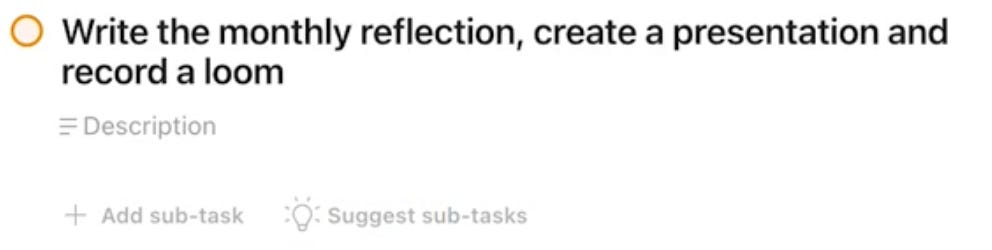
Oh, what’s that? Suggest sub-tasks? Let’s see what it does…
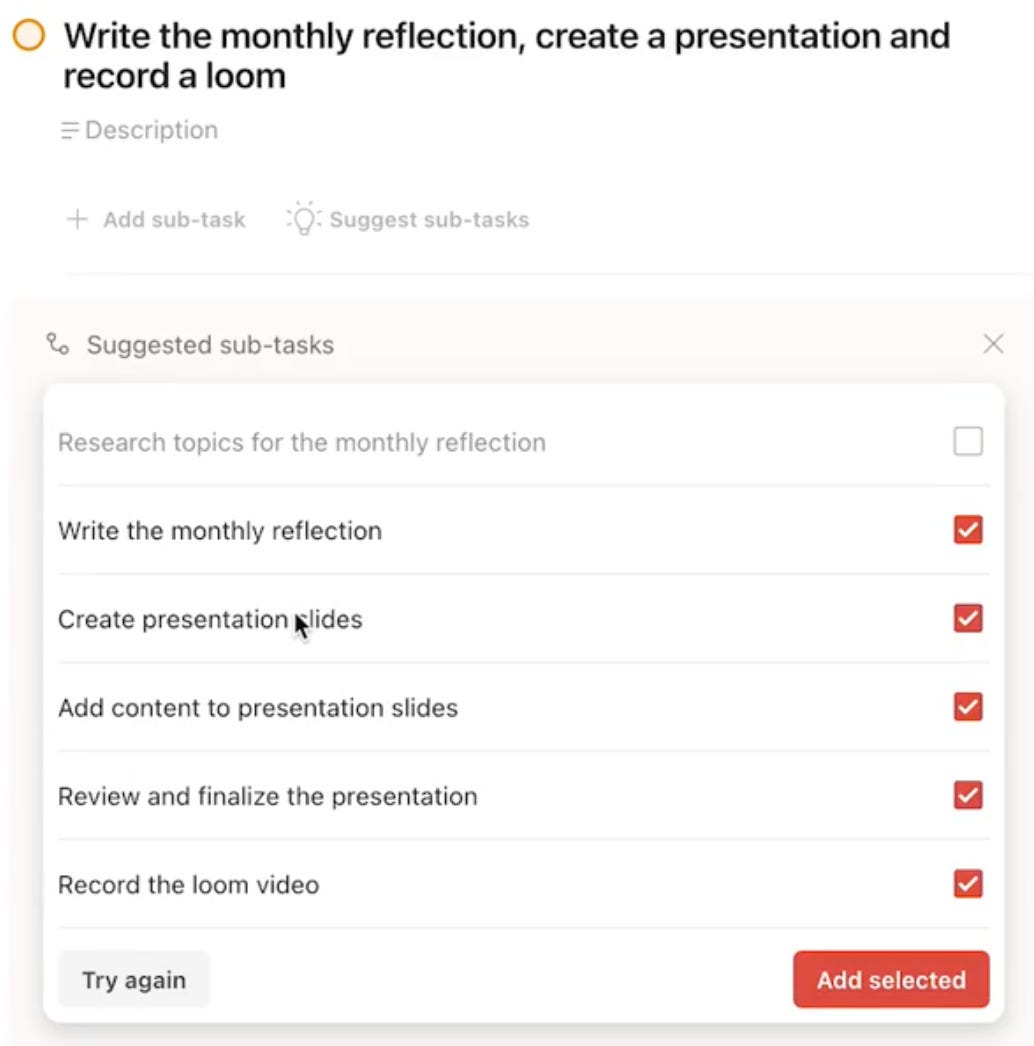
That’s really cool. The AI is almost invisible at first blush, but provides a relevant action with good results with a 1 button click.
Your opinion: What’s been one of your favorite embedded AI experiences?
SPONSORSwitching to a UX career? Then you’ve definitely need to check out Springboard.
As far as UX bootcamps go, Springboard is top-notch, having snagged the Best Bootcamp Award in 2023.
The price of UX bootcamps can indeed be an investment. But you can use the code UXBEGINNER to knock hundreds of dollars (offer may vary) off the cost of your enrollment.

Just as the rich get richer, senior titles get more…senior-er.
It’s an open secret that a huge % of UX design titles - especially at larger companies - have been trending senior and above.
But there is also title inflation. What explains the phenomena of seeing more senior IC roles becoming Director level?
Here are a couple of reasons:
Job titles often reflect the company/industry culture.
More tech and engineering led companies tend to use titles like Senior > Staff > Senior Staff > Principal and more traditional companies that tend to use titles like Associate and Director.
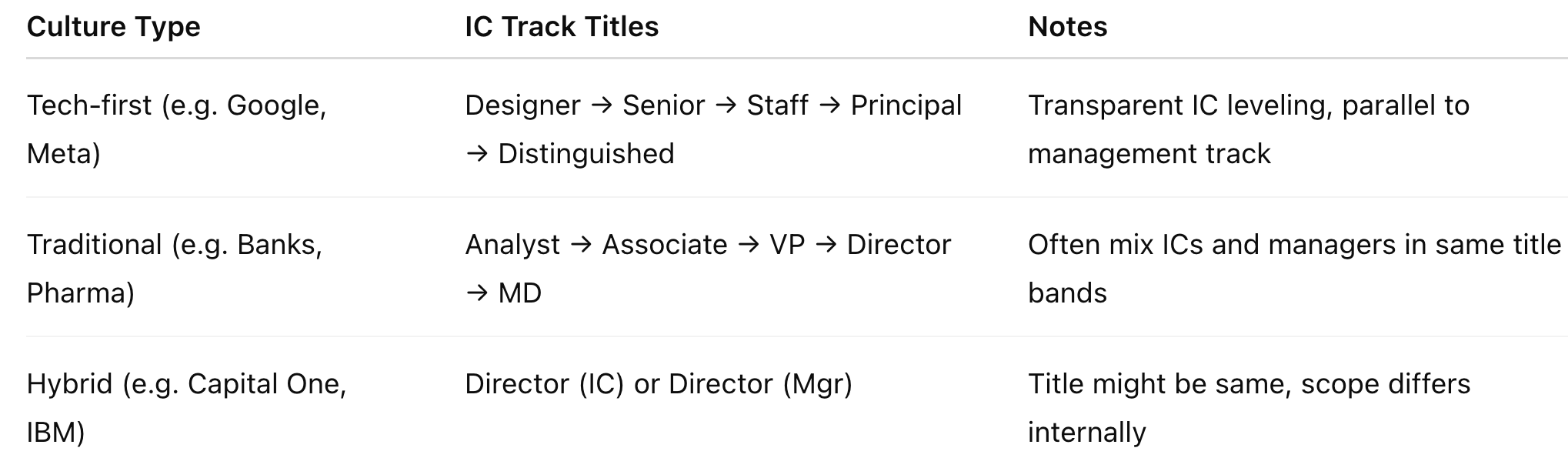
Company hiring needs + compensation structure
A “Director” title can attract senior candidates who are already at Principal level elsewhere
Firms like Capital One, “Director” might just be a level band encompassing both managers and ICs.
Lastly, an optimistic reason: design’s glow up is now grown up
Traditionally, the only way to move up in a career is to go the management track. This is especially the case for newer roles like UX. So even if someone wants to stay an IC (individual contributor), they might be forced/incentivize to “move up or out.”
Tech roles (especially now amped with AI) can scale impact without just scaling headcount
The parity of titles (Director of Design — Director of Product Management) can be interpreted as a good trend towards recognizing the value of design. For better or worse, job titles may be a way to change culture and get collaborators (ahem PM) to take design more seriously.
Your opinion: What is your guess behind the rise in “Director level” ICs?
Why it’s worth reading: you can judge this book by its cover—a truly hideous alien juicer kicks off the premise of Emotional Design.
This is Don Norman’s lesser known book after his popular Design of Everyday Things. In this follow up, he takes his thinking several steps farther.
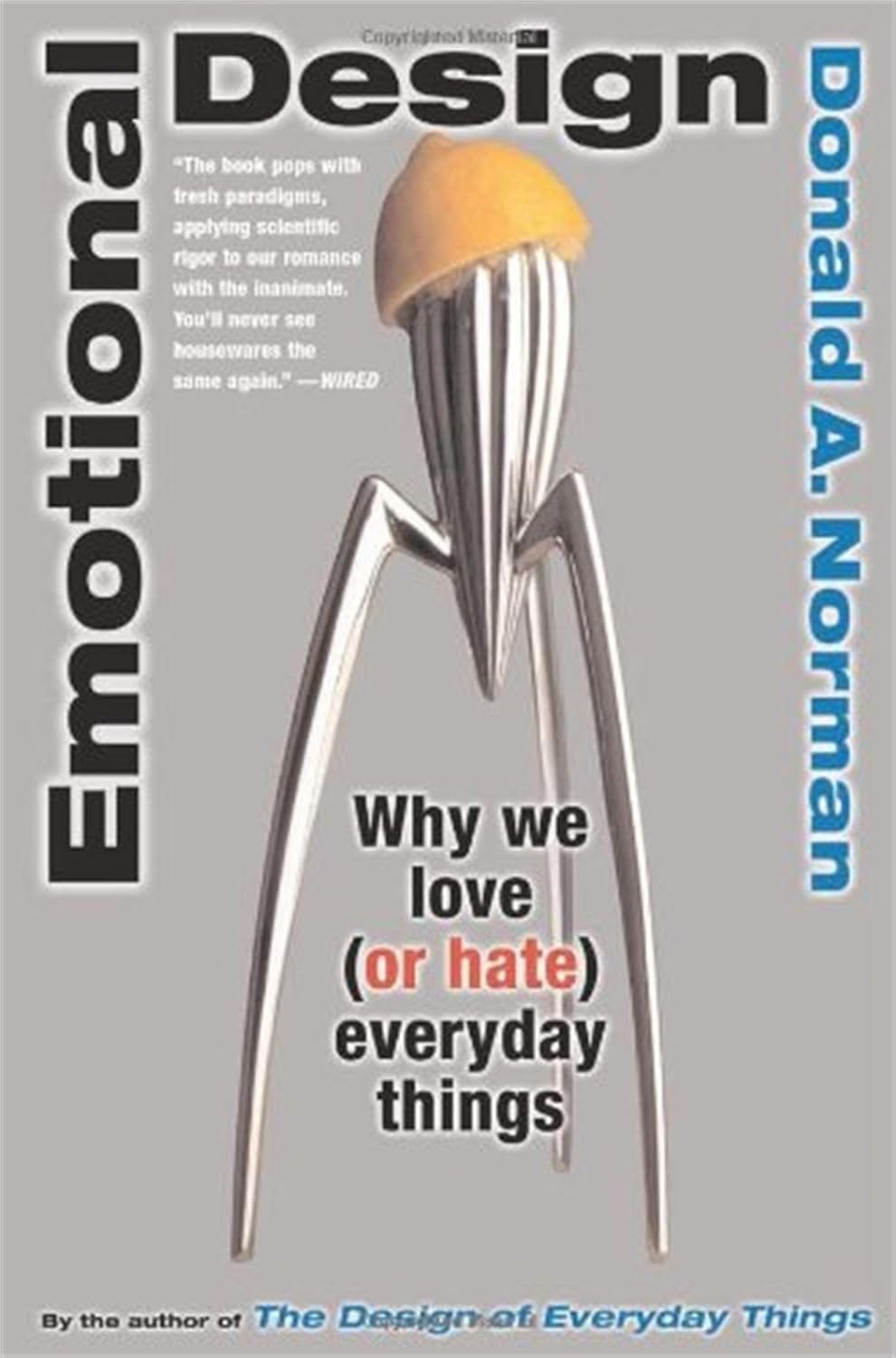
3 actionable insights and quotes:
Attractive things work better: “attractiveness produces positive emotions, causing mental processes to be more creative, more tolerant of minor difficulties.”
Emotions change the way the human mind solves problems. “the emotional system changes how the cognitive system operates. So, if aesthetics would change our emotional state, that would explain the mystery."
Cognition interprets the world; emotion assigns value. While cognition helps us understand, emotion helps us evaluate.
Reflection: What’s an example of a product or design that has given you a visceral emotional reaction?
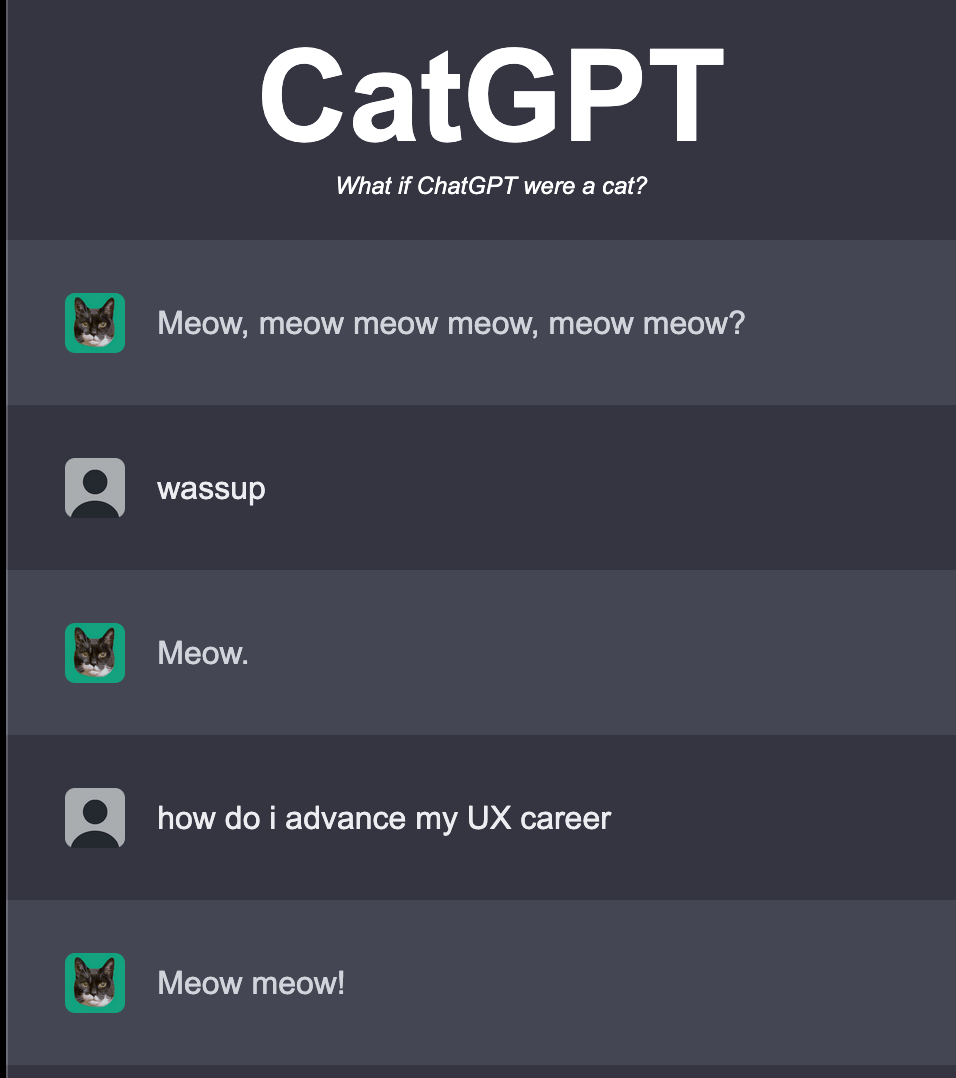
I sometimes say “ChatGPT” too fast and say “CatGPT” instead.
I thought: someone MUST have done something with this.
Indeed, the internet was made for this: https://catgpt.wvd.io/
Stay curious, designer!
Written by Oz Chen.
P.S. If you're just reading this in email, you might not have a full Substack account yet. Creating one is quick—and it unlocks comments, highlights, and DMing me directly. Try it out via the Substack app or log in at Substack.com.
Available for iOS and Android
SPONSORFor those looking for continuing UX education, or something lighter-weight than a bootcamp, then check out Interaction Design Foundation.
Their new course, AI for UX Designers, is a huge level up for modern designers.

No posts
Comments
Nothing yet. Say the first thing.
Sign in to join the conversation.