
Welcome back, designers and product peeps.
Unless you were sleeping under a rock this week (honestly, sounds nice), then you heard the entire design community BUZZING about the slew of updates Figma announced at Config 2025.
This will be a special edition that not only covers the biggest Figma announcements, but an analysis of what this means for the design industry.
Figma shipping fast
Is Figma eating everyone’s lunch?
Walkthrough of Figma Make, Sites and Buzz
The Great Flattening
Predictions for what Figma ships next
Note: this issue has sponsors including Springboard and Interaction Design Foundation.
You can read the official announcement from Figma Founder Dylan Field, but the highlights are:
Figma Make: prompt designs into working, coded-prototypes
Figma Sites: publish designs into a hosted website
Figma Buzz: Design excellence in any format
Figma Draw: Adobe Illustrator inside Figma (finally)
Grid: A huge quality-of-life update to make more advanced + flexible grid layouts
Before we go through each update one-by-one, I want to comment on the meta behind these updates.
Adobe must be catching a vibe right now. On December 18, 2023, Figma announced that it can’t pursue acquisition by Adobe due to regulatory reasons.
But Figma has never stopped cookin’.

2023: Earlier that year, Figma already shipped Figjam AI, which I thought was a truly great first use case for AI (tame turn chaotic sticky notes and content).
June 2024: Figma AI was introduced, a formal integration of AI features in its core product, such as AI powered search and content generation.
For years Figma has largely stayed in its lane as the dominant UI design tool.
But its ecosystem only keeps growing, akin to Google’s strategy of growing a full productivity suite from Docs to Slides to Drive to Keep…you get the point.
Putting together prezos? Why go to Google slides when you can use Figma Slides?
Need to collab? Why leave for Miro or Mural, and just take a sidestep to FigJam?
Now May 2025 brings us even more reasons to stay on the Figma train:
Need to do detailed vector illustrations? Why not do it in Figma Draw?
Bringing your designs to life? Why not just host it directly in Figma Sites?
Running out of credits on your vibing coding tool? Why not just vibe with Figma Make?
Headed to Canva to generate social media assets? Why not just use Figma Buzz?
The strategy is simple:
Try to keep users within Figma’s ecosystem for any design need.
Even if the features are in beta and will likely need to work out kinks post-launch, you gotta give it to Figma for its rapid pace of improvement.
I’ll now cover 3 of the bigger product launches in Figma Make, Figma Sites, and Figma Buzz.
While huge updates, I consider Figma Draw and the updated Grids to be quality-of-life improvements that Figmatians (??) have been asking for.
Alright, so Figma’s already got AI actions to make adjustments to existing assets:
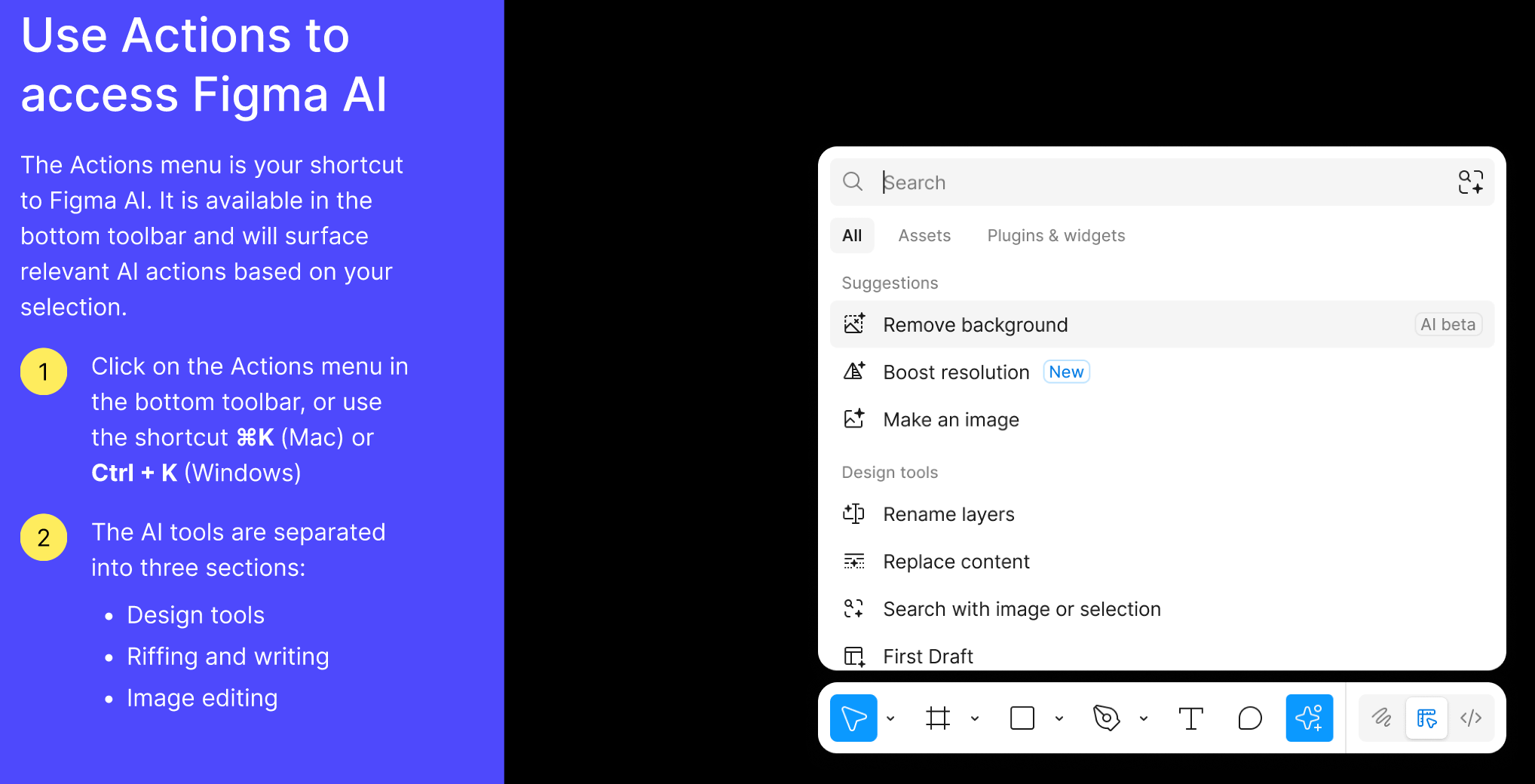
But what about dreaming up full experiences with AI entirely?
Figma Make is basically Figma’s take on vibe coding. (Maybe it should’ve been called Figma Vibe to match Figma Buzz? Jk…kinda)
You can prompt your way to a new working prototype.

But Figma being Figma, it won’t just stop there. The innovations that I find are direct prompting. You can select a specific element and prompt a change there (!)
For certain elements, you can even edit the properties after they’ve been prompted.
I think the true game-changer is if Figma Make becomes so versatile as to allow full design editing alongside full prompting for truly custom designs.
Then that would make it on par with current vibe coding leaders like Lovable, which has Visual Edits.
Figma Make is powered by Claude Sonnet 3.7 with more integration partners soon, so expect more powerful prompting as base LLM models get more powerful.
SPONSORIf AI is an unavoidable tech skill, then it’s definitely unavoidable as a modern designer.
That’s why you should check out Interaction Design Foundation’s new course: AI for UX Designers.

I feel like Figma is really stretching its reach with this one. Figma Sites, powered by Figma Make’s AI, makes it a real contender in a whole new business: web hosting.
Squarespace claims its Blueprint AI is the best on the market
Wix has a prompt-to-ready design tool
Wordpress similarly has an AI website designer
Most of the AI builders I’ve used have been clunky. They won’t be precise enough, and felt quite limited in website builder toolkits.
Figma Sites flip that around.

Designers are already used to designing (more quickly) in apps like Figma, then bringing designs over to web. Now that feedback loop has less friction going both ways: design→ live site, live site→ design. With your Figma components and all.
(I first realized the power of this with Figma’s prototyping tools: you can make a change and see it live)
Figma Sites might have been one of the most obvious product launches, because:
For years already you can share live Figma links, such as design portfolios hosted in Figma.
Dev mode has existed within Figma design files. We know that Figma’s approach is making design-to-code a seamless translation.
Now it’s just filling the gap that many other “Figma to website” tools like Framer and Anima have once occupied.
The replacement might be slow, however.
Figma Sites doesn’t currently have a content management system, so it’s best for single-purpose sites with static content such as portfolios and landing pages with simpler content needs.
So don’t expect it to replace more dynamic websites powered by Wordpress, SquareSpace or Webflow…just yet.
I’m curious to see how new sites hosted by Figma look and feel.
Made a Figma Site? Share your designs in the comments!
Figma Buzz is a formal welcome for marketers and brand strategists - often secondary users of Figma - into the ecosystem. It’s touted as a new tool for creating branded assets.
I played around with Figma Buzz and it feels like templates on steroids.
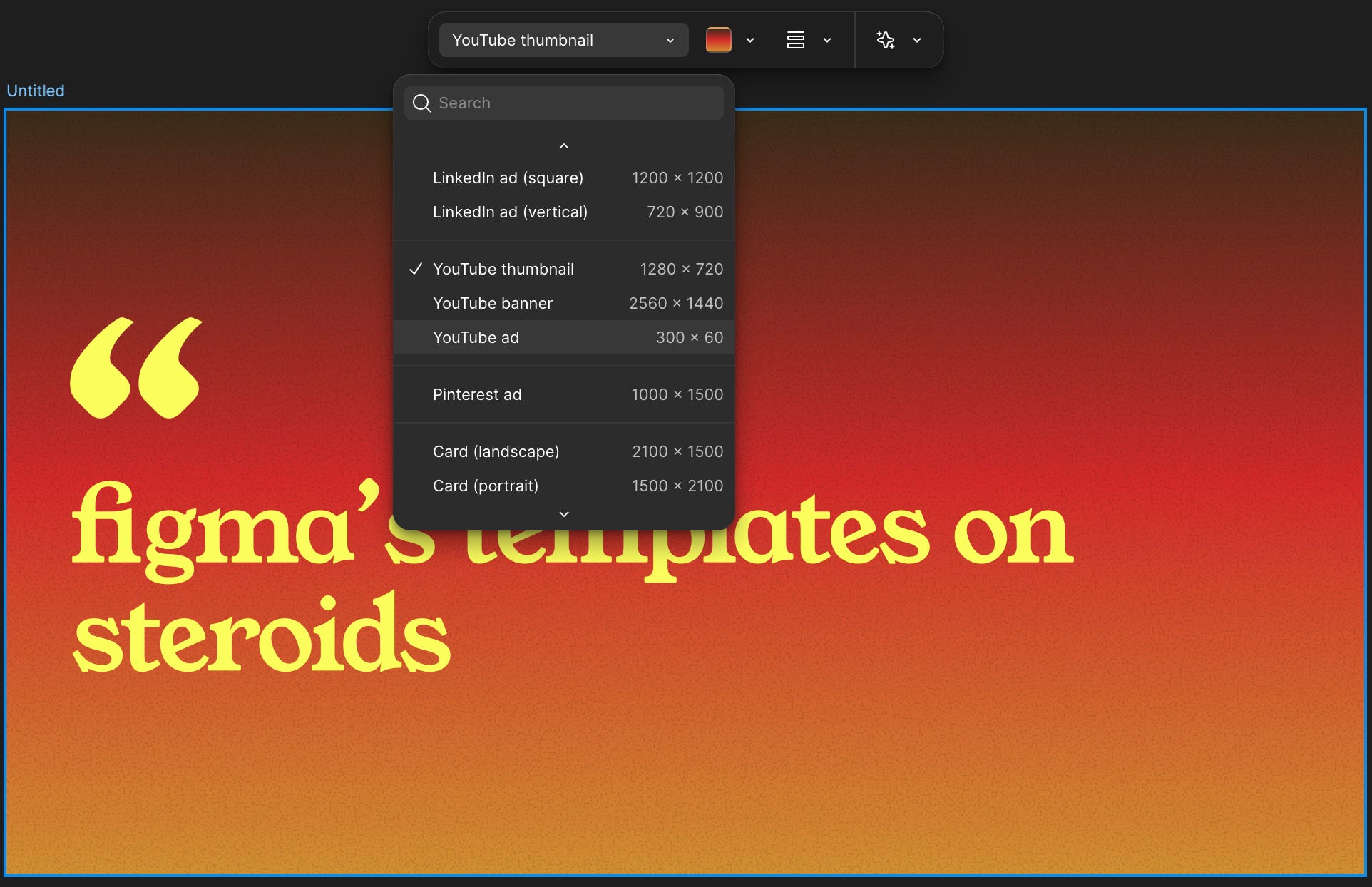
It’s not quite Figma’s answer to Canva, the most notable competitor that specializes in designing for social.
But it does set up Figma to expand into this area, with better collaboration across marketing, brand and design.
I’m sorry I don’t have more to say about this, other than that it does give marketers a more powerful space within Figma to create and manage assets.
It’s still a bit early to tell how successful each one of these new launches will be.
But based on Figma’s track record of bleeding-edge products and attention to detail, I think their recent slate of Config 2025 updates only leaves their competition further away in the dust.
From a business and software procurement angle, Figma expanding its ecosystem is just a smart, straightforward strategy.
Like any SaaS company, Figma makes money by selling seats. These recent updates just makes the seats more valuable, and also expands who (e.g. marketers) may want new seats. Offer more value, get more value per user.
Many companies don’t allow open access to AI tools due to data privacy reasons. But many already have licensing agreements with Figma with enterprise integrations like Okta single sign on and pre-approval from IT departments.
This means that Figma, as a business, doesn’t have the be the first-mover.
If it already has distribution (e.g. Figma with a large, existing userbase in its ecosystem). , it can take its time to develop features that then gain marketshare.
Events like Config 2025 aren’t just product launches. They are also a reaction to the design + tech zeitgeist. The fact that AI is the headliner event isn’t a surprise—it’s expected.
And AI is accelerated one thing for sure: the flattening of product roles.
As Trevor Nielsen on LinkedIn said:
Designers can ship coded products.
Engineers can iterate on designs.
PMs can do all of the above.The walls between these roles are getting thinner.
Fast.And the tools are making it happen.

I do expect the roles to keep blending.
There’s a reason why the “unicorn” designer meme has faded into the background—the tools do indeed allow product people to do it all now.
I think there will be continued disruption at companies as roles and industries shifts. Layoffs and downsizing are always on the table.
As for who benefits? Small teams and solopreneurs will have even more power to “punch up” because the tools effectively enable teams to do more.
Since I already got started on predictions, let’s me make some more formal ones.
Here are my personal guesses as to the types of things Figma will launch next…
Video creation is the next arena for Figma to enter and dominate. Competitors like Canva and Adobe already have a head start.
Better content tools beyond just AI text generation. Perhaps Figma catfoods its own ecosystem partners and duplicates/acquires companies like Ditto or Writer.
Content management systems so that Figma Sites won’t just for hobbyist tinkerers
Ability to not just vibe code websites, but full on mobile apps
IPO: I give it more than 50% chance that Figma will announce an IPO by then, and that Adobe’s stock will take an initial hit.
But with the furious pace of AI development, it’s damn near impossible to make predictions a year out. We’ll see.
Thanks for reading!
What did I miss from Figma’s big announcements? What features, however big or small, are you most excited about?
Written by Oz Chen
SPONSORAs far as UX design bootcamps go, Springboard is top-notch. It won the Best Bootcamp Award in 2023.
Use the code UXBEGINNER to knock hundreds of dollars (offer may vary) off the cost of your enrollment.

No posts
Comments
Nothing yet. Say the first thing.
Sign in to join the conversation.