
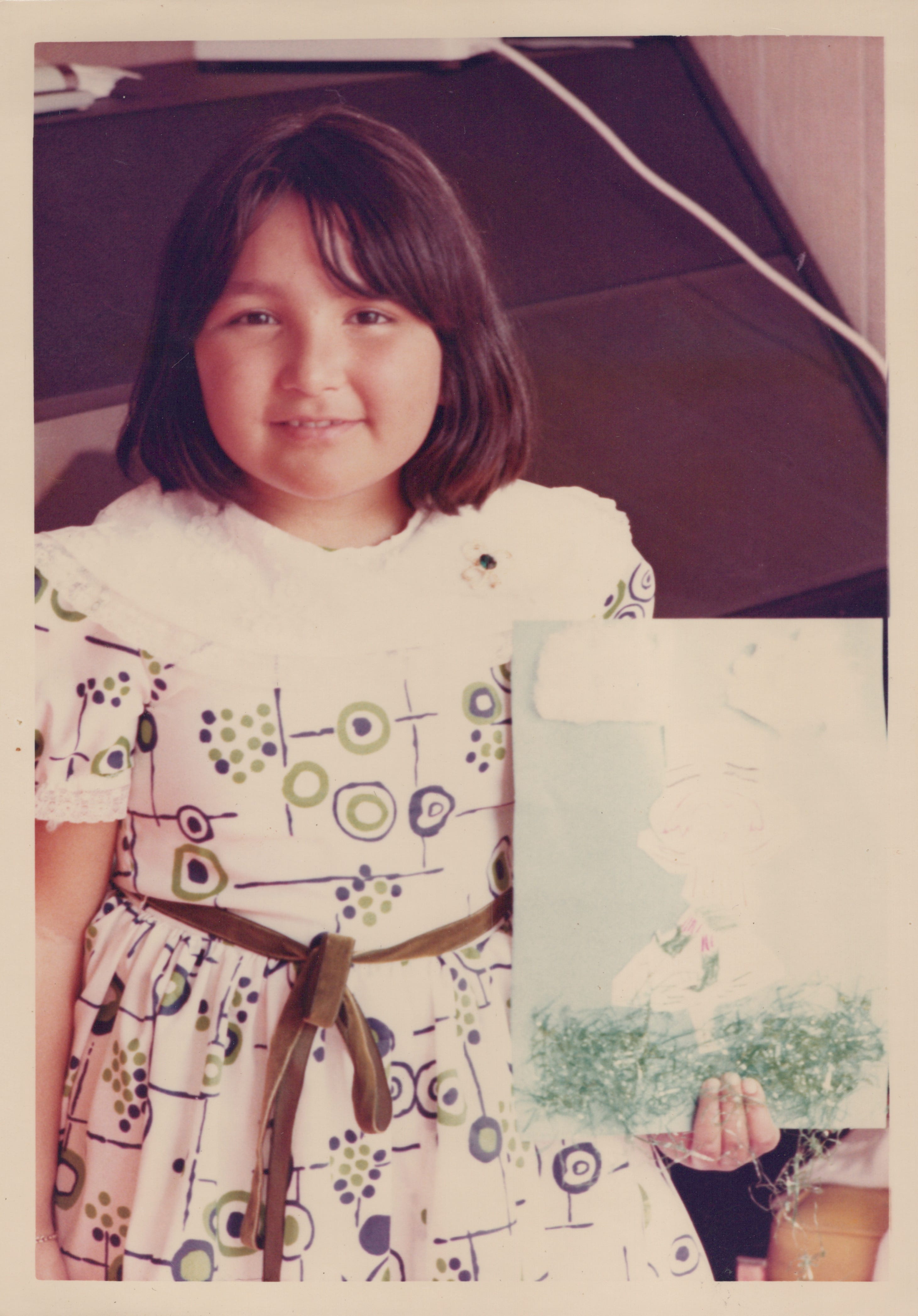
Me at seven, holding one of my drawings. By then, the practice of deliberate attention had already become one of the ways I made sense of the world.
Building Understanding Vienna No. 1
I’ve always needed to pay close attention to the world around me to cope.
That may sound dramatic, but I don’t mean it in an emotional sense; I mean it quite practically. It is simply how I’ve learned to navigate my life.
Born between cultures, I instinctively understood, long before I had words for identity, belonging, or cultural difference, that my world changed depending on where I was and who I was with.
Sometimes, the ground beneath me merely shifted. Other times, it felt like a landslide.
What was celebrated in one corner was dismissed in the next. A gesture could signal warmth in one room yet cross a line in another; even silence held a shifting vocabulary.
So, I watched.
I think that is where it began.
Not in Vienna.
Much earlier.
I was only four when I started school in California, trailing behind the other children and still learning English. My teacher, Mrs. Rattigan, used to drive me home in her brown Mercedes.
One afternoon, I climbed out and started walking behind the car towards the sidewalk.
She stopped me.
“Always walk in front of the car,” she said, “so the driver can keep their eye on you and see that you’re safe.”
I remember that sentence perfectly.
It stuck because it gave me a very physical definition of attention. It wasn’t a big intellectual idea. It simply meant: stay where you can be seen. Make sure the person responsible for you knows where you stand.
That never left me.
Later, as I moved through different countries and cultures, I used attention in that same practical way. I watched how people behaved before I joined in. I listened for tone before trusting my own words. I tried to understand what mattered to people before assuming I already knew.
One of the clearest moments happened in Japan.
Until then, language had always been my ally. I grew up with the cadence of Spanish in my periphery and English as my anchor. Later, other languages followed. Italian mixed with Slovene as my family navigated Europe during a gap year, followed by German in Salzburg and French in Lausanne.
I was entirely used to finding my way through words.
Japan was different.
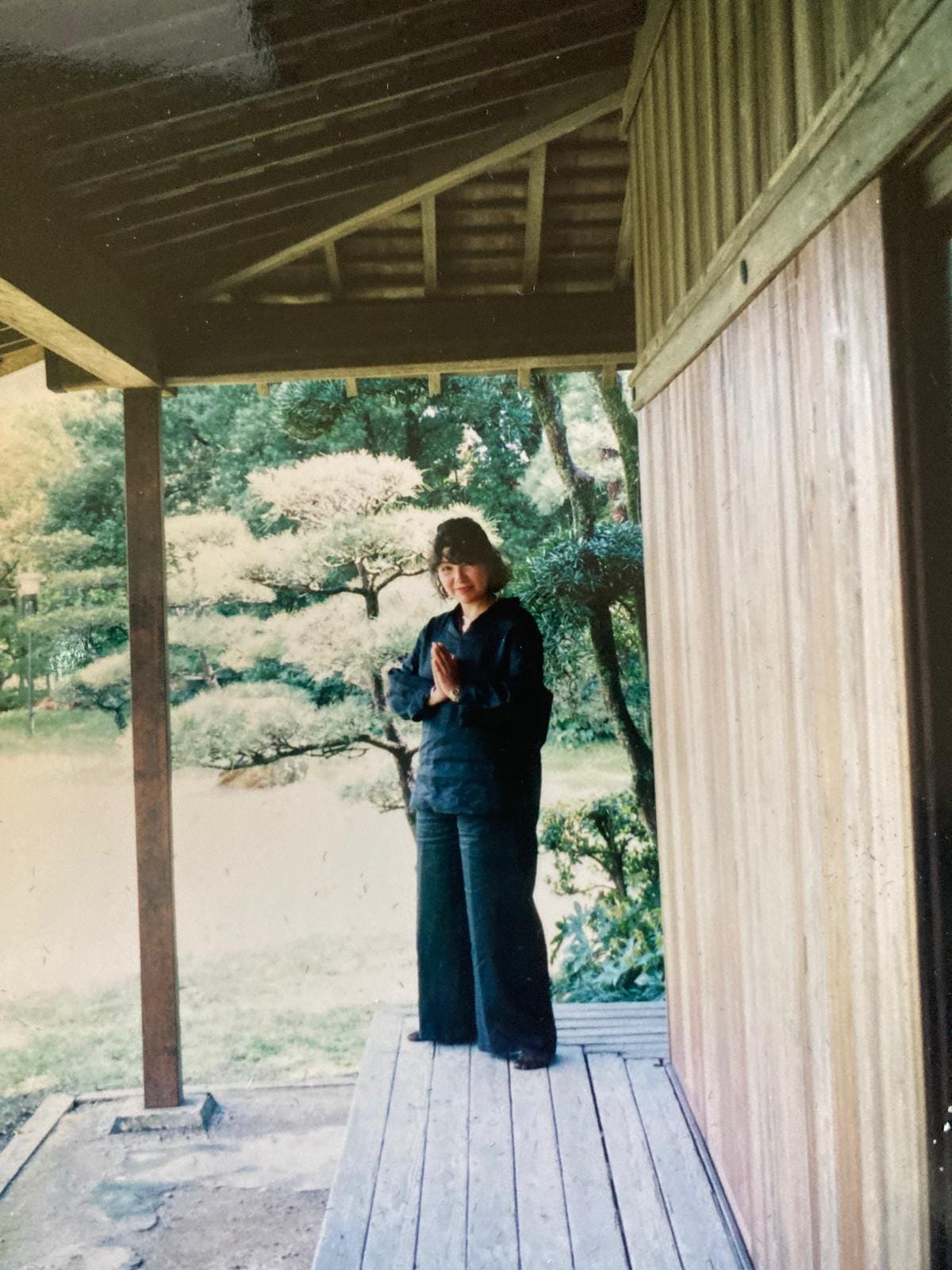
Me observing the beauty of an authentic Samurai house and garden where we were graciously hosted by the owners.
When I arrived in Tokyo, I couldn’t read the signs nor comprehend the spoken words. The alphabet offered no foothold.
Five Japanese men met me at the airport. They spoke no English; I spoke no Japanese. I didn’t fully understand where they were taking me, only that their task was to transfer me between airports so I could continue onwards to Kyushu.
Faced with a total wall of silence, I did the only thing I knew how to do.
I watched them.
Attention helps you notice the door before you try to walk through it.
I noticed their posture, how they handled my luggage, how they made space for me, and how careful they were. I could not decipher their words, but I could read their actions clearly enough to know I was being looked after.
On our way, we stopped at a roadside restaurant for udon noodles. They ordered for me, and I simply nodded. Whatever they were having, I’d have too.
Then, I noticed the sound of the room.
Everyone around me was slurping their noodles.
In the culture I came from, that noise would have been considered rude. But in that room, it meant the opposite. It was normal, even polite. It belonged to the meal as naturally as the noodles themselves.
So, I slurped too.
The five men at the table stopped, looked at me, and then broke into applause.
It was a funny moment, but it was also profoundly significant.
With one small gesture, I had shown them that I was willing to enter their world rather than insisting on carrying my own rules into it.
That is what deliberate attention can do.
It helps you notice the door before you try to walk through it.
The first time I came to Vienna, something similar happened.
I was seventeen and spending a year in Salzburg to learn German. Our language school brought us to Vienna for a short trip, and one evening we went to a Heuriger, I think in Nussdorf.
I was sitting with the other students. We were all from different countries, trying to communicate in German, with English slipping in whenever our German failed us.
But my attention kept moving to another table.
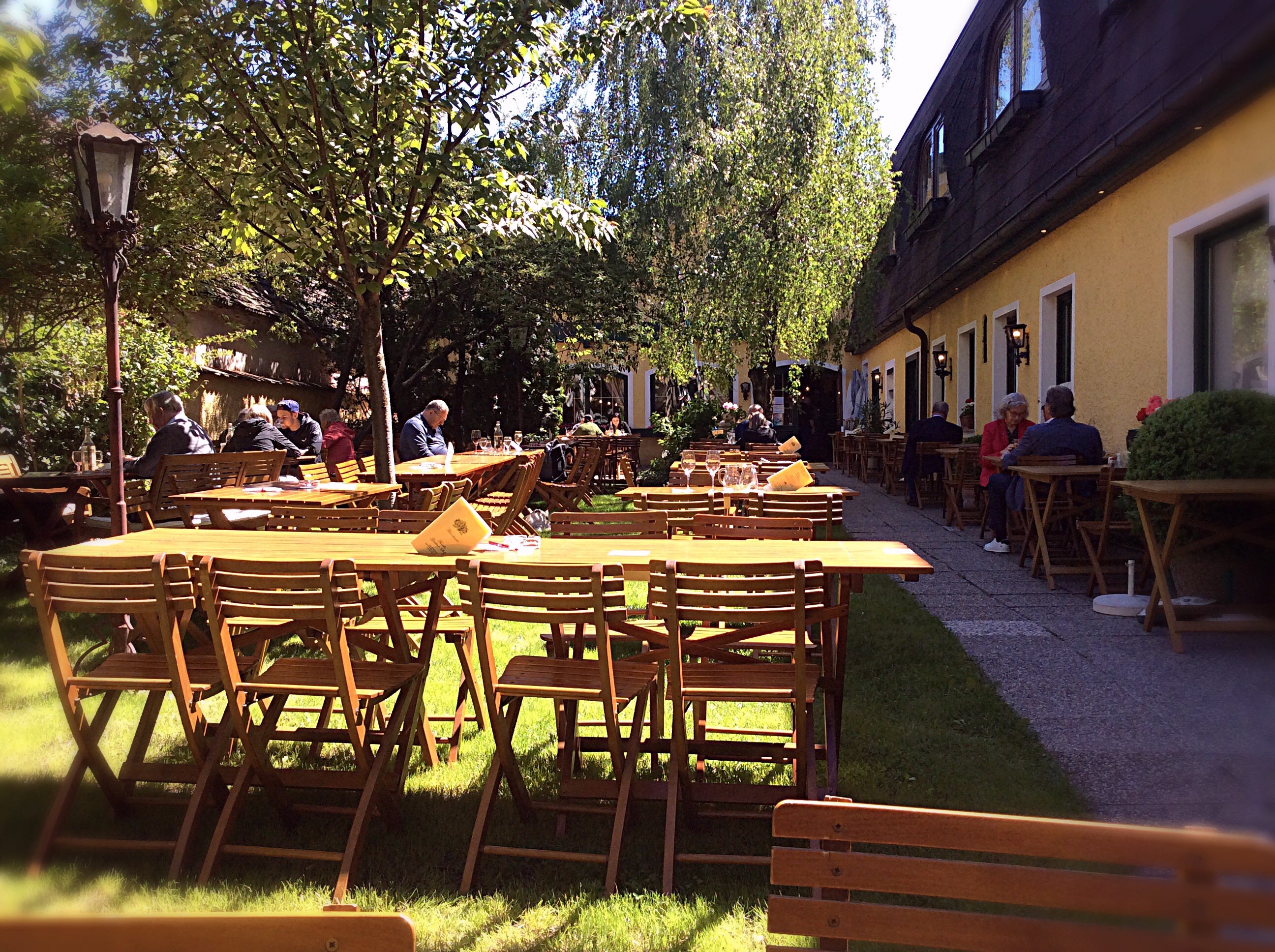
A Viennese Heuriger. It was at a table like this that Vienna turned into more than a city to visit, but rather a world I wanted to enter.
There was an older Viennese couple sitting with musicians who played accordion and guitar. They were playing songs I somehow recognized from childhood because my parents had played them at home.
That table felt closer to the real Vienna than the one I was sitting at, so I walked over.
In my broken German, I introduced myself and asked if they could play Wien, Wien, nur du allein.
They were surprised.
Of course they were. A seventeen-year-old foreign girl asking for that specific song at a Heuriger was probably not what they expected that evening.
But they played it anyway, and then they invited me to sit with them.
The group I had come with eventually noticed I was missing. Someone apparently asked where I was, and the answer was something like, “Over there with the Viennese. Typical Yolanda.”
And yes, that was probably typical.
I wasn’t trying to be difficult. I was simply following the place where life seemed to be happening.
Looking back, I think that was the first time I understood Vienna not as a city to visit, but as a world to enter.
Understanding Vienna grew from that same instinct: to move closer to the place where life is happening, to remain there long enough to notice what isn’t immediately explained, and to try to understand what’s shaped it.
Today, Understanding Vienna is a bilingual cultural and educational platform exploring how place, history, memory, culture, and identity continue to influence the way we see and live. Vienna is its starting point, but the questions at its heart are not limited to one city.
At first, I thought I would explore them primarily through essays. I wanted to look beneath the familiar image of Vienna and examine the layers that remain active in its streets, buildings, gardens, customs, symbols, and silences. But the more closely I looked, the more I realized that one form wouldn’t do.
Some discoveries needed to be carried into the city itself. That became The Traveler Series, a collection of field guides and invitations to leave the most familiar routes, slow down, and begin reading a place rather than simply passing through it.
Some discoveries needed the freedom of imagination. Through The First Whisper, the opening story to the wider world of The Timekeeper Chronicles, I use historical fiction and storytelling to move closer to the people who inhabited the city before us. These are not only the names preserved in official histories, but the gardeners, apprentices, children, servants, observers, and others whose lives helped create the world we inherited.
That story world also began asking to leave the novel. Through Post from Hidden Vienna, it enters the physical world as literary letters printed, sealed, and posted from Austria. It is a story that arrives slowly enough to be held, opened, and lived with.
The Resource Collection gathers the historical and educational material behind the work so that readers, travelers, teachers, and other curious souls can continue their own investigations.
Other parts of the work began with photographs, family histories, languages, and the experience of carrying more than one culture within a single life. Together, they led towards the practice I now call inherited seeing: recognizing the historical, cultural, familial, and personal patterns that shape how we perceive the world, then learning to look again with greater attention, understanding, and freedom.
Inherited seeing is the central inquiry of The Viennese Salon. It is also a method still being developed, tested, questioned, and refined. I am sharing that process openly here: the discoveries that strengthen it, the assumptions that need revising, the practices that prove useful, and the connections that only become visible as the work grows.
Its purpose is not simply to help us understand Vienna, history, or culture more deeply. It is to help us live more richly: to notice more, interpret more carefully, participate more meaningfully, and become more conscious of the inherited expectations shaping our choices, habits, relationships, and sense of what a good life should be.
Each month, the Monthly Inquiry will take one familiar expectation, cultural habit, image, place, or way of living and ask where it came from, what it’s taught us to notice or overlook, and how it continues to shape us in the present.
The other Salon forms will approach the same inquiry from different directions. The Field Diaries will test inherited ideas against actual places and lived experience. Building Understanding Vienna will open the process through which observation becomes interpretation and show the method developing in public. The Cabinet of Fragments will begin with smaller objects, images, memories, and overlooked details, allowing curiosity to lead towards larger questions.
The free Salon is where inherited seeing is being developed in public. Through essays, fieldwork, practical invitations, and reader participation, I am testing what helps this way of seeing become useful beyond the page and beyond Vienna, in the ordinary places, relationships, and situations of daily life. As the method becomes clearer, it will gradually grow into a more structured and in-depth guided practice for readers who want to apply it more systematically.
Seen in this light, The Traveler Series Field Guide, The First Whisper, Post from Hidden Vienna, The Resource Collection, and the recurring forms of The Viennese Salon are not separate projects gathered beneath one name. Each offers a different way into the same work: through observation, historical imagination, material attention, research, memory, or reflection.
Vienna is the starting point and the living laboratory, but the larger subject is how we see and how we live. Through history, art, memory, place, language, and experience, inherited seeing asks how the worlds we have received continue to accompany us, and what may become possible when we learn to look again, live more richly, and move through the world more graciously.
You can follow a young apprentice down a garden path, read an essay about how Josef II opened the gardens at Schönbrunn, or wait patiently for a letter arriving by post from Lena the herb woman. You might enter through a photograph, a story, or a practice carried out close to home.
But each doorway leads toward the same deeper questions:
What has shaped this place?
What does it remember?
What have I failed to notice because I was moving too quickly?
And what might change if I stayed long enough to understand?
That is what I mean when I say that attention has become one of the rarest cultural resources we still have.
We are not merely distracted. Our attention is being deliberately captured, divided, and extracted from us, often by systems that benefit when we remain restless, reactive, and unable to stay with anything long enough for it to deepen. In that sense, we’re being robbed of it.
And when we lose control of our attention, we lose more than time. We lose part of our capacity to remember, judge, care, imagine, and choose how we want to live.
Reclaiming attention is therefore not a minor act of self-improvement. It’s a way of taking back authority over what enters our minds, what we allow to matter, and how fully we inhabit our own lives.
I don’t mean concentration alone. I mean the willingness to remain with something after the first glance. To notice the symbol above the doorway and wonder why it’s there. To recognize that a formal garden isn’t only beautiful, but also expresses ideas about power, order, nature, and control. To look at an old family photograph and ask not only who the people are, but what they carried with them and what they chose not to say.
You can move through Vienna quickly and still see a great deal. You can visit its palaces, learn the names, take the photographs, and follow the map. But seeing a city is not the same as understanding it. Understanding begins when we become curious about what our first impression has left out.
I know the value of that kind of attention because I’ve used it all my life to enter unfamiliar cultures, read rooms whose rules I hadn’t yet understood, recognize what mattered to people, and find my place without assuming that my own way of seeing was the only one.
Seeing a city is not the same as understanding it. Understanding begins when we become curious about what our first impression has left out.
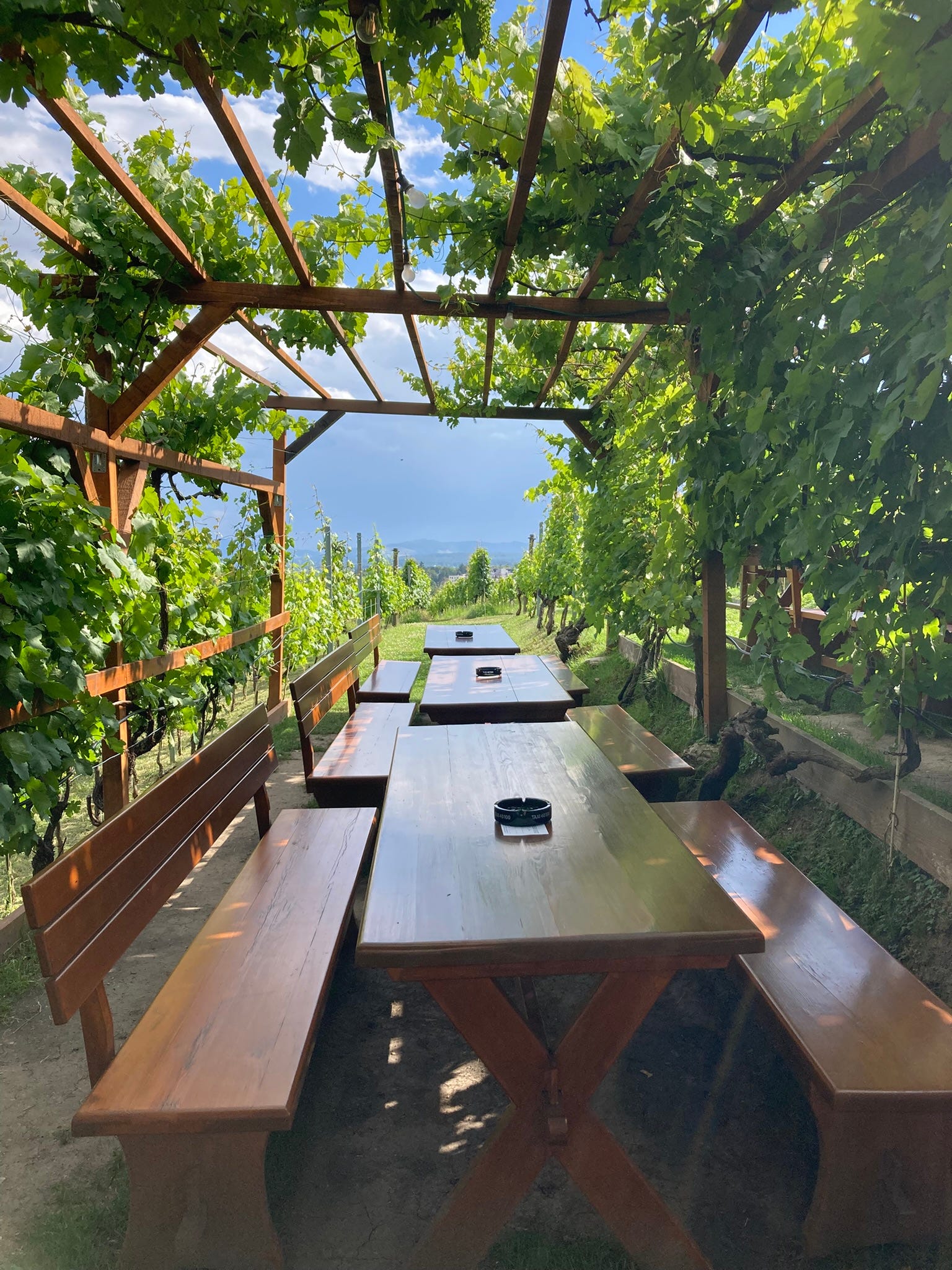
Solitude is not an absence. It is the space in which attention begins to return.
And yet, even after a lifetime of relying on attention, I still have to protect it.
I notice how easily I reach for my phone during a short tram journey, while waiting for someone to arrive, or in the few quiet minutes between one task and the next. I tell myself I’m just going to check one message. A few minutes later, I’ve followed several things I never intended to pull up, and that small opening of time in which I might have noticed my surrounds is swallowed, stolen, irrevocably gone. Our phones are very smart indeed. Sometimes, to the extent of making us quite stupid if we permit them to decide where our attention goes.
But this is not only about phones. I think we’re also becoming uncomfortable with moments that haven’t yet been filled. Silence begins to feel like absence. Waiting feels inefficient. Time alone can begin to look like evidence that something is missing.
We’ve started to confuse solitude with loneliness. Loneliness hurts. It can be devastating. Solitude is different. Solitude gives us room to hear ourselves think again. It allows us to notice the places we inhabit, the person across the table, and the life we’re actually living in real time.
We don’t need to withdraw dramatically from the modern world. We simply need moments when nothing else demands that we look away.
Vienna has helped me preserve those moments. It’s not because Vienna is always peaceful or unhurried. It’s not. Other times, its slowness is maddening. The famous phrase schau ma mal can still make me want to shake the nearest piece of bureaucracy.
But Vienna rewards the person who pauses. A doorway becomes evidence. A statue begins to make an argument. A familiar street reveals the remains of another century. A walk you have taken dozens of times suddenly shows you something that has been there all along.
Beneath schau ma mal, there is an idea worth keeping:
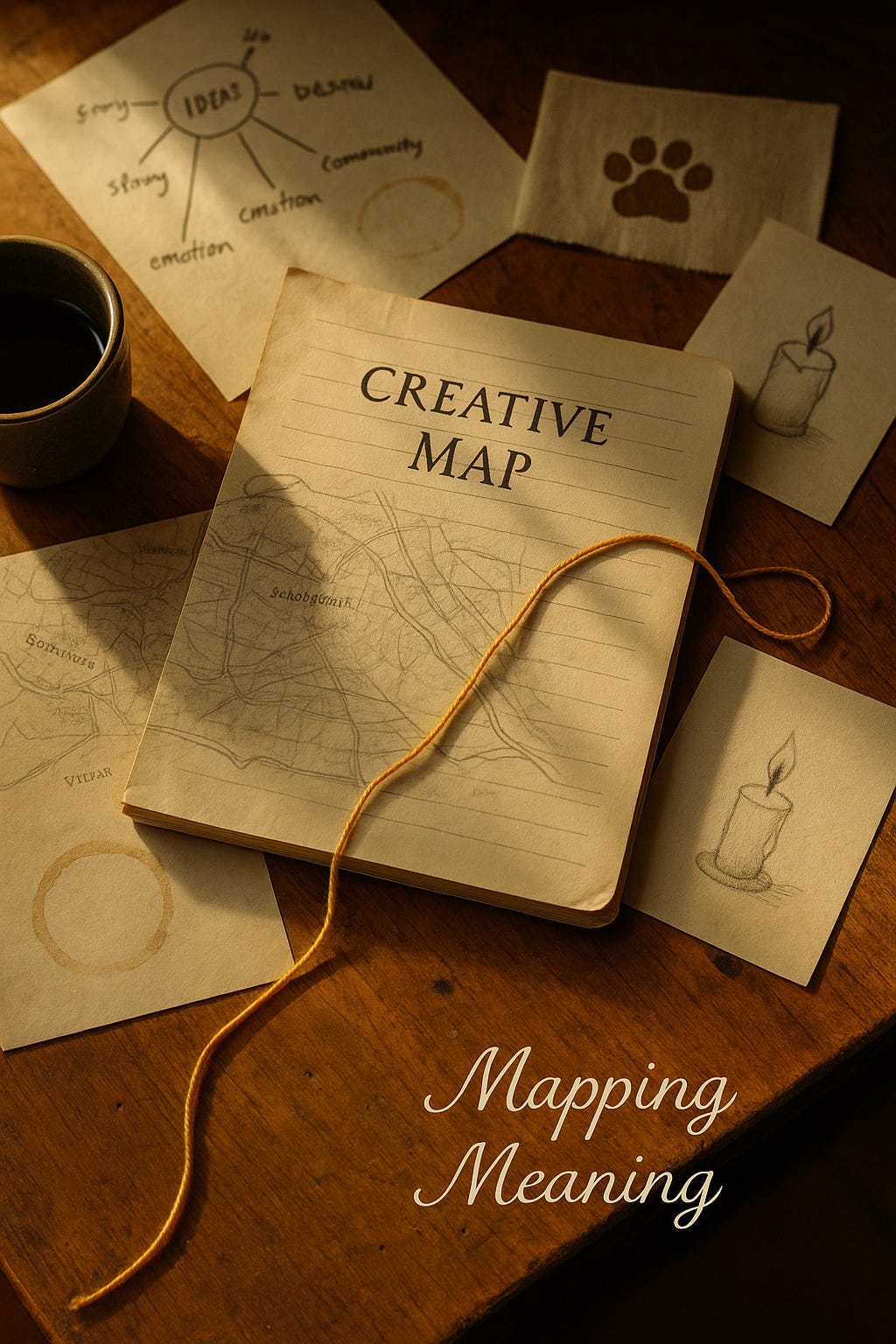
Mapping the connections between place, history, memory, story, and attention.
That is what I want to explore in Building Understanding Vienna.
This series will follow the work while it’s still becoming. It won’t offer a finished origin story in which every influence has already been identified, and every part has fallen neatly into place. Instead, it’ll show what I’m thinking now, what I’m noticing, reveal where an assumption no longer holds, and how a place, memory, piece of research, or unexpected discovery changes what I’d thought I understood.
I’ll write about the visible work of creating this platform, but also about the ideas, experiences, and influences beneath it. Some of those influences may have been present long before I had language for them. Recognizing them is part of building the work too.
I want to share why the different parts of Understanding Vienna exist, how they connect, what I am learning as they develop, and how history, observation, memory, and story can help us inhabit the present more fully.
Understanding Vienna began with one city.
But the question at the heart of it belongs to all of us:
How do we recover the attention to notice where we are, understand what has shaped both the place and our way of seeing it, and allow the world in front of us to change the way we see?
I would love to know:
Can you remember a moment when paying deliberate attention changed the way you understood a place, a person, or yourself?
Write to me. I will read your words with deliberate attention, and answer back.
New readers can begin with Welcome to The Salon.
You are reading The Viennese Salon from Understanding Vienna, a guided practice of inherited seeing.
Through Vienna, history, art, memory, place, and lived experience, the Salon helps you recognize what has shaped the way you see, interpret culture more deeply, and live with greater attention.
Subscribe for free to receive new Salon articles, Notes, and practical invitations to look again.
If this essay helped you notice something differently, share it with someone who might also value a richer way of seeing, understanding, and participating in the world.
Share Understanding Vienna: The Salon
Comments
Nothing yet. Say the first thing.
Sign in to join the conversation.