
Regrettably, I do not have my usual essay this week.
Since my last post, I have been working obsessively on my slides for a lecture I gave on Friday at the National Institutes of Health. The subject was the history of scientific thinking on the pathogenesis of obesity—i.e., two competing paradigms to explain why we get fat. I had been invited by NIH director Jay Bhattacharya to give what is now the second of the NIH Scientific Freedom lecture series.
My goal was to use the history of the science to present a compelling argument that we have embraced the wrong paradigm. (Yes, the word hubris comes to mind.)
The talk was a new one for me, even though the subject matter is the basis of my next book and what we’ve been discussing episodically in this newsletter. I worked on the slides right up to the wire, including writing the summary slides the morning of the talk. That’s my excuse for not having a proper post for you this week. But the lecture makes an argument I care deeply about. I was going to let it stand in for the usual essay, but it seems it will take a few more days to appear on the NIH website. When it does, I’ll send it around as a post.
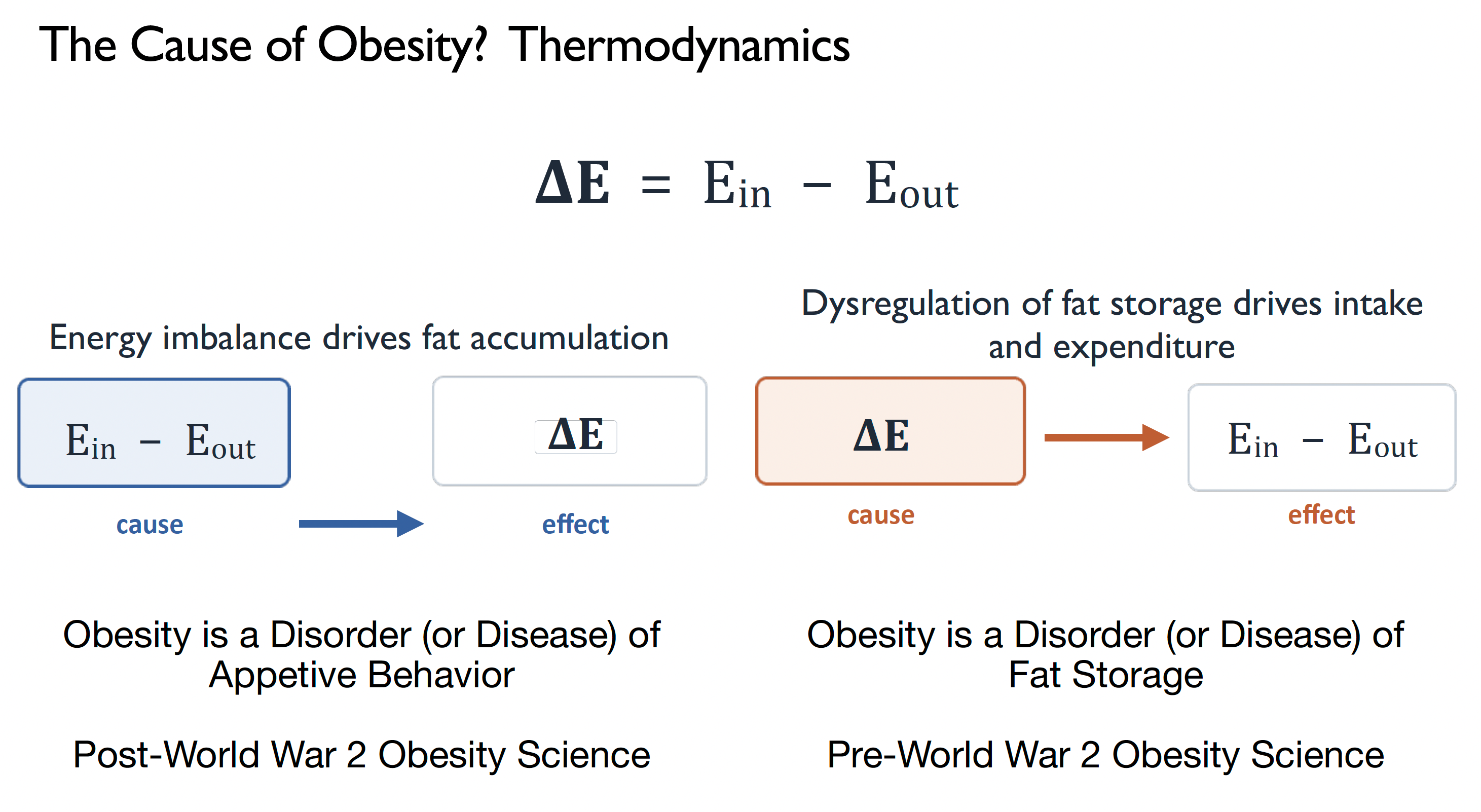
Here’s the short version of the story I’m telling: the paradigm that we’ve taken for granted since the years after the Second World War, that we all grew up with — that obesity is fundamentally a disorder of energy balance, of eating more than we expend — was not always the consensus of opinion by the medical scientists involved. In the decades before World War 2, most of of the serious clinical researchers in Europe had considered that very idea and rejected it as useless. And these European scientists were decades ahead of America in their thinking and research. One of these men called the calories-in/calories-out framework the “dead end of the energetics view,” and the talk explains why. What these scientists put in its place was a different conception entirely: obesity as a constitutional, neuro-endocrine disorder of fat storage — simply put, a fat storage disorder, not the simplistic arithmetic problem of energy consumed and energy expended.
That earlier paradigm was effectively erased by the Second World War and forgotten in the decades after. The talk is about how that happened and why getting this right remains so critical to how we think about obesity and weight regulation today.
Here’s the slide I used to set up the competing paradigms and the history/science I would describe in the talk.1 I’ll send around the talk itself as soon as it’s available online.
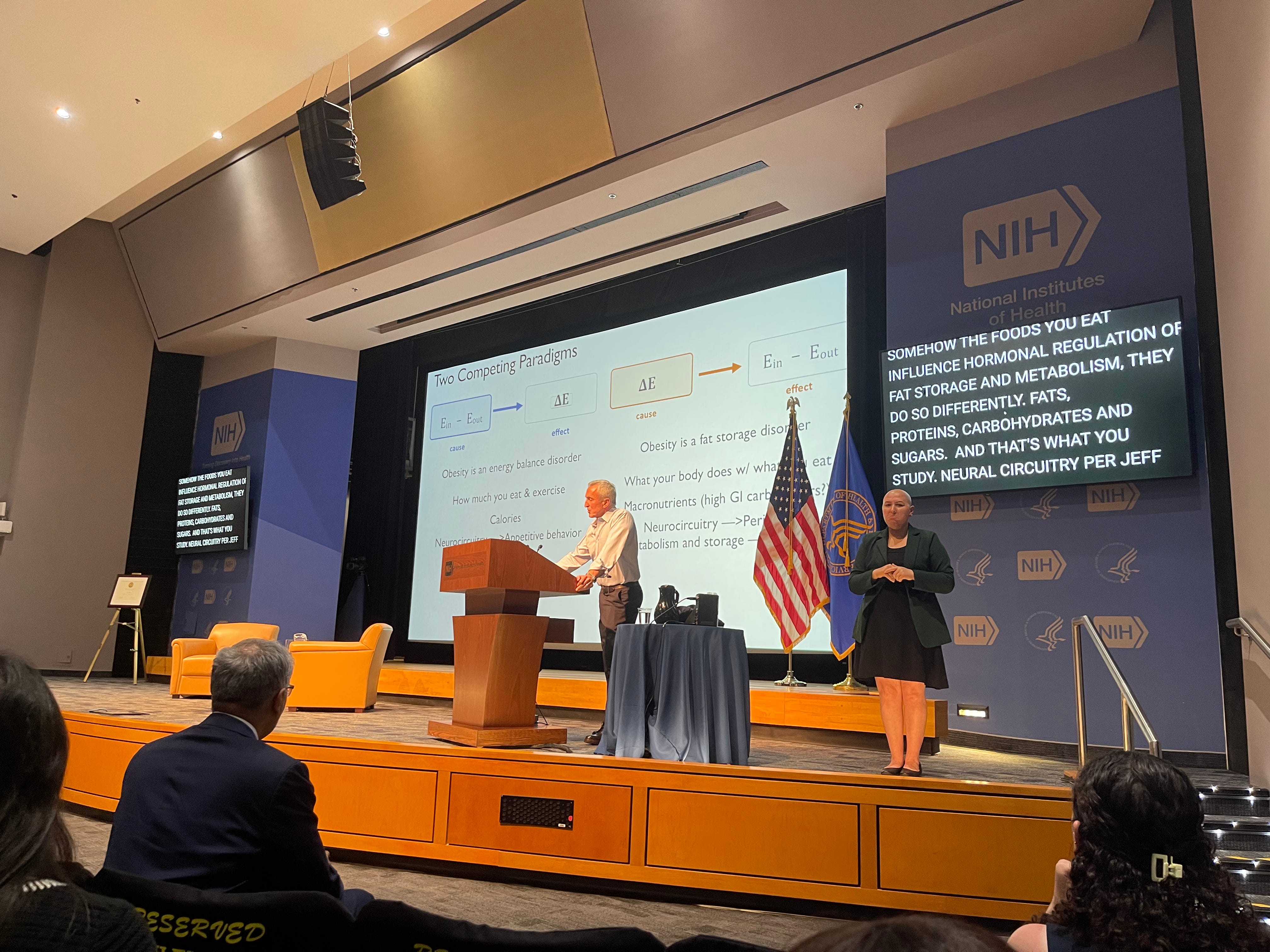
And here’s a photo of me toward the end of the talk.
Thanks for reading Uncertainty Principles! This post is public so feel free to share it.
And, yes, the two causal arrows should be aligned, but when I converted the talk from Keynote to PDF, the blue arrow dropped in the conversion. I only noticed it as I was giving the talk itself, which used the PDF version.
No posts
Comments
Nothing yet. Say the first thing.
Sign in to join the conversation.