
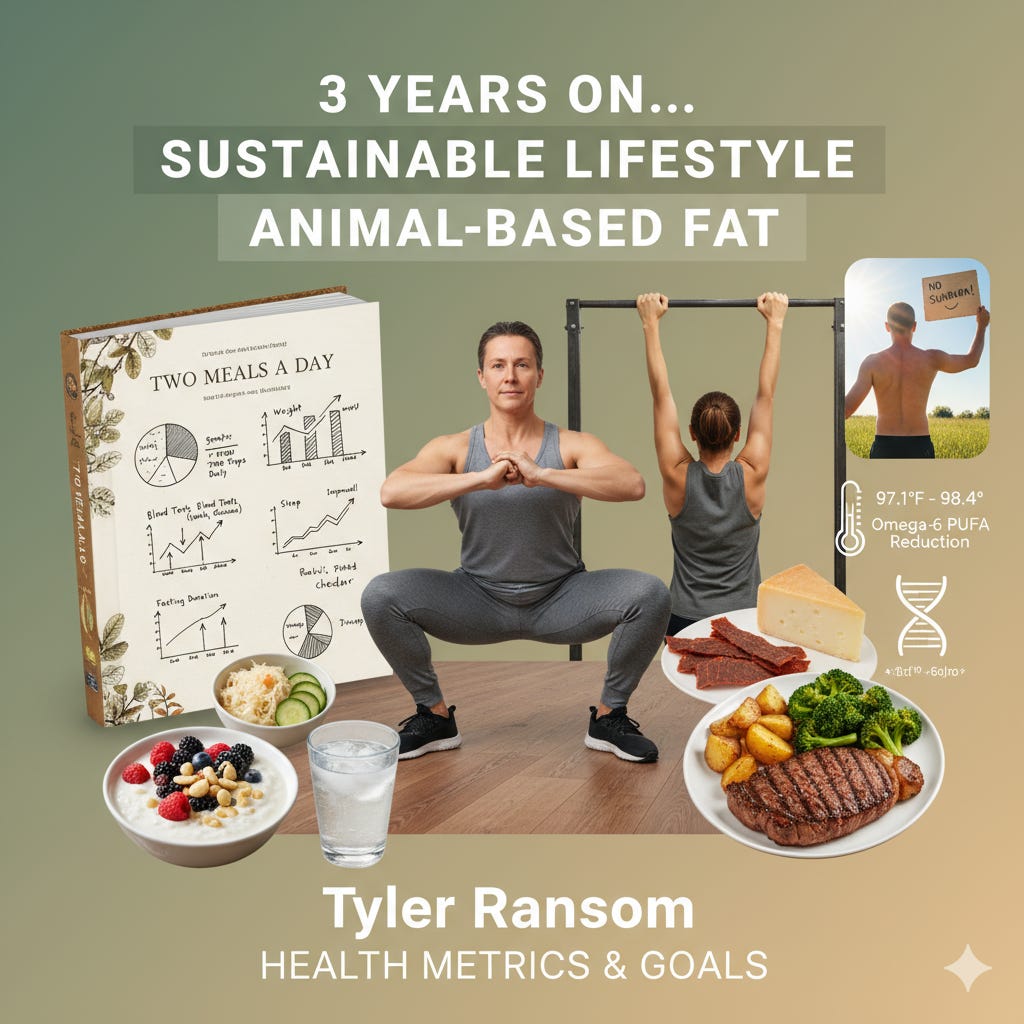
A little more than three years ago, I finished reading Mark Sisson’s and Brad Kearns’ book, Two Meals a Day: The Simple, Sustainable Strategy to Lose Fat, Reverse Aging, and Break Free from Diet Frustration Forever. At the time, it felt like a life-changing book that would stick with me for the rest of my life.
I’ve since published three posts about the lifestyle changes I made and whether they’ve stuck (this post marks the fourth). Past posts are available below for 1-month, 1-year, and 2-year follow-ups:
Additionally, I’m about 1½ years into a lifestyle of eating fat that is mostly animal-based and saturated while eschewing omega-6 polyunsaturated fats as much as possible. While I have run several experiments in the intervening time (see here and here), I’ve held to this quite well.
I thought it would be useful to quantify relevant health metrics while also grading sustainability and reviewing my ongoing goals. Here goes:
I’ve been able to largely maintain the initial weight loss, although things have creeped up over the past year for reasons unknown to me.
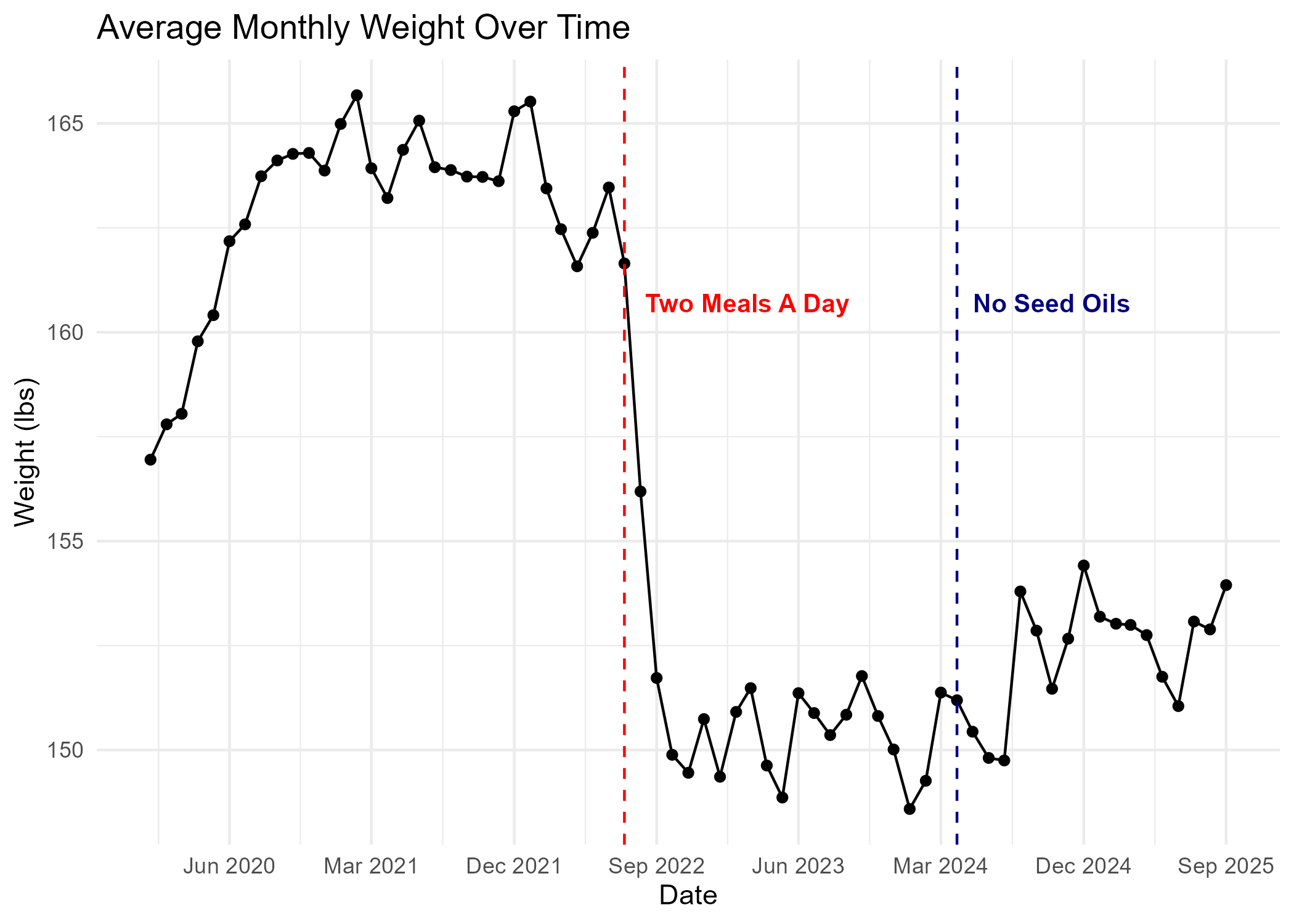
I haven’t changed height at all, so the same graph of my BMI would look identical.
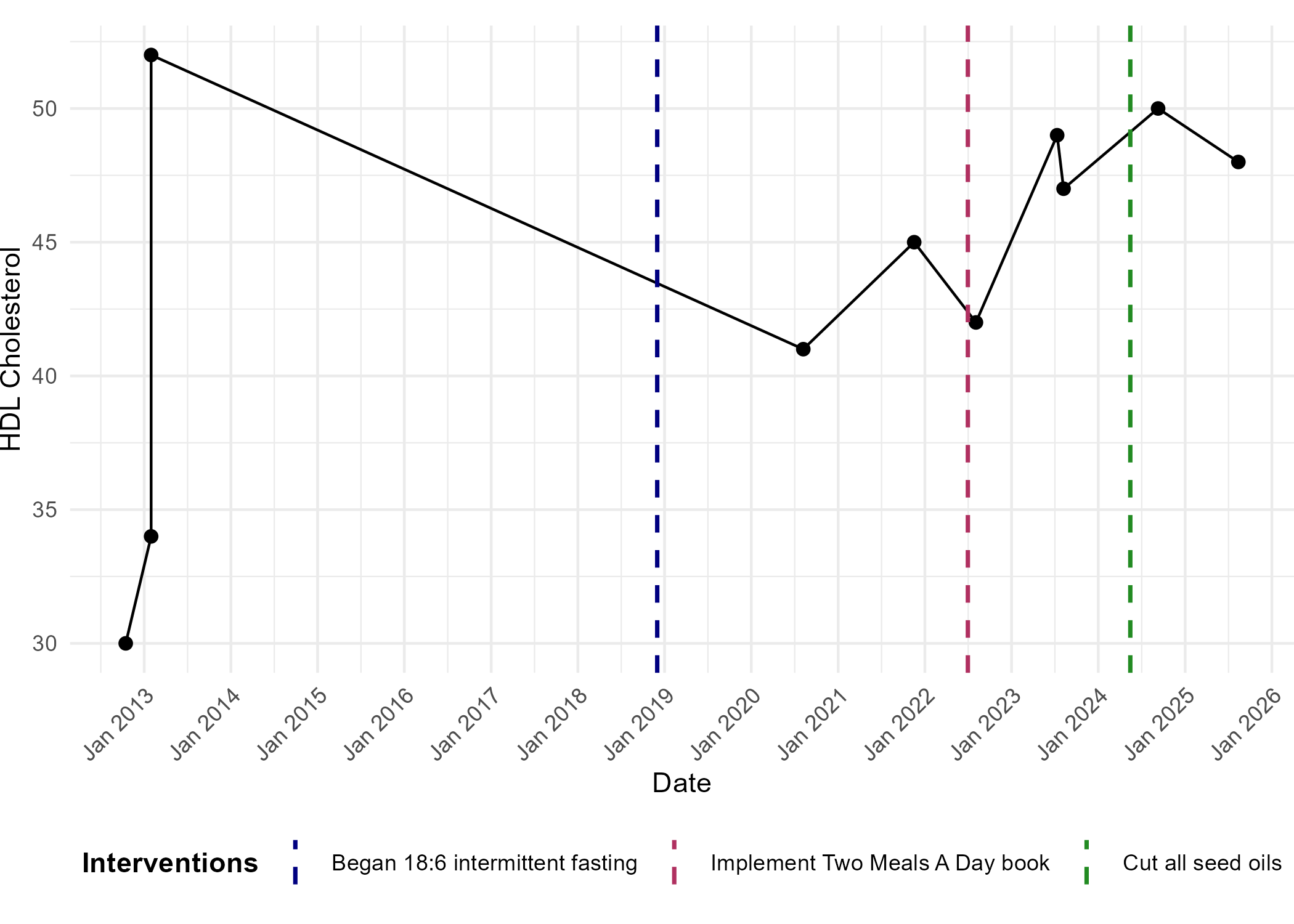
Note that these are a much longer time series, since I only started tracking weight and steps 6 years ago. (Bloodwork goes back 13 years)
Overall, an increase in the past year, but no cause for alarm by any conventional metric. I wish I could get more detailed LDL counts (like Oxidized LDL or LDL Type B).
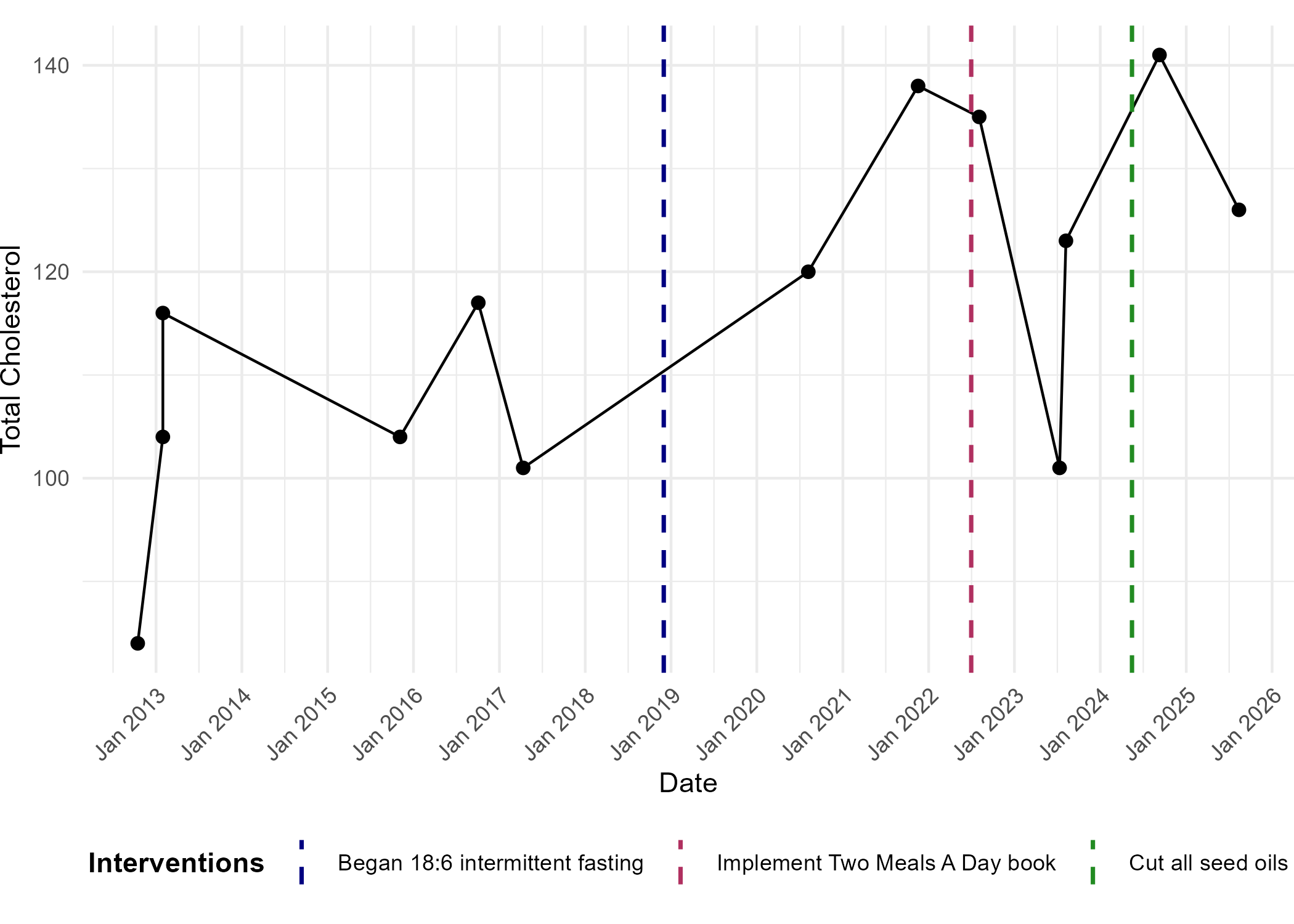
(That total cholesterol in the 80s was when I was diagnosed with a mild case of familial hypobetalipoproteinemia.)
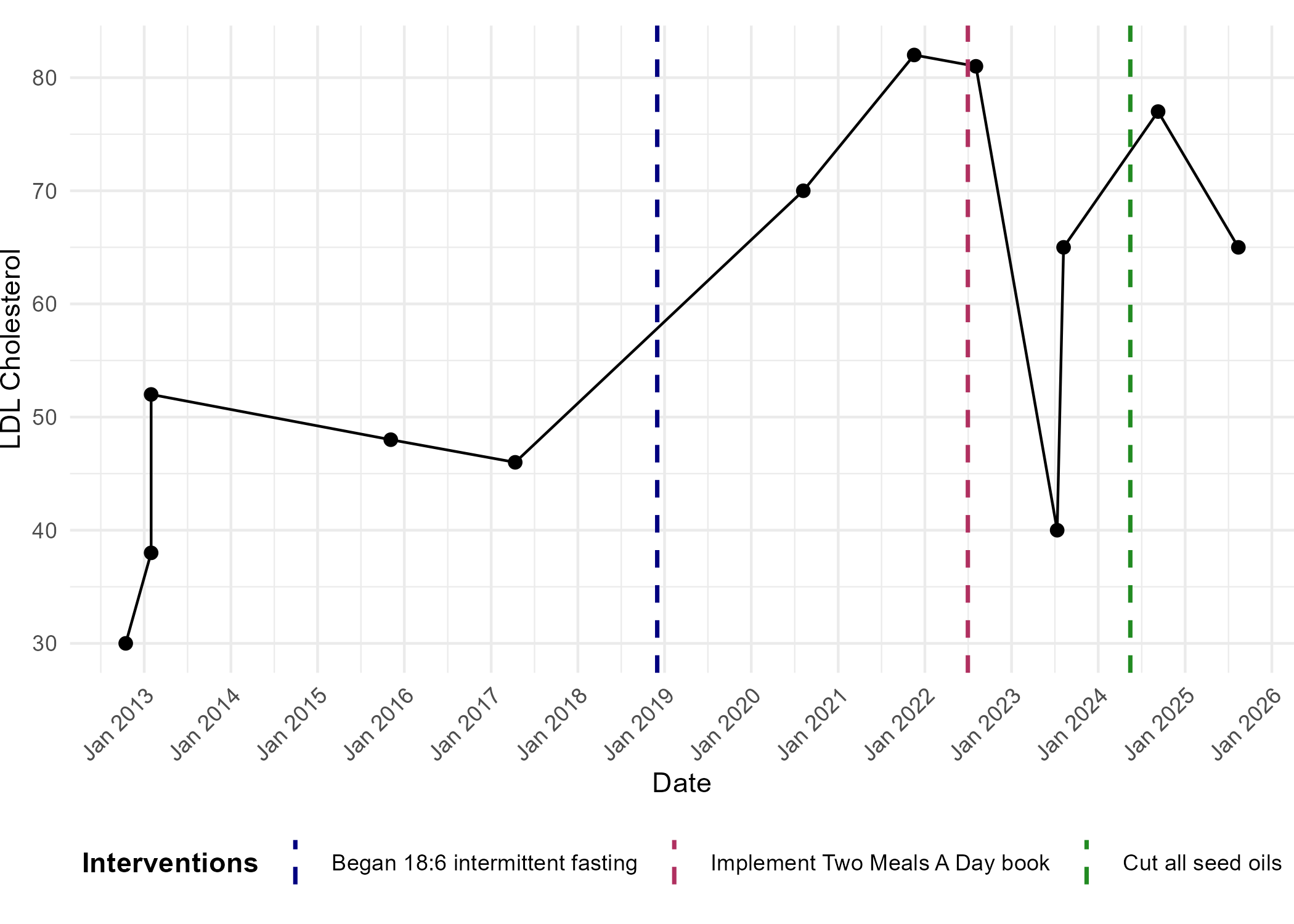
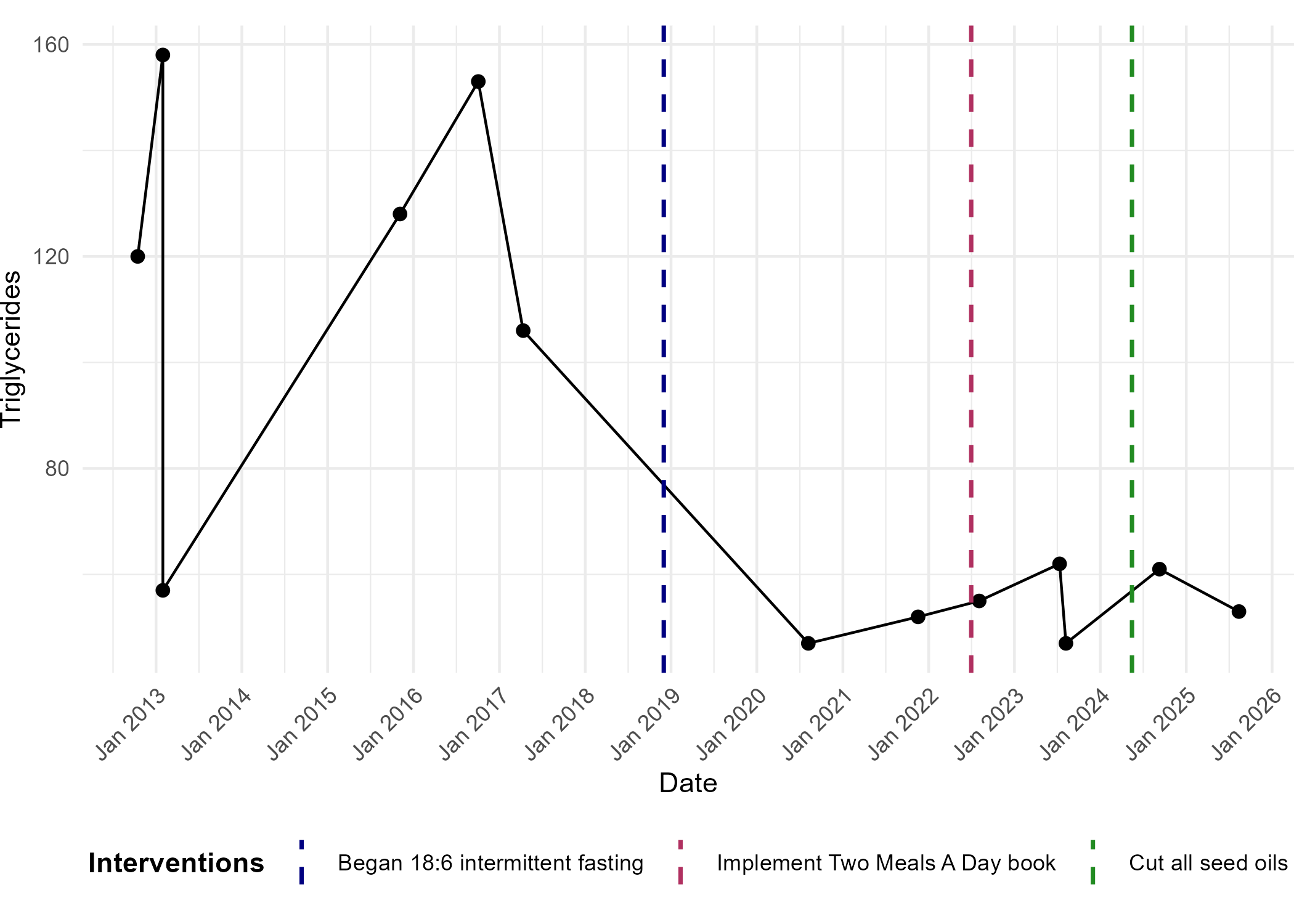
I think it’s interesting that doing intermittent fasting substantially brought down my triglycerides. I was eating loads of junk food in 2020-21 while still only eating two meals each day.
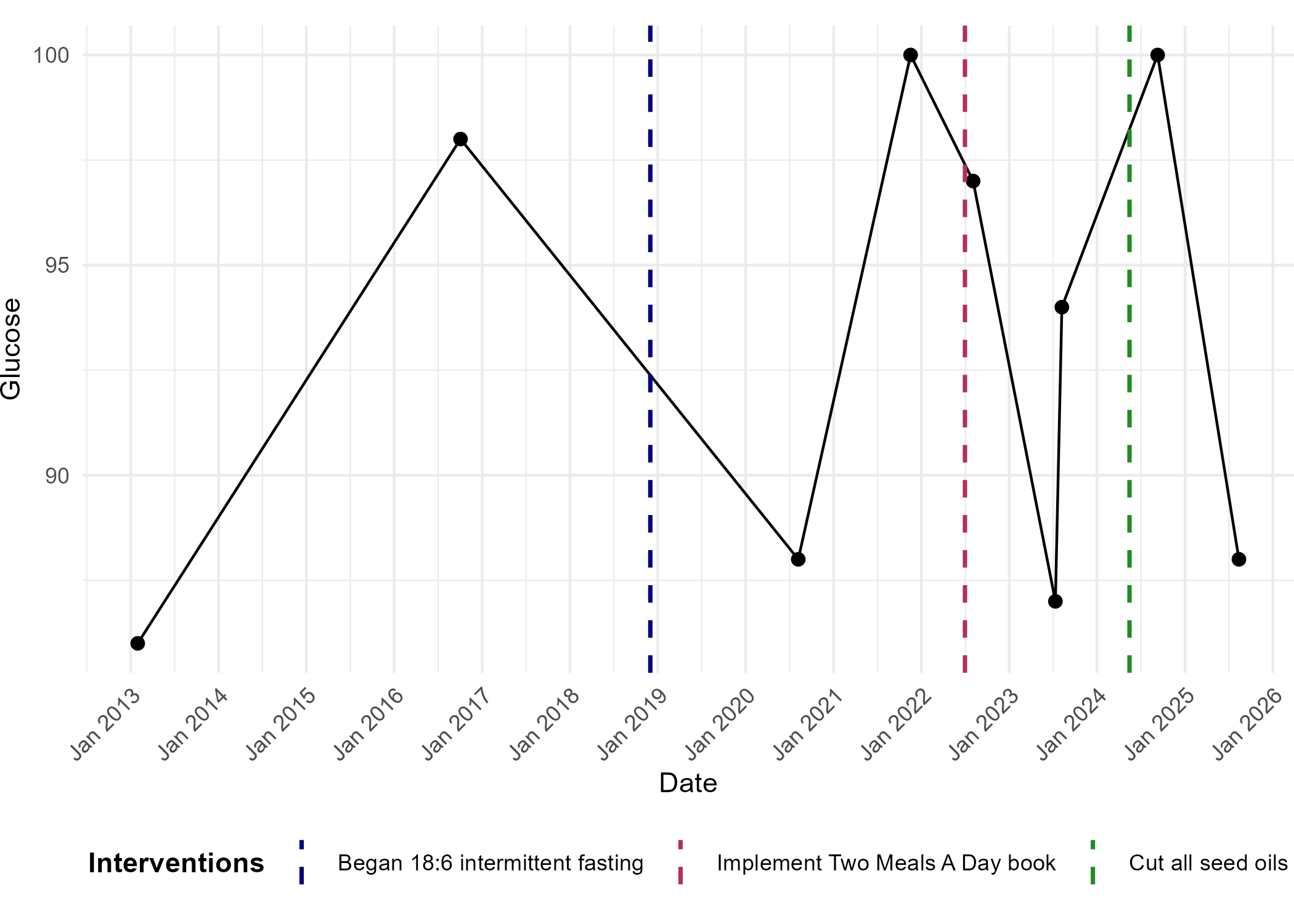
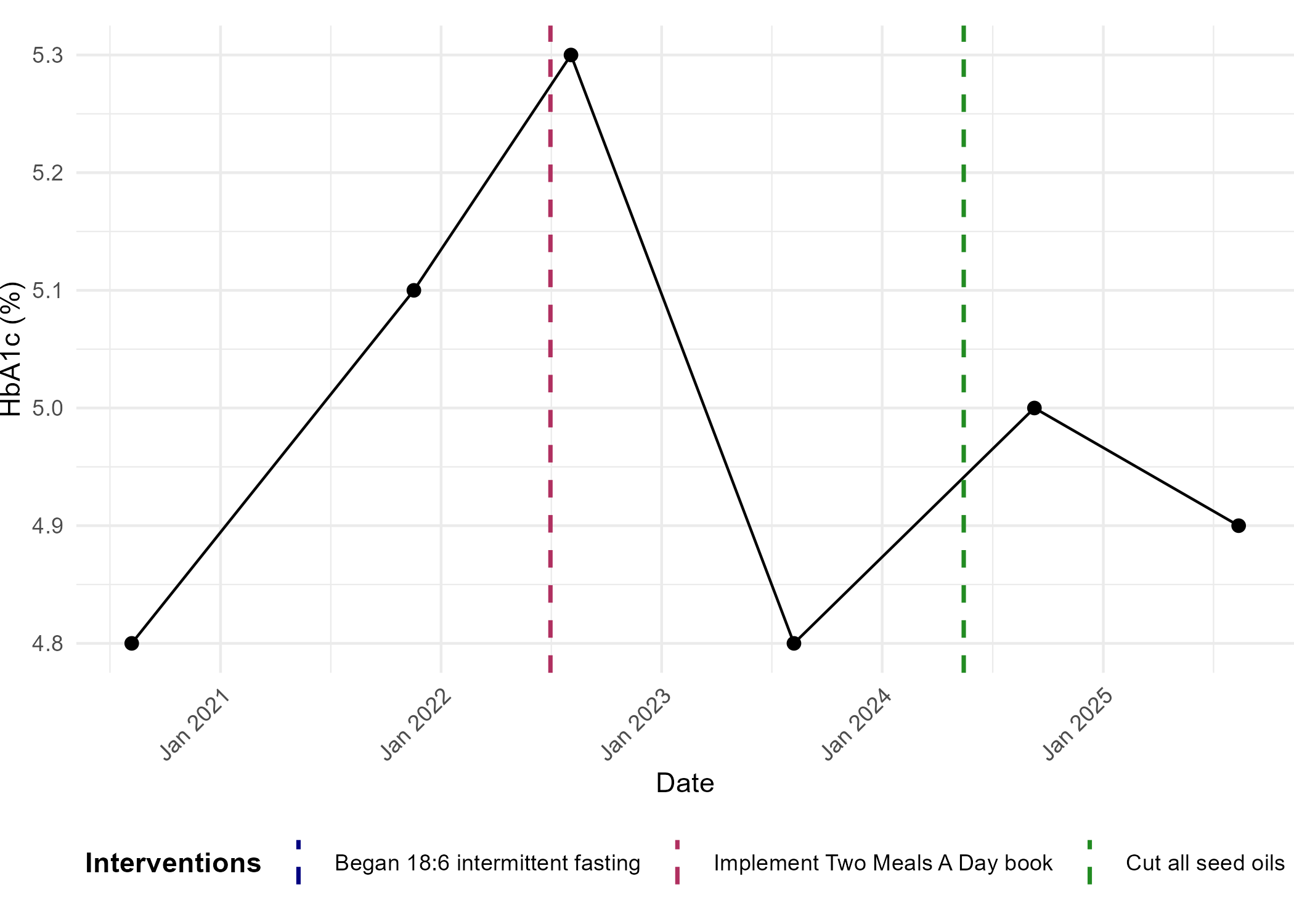
My fasting glucose has improved quite a bit, which I’m proud of. Obviously it could just be an aberration from the day I took my most recent physical, so I may get a CGM to confirm. Either way, nothing but good news here:
My goal is to walk at least 7,000 steps (roughly 5km or 3 miles) every day. I’ve been able to keep at that, except for the few months in 2024 when I was nursing a lower leg injury.
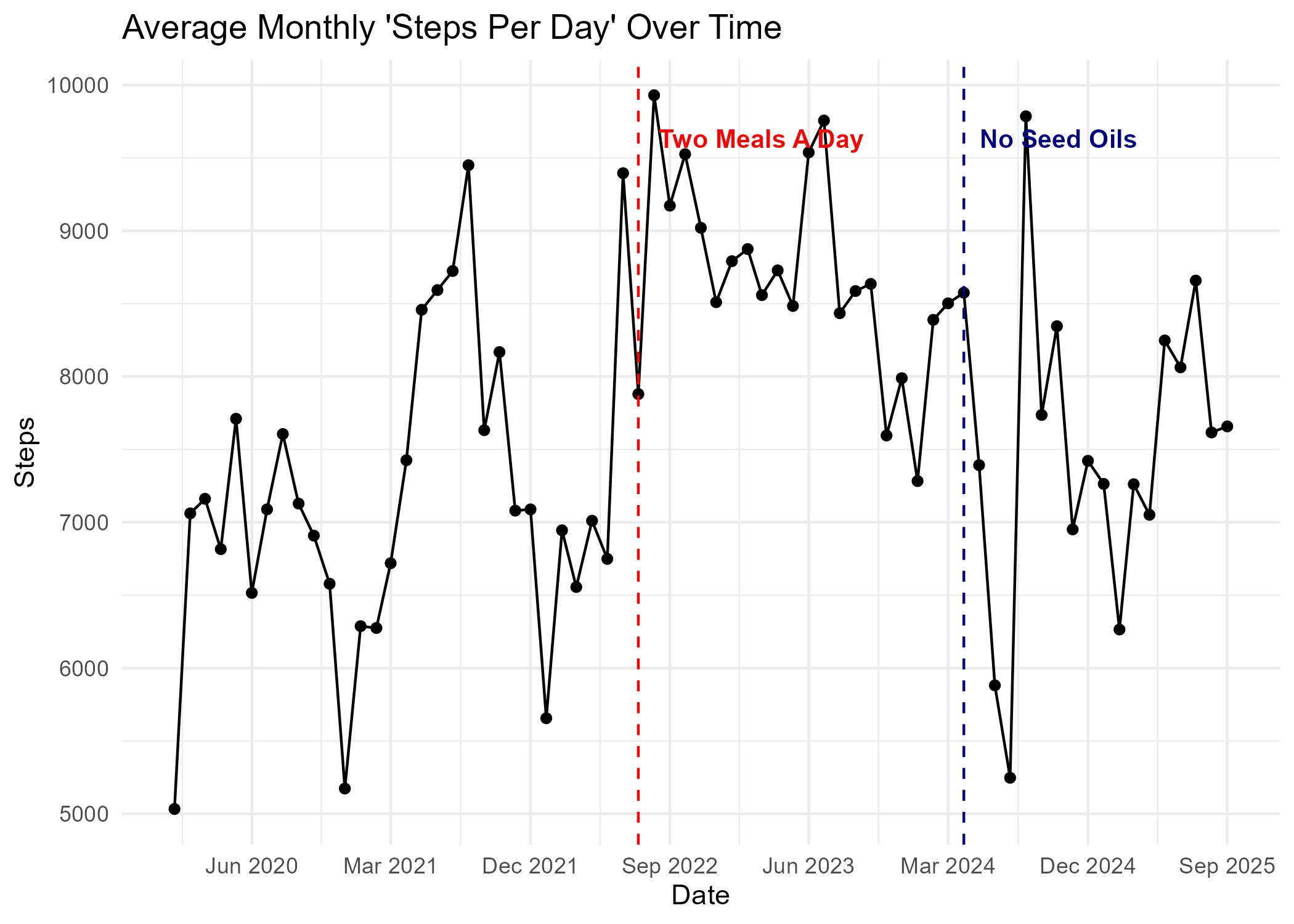
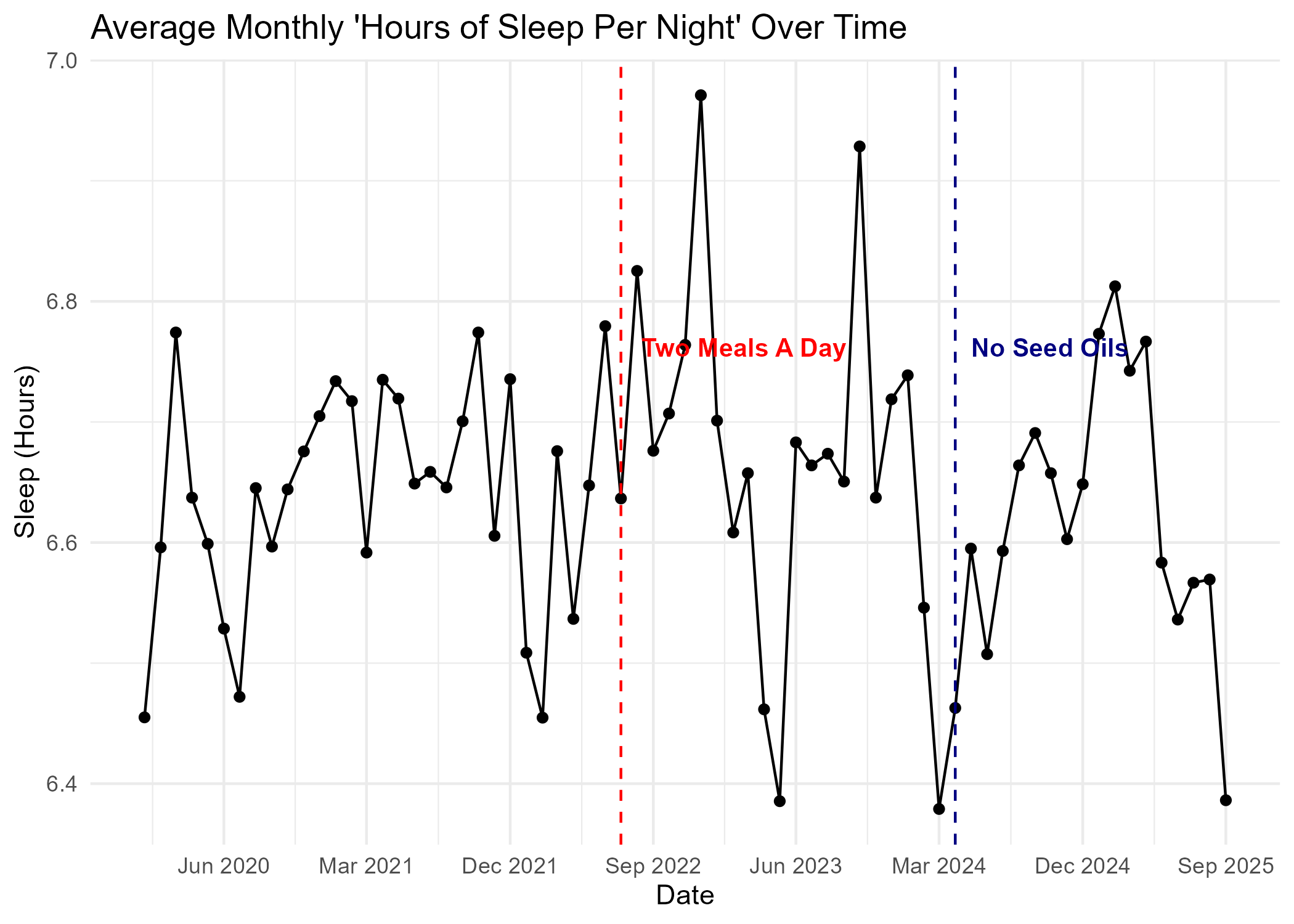
Mostly there’s nothing to see here; I guess a lot more variance since July 2022?
The spikes are when I did 3+ day fasts (typically around New Year’s).
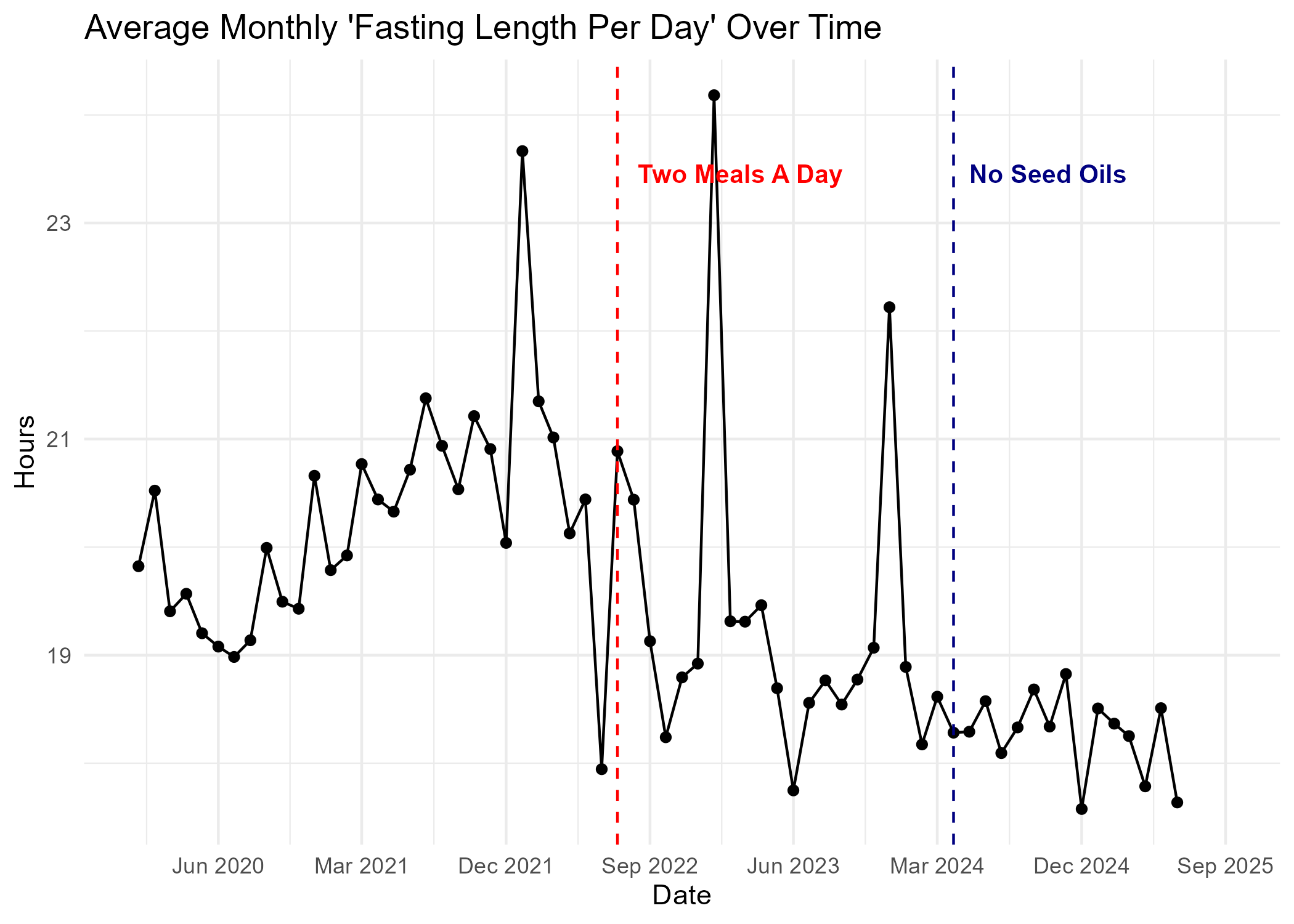
I was too lazy to pull the fasting data from the past few months, but it’s basically identical.
In my 1-month follow-up post, I laid out a set of practices that I thought would be sustainable. In my 1-year follow-up, I wrote about how I have mostly kept with this. My two-year follow-up was largely identical to my 1-year follow-up. My three-year follow-up is no different. I don’t eat “nose to tail,” don’t worry too much about electrolytes, and don’t worry about cold/heat exposure.
Overall, I’d say I’m more or less doing the same things I was doing 2+ years ago, with largely the same results on a variety of measures.
My main physical goals recently have revolved around developing “primal” abilities—like the ability to do a deep squat for several minutes, hang from a bar for 1-2 minutes, and the ability to sit on the ground for a while. I’ve largely kept up with my “light calisthenics” regime of dips/pushups and low-rows/pull-ups along with some squatting. Strength Side has been an enjoyable YouTube channel in this space, along with Tony Riddle’s book Be More Human.
I’ve done several diet experiments to see if anything else works better than what I’ve been doing. So far, I haven’t found a clearly superior diet.
My current diet is roughly:
Lunch: Full-fat plain kefir, fruit, sauerkraut/cucumber “salad”, macadamia nuts, beef jerky, and raw smoked cheddar cheese
Dinner: Any of several low-PUFA meals
steak, potatoes, steamed broccoli, sourdough toast, fried eggs, hamburger lettuce wraps, tacos, corn tortilla chips (fried in tallow), meatballs, …
Basically, I cook everything in beef tallow or butter and I only occasionally eat pork or chicken.
During the past year, I did an OmegaQuant test to see what my Linoleic Acid percentage is. It came in higher than I was expecting, at around 18.5%. I will do another one in the coming months and expect it to be lower, but we shall see.
I also started tracking my temperature regularly, since this is a sign of metabolism. Mostly the temperature ranges from 97.1°F to 98.4°F. The lower readings tend to be right after waking up, so are probably a lower bound.
Finally, I ran some sunburn experiments over the summer and confirmed that ditching seed oils has protected me from sunburn:
I continue to find this lifestyle to be quite sustainable, and I’d definitely recommend it to others!
No posts
Comments
Nothing yet. Say the first thing.
Sign in to join the conversation.