
Welcome to This Week in Social Science.
Maimonides, the 12th century scholar and physician, wrote that the highest form of charity comes when it enables the recipient to be financially self-sufficient. He recognized that the power imbalance in charitable giving can be a source of injustice between the donor and the recipient, risking their dignity and agency.
The debate around the most effective and ethical ways to give aid is still ongoing, and today we will look at some recent research into imbalances between what donors and recipients want from aid, and how narratives about aid can protect the dignity and agency of the recipient.
To better understand what donors and recipients wanted from aid, and how they would like to see it allocated, a team of researchers reviewed 58 studies which included data on what donors and recipients wanted out of their aid.
The researchers arrived at three key takeaways from their review: 1) Donors often prioritized aid to healthcare more than recipients, 2) Donors were more concerned with aid effectiveness than recipients, and 3) There is a lack of research into what recipients actually want from aid programs.1
This third point is particularly critical: If donors don’t understand the desires and needs of recipients, from the perspective of the recipients themselves, it becomes impossible to recognize where the misalignments are, let alone try to resolve them in ways that protect the dignity of the recipients.
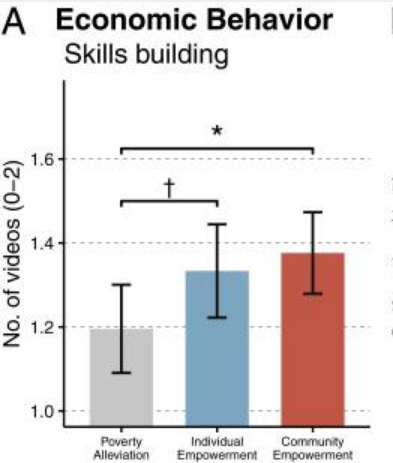
To ensure that aid is given in a way that respects the dignity of the recipient, it is important to think not only about how that aid is given, but also what story we are telling about why aid is given. To learn more, researchers gave a small unconditional gift of cash to 565 low-income residents of Nairobi, Kenya, and then randomly assigned them to hear one of three messages about the purpose of giving aid: 1) Aid helps reduce poverty among the most needy, 2) Aid helps people achieve their personal goals, or 3) Aid helps people support their communities to meet the community’s goals.
The results showed that narratives about personal and especially community empowerment left recipients feeling better about themselves, and also more likely to choose to watch videos to develop their business skills, than did the narrative about poverty reduction for those in need. These empowerment narratives were not only beneficial to the recipients, but also did not, as some might fear, reduce willingness to donate among potential donors. The researchers found in a second study that Americans who watched one of the three videos were all equally willing to donate. This research suggests that small changes to how aid is represented, can meaningfully improve how the aid is received and the benefits it ultimately brings.2
Centering dignity and agency in aid is difficult. The best-intentioned donors are often looking for clear metrics of the effectiveness of their donations, like in lives saved or children fed. But ignoring the needs and preferences of recipients also comes at a cost to their dignity and agency, and the focus on donor goals often relies on the problematic assumption that the values and perspectives of the donor are superior to those of the recipient.
As the research indicates, there are small ways in which we can better respect the values of recipient communities by just adjusting narratives, but important questions remain as to whether we are giving aid to people we respect and trust to best meet their own needs, or whether aid is better designed to make donors feel good about themselves than it is to truly help others.
As always, if you see research we should cover, please email us at twiss.weekly@gmail.com.
Thomas, C. C., Otis, N. G., Abraham, J. R., Markus, H. R., & Walton, G. M. (2020). Toward a science of delivering aid with dignity: Experimental evidence and local forecasts from Kenya. Proceedings of the National Academy of Sciences, 117(27), 15546-15553.
Comments
Nothing yet. Say the first thing.
Sign in to join the conversation.