
This month’s newsletter reflects on my first Berlinale bouncing between screenings, meetings and long walks through the snow, Hollywood’s latest mega-deal (and why it proves decision-making is still fundamentally financial), London’s growing production momentum, Bad Bunny, and a few other things I’ve been thinking about lately.

This was my first year at the Berlin Film Festival (Berlinale), and it reminded me why being physically present still matters.
The week was a blend of impromptu meetings, screenings, and long walks between venues — growing my network across festivals, distributors and sales agents, while also reconnecting with old friends and colleagues from across the industry.
A real highlight was speaking at AfroBerlin, where I joined a conversation on promotion, distribution and release strategy for African and diaspora cinema. We talked honestly about the gap between a film premiering at festivals and actually reaching sustainable audiences — and the role that thoughtful strategy, partnerships and promotion play in that journey. It was energising to share my perspective from the publicity and campaign side of the industry while hearing directly from filmmakers, producers, programmers and distributors navigating those realities.
Berlin also gave me a bit of clarity. About who I want to work with. What kinds of projects genuinely excite me. And the role I want to play in helping films move from “promising” to unmissable.
Between the panels, the coffees and the late-night screenings, I was reminded that my goal is actually quite simple: to be a trusted strategic partner for filmmakers and organisations who care about building momentum around their work — not just noise.
Despite the freezing weather (no one warned me properly), the biggest lesson was this: showing up matters more than having everything figured out. The work I’ve spent the last few years building across publicity, awards campaigns and festival strategy does travel — but only if I’m willing to put myself in the conversation, not just my clients.
Berlin set the tone for how I want to move through the rest of 2026: more intentional international presence, deeper collaborations across borders, and a braver approach to pitching — for my clients and for myself.
If we crossed paths in Berlin, thank you for the conversation. And if you’re thinking about the strategy behind your next film or cultural project, my inbox is always open.
The industry story that everyone is talking about — not only because it’s shocking, but because it’s another very clean reminder that Hollywood is not primarily a cultural project. It’s a financial one.
Whether you’re excited by it, depressed by it, or numb to it, there are implication’s that have a rippling impact on the industry:
Across the board, the selling of Warner Bros will have massive ramification across Tinsel town, with all but assured cuts to staff in a city that has been marred by continued production cuts.
- Paramount set for $111bn Warner Bros takeover after Netflix drops bid, by Danielle Kaye and Nardine Saad, BBC
Additionally, it highlights how far the centre of decision-making has moved away from the creative process itself.. When studios are being bought and sold like portfolios, it reshapes everything downstream, what gets greenlit, what gets cut, which divisions survive, how risk is defined, how success is measured, and how quickly “strategy” becomes another word for “debt management.”
We’ve already seen how risk aversion can manifest creatively. The dominance of remakes, reboots and franchise extensions has often been framed as audience demand. But in many cases, it’s also a financial calculation: familiar intellectual property appears safer to investors than entirely new ideas.
Consolidation of this size doesn’t just change ownership. It changes what audiences get to see, what filmmakers get to make, and which stories are considered “worth” the spend.
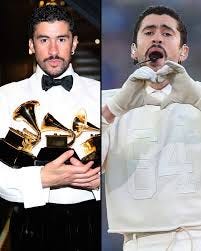
Coming back to authenticity — Bad Bunny winning Album of the Year with a body of work entirely in Spanish feels radical. Not because it’s unprecedented, but also because of when it’s happening.
At a moment when the US is wrestling with anti-immigration, ICE, race, language, and who gets to belong, Bad Bunny has done the opposite of what the industry often demands: he hasn’t translated himself, softened his politics, or diluted his cultural references to be more “palatable.” Instead, he went backwards — to his roots, to Puerto Rico, to language, memory, and place and trusted that specificity would travel, and if it didn’t then it wasn’t for you.
What’s remarkable is that it has travelled. The album resonates far beyond Spanish-speaking audiences, proving that emotional clarity doesn’t require linguistic access. You don’t need to understand every word to feel conviction, pride, grief, or joy. In a global culture that often rewards assimilation, Bad Bunny’s success is a reminder that authenticity isn’t a limitation — it can be an amplifier.
Staying true to who you are, especially when external pressures are telling you to be quieter, smaller, or more neutral, can paradoxically make the work louder, broader, and more enduring.
In that sense, his win is cultural. It’s a signal that audiences are hungry for work that knows exactly where it comes from and refuses to apologise for it.
London Evening Standard ran a piece framing London as “the new Hollywood.”
On the surface, it sounds like a familiar bit of boosterism. But the data/industry figures referenced in the article, highlighted that almost as many films were shot in London in 2025 as in Los Angeles!
A decade ago, that would’ve sounded implausible, and you may have been laughed out of the room.
UK film production spend hit £2.8bn in 2025, the highest figure since film records began in 2002, with overall film and high-end TV (HETV) production spend totalling £6.8bn.
- UK film production spend hit £2.8bn in 2025, highest on record, by Mona Tabbara, Screen Daily
According to reports, the overwhelming majority of that spend came from US studios and streamers choosing to base productions here, thanks to the tax reliefs. Additionally, London offers experienced crews, world-class post-production and VFX, globally recognised studios and a city that can convincingly double as almost anywhere else.
Shooting levels in California, reeling from budget reductions across most studios and streamers, last year fell to their lowest level observed by FilmLA since it started tracking the data in 2017 (excluding 2020 at the height of the pandemic)… the L.A. wildfires put even more projects on pause. “It just doesn’t make sense when you do the math,” a top streaming executive says, adding that entire soundstages on L.A. lots are sitting idle.
- How London Became the New Hollywood by Lily Ford, The Hollywood Reporter
External factors are also shaping the landscape. Political tensions, immigration uncertainty and the dismantling of diversity initiatives across parts of the US entertainment sector are influencing where some creatives choose to work.
With diversity and inclusion programs getting shuttered seemingly everywhere, Britain has the potential to become something of a refuge for talent hoping to get away from Trumpian turmoil… Then there’s the chaos and uncertainty surrounding travel and visas thanks to Trump’s hard-line immigration policy.
- How London Became the New Hollywood by Lily Ford, The Hollywood Reporter
None of this means Hollywood is disappearing. Los Angeles still holds enormous cultural influence, financial capital and institutional power — and likely always will.
But something important is changing.
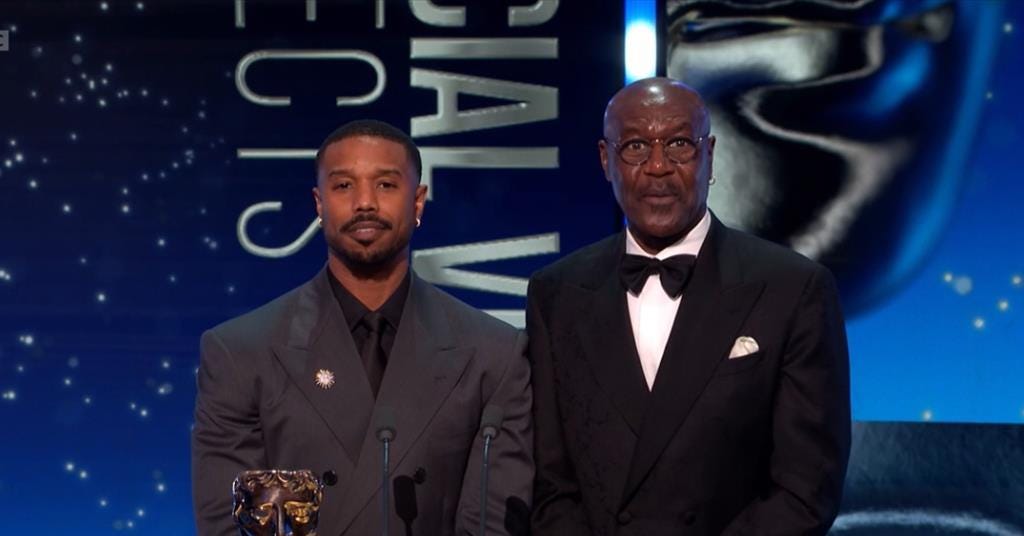
One of February’s biggest industry moment was less about awards and more about what overshadowed it.
At the 79th BAFTA Film Awards, cinema and the craft of filmmaking was celebrated: One Battle After Another dominated with six wins including Best Film and Best Director, Jessie Buckley won Best Leading Actress for Hamnet, and Robert Aramayo took Best Leading Actor and the EE Rising Star Award for I Swear. Films like Sinners, and Frankenstein also earned major recognition across writing, technical and family categories — a reminder that culturally specific UK stories continue to resonate.
And yet.
The ceremony was overshadowed by controversy when a racial slur — involuntarily uttered by a guest with Tourette’s syndrome — was included in the BBC broadcast despite the programme being delayed and heavily edited. Other moments were removed, including the closing line of director Akinola Davies Jr.’s speech, which referenced “Free Palestine”. The decision to leave the slur in the final broadcast sparked backlash and raised difficult questions about editorial judgement, crisis communications and duty of care.
In crisis communications, timing and clarity are everything. As hours passed without a clear response, the narrative spiralled and the opportunity for either organisation to control the messaging narrowed.
It also raises a deeper question: who is in the room making these decisions? If those editorial spaces were more racially and neurodiverse at senior levels, would the issue and impact have been recognised a lot sooner? I understand that representation doesn’t magically solve everything. But a lack of it creates blind spots — and moments like this expose how costly those blind spots can be.
At the other end of the power spectrum is a different kind of shift and how the industry is potentially changing.
On The Town with Matthew Belloni podcast, YouTuber Markiplier discussed how he turned his platform (roughly 38 million subscribers) into the launchpad for his directorial debut film, Iron Lung, which he produced, directed, self-financed and distributed the film entirely himself through his own company, Markiplier Studios. He reportedly investing several million dollars of his own money — rather than partnering with a traditional Hollywood studio, which allowed him to retain creative control and ownership. No major studio. No distributor. No conventional P&A campaign. A rarity for first-time feature directors.
He did something studios talk about endlessly but rarely execute cleanly: he activated an audience that was already paying attention.
Rather than selling the film to cinemas through a top-down distribution deal, demand came from the bottom up. Fans contacted theatres directly requesting screenings, including major chains like Cinemark, Regal and AMC. What was originally intended as a limited release quickly expanded. Iron Lung ultimately screened in more than 3,000 theatres across the US and over 1,000 internationally, driven largely by audience demand and online buzz.
The conversation becomes less about one project and more about what it represents.
Iron Lung sits at the intersection of Hollywood and the creator economy — a reminder that digital creators are able to build audiences first and then bring those audiences with them into traditional formats like theatrical release.
Studios shouldn’t look at Iron Lung and think we need to replicate this. That would completely miss the point.
If studios look at Iron Lung and conclude "we need to partner with every creator who has millions of followers," they are going to fail. Spectacularly. Because many large follower counts are breadth-- impressions, reach, awareness. They are not the kind of audience that picks up the phone and calls a movie theater to demand showtimes.
- Andrew Leonard (Creator Partnerships at YouTube and Business Insider “Rising Star of the Creatory Economy”), LinkedIn
The real opportunity here is identifying depth creators — as Andrew mentioned — creators whose audiences don’t just watch, but act. The kind of audience that shows up, that convert views into sales. We’ve already seen this play out across the wider influencer and creator economy. Large follower counts that doesn’t necessarily translate into action. Depth is different. Depth is the audience that cares enough to actually do something.
It’d be interesting to see the type of films and filmmakers that get greenlit in the next few years.
Have a listen to The Town podcast episode “How a YouTuber Took His Self-Financed Movie Wide Without a Studio.”
I’ve been trying to be more intentional about what I consume lately. So I’ve been experimenting with what the internet is calling anti-doomscrolling — choosing inputs that either genuinely teach me something or actually restore my attention.
I recently watched BLKNWS: Terms & Conditions, the genre-bending film project by artist and filmmaker Kahlil Joseph.
BLKNWS sits somewhere between documentary, essay film and cultural archive — weaving together news footage, historical material and newly shot sequences to explore Black history, politics and memory in a completely non-linear way. It’s the kind of work that refuses to sit comfortably in one category, which is precisely what makes it interesting.
Full disclosure: the film is a client project I’ve been working on, so I’m close to it. But even outside of that, it’s a fascinating example of how artists are experimenting with form to rethink what “news” and storytelling can look like.
You can also watch the film at the new 180 Studios Underground Cinema, until the end of March.
I’ve been reading other Substacks and long-form writing that make me think more deeply about culture, media and power and that actually expands how I understand the industry.
Puck Newsletter: What I’m Hearing – Matthew Belloni
One of the most reliable breakdowns of how Hollywood actually works behind the scenes — deals, executive politics, studio strategy. Even when I disagree with the framing, it’s useful to understand how the business side of the industry narrates itself.
Ankler – Richard Rushfield / The Ankler team
Sharp reporting on media consolidation, streaming economics and the shifting power structures across Hollywood. Less hype, more structural analysis.
I’m planning for the Cannes Film Festival this May. My accreditation has just come through, which makes it all feel suddenly real.
I’m particularly curious to see what the selection looks like this year. If Berlinale was anything to go by, and considering the strength of last year’s Cannes lineup, there’s a lot of interesting work currently circulating through the festival ecosystem.
I’m currently obsessed With We Are Here, the regional cinema programme from We Are Parable that’s currently touring across the UK.
The BFI-funded initiative is designed to expand access to culturally significant Black cinema beyond London, partnering with local curators in cities like Birmingham, Manchester, Bristol and Leicester to shape screenings and conversations that reflect their own communities.
Full disclosure: it’s also a client project I’ve been working on. But even setting that aside, it’s an initiative I think is genuinely important. For a long time, access to culturally specific film programming in the UK has been heavily concentrated in London. Audiences outside the capital often encounter these films much later — if at all — despite the fact that the communities they speak to exist across the country.
What We Are Here does is shift that dynamic slightly. Instead of exporting a London programme to the regions, it works with local partners and curators so that the screenings feel rooted in the cities they’re taking place in. The conversations around the films become just as important as the screenings themselves, creating space for audiences to engage with the work collectively, rather than just consume it in isolation.
It’s a reminder that cinema isn’t only about distribution windows or release strategies. It’s also about access, community and who gets to see themselves reflected on screen and where.
I attended the Black Comms Network Trailblazers event at the end of February.
It was genuinely energising to be in a room filled with so many talented and thoughtful Black communications professionals across industries. Spaces like this really matter, not just for networking, but for visibility, mentorship and the reminder that there is a whole community of people doing brilliant work in this field.
If you’re a Black professional working in Comms or PR, I’d genuinely recommend considering a Black Comms Network (BCN) membership. The community and shared knowledge are invaluable, not just in terms of networking, but in having access to people navigating similar challenges, opportunities and career paths across the industry. Spaces like that are rare, and they make a real difference.
For everyone else, it’s also worth looking at BCN from a partnership perspective. The network has an incredible range of talented communications professionals across sectors, and there’s a real opportunity for organisations to collaborate in ways that support visibility, mentorship and meaningful industry change. You can check them out here. here.
Finally, like everyone else, Bad Bunny’s Grammy-winning album has been on repeat this month, and because of it, I’ve now found myself attempting to learn Spanish. Slowly. Very slowly. But enthusiastically — Thanks Duolingo!
No posts
Comments
Nothing yet. Say the first thing.
Sign in to join the conversation.