

In the space of a few weeks, we’ve had three major developments that are significant. Individually, they are big new, but together could forecast a dramatic change in the media landscape.
Media consolidation is happening on both sides of the Atlantic at the moment, UK regulators cleared Paramount Skydance’s proposed acquisition of Warner Bros. Discovery, removing one of the deal’s major international regulatory hurdles.
Additionally, here in the UK, Sky announced it’ll acquire ITV’s broadcasting and streaming arm to create the UK’s biggest commercial broadcaster. Part of the deal means Sky will own ITV’s media and entertainment business, which includes its free-to-air TV channels in the UK and ITVX streaming platform.
In the US, the Federal Communications Commission (FCC) voted to scrap the longstanding rule against the consolidation of the tv industry, which prevented a single television company from owning multiple stations that collectively reached more than 39% of American households.
The direction of travel is pretty clear: big media is getting bigger.
Media consolidation itself is not new, and the commercial argument for these deals make sense - traditional media companies are competing not only with each other, they are now also competing with streamers such as Netflix, Amazon, Apple, and other global platforms operating at enormous scale such as Google, Meta, TikTok.
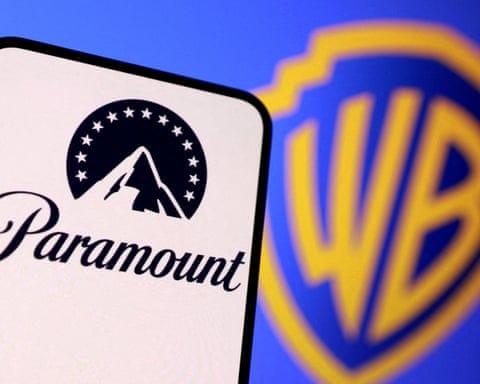
Paramount and Warner Bros. Discovery alone represent an extraordinary collection of film, television, streaming and news brands: CBS, Paramount Pictures, Paramount+, MTV, Nickelodeon and Comedy Central alongside Warner Bros., HBO, CNN, Discovery and more.
Paramount Skydance is led by David Ellison and backed by the considerable financial resources of the Ellison family. His father, Oracle co-founder Larry Ellison, is one of the wealthiest people in the world.
Sky’s proposed ITV deal would bring another significant collection of British television and streaming assets together, while the FCC’s decision potentially opens the door to much greater consolidation among America’s local television groups.
It’s easy to understand why these companies want to merge. These deals may make sense from a financial and business point of view, but that doesn’t mean they’re good for the wider media landscape.
Media companies don’t just sell products or own valuable brands. They also have a huge influence over what we watch, read and hear. They decide which films get financed. Which television programmes get commissioned. Which journalists get hired. Which stories get attention. Which voices receive platforms. Which perspectives become part of mainstream culture.
That doesn’t mean executives are personally deciding every headline, commission or creative choice. But when fewer companies own more of the media, there are simply fewer people and organisations making those decisions independently.
And at a time when trust in traditional media is already low, that matters.
According to the Reuters Institute’s 2026 Digital News Report, global trust in news has fallen to 37%. Interest in news has also declined, with a number of people describing themselves as ‘extremely’ or ‘very interested’ falling by an average of 13 percentage points since 2021. Reuters also found that people think media owners have a real influence over what news gets covered and how it is presented. In the US and Australia, people actually saw media owners as more influential than any of the other groups Reuters asked about.
For example,
In the United States and in several European countries especially, net sentiment indicates that audiences do not believe news media are doing a good job on several of these stories. On the most divisive topics – particularly climate, immigration, and the conflict in Gaza – many audiences feel poorly served by existing coverage.
…
They also appear more open to alternative sources of news, including individual journalists and news influencers, rather than relying solely on traditional institutional brands.
Obviously, media consolidation alone isn’t the only reason why trust in traditional media has declined, political polarisation, misinformation, perceived bias, social media and changing news habits all play a significant role.
But the question worth asking is, what happens when audiences who are already sceptical of mainstream media start to realise that more and more of what they watch, read and listen to is owned by the same small group of companies and wealthy individuals, each with their own interests, priorities and view of the world?
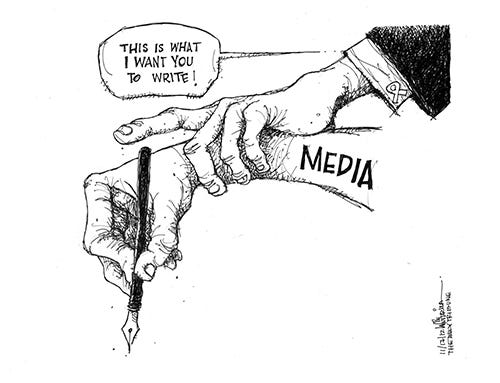
We’re already seeing this shift. At exactly the same time that media ownership is becoming more concentrated, influence is becoming more fragmented.
It would be easy to assume that fewer media owners means a smaller media landscape. But I’m not sure that’s the direction we’re moving in. If anything, I think we’ll see independent media continue to grow.
At one end of the media spectrum, we’ll have a small number of huge media companies with enormous reach, resources and control over distribution. At the other end, a growing mix of independent journalists, creators, newsletters, podcasts, YouTube channels, Substacks and specialist publications.
You can see this particularly clearly in Black British media. The Black press itself is obviously not new, but digital platforms have created new ways for Black journalists and creators to build audiences without having to rely on traditional newsrooms.
Black Ballad now has tens of thousands of women signed up to its newsletter and thousands of paying members, while newer platforms are emerging too. Black Current News, launched by journalist Nadine White in 2025 after she left The Independent, reported a 4,720% increase in subscribers over a six-month period and has already expanded from digital publishing into print.
For communities that have historically been underrepresented, misunderstood or simply overlooked by mainstream media, that direct relationship with an audience feels particularly significant.
There are already signs of that growth. Public Interest News Foundation’s 2025 Index of Independent News Publishing, that measures independent UK news providers, found that independent publishers saw significant year-on-year increases in both website traffic and email subscriptions. Substack, for example, went from two million paid subscriptions in 2023 to more than five million by early 2025. Additionally, newsletter platform beehiiv, paid subscription revenue rose 138% in 2025, as the number of creators earning subscription revenue doubled and number of publishers reached more than 255 million unique readers in 2025.
The Reuters Institute found that 27% of people globally now get information from news-focused creators every week, this goes up to 46% when you include creators who aren’t exclusively focused on news. Audiences describe creators as more relatable, entertaining and easier to understand than traditional media. Despite the report also saying that they generally regard creators as less trustworthy and less impartial, and most people consuming creator-led news are using it alongside traditional journalism rather than replacing it entirely.
The behaviour indicates, what we’ve known for years now, that people follow people, not simply publications.
A journalist can leave a newspaper and take an audience with them. A critic can build a newsletter. An industry expert can create a podcast. A political commentator can build a substantial audience on YouTube. A specialist writer can publish directly through Substack without waiting for an editor at a national publication to decide their subject is sufficiently mainstream. The barriers between journalist, commentator, creator and publisher have already become increasingly blurred.
And perhaps, ironically, the more concentrated mainstream media becomes, the more valuable independent voices become.
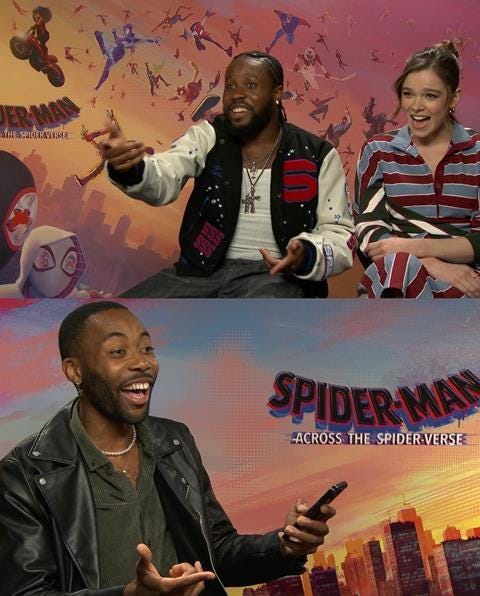
Working in entertainment PR, I can already see how much the media landscape has changed.
Creators aren’t sitting on the outskirts of the traditional media world anymore. They’re at junkets, interviewing talent, attending premieres, reviewing films, hosting Q&As, visiting sets and being built into campaigns alongside journalists. Studios, streamers, broadcasters and PR teams have been working with creators and influencers for years, recognising the reach of their platforms and the value of the audiences they’ve built.
Screen International reported on influencers becoming an established part of film campaigns, from premieres and influencer screenings to press junkets and talent interviews. Publicists were using creators not simply for reach, but because they could access audiences that traditional publications often struggled to reach, particularly younger and more niche communities, not as replacements for journalists and critics, but serving a different purpose within the same campaign.
However, there is still a certain hierarchy when it comes to coverage. A major newspaper profile means something. A feature in a respected magazine means something. A broadcast interview still carries a kind of prestige that other coverage doesn’t always have.
But prestige, reach and influence are not necessarily the same thing.
When I’m thinking about a campaign, I’m increasingly interested in who actually has the audience I’m trying to reach. A specialist film newsletter with 30,000 engaged subscribers might be far more useful for a particular film than a general-interest site with millions of readers. A creator with a loyal film community might get people genuinely talking about a release in a way that a much bigger piece of traditional coverage doesn’t. And an independent journalist who has spent years building trust around a particular subject has something incredibly valuable: a direct relationship with their audience.
For me, that’s PR gold.
It’s not about adding influencers, creators and newsletters to a media list. We already do that. It’s about getting much better at understanding where influence actually sits.
Who do people trust? Who has a real community around them? Who can actually move conversation? Who reaches the audience this particular film, television programme, artist or brand needs?
The bigger question is whether we’re still judging the value of coverage using a media hierarchy that doesn’t fully reflect the way people consume media anymore.
I don’t think this means the death of mainstream media, and I don’t think independent creators are about to replace professional journalism.
Independent media comes with its own problems, from misinformation and editorial standards to accountability and the very real question of whether independent journalism can make enough money to survive. But perhaps the most interesting thing about this moment is that two seemingly opposite things are happening at once. Media ownership is becoming more concentrated, while the ability to build an audience and influence culture is becoming more distributed.
That could make trust one of the most valuable currencies in media.
Because having the biggest platform doesn’t automatically mean having the strongest relationship with an audience. Increasingly, that relationship might belong to the journalist people choose to subscribe to, the creator whose opinion they actively seek out, or the specialist publication that understands a community better than a huge general-interest outlet ever could.
If people are increasingly choosing journalists, creators and communities they trust, then independent voices could become even more valuable as mainstream media becomes more concentrated.
Perhaps the future of media isn’t fewer voices. It’s fewer owners, but more people finding ways to speak without them.
No posts
Comments
Nothing yet. Say the first thing.
Sign in to join the conversation.