
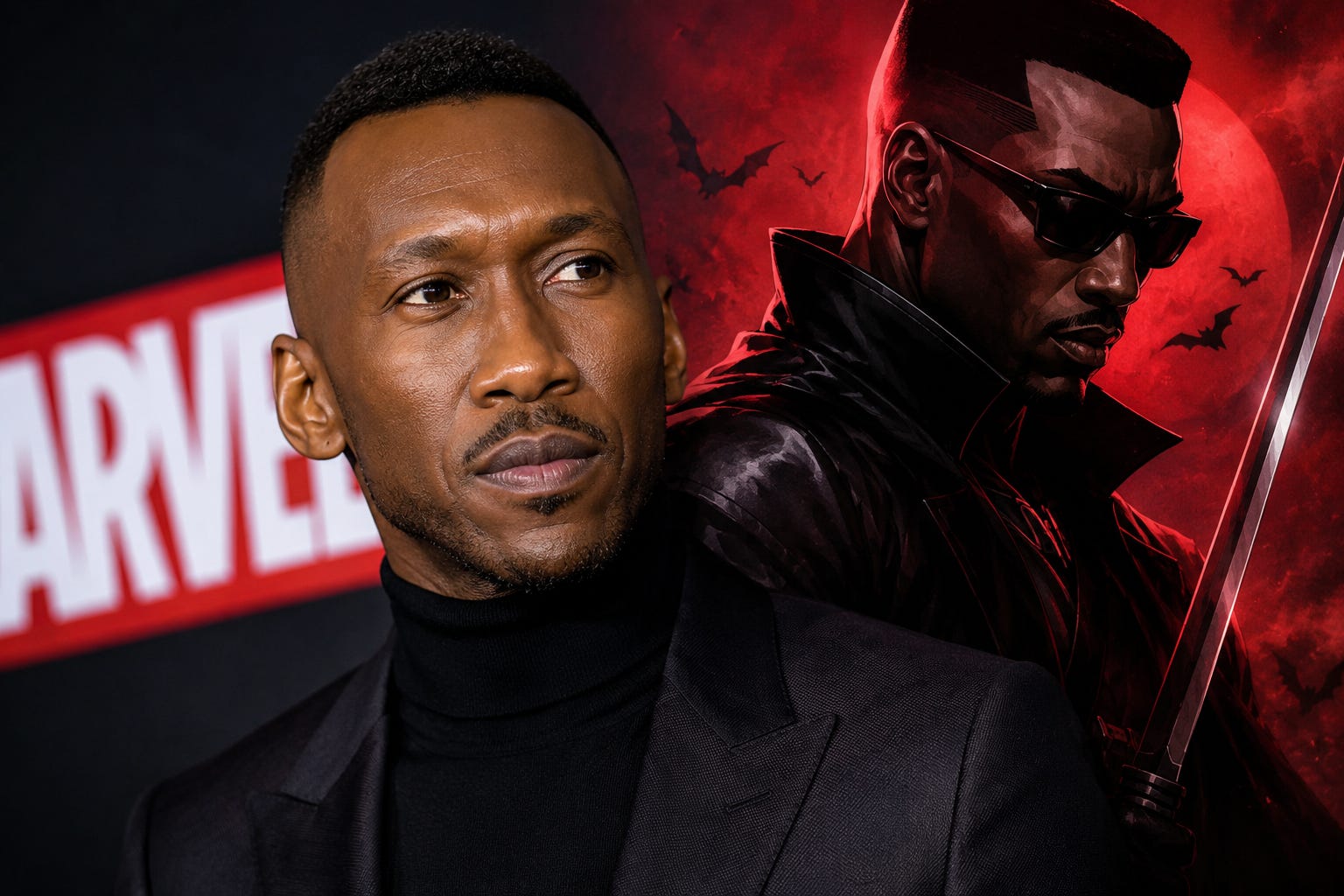
Earlier this week, Mahershala Ali confirmed that Disney and Marvel’s long-delayed reboot of Blade was officially dead.
For Marvel fans, Blade fans, Mahershala Ali fans, film fans, Black cinema fans, Black people, frankly, most people with a pulse, the news was deeply disappointing… although, after seven years of delays, rewrites and changing creative teams, it was difficult to call it surprising.
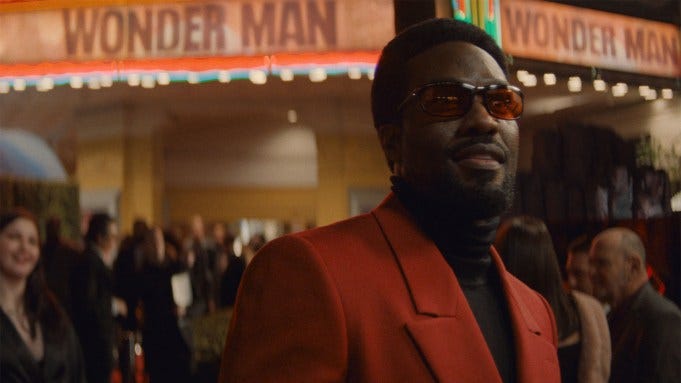
A few days earlier it was announced that Marvel had also cancelled Wonder Man, only a few months after the series had publicly been reportedly been renewed for a second season. Wonder Man earned Yahya Abdul-Mateen II an Emmy nomination, and had a 91 per cent Rotten Tomatoes score, as well as strong audience reviews, so why the cancellation and public backtrack?
Individually, it doesn’t seem like much, but that does not mean we should ignore the pattern created by those decisions as a collective as it reveals a pattern.
Each decision can, of course, be explained on its own.
Marvel is said to be reducing its output, Disney is reassessing what belongs on streaming and what belongs in cinemas, and every project comes with its own complicated mix of viewing figures, budgets, scheduling issues, creative disagreements and changing corporate priorities, but that does not mean we should ignore the pattern those decisions begin to create when viewed together.
It is becoming increasingly difficult to look at each of these decisions entirely in isolation, particularly when they sit alongside a growing list of Black-led Disney and Marvel projects that have either been cancelled, quietly curtailed or left somewhere in limbo between active development and abandonment.
Tiana, the Disney+ series (based on the first Black Disney princess, from The Princess and the Frog) announced in 2020, was repeatedly delayed and eventually shelved in 2025 as Walt Disney Animation moved away from producing original long-form series for streaming.
There was Moon Girl and Devil Dinosaur, the critically acclaimed animated series built around Marvel’s first Black teenage girl superhero, which was cancelled after two seasons, despite winning three Children’s and Family Emmys and currently holding a 100%critics’ score and 93% audience score on Rotten Tomatoes.
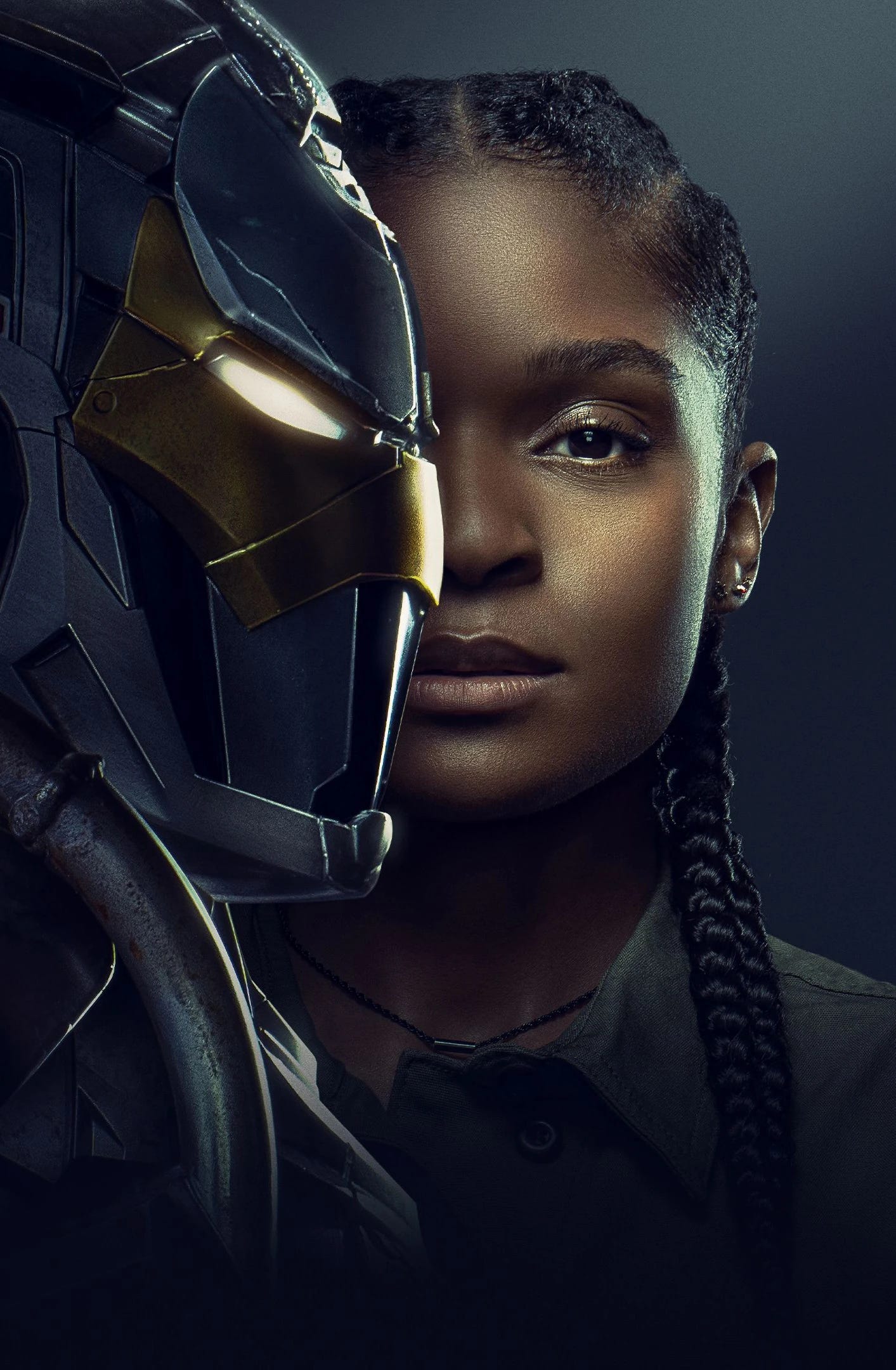
Then there is Armor Wars, announced in 2020 as a Disney+ series that would finally place Don Cheadle’s James Rhodes at the centre of his own Marvel story. It was later converted into a feature film, but years after the original announcement it still has no release date, and Cheadle himself has publicly appeared unsure about where the project stands.
The pattern is not confined to Marvel. Let’s not forget Lucasfilm’s (owned by Disney) The Acolyte, that was cancelled after a single season despite deliberately opening up a different corner of the Star Wars universe with Amandla Stenberg at its centre.
Abi Adamson has an incredible section on this in her latest article, that inspired this. Read here.
In that time, since 2021, the imbalance is fairly easy to see. Black-led titles have made up only a small part of Marvel’s enormous output. Only a handful are clearly Black-led or Black-centred (Black Panther: Wakanda Forever, Captain America: Brave New World, Ironheart, Eyes of Wakanda and Wonder Man) and a few mixed or POC-led (Secret Invasion, Shang-Chi and the Legend of the Ten Rings, Moon Knight, Ms. Marvel and Echo, Eternals, The Marvels, The Falcon and the Winter Soldier).
That does not mean every white-led Marvel project succeeds, because plenty have disappointed, been delayed or disappeared altogether, but it’s interesting to see predominantly animation and other titles renewed, such as Loki, Daredevil: Born Again, What If…? and Your Friendly Neighborhood Spider-Man.
The question everyone is asking, is what is happening behind the scenes, and why?
Black-led projects do not tend to be granted that same freedom to fail individually. They are still too often treated as experiments, demographic propositions or evidence of whether the industry’s investment in representation has “worked”.
The steady decline of diversity on our screens was never going to happen in one big public announcement stating that Hollywood had changed its mind about representation, it was always more likely to happen incrementally: a programme being discontinued here, a commissioning team being restructured there, a series cancelled after one season, a film repeatedly moved down the schedule, a book adaptation remaining “in development” until the rights quietly expire, with one (or two if you’re lucky) high-profile projects upheld as the key successor as evidence that the wider system could refer to.
The language used in corporate reports does not determine whether an individual film is made, but it does reveal which priorities a company is still willing to name, measure and hold its leadership accountable for.
In 2025, the company removed references to its “Reimagine Tomorrow” diversity initiative from its annual reporting, changed how diversity and inclusion appeared within executive performance measures and repositioned some of that work under a broader “talent strategy”. Disney described the changes as an evolution intended to connect its initiatives more closely with business outcomes, but they also formed part of a much wider corporate retreat from the explicit DEI commitments made across America after 2020.
The latest figures suggest that what audiences are seeing on screen, and who is being employed behind it, is beginning to move backwards too.
According to UCLA’s 2026 Hollywood Diversity Report, the proportion of streaming films led by people of colour fell from 51 per cent in 2024 to 36 per cent in 2025, while the proportion of films with majority-people-of-colour casts dropped from 41 per cent to 25.8 per cent. People of colour also lost ground across directing and writing roles, even as households of colour remained disproportionately important to the audiences for many of the year’s most-watched streaming films.
Raquelle David’s write up on the Diversity Report is worth reading, here.
This matters because Hollywood still behaves as though representation may be socially worthwhile but commercially uncertain, despite audiences repeatedly proving otherwise.
Diverse audiences make up a significant share of streaming viewership and box-office revenue, and are often among the most engaged viewers of the very titles the industry continues to treat as niche. This is not simply a response to a lack of demand, it is an industry becoming more conservative even when its own audience has already changed.
The UK picture is no more reassuring. Creative Diversity Network’s latest Diamond report found that overall off-screen representation for Black, Asian and minority-ethnic workers in British television had fallen to 13% (below an estimated national workforce benchmark of 17.9%). More specifically, Black off-screen talent declined from 4% in 2022 to 2.7% in 2025, with the report stating that some of the progress recorded between 2021 and 2024 had now been reversed.
This supports what many Black television professionals have been saying for some time: the surge in conversations, diversity schemes and commissioning promises that followed the murder of George Floyd did not produce enough structural change. Now, as broadcasters face falling budgets and fewer commissions, Black creatives and production workers are fighting over an even smaller number of opportunities.
Black-led work is so often discussed as a risk, an experiment or an attempt to reach a particular demographic that, when it fails to become an immediate phenomenon, the failure is allowed to confirm the industry’s existing caution.
Meanwhile, more familiar franchises can underperform, reboot themselves, replace creative teams, change formats, move between cinema and streaming and return several years later under a different name, because the underlying property is regarded as inherently valuable even when an individual execution does not work.
We also have to ask which projects receive the marketing, scheduling, patience and institutional belief required to find an audience; which are treated as long-term investments rather than short-term tests; and whose failures are seen as individual disappointments rather than evidence that an entire category of storytelling is commercially unviable.
The result is not a total absence of Black work. That would be much easier to identify and challenge. Instead, we are left with occasional major successes surrounded by an increasingly fragile pipeline, where one or two titles are expected to carry the weight of representing an entire audience, genre or community.
There is no denying that film and television is going through a difficult period. Production has fallen, streamers are under pressure to prove that they can actually make money, broadcasters are commissioning less, budgets are being cut and studios are becoming far more cautious about what they are willing to greenlight, which means fewer opportunities for almost everybody working across the industry.
But industry contraction is not neutral simply because everybody is feeling it.
When the industry starts cutting back, Black creatives, executives and production workers are not entering that downturn from an equal position, because we were already underrepresented before the slowdown began, particularly in the senior roles where people have the power to commission work, fight for a project when it runs into trouble, push for more marketing support or convince the business that a title deserves more time to find its audience.
For a few years, particularly after 2020, studios appeared to understand that representation needed more than a few familiar faces appearing on screen. There were public promises, new funds and schemes, appointments, panels, acquisitions and announcements about the Black stories Hollywood finally intended to tell, but so many of those commitments now appear to have been tied to a particular political and cultural moment rather than properly built into the way these companies operate.
Once the pressure eased, it became quieter, and when Black people pointed out that the opportunities are disappearing again, we are told that the “industry as a whole is struggling”, budgets are being cut across the board. Of course every project has its own explanation, but that does not mean the overall result is meaningless.
If the industry continues to treat white-led storytelling as universal, while Black-led stories only for specific demographics and audiences, as filling a diversity gap or being a greater commercial risk, then the “safer” decisions made during a downturn will inevitably lead back to the same characters, the same filmmakers and the same franchises that executives already know how to understand and sell.
This is also why visibility is not the same thing as infrastructure.
A Black actor leading a film or television series does not necessarily mean that Black executives had the power to commission it, that Black producers controlled its future, that Black department heads were hired to shape it or that the people marketing it were given the time, budget and support required to make sure audiences actually knew it existed.
I know from working in publicity that audiences do not simply discover a title because it has appeared on a streaming platform. Success is built through positioning, marketing spend, press access, talent availability, festival launches, screenings, awards strategy, release timing, platform placement and the willingness of a studio to keep reminding audiences that the work is there. The studios know this too, which is why they spend millions manufacturing awareness for the projects they have already decided need to succeed, yet when a Black-led title struggles, the conversation suddenly becomes about the audience failing to show up, as though every film and series was released on equal terms and the public simply made an impartial choice.
White-led projects are generally allowed to fail as individual projects. They can be rewritten, rebooted, recast, delayed, moved between cinema and streaming or revived several years later under a different creative team without anybody deciding that white audiences no longer want to see themselves on screen.
When Black work has never been given the same level of investment, the same room to fail or the same number of opportunities in the first place, cutting “equally” does not create an equal result. It simply takes an industry that was already uneven and makes it even more so.
Black Panther can continue because it is now a proven global franchise, but Blade can spend seven years trapped in development hell before eventually disappearing.
Tiana can remain one of Disney’s most recognisable princesses while audiences wait more than a decade for her story to continue.
A Black-led television series can receive critical acclaim, strong reviews and awards recognition without any of that meaning anything.
This is how representation can move backwards while the industry continues pointing to a handful of individual successes as “proof” that progress is still being made.
It happens when visibility is mistaken for progress.
It’s when a casting announcement is celebrated as an achievement before the cameras have even started rolling, when one successful Black franchise is expected to make up for everything that has been delayed, cancelled or quietly abandoned, or when a studio’s commitment to diversity is judged by what it once said, rather than what it’s actively doing.
At a certain point, we have to stop talking about these projects as though each one was simply unusually difficult to write, cast or produce, and start asking what their repeated failure says about the level of urgency, confidence and protection surrounding them, because Marvel has rebuilt many projects, changed directors, rewritten entire phases, reshot entire scripts and scenes, delayed major ensemble titles, and returned to the characters and franchises it considers essential, yet its Black vampire, princess, engineer and war hero have been cancelled, shelved or left waiting indefinitely.
An industry does not need to announce that it has changed its mind about representation. It only has to keep deciding, project by project, that this one can wait, this one can be cut, this one is too difficult and this one was never quite worth protecting.
When Hollywood considers what it is essential, Black stories are usually regarded as optional.
No posts
Comments
Nothing yet. Say the first thing.
Sign in to join the conversation.