

A few years ago I worked out my hourly rate properly for the first time and it changed how I ran my business.
The maths was simple. I added up everything I’d earned in a year across my products and divided it by the hours I’d worked. The number came out at $110. That was the average value of every hour I spent on the business, including the ones I spent on admin and tweaking landing pages that didn’t need tweaking.
Once you have that number, every decision changes.
Sponsored by Pipedrive
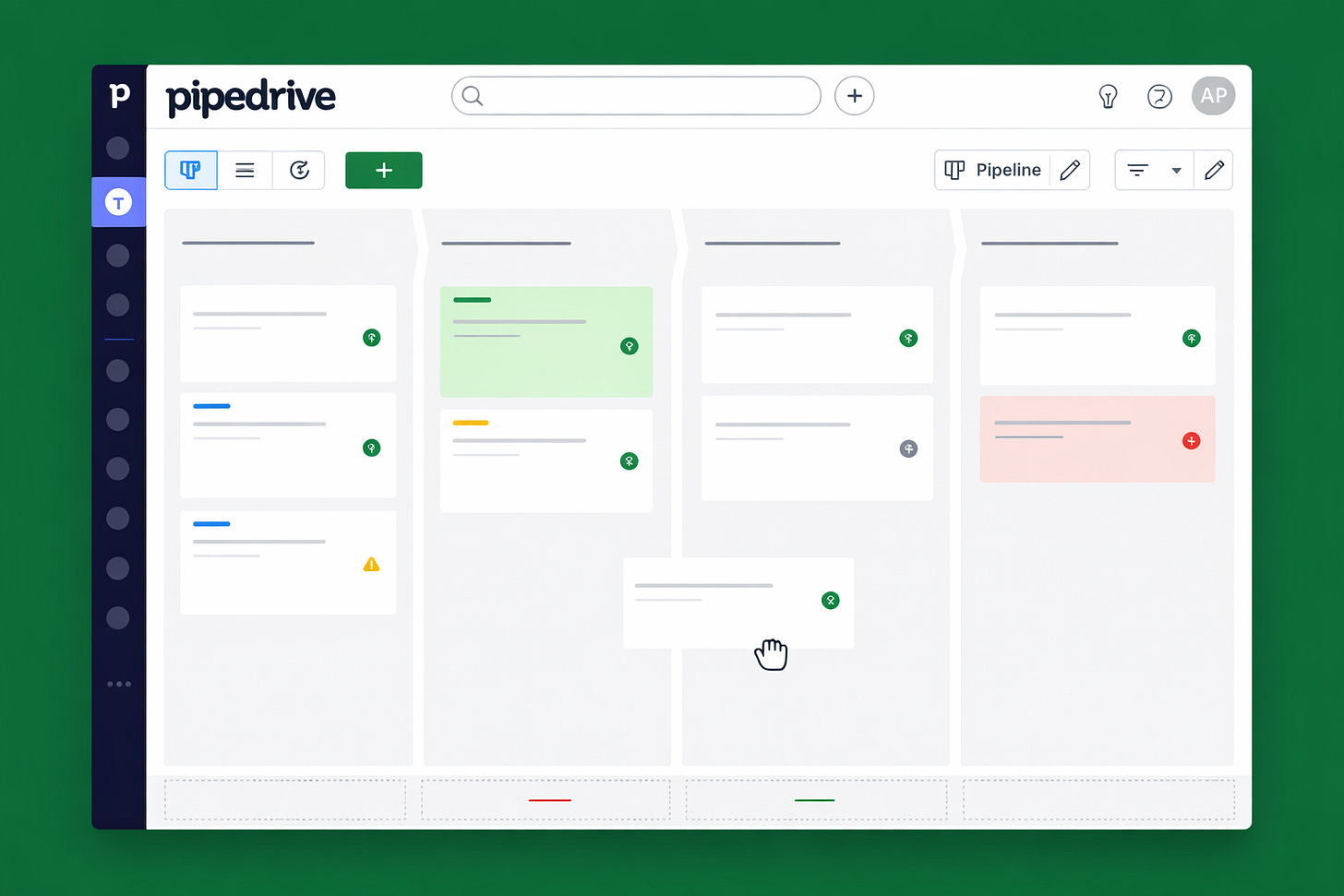
If you're selling anything, you need a CRM. But most CRMs are built for large sales teams, not founders doing everything themselves. Pipedrive takes the opposite approach: a visual, drag-and-drop pipeline where every deal has a next action, so nothing gets forgotten. It connects with 400+ tools, and the AI features are practical, handling things like email drafting and deal prioritisation. Plans start at $14/month per seat. Worth a look if spreadsheets are still your CRM. Tiny Empires readers get an extended trial and 20% off their first year.
Most solo founders never do this calculation, or they do a soft version that flatters them. They take their best month, multiply it by twelve, and divide by 40 hours a week.
The honest version looks like this:
Total revenue for the last 12 months, after platform fees, refunds, and any direct costs
Total hours worked, including evenings and weekends if you’re being honest about it
Divide one by the other
Most people I’ve spoken to are surprised on the way down. They think they’re earning $300 an hour and they’re earning $90.
A few are surprised on the way up. One founder I spoke with last year was running a niche SaaS doing about $14k a month. He thought he was working 50 hours a week on it. When he tracked his time for a month, the real number was 28, putting his effective hourly rate around $125.
The number works as a filter. Once I knew mine was $180, I had a benchmark for every task. Anything I could pay someone less than $180 an hour to do, and have it done to a standard I was happy with, became outsourceable in principle. Anything that took my time but didn’t generate revenue at that rate became a candidate for cutting.
This is where AI shifted the calculation again. Tasks that cost $50 an hour to outsource to a virtual assistant now cost almost nothing if a tool can handle them. My customer support inbox used to take me about four hours a week. Better documentation plus an AI-drafted reply system took it down to about 30 minutes, which is roughly $600 a week redirected toward things only I can do. Over a year, that’s $30k.
The same logic applies to research, first drafts, and most of the work that fills a solo founder’s calendar without showing up in revenue.
I fell into the obvious trap of this thinking for about six months.
If your hourly rate is $200, the temptation is to outsource or automate anything below that line. So you spend three weeks setting up automations, hiring a VA, building a system. Then you realise you’ve spent 60 hours optimising a workflow that was costing you 4 hours a week. The payback period stretches into months, and meanwhile you’ve lost momentum on the actual product.
The fix is to only optimise work you’re definitely going to keep doing. If you’re not sure whether you’ll still be running this product in six months, don’t automate anything about it. Do it badly and ship.
Pick one week. Track every hour you spend on your business in a spreadsheet, with two columns: the task, and whether it directly generated revenue or moved a paying customer closer.
At the end of the week, look at the rows that didn’t move revenue. That’s your candidate list. Some of it is necessary, like tax and accounting. Most of it isn’t.
The exercise isn’t really about productivity, though it looks like it. It’s about noticing what you’ve drifted into doing because it feels like work. The hours that quietly drag your rate down are usually the ones you’d defend hardest if someone asked you to stop them.
You probably have a $200 hour and a $20 hour running at the same time, but it all gets merged together. The calculation tells you which is which, and from there it’s a question of what you want to do about it.
Depending on your goals, there are 2 ways we can work together:
JOIN PRO MEMBERSHIP Learn more
Get full access to all our resources with Pro Membership for a one-time payment of $149.
💰$50k in Perks: Access Exclusive offers from the top no-code tools who have partnered with us. Including $15k waived Stripe fees, $500 Bubble credit + $1000 Coda credit View all
💻 No-Code Operating System: Advanced Notion template that replaces all your productivity tools. Everything you need to launch and manage your business from one page. Learn more
🎓 Course: Tiny Empires Method: Learn how to build a 6-figure business that works around your life and not the other way around. Learn proven frameworks to stop wasting time and start making money. Learn more
🎓 Course: Sales for Introverts (and people who don’t like selling): Learn how to sell in a way that fits your personality and delivers consistent, reliable revenue for your busines. Learn more
🛠️ 75+ Curated No-Code Courses and Resources: We’ve curated 2000 no-code videos into 75+ easy to navigate courses. Save yourself hours of watching Youtube videos that don’t move your knowledge forward. View all
SPONSOR THIS NEWSLETTER Learn more
Want to get in front of 34k+ other founders and makers building business faster using no-code and AI tools.
Comments
Nothing yet. Say the first thing.
Sign in to join the conversation.