
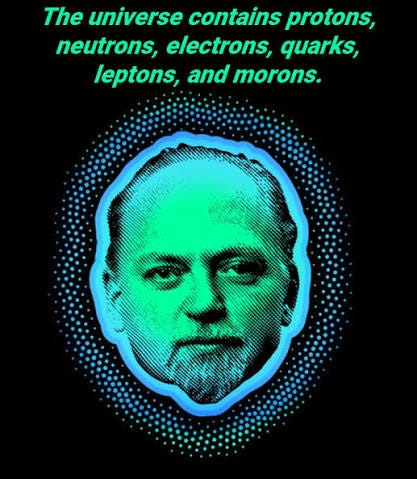
Robert Anton Wilson’s extrapolation of Timothy Leary’s concept of the “Reality Tunnel” is one of the most lasting and influential ideas to emerge from his work. At its core is a deceptively simple proposition: human beings do not experience reality directly. Instead, we perceive reality through a complex network of mental filters that shape, interpret, and often limit our understanding of the world.
Wilson argued that everyone lives within a unique reality tunnel, constructed over their lifetime. This tunnel is built from various elements, including language, culture, education, religion, political beliefs, family influences, personal experiences, emotions, and even biological factors. By the time we reach adulthood, these components have combined to form an internal model of reality that feels so natural and self-evident that we mistake it for reality itself.
This explains why intelligent, sincere individuals can observe the same event and arrive at radically different conclusions. Wilson believed that many of humanity’s conflicts arise from an inability to recognise the existence of these competing tunnels. Political polarisation, religious disputes, ideological movements, and even personal disagreements often stem from the assumption that one’s subjective interpretation is synonymous with objective truth. In Wilson’s view, psychological maturity requires the acknowledgement that one’s perspective, no matter how convincing it may seem, is just one of many possible models.
For this reason, he encouraged people to consciously experiment with alternative perspectives. By temporarily adopting another person’s assumptions—even without accepting them as true—individuals could expand the boundaries of their own consciousness and become less constrained by habitual patterns of thought.
In an era long before social media, it seemed plausible that people were more open to new ideas and alternative opinions. Certainly this is how I remember it. I clearly recall considering conspiracy theories in the years and days before 9/11, even among those who primarily relied on mainstream media. Then, around 2003, something significant happened: the establishment created a situation whereby siding with the prevailing orthodoxy became, in effect, a heroic act.
The situation soon shifted dramatically away from discourse and debate. When the vast majority of people were presented with new information and theories, many became angry, others laughed, and many quietly disengaged. The Leary/Wilson concept of the ‘Reality Tunnel’ was now a weapon wielded by the Globalists.
One memorable story recounted by Robert Anton Wilson involved an encounter between modern journalism and ancient Irish folklore. According to Wilson, a reporter from the Irish Times travelled into rural Ireland to investigate persistent local accounts of a giant hare—an animal that many associated with the Púca, one of the most enduring figures in Irish mythology.
The Púca occupies a peculiar place in the Irish imagination. It is neither entirely benevolent nor wholly malevolent. It appears as a shape-shifter: sometimes a horse, sometimes a goat, and often a hare. It belongs to that liminal world between folklore and lived experience.
Seeking a definitive (approved) answer, the reporter approached a local farmer and posed a straightforward question: “Do you believe in the Púca?” The farmer replied, “That I do not.” Satisfied that the matter had been settled, the reporter pressed further. “And why not?” The farmer answered, “Because the Púca doesn’t believe in me.”
He did not believe in the Púca, but neither, one suspects, would he have been entirely surprised to encounter one while walking home on a quiet Irish road after sunset. He wasn’t interested in the Irish Times validating him as a hero.
Oh how I long for a world like this once more.
No posts
Comments
Nothing yet. Say the first thing.
Sign in to join the conversation.