
It came to me last night that I have several good reasons for feeling disoriented these days. I’m in the second month of grieving the loss of my wife. I also traveled for a week. Throw the change to daylight savings into the middle of the travel, which took me from Eastern Standard Time to Pacific Standard Time and back again, and it seems pretty clear why I’m all over the place.
It hasn’t taken much—watching a TV show, or hearing a politician say something especially unethical—to cause me to miss the uninterrupted dialogue my wife and I enjoyed. We were together longer than we were both single.
Conversations do end. We generally hide our grief. We adjust, slowly or quickly.
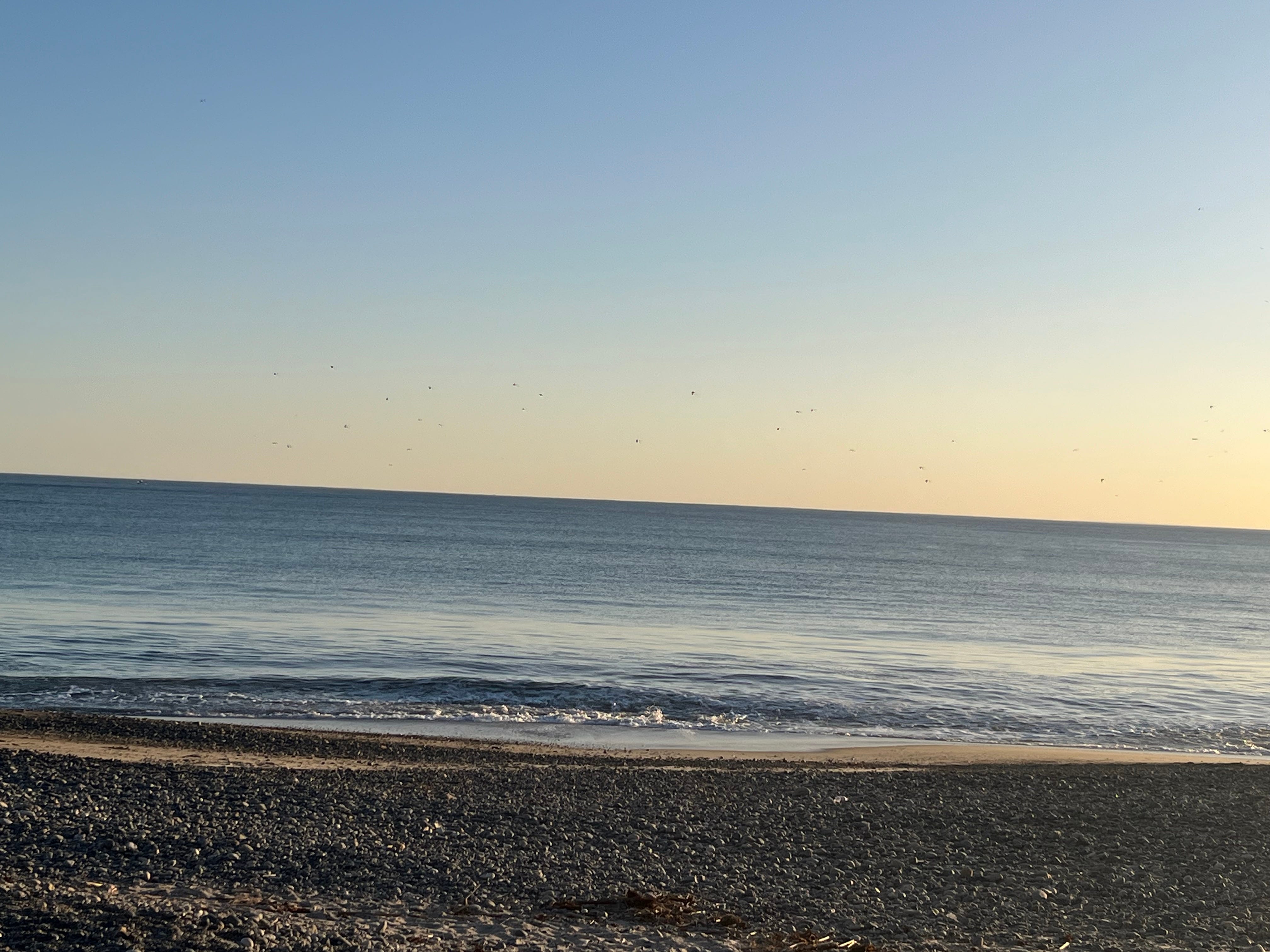
As I’ve already noted, over the first week of March, I flew to California to see friends and family. The weather was warm. Two friends took me for a ride in their convertible around the beach at San Clemente and Dana Point.
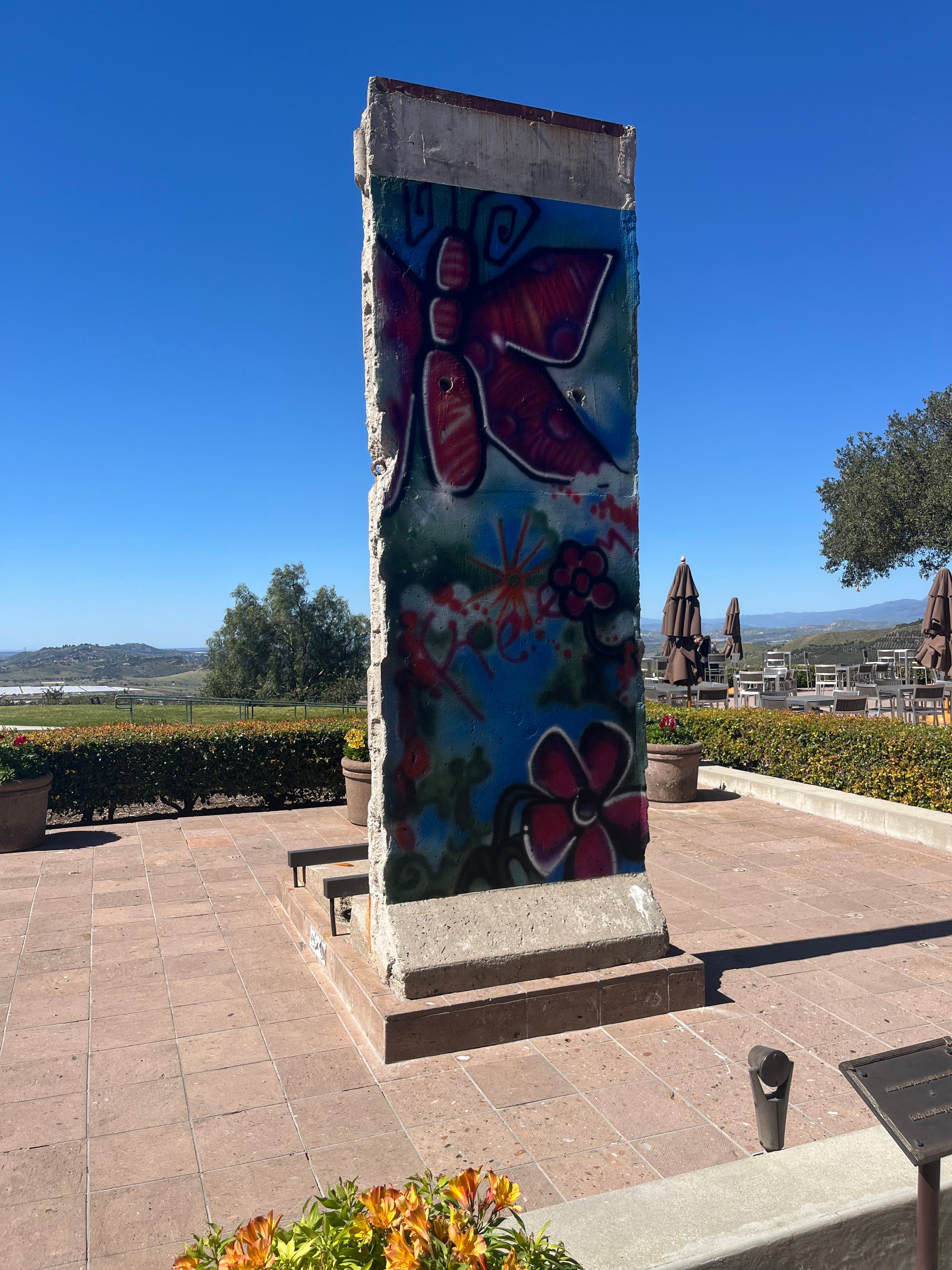
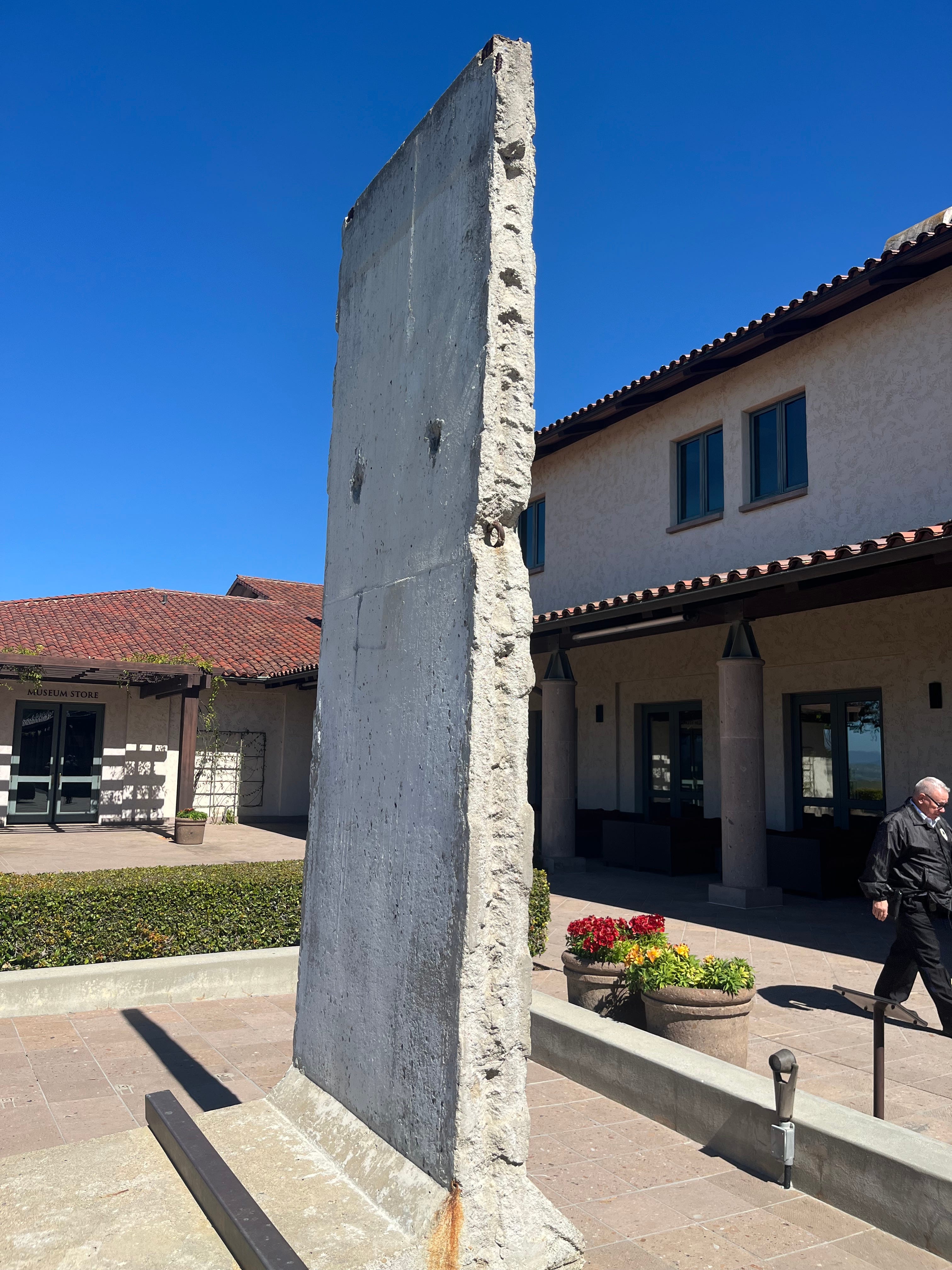
Another friend took me to the Reagan Presidential Museum. We walked on Air Force One. We saw the slab of the Berlin Wall that was cut and lifted up out of its place in time and placed on display on the grounds there in Simi Valley, certainly no “dustbin of history.” The side facing what was known as the free world had been painted colorfully. The side that faced inward, toward East Berlin, was blank concrete.
On Sunday morning, I drove up a not busy Highway 5 from San Clemente and through Los Angeles to North Hollywood to see family. My daughter prepared a wonderful roasted vegetable soup for us to eat. The following day, I spent time with friends at the Survivors of Suicide group I’ve been part of, and then I met with former colleagues over Donut Man donuts. Donut Man is a local attraction to the Azusa and Glendora community. They feature donuts 24 hours a day that have fruit in them, and I believe they are, or were, the destination for many APU students pulling all-nighters over the years.
No one is sad all the time or, for that matter, happy all the time. People try to rush grief or ignore it. Sometimes we try to pretend that the road in our life leading us into the valley of the shadow of death is not really our road. We are told—I’ve been told as someone over 70—not to waste time feeling sad. Over the four or five days since I’ve returned from my travels, I’ve tended to stay to myself to avoid having to explain myself to others or to have them size up whether I am doing okay or not. Being alone is easier.
I think about what one writer of grief has to say about healing. Patricia McKernon Runkle, who loves and draws on Emily Dickinson’s poetry, writes the following:
When you dig to the root of healing, you find that this word has to do with health, wholeness, even holiness. In my experience, all of this is true. The ragged work of grief may feel like madness. But, as (Emily) Dickinson said, “Much Madness is divinest Sense — / To a discerning eye.”
Grief is a holy madness. It is not a puzzle to be solved, a problem to be overcome, or a situation to be managed. It is a wilderness we wander in search of the sacred—an absent other, a missing self. No one can take this wilderness from us, and no one should. You who grieve, stay away from people who want you to get over it fast. They don’t know that the work you’re doing is holy. (5)
McKernon Runkle captures what the last month of my existence has felt like, to wander a wilderness in search of the sacred.
I feel off most mornings. It doesn’t take long into my first glass of water to locate the feeling of sadness in me that suggests there will only be emptiness in the day ahead. I’ve continued to write stuff in my journal. I’ve been writing down what I don’t want to forget. Bernadette didn’t like the water or the way food tasted in our local community here in Raleigh. I wrote that down.
I wrote a bad poem that begins with “I pass through doorways, and I begin to think she is in the next room, playing a game on her computer.”
There is something disorienting about doorways. Some people my age joke about walking into a room and then forgetting why they entered it. “I went to the bedroom to … what was it I came for?”
A former student I had the opportunity to work with referred to doors as “liminal spaces.”
In the first weeks after her passing, I would enter the bedroom or the bathroom, and for a liminal moment, I would think she was still in the apartment. And then I would remember where I was.
My wife’s memorial service will be held this weekend, on Saturday at 11 am in the chapel at Meredith College. I am both dreading and looking forward to this as another touchstone point in my journey. Starting on Thursday, family are arriving from all over the country.
For the memorial, I was given the assignment of writing a poem. I used the line mentioned above to structure it. I also provide images of our relationship and a brief mention of epic poems. We will see how it goes.
Please have a good month.
If you’re hurting, you are okay to not hide it.
*********
Work Cited
McKernon Runkle, Patricia. Grief’s Compass: Walking the Wilderness with Emily Dickinson. Baltimore: Apprentice House, 2017.
P.S. I read two great books this month:
First was Emily Wilson’s translation of Homer’s Odyssey. It is amazing how many meals and examples of xenia or hospitality are rendered in detail in that story. It seems that xenia is a major principle being advocated in this ancient text.
Second, I read 99 Poems, New and Selected, by Dana Gioia.
Highly recommend both books.
Finally, the following poem is from the book of poems I’m still working on in honor of my son. It’s about grief. I am happy to say that people have been very supportive over the past month. No one has suggested that I have my pictures to remind me.
Comments
Nothing yet. Say the first thing.
Sign in to join the conversation.