
Welcome to what might be the weirdest portion of Paradise Lost, or close to it. In this week’s reading, Milton blends elements of Spenserian allegory with . . . space opera? Some of the most memorable, horrific, and mysterious characters in the poem make their first appearance, including Chaos, who has been mentioned a few time already. We also start to see the real reason so much classical mythology mirrors — and distorts — the biblical narrative.
Here’s an outline of this week’s reading:
506–628: Recreations of the demons while they wait for Satan to return from his adventure
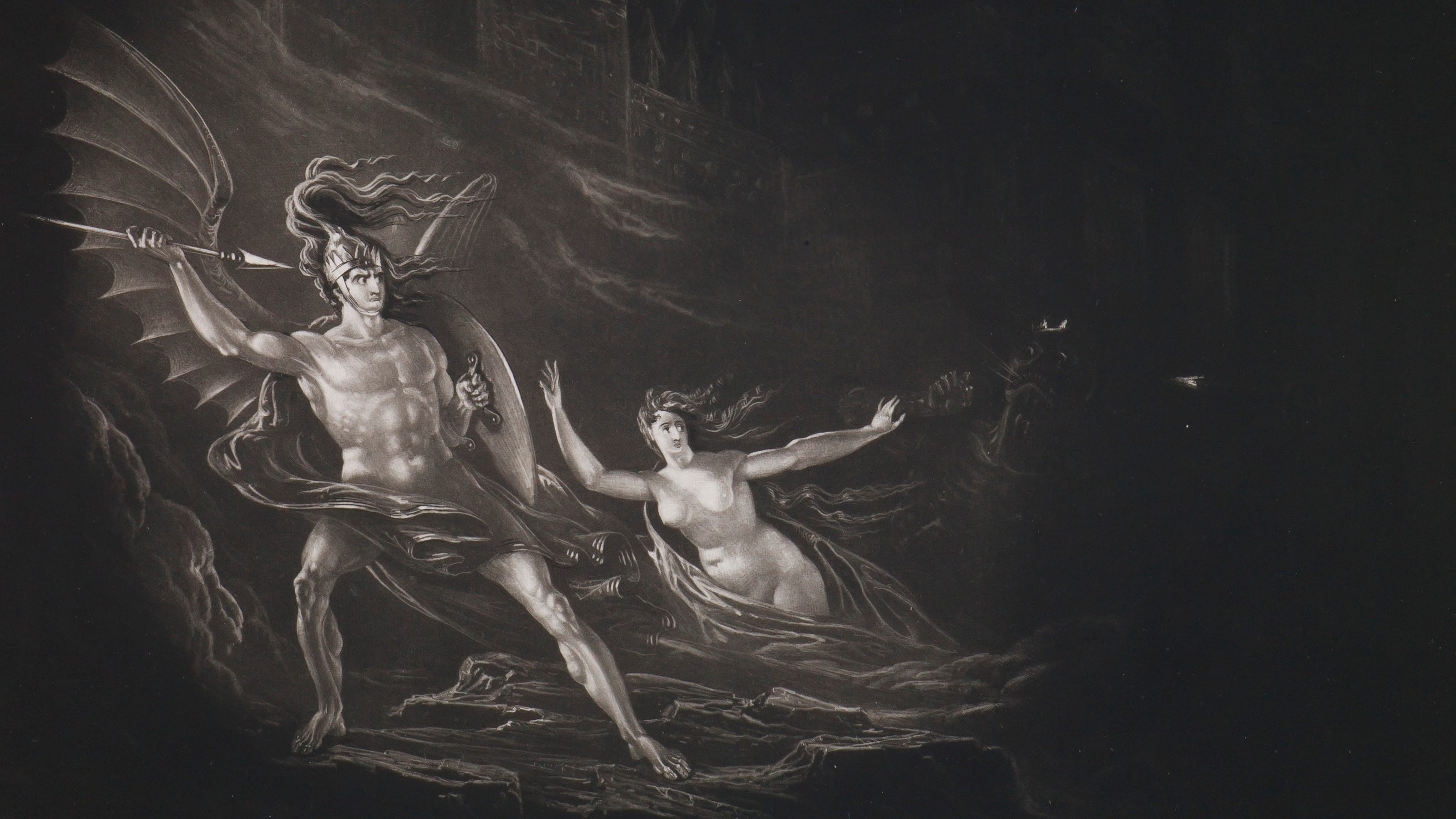
629–745: Satan, at the gates of Hell, encounters Sin and Death. The conflict between Satan and Death, and why Sin intervenes.
746–814: Sin relates narrative her origin and Death’s.
815–967: Satan manipulates Sin to open the gates of hell. His journey into the realm of Chaos.
968–1055: Satan’s conversation with Chaos, and the resulting journey.
In this week’s deep dive, Milton gives us piercing insights into the nature of sin and temptation.
Here are some things to pay attention to as you read each section
506–628: Recreations of the demons while they wait for Satan to return from his adventure
Consider how Milton, as a zealous Puritan, might be making social commentary on the devils’ use of their time.
629–745: Satan, at the gates of Hell, encounters two creatures. The conflict between Satan and dark monster, and why the woman intervenes.
As Satan interacts with the guard at Hellgate, pay attention to how Satan views himself versus how this creature sees and describes him.
746–814: The portress relates narrative her origin and that of her son.
As we learn the identity of this daughter of Satan, what might Milton be trying to teach his readers in this allegorical passage? Do you think this is allegory? Does this seem out of place?
815–967: Satan manipulates Sin to open the gates of hell. His journey into the realm of Chaos.
As usual, Satan has to use his powers of persuasion to achieve his ends. What rhetorical methods does he employ?
968–1055: Satan’s conversation with Chaos, and the resulting journey.
How would you describe the relationship of these primordial powers to Satan? Are they allied? Why might their inclusion be important?
We’re a new community. Do you know someone else who would like resource for Paradise Lost?
What activities stood out to you in the list of the devils’ recreational activities? Consider how this might be a parody of the hated Book of Sports that excessed so much opposition from Puritans like Milton.
What commentary might Milton be making by including the poetic, musical, and philosophical diversions of the loitering demons?
Does it impugn on God’s sovereignty or goodness that he left the charge of Hell in such unreliable wardens? Do you think this mean he always intended for Satan to escape?
What kind of alliance is being forged between Satan and the various figures he encounters in this part of the poem? Are these characters truly allied? Or is it a partnership of convenience? (i.e., What does Sin want? What does Death want?)
Do you perceive a significant disconnect between the kind of characters we encounter in book 1 and the more “allegorical” figures in the end of book 2? Do you think Milton intends for his readers to change their approach to the poem? Do you think Milton is attempting to be less literal?
How would you describe the motivation of Chaos? What purposes do the inclusion of these beings of a different order serve in Milton’s great argument?
No posts
Comments
Nothing yet. Say the first thing.
Sign in to join the conversation.