
Intro
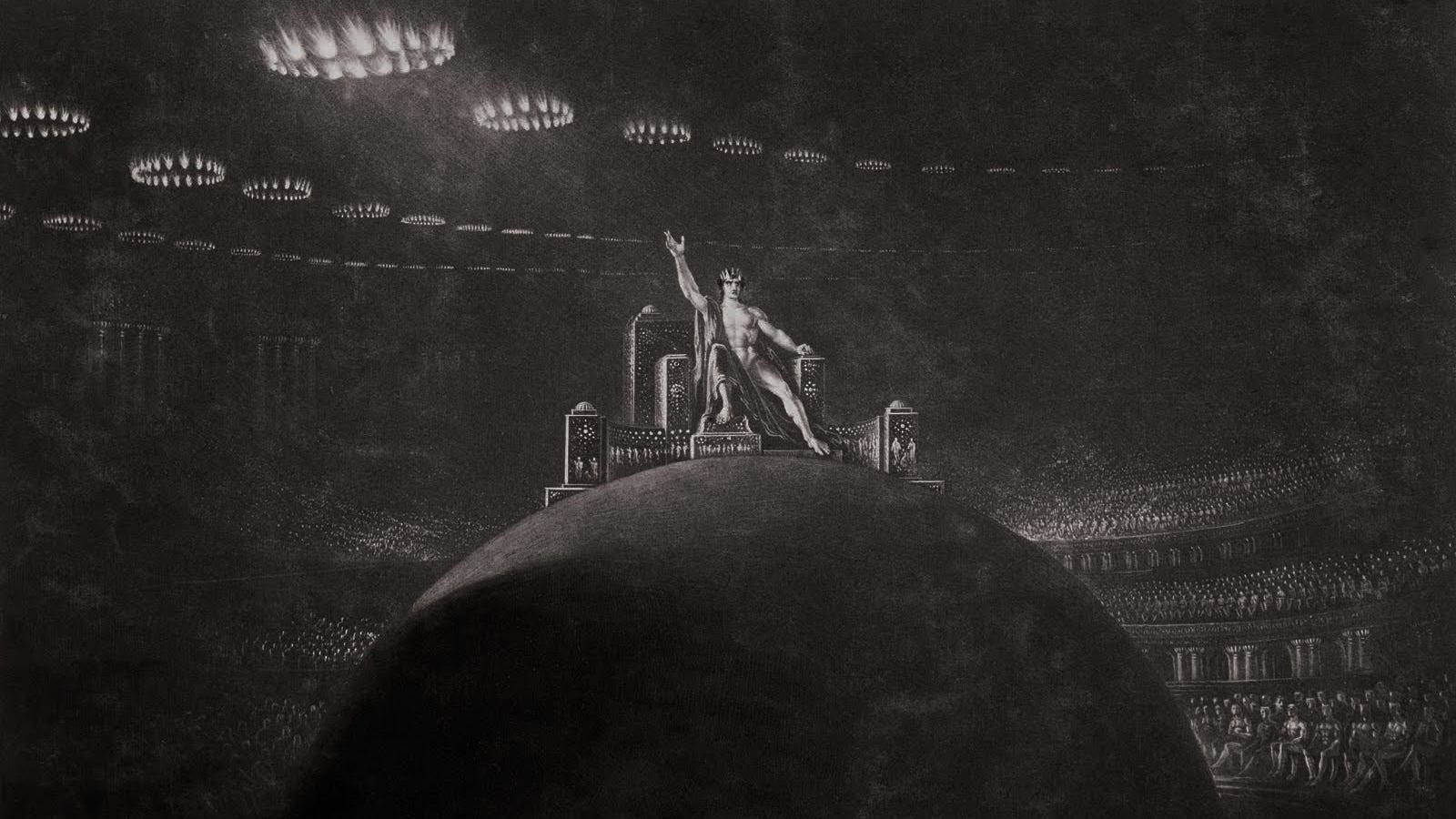
Here’s my outline…
1-42: Satan described, and opening speech to council
43–108 Molech’s speech: the grizzled general
108–228: Belial’s speech: the honey-voiced politician
228–298: Mammon’s speech: the industrial capitalist
299–389: Beelzebub’s first speech: the cynical strategist
390–429: Beelzebub’s second speech, and silence: a masterclass in political manipulation
430–505: Satan’s speech and the tactics of supremacy
In this week’s deep dive video, I plunge into Mammon’s speech at the synod of Hell. We explore the dangers and ironies of pragmatism and the deceits of pursuing self-glory.
Here are some things to pay attention to as you read each section
1-42: Satan described, and opening speech to council
As you read this section, do you notice any disconnects between Milton’s descriptions and Satan’s rhetoric? Do you think he genuinely believes what he is saying?
I think a good proverb to keep in mind in reading the great consult is Prov 18:17: He that is first in his own cause seemeth just; but his neighbour cometh and searcheth him. (The one who states his case first seems right, until the other comes and examines him.) Consider how you experience this as you read.
43–108 Molech’s speech
Before reading Moloch’s speech, keep in mind what we already know about Moloch from book 1.
Text within this block will maintain its original spacing when published
First Moloch, horrid King besmear'd with blood [391]
Of human sacrifice, and parents tears,
Though for the noyse of Drums and Timbrels loud
Thir childrens cries unheard, that past through fire [ 395 ]
To his grim Idol. Him the Ammonite
Worshipt in Rabba and her watry Plain,
In Argob and in Basan, to the stream
Of utmost Arnon. Nor content with such
Audacious neighbourhood, the wisest heart [ 400 ]
Of Solomon he led by fraud to build
His Temple right against the Temple of God
On that opprobrious Hill, and made his Grove
The pleasant Vally of Hinnom, Tophet thence
And black Gehenna call'd, the Type of Hell. [ 405 ]
Do you find yourself admiring anything about Moloch’s proposal?
108–228: Belial’s speech
Like with Moloch, in mind what we already know about Belial:
Text within this block will maintain its original spacing when published
Belial came last, then whom a Spirit more lewd [ 490 ]
Fell not from Heaven, or more gross to love
Vice for it self: To him no Temple stood
Or Altar smoak'd; yet who more oft then hee
In Temples and at Altars, when the Priest
Turns Atheist, as did Ely's Sons, who fill'd [ 495 ]
With lust and violence the house of God.
In Courts and Palaces he also Reigns
And in luxurious Cities, where the noyse
Of riot ascends above thir loftiest Towrs,
And injury and outrage: And when Night [ 500 ]
Darkens the Streets, then wander forth the Sons
Of Belial, flown with insolence and wine.
Witness the Streets of Sodom, and that night
In Gibeah, when the hospitable door
Expos'd a Matron to avoid worse rape. [ 505 ]
How does Milton, as a master poet, make Belial’s voice sound different than Molochs? Do you notice different poetic effects and affects?
228–298: Mammon’s speech
Keep in mind what we know of Mammon from book 1:
Text within this block will maintain its original spacing when published
                  . . .        Mammon led them on, [678]
Mammon, the least erected Spirit that fell
From heav'n, for ev'n in heav'n his looks and thoughts [ 680 ]
Were always downward bent, admiring more
The riches of Heav'ns pavement, trod'n Gold,
Then aught divine or holy else enjoy'd
In vision beatific: by him first
Men also, and by his suggestion taught, [ 685 ]
Ransack'd the Center, and with impious hands
Rifl'd the bowels of thir mother Earth
For Treasures better hid.
As you read Mammon’s speech, consider how he makes you doubt your reading of the previous two speakers. What’s happening to your own thinking?
299–389: Beelzebub’s first speech, its origin, and the vote
I’ve unrepentantly referred to Beelzebub as a “buttkisser”. Am I being unfair? Consider as we read how his proposal relates to Satan’s speech in book 1.
Text within this block will maintain its original spacing when published
   . . .          our better part remains [ 645 ]
To work in close design, by fraud or guile
What force effected not: that he no less
At length from us may find, who overcomes
By force, hath overcome but half his foe.
Space may produce new Worlds; whereof so rife [ 650 ]
There went a fame in Heav'n that he ere long
Intended to create, and therein plant
A generation, whom his choice regard
Should favour equal to the Sons of Heaven:
Thither, if but to pry, shall be perhaps [ 655 ]
Our first eruption, thither or elsewhere:
How does Beelzebub’s proposal build on Satan’s proposal? Is he adding something new? What is his contribution?
390–429: Beelzebub’s second speech, and silence
How is Beelzebub manipulating the audience here?
430–505: Satan’s speech and his tactics of supremacy
How is Satan trying to fix the outcome of this deliberation?
We’re a new community. Do you know someone else who would like resource for Paradise Lost?
Which of the demon’s speeches did you find most compelling? Did you find your perspective changing from speech to speech? How so?
Some critics have noted that from Book 1 to Book 2, Satan is “diminishing” in his grandeur. Do you sense this too? In what ways?
Do you see parallels between the different kinds of characters and logic presented in the synod and modern-day types of people or arguments?
Does it seem to you like Satan and Beelzebub had “rigged” the outcome of the council? Why would they go through this charade?
Did something in this deliberation cause your emotional response to the demonic characters to change in any way? Do you feel more sympathetic? Less so? Why or why not?
No posts
Comments
Nothing yet. Say the first thing.
Sign in to join the conversation.