
After almost two thousand lines of poetry, we finally ascend out of hell and into the ‘bright effluence of bright essence’ and beatific vision. From the throne of of heaven, the Father and Son witness all of Satan’s schemes and decree that though the race of man will fall, they will find grace. In this most theologically dense of portion of Paradise Lost we are presented with Milton’s bespoke solutions to some of the hottest dogmatic controversies of the mid-seventeenth century: free-will and predestination, the imputation of Christ’s active (as well as passive) obedience, and prophecy of the end times. Can Milton deliver on his promise to uphold eternal providence and justify the ways of God to men?
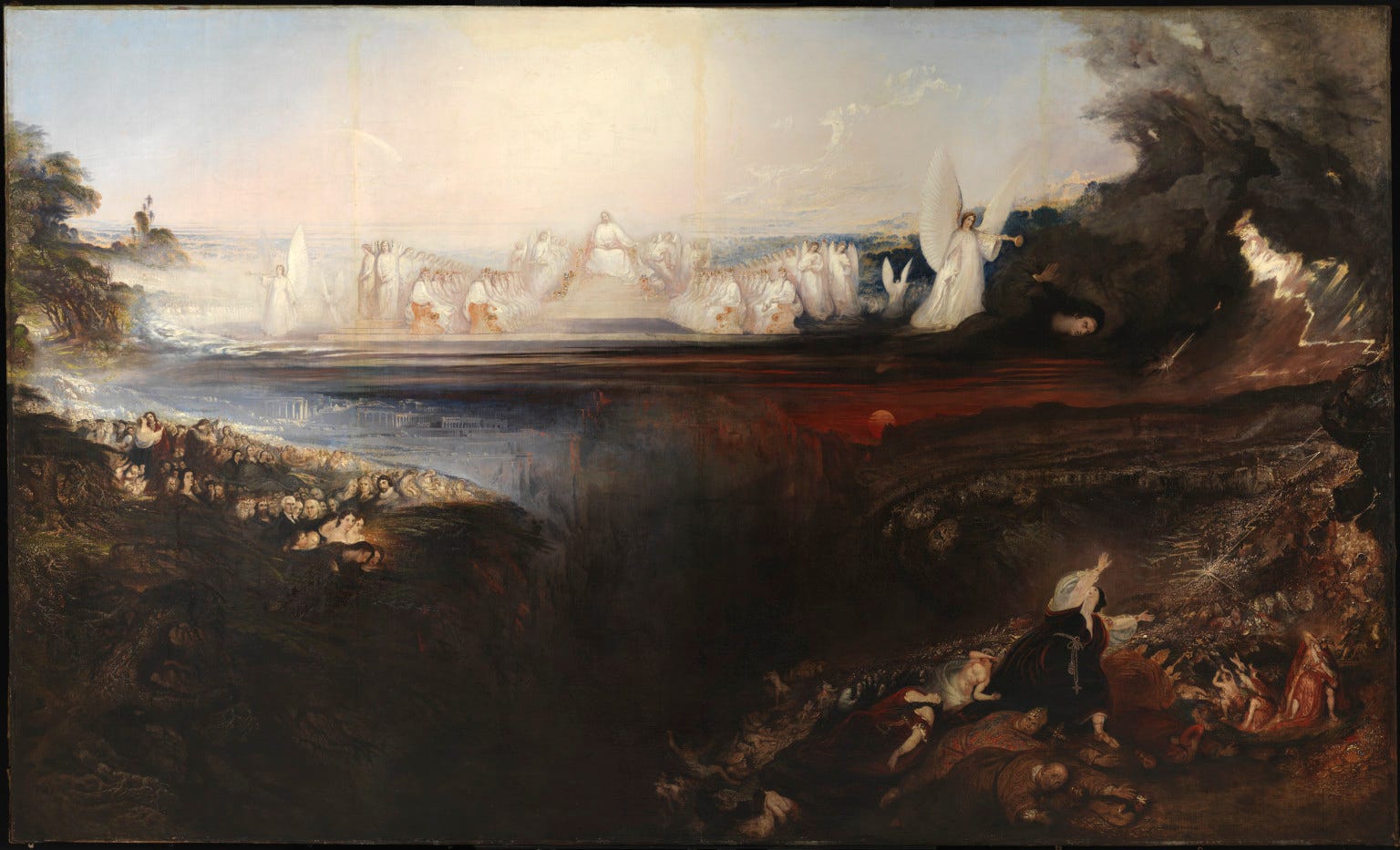
Here’s an outline of this week’s reading in book 3:
1–55: Hymn to Divine Light and prayer for illumination
56–137: The Father to the Son reveals the schemes of Satan and the fall of man, and his intention to show grace.
138–202: The Son appeals to the Father’s glory and goodness, to which the Father outlines a plan of redemption
203–271: The Father asks who will undertake this redemption, to which the Son volunteers as substitute.
271–343: The Father ordain’s the Son’s incarnation, righteous life, passion, resurrection, and exaltation as King and Judge.
My apologies, I am behind on this week’s deep dive video on the Son’s offer to redeem mankind. I will add it here once I finish filming and editing in the coming days. Thanks for your patience!
Here are some things to pay attention to as you read each section
1–55: Hymn to Divine Light and prayer for illumination
How does Milton portray his blindness in this section?
56–137: The Father to the Son reveals the schemes of Satan and the fall of man, and his intention to show grace.
If there can sometimes be a perceived tension between God’s providence and his goodness, which way do you sense the balance tipping?
138–202: The Son appeals to the Father’s glory and goodness, to which the Father outlines a plan of redemption
Pay attention to how the conversation between Son and Father relates to the conversations between Satan and Beelzebub. What’s different? How so?
203–271: The Father asks who will undertake this redemption, to which the Son volunteers as substitute.
The descriptions and events here mirror several of the scenes we have seen before. Notice the similarities, especially how they throw the difference into sharper relief.
271–343: The Father ordain’s the Son’s incarnation, righteous life, passion, resurrection, and exaltation as King and Judge.
How is Milton building his Great Argument in this passage?
We’re a new community. Do you know someone else who would like resource for Paradise Lost?
Readers and critics often struggle with the characterization of God in book 3, especially after having just encountered such psychologically detailed characters in books 1 and 2. Do you find the Father and/or Son to be flat in comparison? What are the poetic challenges Milton faces in this passage? Do you think he fails or succeeds?
What are the motivations presented for humanity receiving grace when the fallen angels do not? Do you find this persuasive? Is this fair?
How is Milton trying to navigate the thorny debates about free will and predestination? Is he contradicting himself by trying to have it both ways?
What are the ways the Son of God is the foil of Satan? How do the similarities in the events and discourse highlight their differences?
How does the means of the redemption proposed and planned support the Great Argument?
How does Milton’s presentation of salvation enrich your imagination or foster a deeper appreciation for the plan and work of redemption?
No posts
Comments
Nothing yet. Say the first thing.
Sign in to join the conversation.