
ThirdSpace BUZZ is an edgy newsletter on whatever the fuck I want.
The intersection of digital content platforms, organized crime, and financial crime represents a rapidly evolving challenge for global law enforcement agencies.
As subscription-based services like OnlyFans and mainstream applications transform how media is monetized and distributed, bad actors have weaponized these ecosystems.
By utilizing deceptive management agencies, proxy accounts, and complex layering techniques, criminal syndicates disguise forced labor and illicit proceeds as legitimate online entrepreneurship and digital commerce.
🍋

Sponsored by:
Help us grow by sponsoring our newsletter and reaching an engaged community.


“The line separating good and evil passes right through every human heart.”
— Aleksandr Solzhenitsyn, The Gulag Archipelago

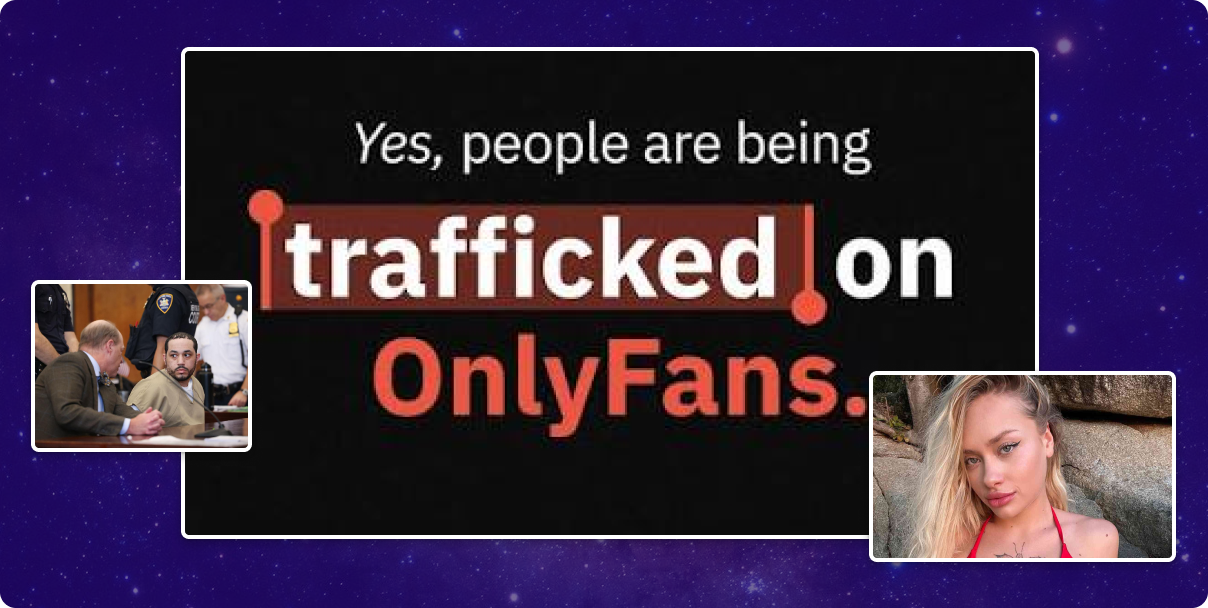
Modern digital infrastructure has revolutionized remote work and independent content creation, yet it has simultaneously provided sophisticated criminal syndicates with unprecedented avenues for exploitation. Beneath the veneer of legitimate creator autonomy, international trafficking rings and localized coercion cells have weaponized subscription sites and social media funnels. By seizing control of victims’ financial accounts, restricting communication, and utilizing multi-tiered corporate fronts, these networks successfully obscure illicit proceeds and launder money through global electronic payment channels.
The intersection of online subscription platforms like OnlyFans, money laundering, and sex trafficking involves complex systemic issues concerning digital platforms, third-party management agencies, and financial institutions.
While OnlyFans markets itself as a tool for independent creator empowerment, advocacy groups, law enforcement agencies, and investigative reports have highlighted how digital adult platforms can be exploited by traffickers.
Third-Party Management Agencies
A recurring vector for trafficking involves predatory management or “modeling” agencies that recruit vulnerable individuals—often using manipulation, psychological coercion, or the “lover boy” method—to produce explicit material.
Loss of Account and Financial Control
Traffickers or abusive managers frequently force victims to create accounts using their own personal documents while retaining full control over the login credentials, bank routing details, and earnings. Victims are often trapped through debt bondage, strict production quotas, heavy financial penalties, and physical or emotional threats. High-profile criminal crackdowns—such as investigations into agencies like Czech-based “Reach Out”—illustrate how traditional pimping and trafficking operations have migrated into digital spaces.
Non-Consensual Content
Investigations have also revealed instances where third parties uploaded explicit content of individuals without their consent or knowledge, or where underage individuals were exploited on the platform.
The financial plumbing supporting adult content platforms has faced intense regulatory scrutiny regarding anti-money laundering (AML) protocols and illicit revenue.
Whistleblower Complaints and FinCEN
Financial compliance whistleblowers have filed complaints with bodies like the U.S. Treasury’s Financial Crimes Enforcement Network (FinCEN), accusing major payment processors and card networks (such as Visa and Mastercard) of turning a blind eye to transactions tied to illicit material and trafficking on platforms like OnlyFans.
Layering and Illicit Funds
Because digital content platforms handle massive volumes of peer-to-peer micro-transactions, they can inadvertently become conduits for layering illicit funds or laundering money derived from financial crimes, fraud, and trafficking operations. This occurs when criminal proceeds are funneled through seemingly legitimate creator accounts or corporate agency structures.
International Investigations
Law enforcement agencies globally have increasingly targeted financial flows associated with online adult content. For instance, international roundups (such as clampdowns on networks in Europe and various domestic financial probes) frequently track how cash generated from digital exploitation is moved across borders, laundered through shell companies, or converted into assets.
Under intense pressure from governments, law enforcement, and banking partners, OnlyFans instituted more stringent identity and age verification requirements for creators (requiring government IDs, selfies, and banking details).
Major credit card companies have faced demands to enforce stricter compliance rules on adult merchants, requiring regular audits and transparent reporting to prevent the monetization of illegal content. However, critics and anti-trafficking organizations continue to argue that enforcement remains reactive rather than proactive, prompting calls for broader investigations by state attorneys general and federal regulators.
The flow of laundered capital through the digital adult content creator industry relies on exploiting the structural components of online platforms, third-party intermediaries, and global electronic payment processing networks. By mimicking legitimate peer-to-peer commerce and high-volume subscription models, illicit actors can move, obscure, and reintegrate funds.
The typical financial laundering lifecycle through this ecosystem follows a multi-stage process.
The initial injection phase involves introducing dirty money—derived from narcotics, fraud, human trafficking, or cybercrime—into the digital creator economy.
Illicit actors use stolen credit cards, synthetic identities, or direct cash-to-crypto conversions to purchase subscriptions, “tips,” or pay-per-view (PPV) content from specific creator accounts. Because digital adult platforms handle massive volumes of low-value, high-frequency transactions, individual micro-payments often bypass routine manual reviews.
Criminals sometimes hijack or establish creator accounts using stolen identities, then fund subscriptions to those accounts using illicit capital sources, effectively converting un-banked criminal proceeds into platform account balances.
Once the funds are inside the platform ecosystem, criminal networks utilize complex business structures and digital channels to distance the money from its illicit origin.
A primary vector for layering involves shell or front agencies. Criminal networks set up management firms that represent multiple creators. Illicit revenue is pooled across a portfolio of creator accounts, blending criminal proceeds with genuine subscriber revenue.
Funds disbursed from platforms to creators or agencies are frequently routed through multiple corporate layers, including multi-jurisdictional shell companies, offshore accounts, and digital wallets. Because agencies often take a large cut of a creator’s earnings, these administrative fees and service contracts provide a legalistic paper trail that masks the true ownership of the money.
To further break the fiat audit trail, funds earned through platforms or intermediary agencies are frequently converted into decentralized cryptocurrencies, non-fungible tokens (NFTs), or high-value portable assets like gold and luxury vehicles.
The final stage reintegrates the laundered capital back into the legitimate financial system, making it appear as clean, earned revenue from digital commerce or entertainment.
Law enforcement investigations (such as cross-border sweeps targeting illicit proceeds funneled through online adult platforms) have revealed that accumulated funds are ultimately integrated by purchasing real estate, funding legal businesses, or buying corporate stock.
By paying out “salaries,” contractor fees, or dividends from the management agencies back to the perpetrators or co-conspirators, the money is subjected to standard tax withholding, successfully acquiring a facade of legitimacy.
The operational architecture used to launder money and manage content creators mirrors the digital pipelines utilized for modern commercial sex work, escorting, and trafficking networks spanning mainstream platforms like Instagram and dating apps (such as Tinder, Bumble, Hinge, and localized alternatives).
While OnlyFans operates as a structured subscription platform with formalized corporate rails, social media and dating apps serve as the top-of-funnel discovery, recruitment, and client acquisition layer. Together, they form an integrated continuum where visibility, communication, and monetization are decoupled across different apps to evade detection.
Organized networks and independent operators use a multi-platform pipeline to move targets or clients from mainstream visibility to hidden financial transactions:
Stage 1: Attraction and Profiling (Instagram & Dating Apps):
Dating Apps: Used heavily for direct solicitation, client filtering, or identifying individuals experiencing financial vulnerabilities (e.g., job loss, housing instability) for recruitment. Traffickers or independent managers use charm, luxury lifestyle projection, or false employment promises (the “lover boy” method or fake modeling contracts) to build dependency.
Instagram: Acts as a visual portfolio and public storefront. Algorithms and hashtags allow operators to project high-status aesthetics, glamorous travel, and curated lifestyles. Direct Messages (DMs) are utilized to screen potential clients for escorting services or to pitch vulnerable individuals on “easy digital modeling work.”
Stage 2: Diversion to Messaging Apps: Because Instagram and dating apps monitor text for trigger words related to commercial sex, drug trade, or financial steering, conversations quickly migrate to encrypted or ephemeral apps (Telegram, WhatsApp, Signal).
Stage 3: Financial Settlement: Once terms are set—whether for an in-person meeting (prostitution/escorting) or digital content subscription—payments are shunted away from traditional credit card processors into alternative rails. As law enforcement analytics note, these networks heavily rely on stablecoins (like USDT), peer-to-peer cash apps, or multi-layered digital wallets to bypass anti-fraud tracking.
The financial flows and control mechanisms seen in the adult creator space map directly onto tech-enabled commercial sex networks.
Just as criminal managers frequently control the banking and login credentials of creators on subscription sites, traffickers running prostitution rings via social media often force victims to open accounts (bank accounts, Venmo, CashApp, crypto exchanges) under their own names while the perpetrator retains absolute control over the funds.
On Instagram, high-end escorting and commercial sex work are routinely masked as “influencer lifestyles,” VIP hosting, or “brand ambassador” travel. The funds received from clients—often wired or transferred digitally under the guise of consulting fees, gifts, or digital product purchases—help integrate illicit capital into the banking system under a false pretense of legitimate self-employment.
Just as digital management agencies can act as layering vehicles for illicit funds, modeling, PR, or “concierge” agencies operating on Instagram frequently act as fronts for high-end escort rings. They pool funds across multiple accounts, pay out “salaries” to participants, and create a thick layer of corporate paperwork that confuses bank compliance officers trying to separate legal social media revenue from illegal proceeds.
Tech companies face intense regulatory and legal pressure regarding how their ecosystems facilitate these pipelines.
Operators use coded language, emojis, alternate spelling, and constant profile rotation (deleting and recreating banned accounts) to keep storefronts active.
By utilizing decentralized assets or localized peer-to-peer payment apps for transactions initiated on social media, criminal networks successfully isolate the platform where the customer was acquired from the platform where the money is actually laundered.
The supply chain and logistics flow of tech-enabled commercial sex, digital content exploitation, and associated financial laundering operates much like a vertically integrated, transnational illicit enterprise. Moving from raw asset acquisition to final monetary integration, the architecture relies on digital discovery, physical or virtual processing, and complex financial logistics.
Law enforcement, financial regulators, and prosecutors have increasingly targeted the intersection of digital subscription platforms, social media, human trafficking, and financial crimes. Several prominent legal cases and investigations illustrate how these criminal pipelines operate and how authorities are dismantling them.
The “OnlyFans House” Case (Bellevue, Washington):
The Case: Law enforcement raided a mansion in Bellevue, arresting 21-year-old Nikita Tyukalo. Prosecutors charged him with multiple counts of second-degree human trafficking, money laundering, and leading organized crime.
The Modus Operandi: Investigators revealed that Tyukalo and associates ran an operation where young women (including intimate partners) were coerced into working grueling 14-hour days producing explicit content for platforms like OnlyFans and Chaturbate. Victims were controlled through physical violence, threats of leaked media, forced chemical dependency (Adderall), and complete financial isolation. The victims were kept destitute, receiving a nominal allowance while the ringleader flaunted cash and luxury cars funded by the operation.
The Jonathan Ruiz and Charline Santiago Prosecution (New York):
The Case: The Manhattan District Attorney’s Office indicted Jonathan Ruiz and Charline Santiago on charges of sex trafficking, labor trafficking, conspiracy, and promoting prostitution.
The Modus Operandi: The defendants forced multiple women into commercial sex work across six states, utilizing physical violence, firearms, and forced drug consumption. Crucially, the scheme included labor trafficking tied directly to digital platforms, where one of the victims was forced to produce and manage sexually explicit videos on OnlyFans. To hide the proceeds, the network funneled and disguised the financial revenue through a Connecticut-based LLC.
The “Reach Out” Agency Crackdown (Czech Republic):
The Case: Elite police units from the Czech National Centre Against Organised Crime arrested key figures linked to “Reach Out,” a prominent digital management agency representing creators on platforms like OnlyFans.
The Modus Operandi: The agency targeted vulnerable young women—often newly turned 18—using the “lover boy” method of psychological manipulation and false promises of elite modeling careers. Once under contract, the agency stripped the victims of access to their own accounts and emails. Contracts featured exorbitant penalty clauses (e.g., hundreds of thousands of crowns) designed to trap creators in debt bondage. Financial routing was tightly controlled: agency-mandated bank details ensured subscription payouts went directly to the agency’s accounts before meager distributions were handed out, prompting charges of organized sexual exploitation, human trafficking, and asset seizure worth millions.
United States v. Kylie Leia Perez (Middle District of Florida):
The Case: Creator Kylie Leia Perez (who performed under the alias “Natalie Monroe”) was indicted on federal charges of filing false tax returns and willfully failing to pay income taxes.
The Significance: While operating primarily as a high-earning individual creator (pulling in over $5.4 million across a multi-year span), the case underscores the intense scrutiny by the IRS Criminal Investigation (IRS-CI) division regarding high-velocity digital platform revenues. Federal prosecutors emphasize that massive micro-transaction cash flows through digital portals are subject to strict anti-tax evasion and asset transparency laws.
Congressional and FinCEN Inquiries:
Lawmakers and anti-trafficking advocates have repeatedly petitioned the U.S. Treasury’s Financial Crimes Enforcement Network (FinCEN) to investigate the financial agreements between subscription platforms (like OnlyFans) and major banking and credit card networks.
These inquiries focus on whether payment processors perform adequate Bank Secrecy Act (BSA) and Know Your Customer (KYC) compliance to catch illicit trafficking rings that utilize corporate shell front companies to launder digital proceeds into the traditional banking system.
The Defendants: Michael James Pratt (site owner), Ruben Andre Garcia (lead recruiter/performer), and associates.
Charges & Rulings: Federal convictions for conspiracy to commit sex trafficking by force, fraud, and coercion, production of illicit material, and money laundering. Alongside federal criminal charges, 22 victims won a landmark $13 million civil judgment in California Superior Court. Pratt later pleaded guilty in federal court after years as an FBI Most Wanted fugitive.
Operational Mechanics:
Sourcing & Deception: The ring ran deceptive online advertisements (e.g., on Craigslist) for “clothed modeling gigs,” targeting young women needing money for rent or college. Once at hotels, targets were pressured into explicit video shoots.
False Guarantees: Victims were falsely promised that videos would only be sold as physical DVDs to private collectors overseas and never published online or in the U.S.
Financial Laundering: The enterprise utilized a series of overseas shell companies and pass-through bank accounts to collect subscription fees from proprietary websites, pool millions in revenue, and obscure the true beneficial owners.
The Defendants: Andrew Tate, Tristan Tate, and co-conspirators.
Charges: Human trafficking, rape, forming an organized crime group to sexually exploit women, tax evasion, and money laundering across Romania, the UK, and the U.S.
Operational Mechanics:
The “Loverboy” Recruitment Method: The defendants allegedly targeted women through social media and direct messaging, establishing romantic or emotional dependency under false promises of marriage or long-term commitment.
Digital Production Factories: Victims were relocated to physical properties in Eastern Europe, placed under 24/7 surveillance, and forced to produce explicit adult content for webcam portals and subscription platforms like OnlyFans.
Asset Integration: Illicit revenue generated from subscription platforms and adult streaming was allegedly funneled through corporate entities and off-ramped into luxury real estate, high-end vehicle fleets, and cryptocurrency assets to evade tax authorities and hide the audit trail.
Criminal networks frequently isolate the client acquisition layer on dating apps from the payment clearing mechanisms, as illustrated in two notable prosecutions:
State of Washington v. Maziar Rezakhani (Snohomish County)
The Mechanism: The defendant allegedly targeted women on Tinder, coaxing them to hotel locations where they were filmed performing explicit acts for live digital streams.
Payment Exploitation: To maintain control over victims without handing over capital, the defendant utilized spoofed digital payments (Zelle). Victims received fake confirmation text messages making it appear that money was transferred to their bank accounts, allowing the operator to capture 100% of the proceeds while leaving victims penniless.
R. v. Prophete, Hamblett, & Wilkins (Toronto Police Human Trafficking Enforcement)
The Mechanism: Organized ring members used Tinder to build rapport with targets before using intimidation, fear, and physical control to force them into commercial sex work and digital modeling.
Financial Control: The ring posted photos on online advertising hubs, fielded bookings, and retained all earnings generated by the victims, demonstrating how dating app recruitment feeds directly into financial exploitation rings.
A major legal front involves civil litigation against subscription platforms and financial institutions under federal laws like the Trafficking Victims Protection Reauthorization Act (TVPRA) and the Racketeer Influenced and Corrupt Organizations Act (RICO):
Core Legal Argument: Plaintiffs argue that platforms and credit card networks (e.g., Visa, Mastercard) act as financial beneficiaries of a sex trafficking enterprise.
Liability Claims: Under the TVPRA, any entity that knowingly benefits financially from participating in a venture that engages in forced labor, sex trafficking, or non-consensual content distribution can be held civilly liable for damages.
Impact on Compliance: These class actions contend that platforms fail to enforce adequate Know Your Customer (KYC) or identity-verification safeguards, allowing traffickers to monetize victims and move laundered subscription revenue through mainstream merchant processing rails.
The criminal networks exploiting digital creator platforms, social media funnels, and electronic payment rails range from localized coercion rings to structured transnational syndicates. Law enforcement investigations classify these groups into several distinct organizational typologies:
Rather than operating traditional street-level enterprises, modern criminal networks have evolved to set up pseudo-legitimate digital talent or modeling agencies.
These groups function with corporate-sounding titles, contracts, and administrative layers to mimic legal businesses. Behind the facade, however, they operate as centralized command structures that control victims’ digital identities.
As highlighted by European law enforcement crackdowns on agencies like the Czech-based “Reach Out” network, these syndicates systematically strip victims of account access, enforce draconian financial penalties, and utilize digital platforms to launder proceeds internationally.
At the localized level, smaller criminal cells and independent operators frequently adopt tech-enabled business models to run forced labor and commercial sex rings.
Typically consisting of a primary ringleader or a small group of associates, these cells rely heavily on personal intimidation, the “lover boy” psychological manipulation method, and physical confinement (such as the multi-person exploitation rings uncovered in urban crackdowns like the Bellevue, Washington “OnlyFans House” case).
Victims are isolated from support systems, forced to maintain grueling round-the-clock streaming and content production schedules, and kept under tight financial control while the ringleaders siphon all generated revenue into luxury assets and cash holdings.
Larger international syndicates—frequently operating across Eastern Europe, Southeast Asia, and Latin America—integrate digital content exploitation into broader portfolios of cybercrime, human trafficking, and financial fraud.
Highly compartmentalized networks that utilize encrypted communication channels (Telegram, Signal), offshore shell corporations, and decentralized cryptocurrency networks to move illicit capital across borders.
These groups specialize in cross-border trafficking, moving victims into localized production “dens” or compounds where they are forced to perform live-streamed sexual acts or generate mass volumes of subscription content, effectively merging traditional human trafficking supply chains with modern digital laundering architectures.
Inside the Alleged OnlyFans House at the Center of a Human Trafficking Case
This video provides an overview of law enforcement findings and court documents detailing how localized criminal cells organize and control digital content exploitation rings.
Global law enforcement agencies and intelligence databases track several prominent transnational organized crime groups, street syndicates, and cult-like networks historically documented for engaging in large-scale sex trafficking and forced prostitution.
Operating primarily across the Mexico-U.S. border corridor, specific cross-border smuggling cells have expanded their revenue models from narcotics and migrant smuggling to forced prostitution.
These organizations exploit vulnerabilities along migration routes. Women and minors from Central and South America are promised safe passage or legitimate employment in the United States, only to be subjected to extreme debt bondage upon arrival. Victims are often trapped in localized “red-light” compounds, controlled through threats against family members back home, and forced into commercial sex work to pay off inflated, inescapable smuggling fees.
Originating in countries like Albania, Moldova, Romania, and Bulgaria, these syndicates control major human trafficking routes spanning the Adriatic Sea into Western Europe and the UK.
Often referred to in European security reports as structured clan-based networks, they heavily rely on the “lover boy” (or Romeo) grooming technique. Group members build romantic trust with economically marginalized women, lure them abroad under false pretenses, and then confiscate their passports, use extreme physical violence, and coordinate multi-jurisdictional rotation cycles where victims are frequently moved between safe houses to evade police tracking.
Historic organized crime bodies have maintained systemic involvement in the commercial sex trade across Asia and international diaspora communities.
The Yakuza: Japanese syndicates have historically coordinated the procurement and trafficking of foreign women (from parts of Southeast Asia, China, and South America) into entertainment districts, utilizing complex front companies and nightlife hospitality fronts.
Chinese Snakeheads: Specialized in transnational human smuggling, these syndicates operate vast networks that historically trapped migrants in overseas warehouses and forced them into debt bondage, labor, or commercial sex work to satisfy exorbitant transportation debts.
In domestic United States jurisdictions, federal task forces (such as FBI Safe Streets operations) have frequently prosecuted traditional street gangs that diversify their criminal portfolios into human trafficking.
Moving away from reliance solely on street-level narcotics distribution, factions of gangs like the Crips or Bloods utilize pimping algorithms and localized sex-trafficking rings. Gang members leverage peer pressure, psychological dominance, and brutal physical violence to force both adult and minor victims into prostitution along commercial strips or through online classified ads, pooling the generated cash directly back into gang enterprises.
A syndicate of five brothers (Eugenio, Attilio, Carmelo, Alfredo, and Romeo Messina) originating from Sicily who built a massive, centralized vice empire centered in London’s Soho district.
The brothers capitalized on post-WWI and post-WWII dislocation by smuggling hundreds of women from continental Europe (particularly France and Belgium) into the UK under the guise of legitimate employment or marriages-of-convenience.
The Messinas utilized extensive networks of corrupt fixers, front companies, and shell accounts to launder profits. They maintained strict control over their workers by confiscating passports, threatening family members abroad, and forcing victims into isolation. Their operations were eventually exposed by investigative journalist Duncan Webb, leading to landmark British legislative crackdowns on living off earnings of prostitution.
Run by four sisters—María de Jesús, Delfina, Carmen, and María Luisa González—operating a string of clandestine brothels in Guanajuato and Jalisco, Mexico.
The sisters targeted poor, young rural women with advertisements for domestic work. Upon arrival, the victims’ documents were seized, and they were subjected to severe physical abuse, starvation, and debt bondage.
Unlike standard enterprise models, the Poquianchis operated with extreme brutality, murdering dozens of victims, infants born in captivity, and uncooperative clients who tried to intervene. The scale of the enterprise and its local police protection came to light only after an escaped victim managed to reach authorities, exposing one of the deadliest serial trafficking rings in Latin American history.
A historic structural exposé orchestrated by social reformer W.T. Stead and the Salvation Army to force Parliament to address child prostitution and the illicit trafficking of British girls to continental European brothels.
To prove how easily criminal procurers bought and sold children, Stead and his associates infamously purchased a 13-year-old girl named Eliza Armstrong from her impoverished mother for five pounds.
Published as a sensational series titled The Maiden Tribute of Modern Babylon in the Pall Mall Gazette, the scandal horrified Victorian society. While it resulted in Stead briefly standing trial for procurement, the massive public outcry successfully compelled Parliament to pass the Criminal Law Amendment Act of 1885, raising the age of consent and establishing legal frameworks to combat child sexual exploitation and forced abduction.
As regulatory scrutiny intensifies and cross-border task forces dismantle high-profile operations—from suburban content house raids to international agency crackdowns—the structural vulnerabilities of digital platforms are increasingly exposed. Combating these sophisticated enterprises requires aggressive multi-agency enforcement, stricter corporate compliance, and enhanced transparency across electronic payment rails. Only by dismantling both the physical coercion networks and the financial laundering loops can authorities effectively safeguard vulnerable individuals from tech-enabled exploitation.
Financial Action Task Force (FATF). (2018). Financial flows from human trafficking. Paris: FATF/APG. Retrieved from https://www.fatf-gafi.org/en/publications/Methodsandtrends/Human-trafficking.html
Rychlíková, A. (2026). From OnlyFans investigation to human trafficking charges. Journalismfund Europe. Retrieved from https://www.journalismfund.eu/news/onlyfans-investigation-human-trafficking-charges
University of New Haven Center for Forensic Investigations of Trafficking in Persons (CFITP), & Anti-Human Trafficking Intelligence Initiative (ATII). (2022). Open-source research shows online child sex trafficking and other criminal activity found on OnlyFans.com. West Haven, CT: University of New Haven.

Help us grow by advertising your business in our newsletter and reaching an engaged community.

Comments
Nothing yet. Say the first thing.
Sign in to join the conversation.