
ThirdSpace BUZZ is an edgy newsletter on whatever the fuck I want.
The explosive emergence of non-fungible tokens (NFTs) redefined the boundaries of digital ownership, merging speculative consumer culture with decentralized cryptographic infrastructure.
Yet, the rapid expansion of this multi-billion-dollar marketplace occurred largely in a regulatory vacuum, attracting not only mainstream creators and institutional investors, but also sophisticated criminal syndicates, opportunistic fraudsters, and bad actors eager to exploit structural blind spots.
🍋🟩

Sponsored by:
Help us grow by sponsoring our newsletter and reaching an engaged community.

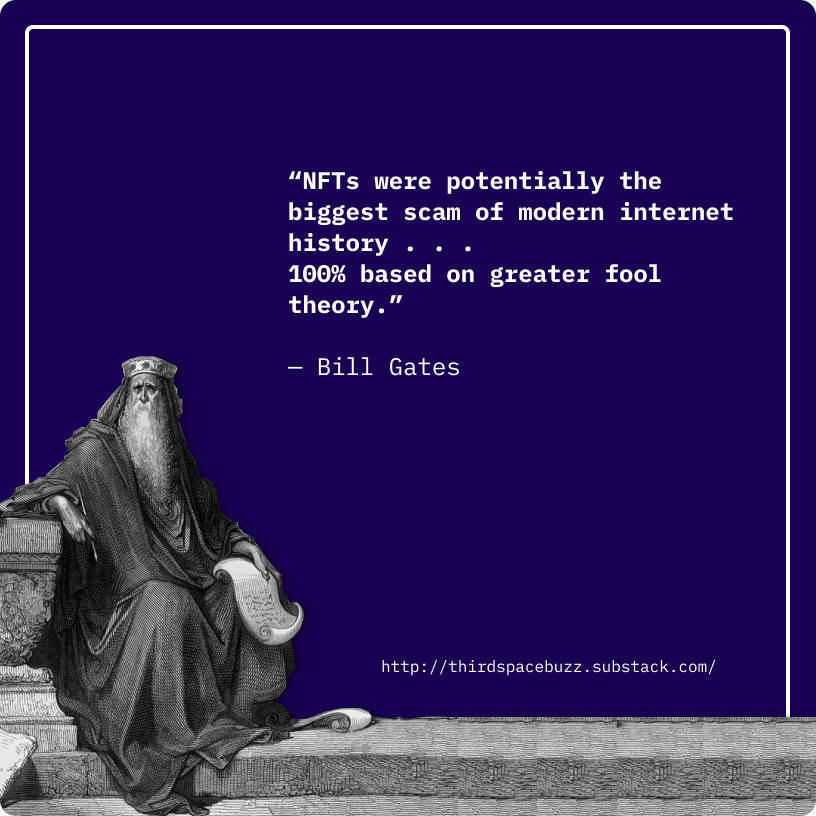
“NFTs were potentially the biggest scam of modern internet history . . . 100% based on greater fool theory.”
— Bill Gates

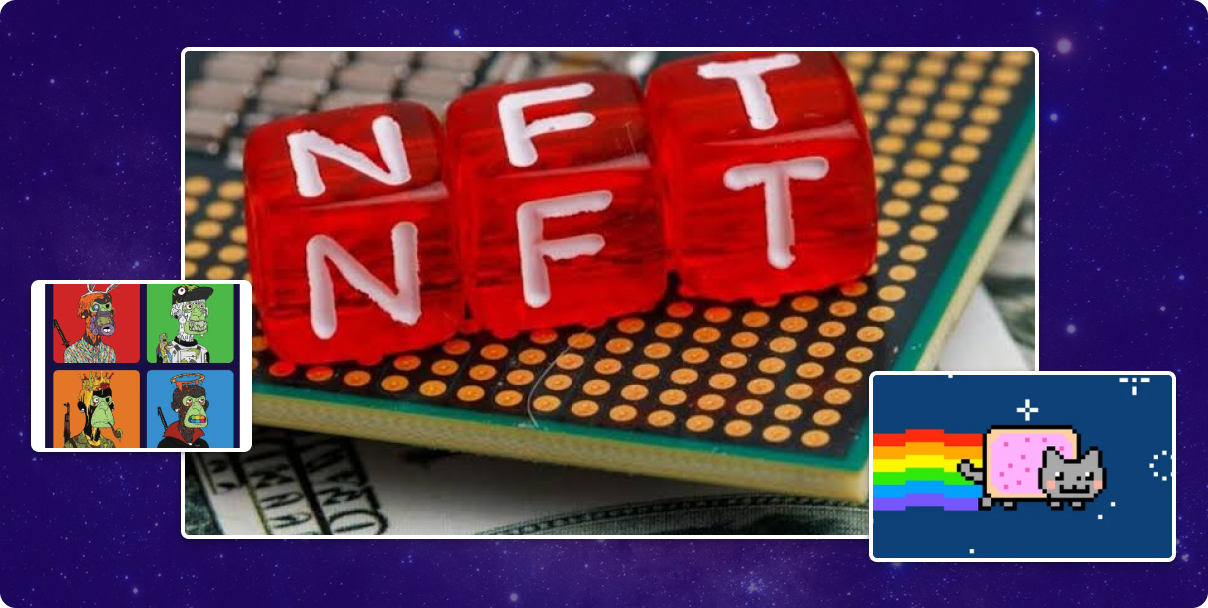
Understanding the architecture of NFT-related crime requires examining how traditional financial white-collar offenses—such as market manipulation, money laundering, and unregistered securities offerings—have evolved to exploit the mechanics of distributed ledgers.
Concurrently, an extensive body of civil litigation and federal criminal prosecutions has begun to establish clear boundaries for digital asset commerce. This comprehensive analysis evaluates the technical mechanics of NFT-related fraud, the scope of transnational cartel integration, global financial losses, and the definitive legal actions that continue to shape the web3 compliance landscape.
The pseudonymous, borderless, and immutable nature of blockchain networks provides unique structural incentives for financial fraud. Unlike traditional equities or commodities markets governed by strict disclosure frameworks, NFT markets rely heavily on decentralized communities, speculative hype, and opaque ownership trails.
Rug Pulls and Mint Scams
A predominant form of fraud in the digital collectible space involves project creators hyping speculative utility, virtual land integration, metaverse roadmaps, or exclusive community access, only to abruptly abandon the project and drain the liquidity pools post-sellout. A classic benchmark of this activity is the Frosties NFT case prosecuted by federal authorities, where founders systematically vanished with user funds immediately after closing primary mint sales, leaving investors holding worthless metadata tokens.
Wash Trading
Because pseudonymous users can freely establish and control hundreds of digital wallets without institutional identity verification, bad actors frequently execute circular trades across self-controlled addresses. By selling an NFT from one wallet to another owned by the same individual—often absorbing nominal gas fees—perpetrators artificially inflate trading volumes and price floors on public marketplaces. This orchestrated deception creates a false sense of organic market demand, tricking external retail buyers into acquiring overvalued assets.
Smart Contract Exploits and Phishing
Malicious actors routinely target the technological vulnerabilities underlying decentralized marketplaces. By deploying malicious smart-contract code or exploiting front-end web interfaces, attackers gain unauthorized permissions to drain user wallets. Similarly, social engineering campaigns compromise high-profile community channels (such as official Discord servers or X accounts) to distribute malicious mint links that siphon high-value digital assets instantly upon signature approval.
Beyond retail-level investment scams, digital assets and NFTs have increasingly intersected with systemic, transnational financial crime. Law enforcement and financial intelligence units have identified several structural attributes that make NFTs prime vehicles for the layering and integration phases of money laundering.
Subjective Valuation
Traditional assets like real estate, equities, or precious metals have comparative market benchmarks that limit how drastically pricing can be manipulated without triggering regulatory suspicion. Conversely, an NFT’s value is entirely subjective and aesthetic. A unique digital token can be bought or sold for arbitrary amounts, allowing bad actors to easily justify extreme price differentials and asset transfers.
Self-Laundering via Marketplaces
Illicit actors holding “dirty” cryptocurrency derived from ransomware, darknet operations, or cyber fraud can self-mint an NFT, purchase it using funds from an anonymous or unhosted wallet, and convert illicit proceeds into seemingly legitimate capital gains originating from a digital sale. The resulting cryptocurrency can then be funneled back into traditional financial systems with a pseudo-legitimate provenance.
Supply Chain and Drug Trafficking Operations
Transnational criminal organizations (TCOs) and drug cartels frequently comingdle illicit proceeds from high-volume drug trafficking with cyberfraud and cryptocurrency schemes. Digital assets derived from these networks are routinely routed across international borders to settle logistics, procure chemical precursors for illicit substances, and bypass traditional banking controls. By utilizing over-the-counter (OTC) brokers and unhosted wallets, cartels obscure the movement of capital away from the scrutiny of the Bank Secrecy Act (BSA) and anti-money laundering (AML) frameworks.
Quantifying the total financial damage inflicted by NFT-centric crime requires distinguishing between broad digital asset hacks and targeted digital collectible fraud. While comprehensive crypto-related fraud, scams, and decentralized finance (DeFi) exploits routinely account for $12 billion to $17 billion annually, the peak era of NFT market mania (2021–2022) experienced a concentrated wave of direct user losses.
During this peak window, marketplace exploits, social engineering vector attacks, Discord compromises, and coordinated rug pulls resulted in hundreds of millions to over $1 billion in direct losses. While dedicated NFT scam volumes subsequently contracted alongside broader market corrections and collapsing floor prices, the structural vulnerabilities exposed during the mania period permanently altered the posture of global financial regulators.
As the digital asset market matured, the vacuum left by legislative ambiguity was filled by the judiciary. Courts across multiple jurisdictions began applying traditional legal doctrines—ranging from trademark law and contract enforcement to federal securities regulations and criminal wire fraud statutes—to the unique contours of NFTs.
The collision between digital art duplication, brand protection, and constitutional free speech generated a defining series of intellectual property disputes.
Yuga Labs, Inc. v. Ripps
In a landmark intellectual property dispute, creator Yuga Labs sued conceptual artists who launched an explicit copycat collection (”RR/BAYC”) intended to mock and devalue the original Bored Ape Yacht Club assets. The U.S. Court of Appeals for the Ninth Circuit issued a vital ruling establishing that NFTs qualify as legal “goods” under the Lanham Act, affirming that digital tokens combining art, code, and community access are subject to traditional trademark enforcement rather than receiving blanket immunity under artistic expression doctrines.
Hermès v. Mason Rothschild (MetaBirkins)
French luxury house Hermès sued artist Mason Rothschild over his “MetaBirkins” NFT collection, which featured digital iterations of its signature handbags adorned with fur. The court ruled decisively in favor of trademark protection over commercial artistic expression, establishing a high legal barrier for creators attempting to leverage luxury brand iconography within virtual spaces.
Nike v. StockX
Sportswear giant Nike initiated legal action against prominent resale marketplace StockX for issuing unauthorized “Vault NFTs” tied directly to physical footwear. Nike argued that these digital tokens created consumer confusion and misappropriated its trademark value without authorization.
Miramax v. Quentin Tarantino
Entertainment studio Miramax sued acclaimed director Quentin Tarantino when he announced plans to auction off “secret” NFTs based on handwritten screenplay pages of Pulp Fiction. Miramax alleged that the minting process constituted a direct breach of contract and copyright infringement, asserting that broad studio ownership rights superseded the director’s narrow reserved print rights. (The dispute was ultimately resolved through an out-of-court settlement).
Roc-A-Fella Records v. Damon Dash
Record label Roc-A-Fella successfully blocked co-founder Damon Dash from minting and auctioning Jay-Z’s legendary debut album, Reasonable Doubt, as an independent NFT. The court affirmed that owning a corporate share of an enterprise does not grant individual copyright ownership or the right to tokenize underlying master recordings.
Disgruntled investors seeking recourse for collapsed market valuations frequently turned to federal courts, arguing that various high-profile NFT drops functioned as unregistered securities offerings.
DraftKings NFT Settlement
DraftKings resolved a major consumer class-action lawsuit by agreeing to a $10 million settlement. The lawsuit alleged that the platform’s primary drops and secondary marketplace operations constituted the unlawful distribution of unregistered securities to retail investors.
Nike and RTFKT Class Action
Following Nike’s abrupt decision to wind down operations for its acquired digital fashion studio RTFKT, affected consumers filed a class action alleging that the sudden closure amounted to a corporate rug pull and that the virtual collectibles had been marketed as speculative investment vehicles violating federal securities laws.
NBA Top Shot (Dapper Labs)
Plaintiffs targeted Dapper Labs in a prolonged legal battle, arguing that “Moments”—tokenized video highlights of basketball plays—operated as securities because their secondary market liquidity and valuation were entirely dependent on the centralized platform’s ecosystem maintenance and promotional efforts.
The Bored Ape Celebrity Class Action (Real v. Yuga Labs)
A sweeping investor class action targeted Yuga Labs alongside a roster of high-profile cultural figures—including Justin Bieber, Madonna, Paris Hilton, Gwyneth Paltrow, and Steph Curry—alleging they leveraged their massive public followings to orchestrate a deceptive pump-and-dump scheme through undisclosed paid endorsements. Ultimately, a federal judge dismissed the core securities claims after ruling that the plaintiffs failed to satisfy the legal criteria established by the Howey test.
Magic Johnson “MagicVerse” Suit
A commercial lawsuit addressed allegations that sports icon Magic Johnson and associated entities pitched a fraudulent metaverse and NFT investment scheme that failed to deliver promised technological utility or digital assets. The litigation concluded following an amicable resolution and a dismissal with prejudice.
When commercial deception and market manipulation cross ethical boundaries into systemic deceit, federal prosecutors have consistently utilized criminal statutes to secure indictments and convictions.
United States v. Nathaniel Chastain
In a landmark insider trading prosecution, federal authorities charged Nathaniel Chastain, a former product manager at marketplace giant OpenSea, with wire fraud and money laundering [cite: . Chastain leveraged confidential internal data regarding which digital collections would be prominently featured on OpenSea’s homepage, secretly purchasing them through anonymous auxiliary wallets and flipping them immediately post-launch for illicit profits. To conceal his tracks, he routed transactions through multiple wallets, leading the DOJ to successfully secure a conviction under federal money laundering statutes.
United States v. Gabriel Hay and Gavin Mayo
Federal prosecutors in California unsealed a major multi-defendant criminal indictment charging developers Gabriel Hay and Gavin Mayo with orchestrating a sophisticated digital asset fraud scheme across several projects, including Vault of Gems. The defendants allegedly solicited millions under the guise of hard-asset backing before systematically abandoning the projects and routing funds through complex transaction layers for personal enrichment.
The Few and Far Fraud Case
Taj Tarsha, the founder of the crypto startup Few and Far, was hit with federal criminal charges including securities and wire fraud. Tarsha allegedly raised roughly $10 million from at least 67 investors through Simple Agreements for Future Tokens (SAFTs) to build an NFT trading platform, only to misappropriate millions for personal online casino gambling, speculative cryptocurrency trades, and unauthorized executive compensation.
Operation Token Mirrors and Market Manipulation Sweeps
Coordinated federal law enforcement crackdowns targeted automated market makers and specialized entities providing “wash trading-as-a-service.” These operations revealed criminal syndicates executing millions of automated, circular transactions across hundreds of self-controlled wallets to artificially fake organic market demand, resulting in criminal conspiracy and wire fraud indictments designed to dismantle systemic market deception.
The evolution of the non-fungible token ecosystem demonstrates a profound tension between technological innovation and regulatory enforcement. While blockchain networks offer unprecedented cryptographic transparency, the unique properties of digital tokens—such as subjective valuations, unhosted self-custody wallets, and pseudonymous infrastructure—have provided fertile ground for sophisticated financial crimes.
However, the aggressive enforcement posture adopted by regulatory bodies, coupled with landmark judicial rulings establishing that NFTs constitute commercial “goods” and are subject to traditional legal frameworks, has fundamentally transformed the landscape. As federal criminal prosecutions against insider trading, rug pulls, and market manipulation continue to set robust legal precedents, the era of absolute regulatory impunity for digital asset fraud has effectively closed, establishing a more accountable and legally scrutinized future for web3 commerce.
Chainalysis Inc. — Crypto Crime Reports (Annual Series). Comprehensive tracking data detailing illicit transaction volumes, ransomware trends, and scam metrics across global blockchain ledgers.
U.S. Department of the Treasury — Illicit Finance Risk Assessment of Decentralized Finance and Non-Fungible Tokens. Official advisory reports detailing how decentralized platforms, unhosted wallets, and subjective asset valuations are exploited for layering and integration phases of money laundering.
Financial Action Task Force (FATF) — Updated Guidance on Virtual Assets and Virtual Asset Service Providers (VASPs). International standards concerning risk-based anti-money laundering (AML) and counter-terrorist financing (CFT) compliance for digital collectibles and marketplaces.
Yuga Labs, Inc. v. Ripps, No. 2:22-cv-04355 (C.D. Cal. / 9th Cir.) — Establishing the legal classification of NFTs as “goods” under the Lanham Act for trademark protection.
Hermès International v. Mason Rothschild, No. 1:22-cv-00384 (S.D.N.Y.) — Precedent balancing trademark rights against digital artistic expressions involving luxury virtual assets.
Real v. Yuga Labs, Inc., No. 2:22-cv-08909 (C.D. Cal.) — Class action focusing on digital asset promotions, celebrity endorsements, and application of the Howey test to decentralized ecosystem assets.
Securities and Exchange Commission (SEC) Enforcement Actions & Settlement Closures — Reference documentation concerning administrative actions (Impact Theory, Stoner Cats) and subsequent strategic investigation closures regarding major secondary marketplaces like OpenSea.
United States v. Nathaniel Chastain, No. 1:22-cr-00305 (S.D.N.Y.) — Landmark insider trading and wire fraud/money laundering prosecution involving internal marketplace data exploitation.
United States v. Gabriel Hay and Gavin Mayo (C.D. Cal.) — Federal criminal indictments targeting multi-million-dollar digital asset fraud and project abandonment (”rug pulls”).
United States v. Taj Tarsha (Few and Far) (S.D.N.Y.) — Federal criminal indictments concerning securities fraud, wire fraud, and capital misappropriation in Web3 startup financing.

Help us grow by advertising your business in our newsletter and reaching an engaged community.

Comments
Nothing yet. Say the first thing.
Sign in to join the conversation.