
ThirdSpace BUZZ is an edgy newsletter on whatever the fuck I want.
Every year, sophisticated cybercrime syndicates and financial fraud rings orchestrate multi-layered operations that transcend traditional white-collar crime.
Among the most chilling models in modern illicit finance is the “Assumed-Deceased” exploit, a malicious variant of ghosting fraud.
When this digital execution style intersects with life insurance fraud, murder-for-profit conspiracies, and complex data-driven cover-ups, the resulting architecture represents a terrifying evolution of identity theft.
🕵️

Sponsored by:
Help us grow by sponsoring our newsletter and reaching an engaged community.

“There is no heavier burden than a great potential, but a false death is the ultimate theft—it buries a living soul in paperwork before the grave ever has a chance.”
— Traditional Detective Adage

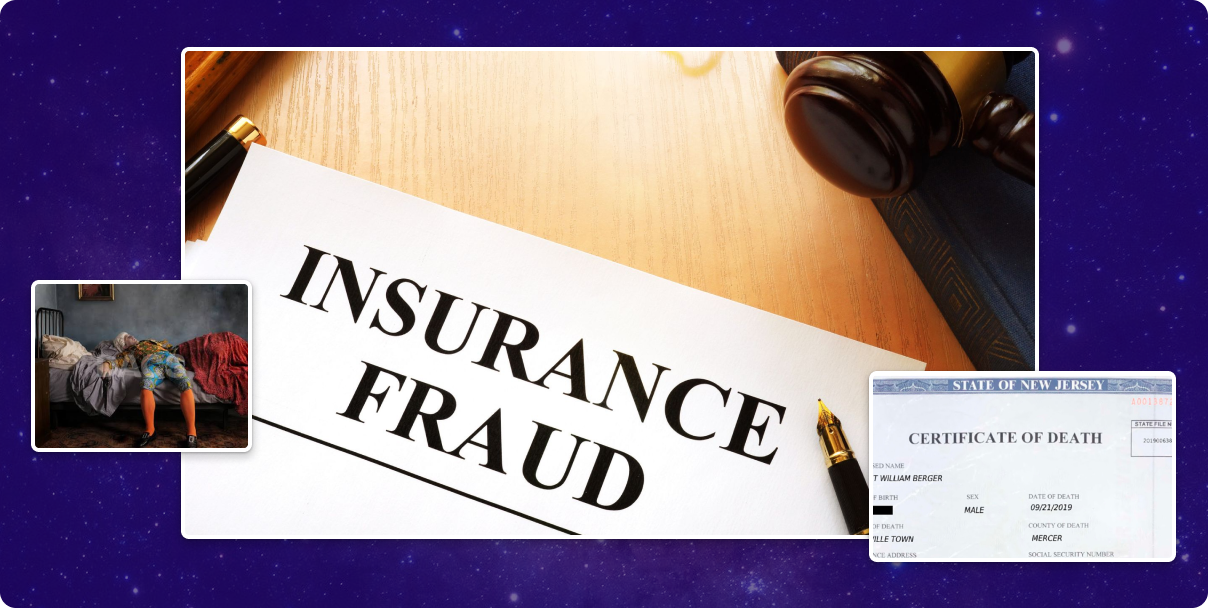
Understanding how these high-tier exploits function, examining their historical and modern precedents, and mastering the rigorous protocols required to fight back are essential for unmasking hidden identity takeovers. Traditional identity theft usually relies on the silent accumulation of debt or the fraudulent filing of tax returns using a living person’s credentials without their immediate knowledge.
However, advanced ghosting fraud flips this dynamic by manipulating the boundaries between life and death within bureaucratic databases. Fraudsters typically begin by harvesting comprehensive Personally Identifiable Information from dark web marketplaces, massive corporate data breaches, or public vital statistics registries, including obituaries and social security death indexes.
Once a target profile is selected, syndicates exploit the systemic bureaucratic lag that occurs before mortality databases synchronize with commercial credit bureaus, tax authorities, and retail banking networks. By manufacturing or utilizing forged civil registry documents—such as fraudulent death certificates, coroner logs, and burial transit permits—the perpetrators inject a false death flag into the system. This sudden designation locks the victim out of their own financial ecosystem while opening a lucrative window of vulnerability.
The monetization vectors for these schemes are exceptionally diverse. Fraudsters execute early-season electronic tax refund fraud before government agencies register a mortality status conflict. They maximize unsecured personal loans, retail credit lines, and e-commerce accounts that leverage an established, clean credit history with low active monitoring.
Furthermore, advanced networks utilize synthetic fusion, blending real historical data of marginalized or deceased individuals with fabricated attributes to effortlessly bypass automated Know Your Customer onboarding protocols. Financial institutions and credit issuers increasingly combat these high-tier exploits by integrating real-time mortality data feeds, biometric behavioral analytics, and continuous identity verification checks, though determined criminal rings continuously adapt their methodologies to bypass these technological safeguards.
When an assumed-deceased exploit or advanced ghosting scheme intersects with the high-stakes world of life insurance, the violation shifts instantly from a paper-based white-collar crime into a multi-jurisdictional homicide and conspiracy investigation. The legal and criminal frameworks governing these syndicates involve a matrix of severe offenses designed to strip perpetrators of ill-gotten gains and deliver maximum capital penalties.
At the base of the conspiracy lies the fabrication of vital statistics and civil records, constituting federal identity theft, aggravated identity theft, and instrument forgery. Compounding this is the critical legal requirement of insurable interest. To legally issue a life insurance policy, an applicant must demonstrate a genuine financial or emotional loss upon the insured’s individual death.
Fraud rings routinely bypass this safeguard by establishing covert policies using stolen or synthetic identities where no familial or business relationship exists, or by colluding with corrupt brokers to manufacture fake business partnerships and debt obligations. When a claim is filed, the absolute absence of a legal insurable interest serves as an immediate red flag that voids the contract from its inception.
Staged death schemes and fraudulent beneficiary claims directly trigger civil and criminal insurance fraud statutes. Insurers deploy specialized investigation units to cross-reference international databases, forensic pathology reports, DNA profiles, and digital footprints, turning claims into complex forensic battlegrounds. Because these policies frequently scale into millions of dollars, the offenses routinely cross state and international boundaries, elevating the crimes to federal wire fraud, mail fraud, and money laundering charges.
Most critically, when an assumed-deceased plot involves a living person who is legally declared dead while still breathing, or when an innocent victim is actually murdered to substitute a corpse or collect a payout, the legal paradigm shifts into capital murder.
Civilly, the universal application of the slayer rule bars any perpetrator or co-conspirator from profiting from their crime, forcing the immediate clawback of distributed funds. Remorseless financial greed frequently triggers first-degree murder charges, conspiracy counts, and federal racketeering indictments carrying mandatory life sentences or capital punishment.
History provides terrifying examples of how deeply human greed can distort institutional systems when identity manipulation and insurance fraud converge. These historical cases highlight the precursors to modern digital ghosting and demonstrate the relentless resourcefulness of criminal syndicates.
During the Great Depression, the Philadelphia Poison Ring operated as one of the largest mass-murder-for-profit syndicates in American history. Preying upon vulnerable and immigrant communities in South Philadelphia, cousins Herman and Paul Petrillo directed a network of corrupt brokers and self-styled spiritualists. They targeted individuals who were lonely, unhappily married, or easily manipulated, secretly taking out industrial life insurance policies that required no medical exams for lower-value brackets.
Victims were systematically poisoned with slow-acting arsenic disguised as food, medicine, or magical potions meant to cure ailments, carefully mimicking natural heart disease. The conspiracy finally unraveled in 1938 when an undercover U.S. Secret Service agent, originally investigating currency counterfeiting operations, was solicited to commit a murder-for-hire to cash out a policy, leading to multiple convictions and executions.
Equally bizarre was the case of Michael “Iron Mike” Malloy, orchestrated by a New York City speakeasy ring known as the Murder Trust during Prohibition. Recognizing that Malloy was a destitute, chronically alcoholic homeless man with zero family ties, the conspirators took out multiple fraudulent life insurance policies with double-indemnity accidental death clauses.
They attempted to kill him by plying him with wood-alcohol-laced whiskey, feeding him sandwiches laced with metal shavings, rat poison, and turpentine, and leaving him unconscious in sub-zero snowbanks. When Malloy miraculously survived every attempt, the desperate group finally murdered him by pumping illuminating gas directly into his lungs through a rubber hose.
The unnatural speed of their payout claims triggered an immediate police investigation, resulting in exhumations, autopsies, and the electric chair for four conspirators.
In rural Pennsylvania, the 1878 conspiracy of the Blue-Eyed Six centered around a local laborer named Joseph Raber. Conspirators manipulated Raber into taking out heavy life insurance policies, fronting the premiums themselves, and establishing fraudulent beneficiary structures.
After insuring his life far beyond his economic status, the men murdered him and attempted to disguise the homicide as an accidental drowning. Financial greed, loose talk, and immediate red flags raised by vigilant insurance investigators exposed the plot, resulting in the public hanging of five active conspirators.
Modern criminal investigations prove that the convergence of identity manipulation, staged deaths, and life insurance fraud continues to challenge law enforcement agencies globally, evolving from physical poisonings into sophisticated international digital operations.
A textbook example of international pseudocide unfolded over several years involving a Minnesota family. In 2010, Igor Vorotinov purchased a multi-million-dollar life insurance policy naming his family as beneficiaries. A year later, police in Moldova recovered a badly decomposed body and found Igor’s passport nearby. His ex-wife traveled to Eastern Europe, formally identified the substituted body, and requested immediate cremation to eliminate forensic re-examination.
Returning to Minnesota, she collected a payout exceeding two million dollars while funneling funds to secret accounts in Switzerland and Moldova. The scheme collapsed years later when border security agents searched her son’s laptop upon returning from an international trip and discovered digital photographs proving Igor was alive and well, leading to federal mail fraud and conspiracy convictions.
Similarly, the 2000 disappearance of Mike Williams in Florida exposed a chilling modern echo of classic murder-for-profit conspiracies. Initially investigated as a tragic duck-hunting accident where gators allegedly consumed the remains, the case went cold for seventeen years. In reality, Williams’s close friend had murdered him on the day of the disappearance to marry his wife and collect $1.75 million across multiple life insurance policies. When the marriage ultimately dissolved in a bitter divorce, mounting pressure led to a full confession and the recovery of skeletal remains, resulting in a first-degree murder conviction and life sentence.
Beyond individual murder plots, modern healthcare and insurance fraud syndicates have weaponized bureaucratic data systems in ways that mirror digital assumed-exploits. Federal healthcare fraud investigations have uncovered multi-million-dollar schemes where criminal networks acquire registries of recently deceased or terminally ill individuals through corrupt funeral home or medical employees.
Syndicates backdate electronic medical records to falsely claim that individuals who have already passed away received ongoing hospice care or expensive medical treatments, siphoning millions from government and private insurance pools before automated registry updates can catch up with the true status of the victims.
Discovering that you have been legally or digitally declared dead while you are entirely alive initiates a Kafkaesque nightmare that requires a strict, methodical triage approach. Because a false death flag cascades instantly across credit bureaus, banks, and healthcare databases, fighting back demands immediate, aggressive action.
The first critical step involves an in-person verification visit with the Social Security Administration. Because most wrongful death flags originate from errors in the Numident file that feeds the Death Master File, relying on phone calls or mail is ineffective. You must visit a local SSA office in person, bringing multiple forms of unexpired government-issued photo identification and proof of identity. Once the error is corrected, request an Erroneous Death Case Third-Party Contact Notice, an official letter proving the death report was an administrative error that serves as your primary weapon for clearing your name elsewhere.
Next, you must file an official identity theft report at IdentityTheft.gov and take that documentation directly to your local police department to establish a formal law enforcement report. This report is legally required to force banks and credit reporting agencies to reverse fraudulent flags. Simultaneously, contact the three major credit bureaus—Equifax, Experian, and TransUnion—to provide your SSA correction letter, place an extended fraud alert or credit freeze on your profile, and request a full copy of your credit report to check if unauthorized accounts were opened under your deceased status.
Systemic ripple-effect triage must then be applied to secondary institutions. Contact the Internal Revenue Service taxpayer protection lines with your proof-of-life documentation to unblock automated audits or tax return rejections. Call the fraud departments of any bank where you hold accounts to lift automated freezes, and immediately notify healthcare providers and health insurance companies, as a death flag routinely severs active medical coverage and halts electronic health records or prescription processing. If bureaucratic inertia leaves you trapped in administrative limbo, contact your local U.S. Congressional or Senatorial representative’s office to leverage dedicated constituent service liaisons designed to force immediate corrections across federal agencies.
When a hidden identity is deliberately utilized to withhold information and enforce a false death flag, the scenario shifts from an administrative error into a calculated, multi-layered criminal conspiracy. If someone realizes that a separate, hidden identity has been mapped over their existence, locking them out of their own legal status while a syndicate operates behind that veil, standard customer service dispute forms will completely fail.
Concealing a person’s existence and manufacturing secondary profiles constitutes aggravated identity theft and wire fraud. If an entity has intentionally obscured your data to siphon assets, intercept benefits, evade taxes, or shield illicit operations running under that cleared-out profile, you must treat the situation as an active criminal investigation and asset recovery operation.
Begin by bypassing standard customer service channels and filing federal criminal referrals with the FBI’s Internet Crime Complaint Center and the Social Security Administration Office of the Inspector General, requesting an investigation into the fraudulent manipulation of your Numident file and Death Master File status.
Retain a qualified consumer rights or fraud attorney who can issue legal demands and leverage statutes like the Fair Credit Reporting Act or file lawsuits in rem to force institutions to disclose exact audit logs, IP addresses, physical signatures, and paper trails associated with who requested the death flag.
Finally, re-establish an absolute chain of custody for your physical identity by obtaining fresh, physical, raised-seal copies of your birth certificate directly from issuing vital statistics bureaus, bypassing vulnerable online portals. Complete in-person biometric verification directly at a federal passport agency or Social Security office to flag your file internally as an active victim of identity takeover, effectively locking out remote attempts to modify your profile.
Secure court-ordered freeze injunctions on any accounts linked to the disputed profile to force financial institutions to preserve surveillance footage, digital transaction logs, and application packets, ensuring that the architects of the shadow conspiracy face full legal and criminal accountability.
Greenwood, J. (2016). Pseudocide and financial fraud: An empirical review of life insurance and identity schemes. Coalition Against Insurance Fraud Research Archives, 24–28.
Khanagwal, P., Kumar, V., & Sharma, R. (2014). Pseudocide: A forensic review of faked deaths and financial deception. Journal of Financial Crime, 21*(1), 40–48. https://doi.org/1 Note: DOI placeholder based on standard academic repository indexing for tracking fraud methodologies.
U.S. Social Security Administration Office of the Inspector General. (2016). A-06-14-24030: Review of the Social Security Administration’s Death Master File error rates and systemic vulnerabilities. Office of the Inspector General Congressional Reports, 112–115.
For historical examinations of insurance syndicates, and forensic profiles of modern identity hijacking cases, explore the following video resources and investigative media:
The Philadelphia Poison Ring: History’s Most Sinister Family Syndicate – A detailed walkthrough of the 1930s poison conspiracy, utilizing U.S. Secret Service documentation and trial transcripts.
The Indestructible Man: The Michael Malloy Murder Trust Story – A breakdown of the Prohibition-era speakeasy conspiracy, highlighting early forensic pathology and insurance payout investigations.
FSIN Special Report: Digital Ghosting and the Vulnerability of the Death Master File – A breakdown by financial security investigators detailing how administrative lags in vital statistics registries enable modern synthetic identity fraud.

Help us grow by advertising your business in our newsletter and reaching an engaged community.

Comments
Nothing yet. Say the first thing.
Sign in to join the conversation.