
“Benvegnesto* to another round of science mayhem. It’s quickly become apparent to one and all that AI is tremendously expensive to run - not only in pure cash terms but also in the high cost to the environment. Those huge data centres don’t come cheap. But what if we co-opted the power of our own minds to find a cheaper way of being supplied with hopelessly wrong information? Also this week: the Roman tax scandal that could have happened yesterday, the Sun close up, and the future of food could be a seedless cherry. Feel free to like/share/subscribe!”
Daniel
* Welcome in Venetian
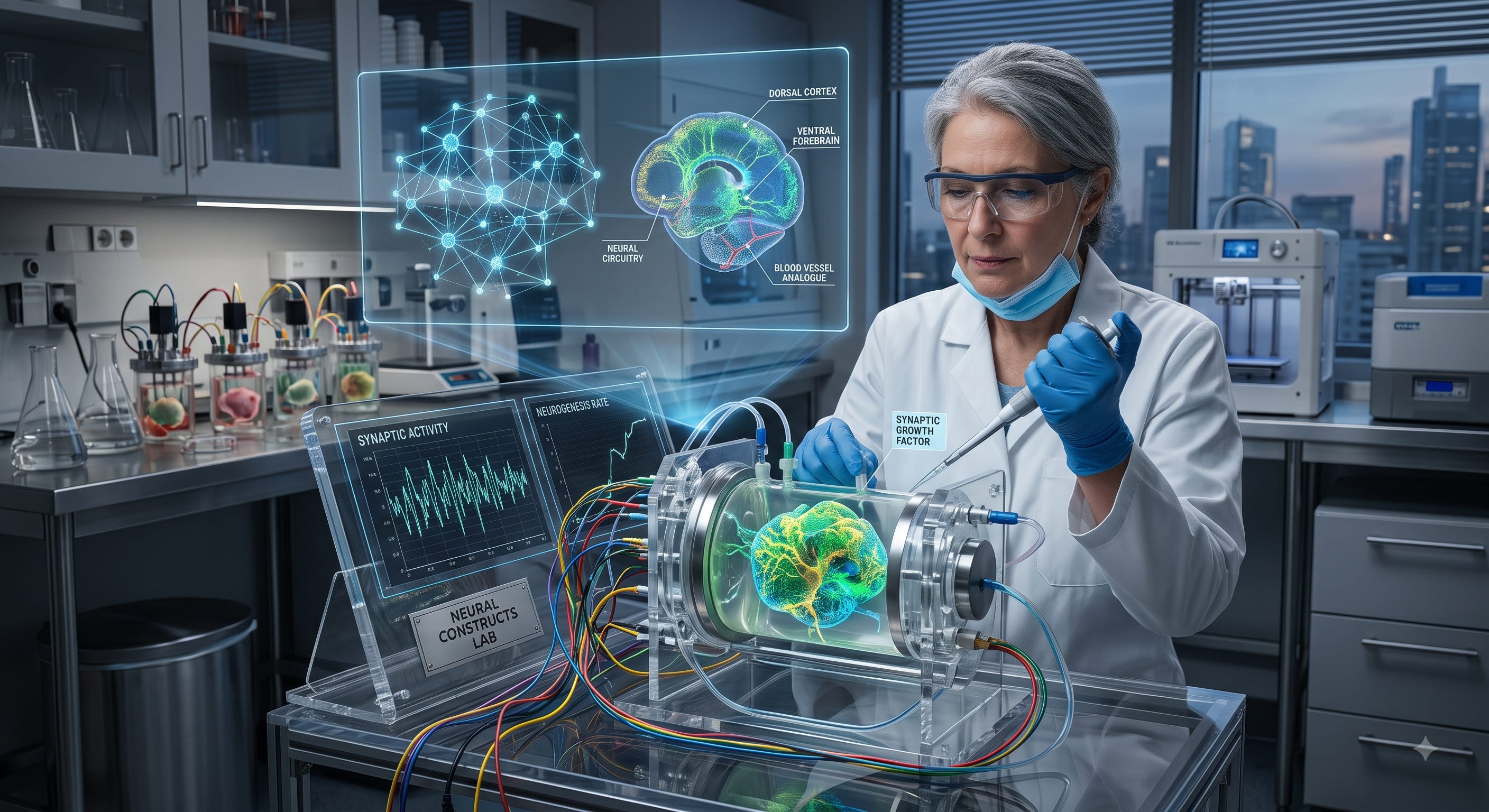
🧠 Computer-powered AI is so 2025, welcome instead to your new overlords: mini-brains created in the lab. Biologists have been cooking up pea‑sized ‘organoids’ grown from stem cells to process information, with early results hinting they could outperform their silicon competition.
The living cell clusters have been linked to electrode arrays that send and read electrical signals and learn to respond to patterns, much like a biological computer processor.
There is also one big advantage of going natural. The human brain runs on roughly 20 watts, while training today’s largest AI models is famously a huge drain on the planet’s resources.
While tech giants race to stack ever more expensive GPUs, pushing consumer tech prices ever higher, a biological alternative coming out of left field would be welcome to anyone wanting an affordable PS6.
However, there are a few issues. Keeping neural tissue alive is tricky and demands tightly controlled ‘life‑support’ conditions, and as organoids learn and adapt, we might walk into an ethical minefield. Read more on The Tech Buzz
❤️ Miniature human organs are to be grown from patients’ cells in a drive to improve medicine testing and reduce the number of animals used in drug development. UK scientists will use the organs to help identify which treatments are best for different people
😎 I’m afraid to report that people with delusions of grandeur get ahead in life. Having excessive self‑belief helps confident people open doors and flourish, even if their arrogance can lead to expensive blunders.
A new study has examined a long‑standing puzzle: if overconfidence fuels risky decisions, failed businesses, and even dangerous driving, why is it so common? Or put it another way, how can the spectacularly inept candidates on The Apprentice each earn so much dosh?
They’ve borrowed the ‘handicap principle’ from biology (essentially, animals who show off to grab a mate) to claim that strong self‑belief is more effective for the genuinely able and so reads as an honest, positive signal to others.
So high confidence brings bigger payoffs to capable people and, at least seemingly, lower costs when things go wrong, creating a ‘confidence arms race’ that leaves a population broadly overconfident in its abilities. Read more on The Conversation
👻 The majority of people who report a paranormal experience say it had ‘positive’ long-term effects. But one-in-four who go through something extraordinary - such as an out-of-body experience or seeing a ghost - report immediate discomfort.
Researchers in Brazil analysed the impact of non-ordinary events - such as unlikely coincidences, near-death experiences and extrasensory perception - on people who live through them.
They found that such experiences are ‘far more common’ than they expected. Study leader Professor Ronald Fischer said:
“Highlighting these possible positive outcomes is important to help people make sense of them and help to normalise them. Importantly, we hope our work can help to remove stigma by focusing on the diverse ways that people experience and make sense of them.”
Most of the people interviewed as part of the ‘Inventory of Non-ordinary Experiences’ felt they had some degree of control over their experience, no matter how strange or wild. Read more on Eureka
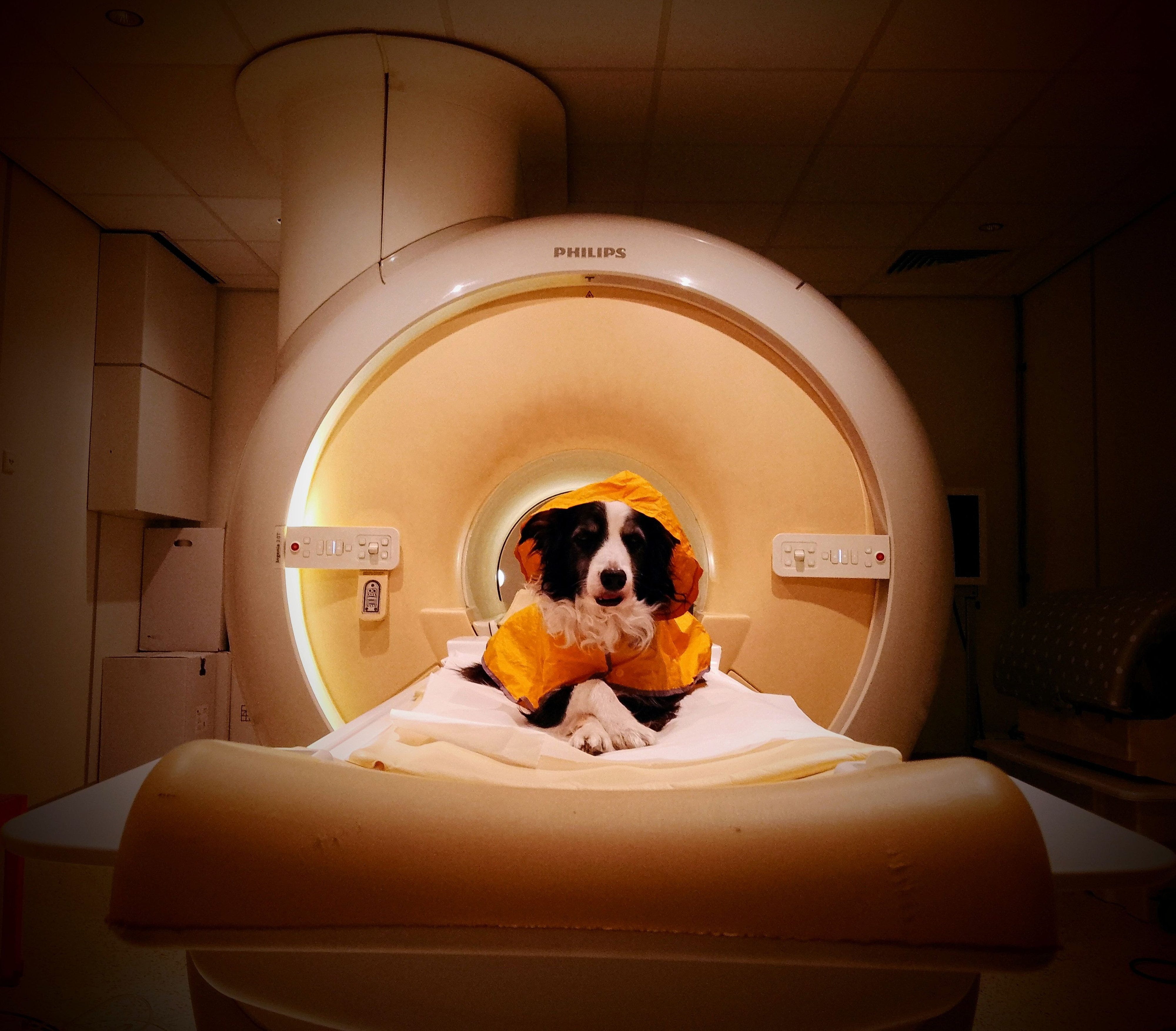
🐶 Dogs really can tell if you are afraid or sad. Pooch lovers have long said their four-legged friends are remarkably good at interpreting the laughs, frowns and tears of people around them - and now science has backed them up.
Researchers peered inside the brains of dogs as they viewed images of various human expressions for the new study. Scans revealed that dogs process smiles in a “unique” brain region.
The study also provided evidence, for the first time, that dogs can distinguish between negative facial expressions - including anger, sadness, and fear.
Study first author Dr Raúl Hernández Pérez, from the University of Vienna, said:
“Humans are really good at picking up small details on the face, and so are dogs. This makes dogs very interesting. By studying their brains, we can understand what adaptations have developed to support their remarkable social and emotional understanding of humans.”
🌌 The largest 2D colour map of the universe ever has been released - featuring nearly four billion stars and galaxies. The 5.6-trillion-pixel map was hatched by the DESI Legacy Imaging Surveys team in the US, who combined more than 263,000 telescope exposures to create it.
Covering around 75% of the sky in visible and near-infrared light, the map provides a deep view free from the dust and stars of our own Milky Way. Researchers expect it will remain the most comprehensive 2D map of our universe for many years to come.
In a Herculean effort, the sweeping portrait uses exposures taken on 2,285 nights over 13 years, stitched together to form an image with a staggering 5.6 trillion pixels. Read more on Space.com
👋 Hello, fellow science geek. If you’re enjoying this newsletter, it would really help me if you could spread the word. Simply forward this email to a friend, and they can sign up here or click the share button below.
What’s Up, Doc?
🍽️ It’s not what we eat, but when we eat, that could be the key to staying healthy. In the UK and US, it’s more usual to have a light lunch followed by a bigger meal in the evening - but we may have got things backwards
⚖️ Belly size is a better predictor of heart disease than body mass index. It turns out that BMI, often much-maligned, doesn’t reflect overall body composition, as abdominal fat is not taken into account
🖥️ Heavy internet users are grumpier, more stressed, and more tempted than other people. Researchers found that people described as ‘problematic’ users report higher stress, worse mood, and greater neglect of other activities than those who surf the web sparingly
🏃♀️ Even cutting just 15 minutes off your daily run increases the risk of cancer, according to a new study. It appears that we’d probably spend the quarter of an hour sitting on the sofa and watching TV instead
☀️ The highest-resolution image of the Sun's surface ever captured has been taken by the Inouye Solar Telescope in Hawaii. It reveals small, swirling, whirlpool-like patterns that could fundamentally change how we understand the physical mechanisms driving our star and its impacts on life on Earth.
What has AI ever done for us?
🦠 AI has designed working viruses in a lab for the first time. Gulp. US researchers used an AI model called Evo to generate genetic sequences for bacteriophages, viruses that infect bacteria, not humans. It was trained on millions of genetic sequences from animals, plants, microbes and viruses, learning to spot patterns in DNA and generating new genetic designs. While the AI-designed viruses do not pose a direct threat to human health, I really want to add ‘yet’ into the sentence!
"The task is not so much to see what no one has yet seen; but to think what nobody has yet thought, about that which everybody sees."
Erwin Schrödinger
Weird Science Factoid
Sloths are strange creatures, so much so that they can starve to death on a full stomach. If the temperature gets too chilly, the bacteria in their stomachs wave a little white flag and give up digesting the fibrous leaves the animal relies on
🤖 Robots, of course, will soon rule the world. And there’ll be no hiding from them. The Figure 03 humanoid machine has been filmed climbing up a ladder, and for some reason, I find it faintly terrifying!
🫐 Seedless blackberries and cherries that grow on bushes are vying to be the future of food. There’s a race on to create gene-edited crops that taste better and grow on a hotter planet
🌠 The earliest written record of a meteor shower, dating back more than 3,000 years, has been found. The observations were made during the reign of the Shang Dynasty, about the time in which Homer's Odyssey was set
🛰️ Currently cruising in interstellar space, Voyager 2 was in real danger of running out of power until NASA stepped in to buy the probe more time. They shut down certain power-hungry hardware and switched to lower-power alternatives while keeping the spacecraft warm enough to carry on
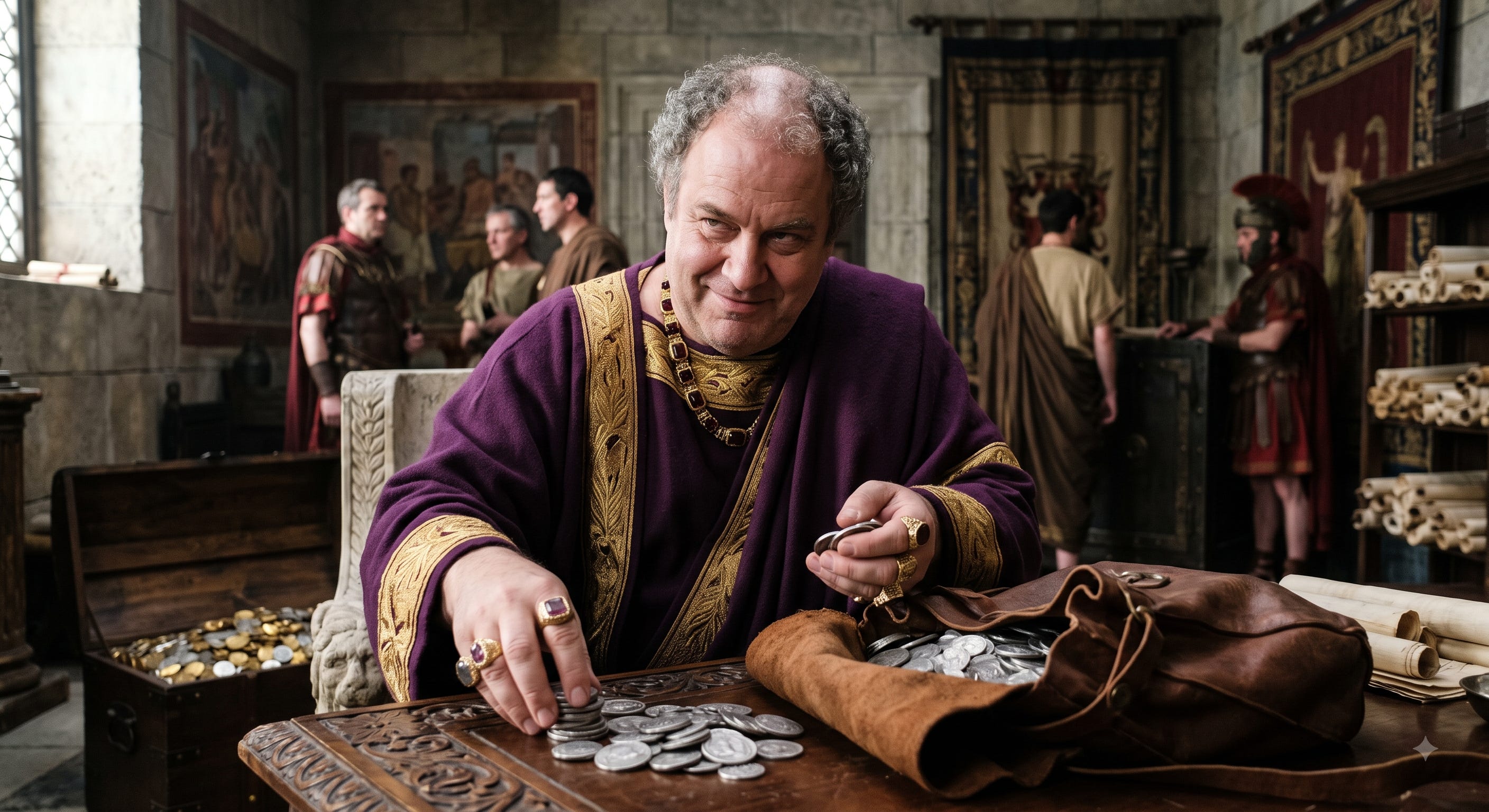
💰 Archaeologists have unearthed new details of a Roman tax scandal that sounds all too familiar today. It turns out that for over a decade, tax collectors in the province of Caria were underreporting the cash they had amassed to government officials and pocketing the difference
💎 Chinese scientists have created a new type of diamond that cannot be broken. Old-fashioned diamonds are famously hard, but they have a major weakness: they are brittle, like glass. But the new version is six times as tough
Fortune runs out
Fret not, ye astronomer
Get happy
Psyche captures stunning time-lapse video of its Mars encounter
Scientists link four-hour rule before bed to sharper memory and lower dementia risk
About TWSD
Science is weird, and here’s the proof. The Weird Science Drop goes where other, more-sensible newsletters fear to tread. Every week, we grab our trusty white lab coat, bunch of bubbling test tubes and world-ending robot prototype to go in search of the overlooked, under-the-radar and, above all else, most madcap science news, views and research.
Daniel Smith is an ancient experienced journalist who has worked for a host of news publishers on both sides of the Atlantic. A long, long time ago, he fancied himself an astrophysicist but turned out to be the worst scientist since the man who mapped all those canals on Mars, which turned out to be scratches on his telescope’s lens. Luckily, he is not working on the Large Hadron Collider, inadvertently creating a black hole that would swallow the world by pressing the big red button, but is safely behind a desk writing this newsletter, bringing you the fantastical underbelly of nature... The Weird Science Drop.
No posts
Comments
Nothing yet. Say the first thing.
Sign in to join the conversation.