
“Selamat datang* It’s a somewhat abridged TWSD this week as I’m not really here; this is a hologram and the real Daniel is off, enjoying a little R&R. Normal service will resume next week. As ever, if you like what you see, please consider liking, sharing and, if you’re really stout of heart, subscribing.”
Daniel
* Welcome in Malay
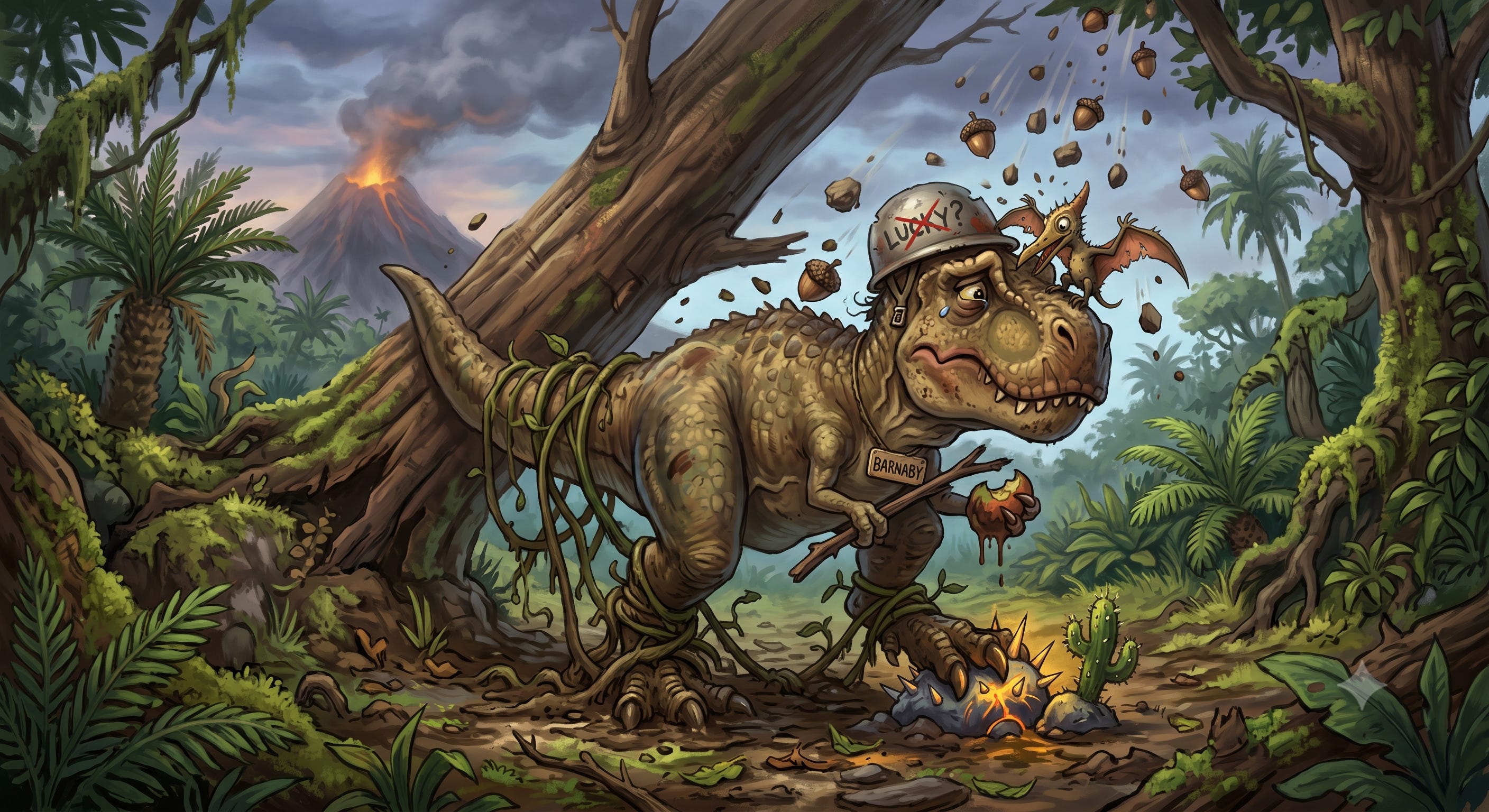
🦖 When your luck runs, your luck runs out. Just ask the dinosaurs. Well, if you could. They’re all gone now, apart from birds, thanks to an ‘oddball’ meteorite that struck the planet 66 million years ago.
New research says fine debris thrown into the atmosphere by the space rock, rather than chemicals, was most likely responsible for killing off 75% of Earth’s species - including the iconic reptiles.
An international research team identified that the six-mile-wide Cretaceous-Palaeogene meteorite responsible for the dinosaurs’ extinction was a rare carbon monoxide chondrite.
This meant that when it slammed into the Earth’s surface at an estimated 40,000mph, it threw up fine debris that blocked out the sun and plunged the world into an icy darkness for over a decade.
Carbon monoxide chondrites make up a tiny fraction of the space rocks found on Earth, and are some of the most primitive and untouched materials in the solar system. This makes being hit by one extremely unlucky indeed. Read more on the Daily Star
🌍 The ground beneath our feet bears the fingerprints of the galaxy above. Rather poetic, eh? Pretty pleased with that one. A new study argues that Earth’s earliest continents were nudged into being not just by internal geology, but also by our Solar System’s long trek through the Milky Way.
According to a team from Australia, as we orbit the galactic centre roughly every 250 million years, we plough through denser spiral arms every 200 million years or so.
Those regions can jostle the distant Oort Cloud - a vast shell of icy objects hanging out in the far reaches of the Solar System - sending comets sunward and towards us.
A spike in big impacts on the young Earth, the team suggests, could have helped create the first stable ‘seeds’ of continental crust.
The next step lies beyond Earth. If similar timing shows up in the mineral records of the Moon or Mars, that would strengthen the case for a galactic hand in shaping rocky worlds. Read more on Science Alert
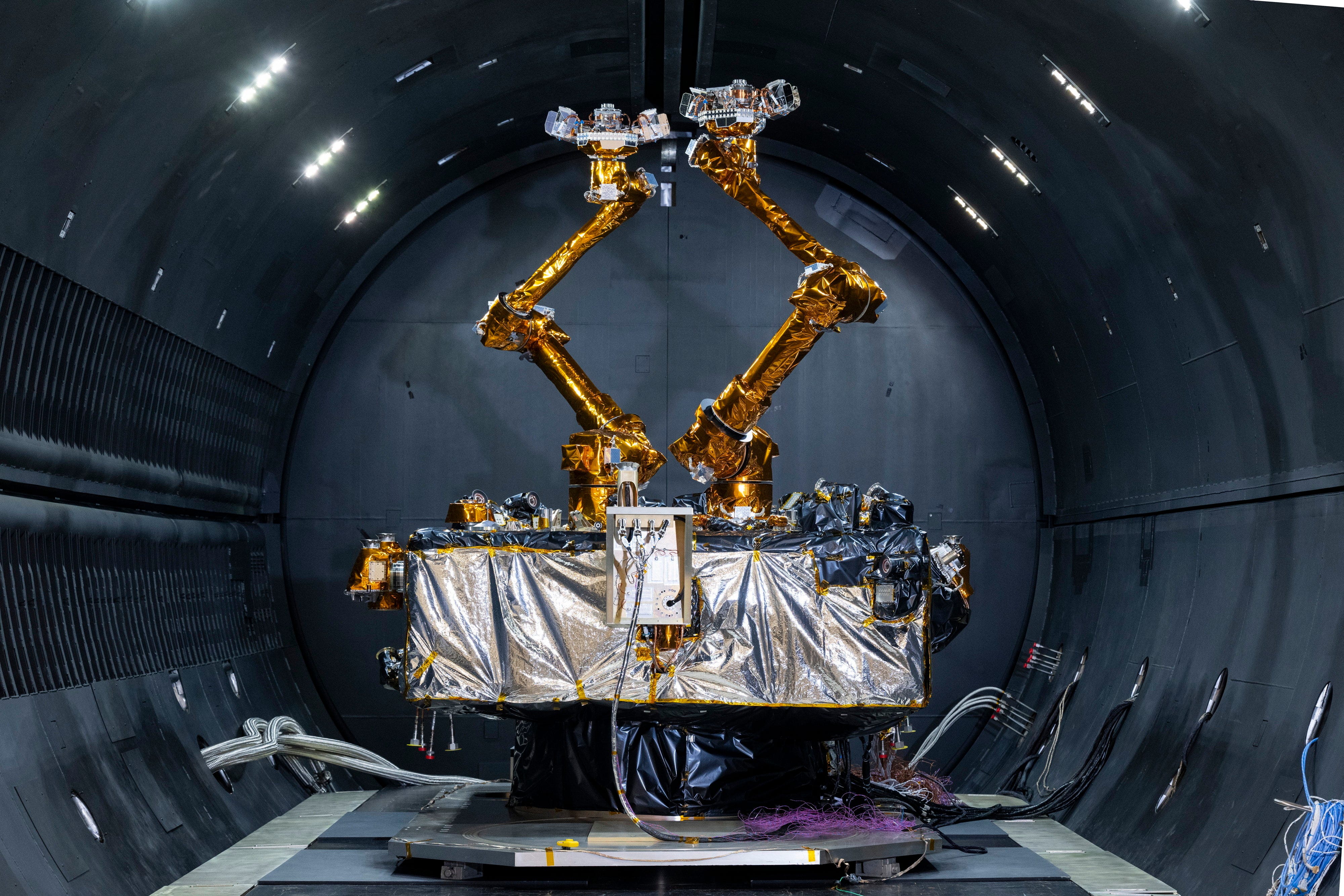
🛰️ A US spacecraft with two robotic arms designed to service satellites - but with potential to destroy enemy assets - has been launched. The Robotic Servicing of Geosynchronous Satellites (RSGS) is designed to extend the life of satellites in orbit.
Or that’s what the US Space Force would like us to think. Military website TWZ reports that, in response to a question whether offensive versions of the spacecraft could be used to disable adversary satellites, developer Northrop Grumman’s CEO Kathy Warden said:
“I will leave it up to the US government to decide how that capability might fulfil mission objectives that they have in that regard. Certainly, it’s our objective to offer our clients options for technology deployment and for them to determine policy for when and how they might deploy that technology.”
Errr… so that’s a big yes then. It doesn’t help that the whole exercise is funded by DARPA, the US Department of War’s research agency, which kind of gives the game away.
The launch follows President Donald Trump’s announcement last year of the $175billion ‘Golden Dome’ missile defence system, a space- and ground-based shield intended to intercept missiles fired at the United States from anywhere in the world. Read more on TWZ
👋 Hello, fellow science geek. If you’re enjoying this newsletter, it would really help me if you could spread the word. Simply forward this email to a friend, and they can sign up here or click the share button below.
What’s Up, Doc?
💊 A daily multivitamin pill really does help pensioners maintain their physical well-being, so says new research. Popping a daily vitamin tablet provides ‘modest but meaningful’ improvement in everyday activities - such as dressing, bathing, walking and climbing stairs - for people over the age of 60
🍽️ Confining meals to a nine-hour daily window and not eating at least four hours before bedtime could help stave off dementia. A clinical trial examined older women carrying excess weight and discovered that those who narrowed their eating hours showed sharper cognitive performance than those who did not
❤️ The US has just OK’d a breakthrough in heart disease treatment that promises to transform how millions of people manage high cholesterol. The US Food and Drug Administration has approved Lipfendra, the world’s first oral PCSK9 inhibitor, offering patients a once-daily pill that lowers bad cholesterol by nearly 60 per cent
"The brain is a wonderful organ; it starts working the moment you get up in the morning and does not stop until you get into the office."
Robert Frost
Weird Science Factoid
Lobsters don't die of old age. They produce an enzyme called telomerase that continuously repairs their DNA, allowing them to regenerate indefinitely. They usually die from exhaustion while shedding their heavy shells, or from disease or getting eaten up by predators (including us).
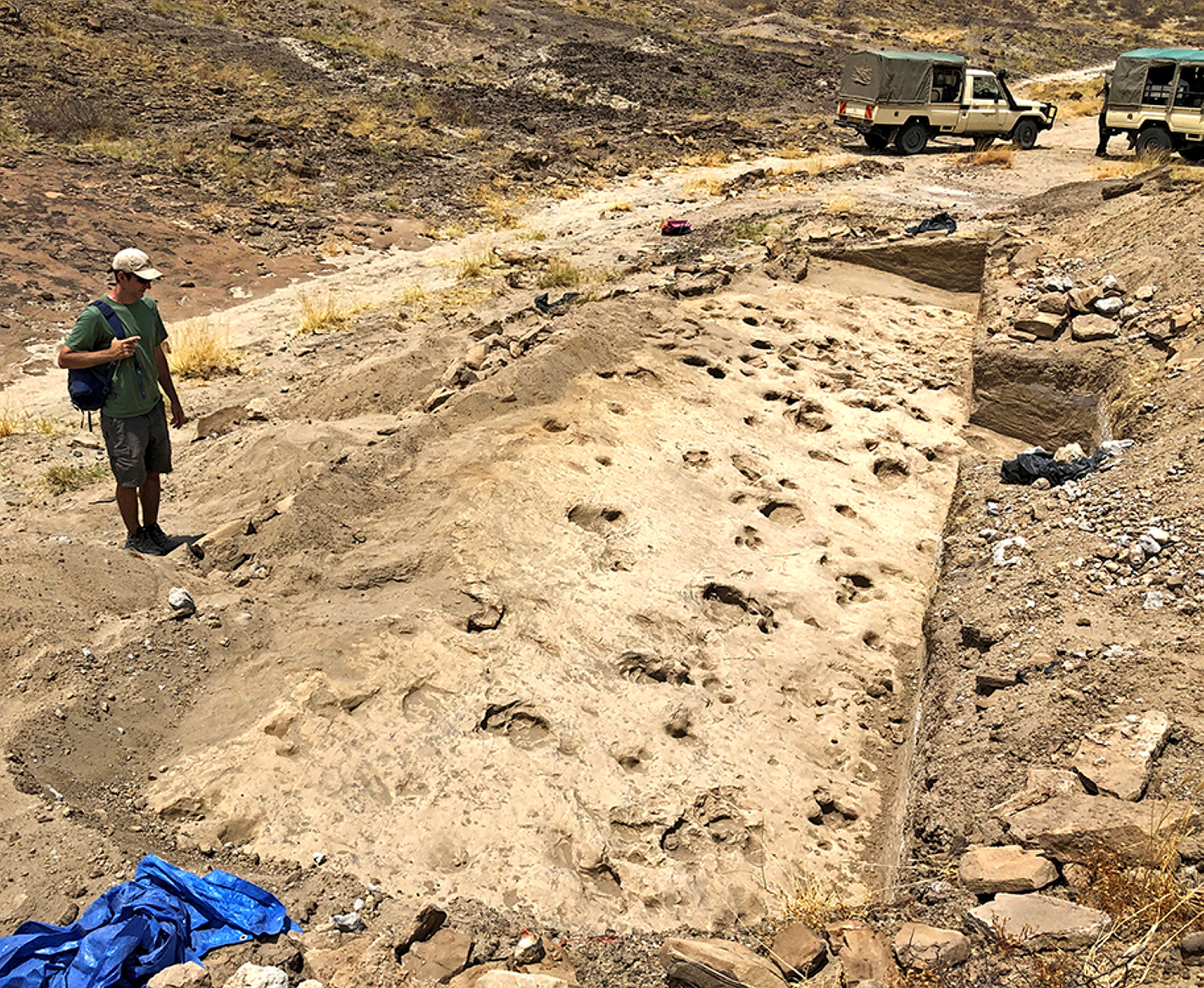
👣 Fossil footprints reveal that an ancient human relative was much taller than previously thought and travelled in groups 1.4 million years ago. Scientists say the trackway in northern Kenya preserves a ‘snapshot’ of how individuals of an ancient hominin species interacted with one another
🔥 Researchers in China have developed a new metal alloy capable of maintaining its strength at temperatures as high as 2,400 degrees Celsius. The specially engineered tantalum-based material is perfect for hypersonic aircraft, spacecraft, rocket engines and next-generation nuclear reactors
🧠 In a huge boon for recycling, American and South Korean scientists just fed water bottles, shopping bags and yogurt tubs into a single reactor without sorting them first - and got 90% pure hydrogen in return. The tiresome trouble of manually separating bags and bottles means that currently 79% of discarded plastic gets sent to the landfill
🧈 A spacecraft that skimmed by Mars has created a trippy timelapse video, man. The Psyche probe got within 2,800 miles of the Red Planet while using the rouge world to get a speed boost on its way to an asteroid. Groovy
Fret not, ye astronomer
An international group has agreed on a fresh playbook for how humanity should respond if we detect signs of intelligent life - and, like something out of The Hitchhiker’s Guide to the Galaxy, it starts off with don’t panic!
Get happy
Alien power plants
About TWSD
Science is weird, and here’s the proof. The Weird Science Drop goes where other, more-sensible newsletters fear to tread. Every week, we grab our trusty white lab coat, bunch of bubbling test tubes and world-ending robot prototype to go in search of the overlooked, under-the-radar and, above all else, most madcap science news, views and research.
Daniel Smith is an ancient experienced journalist who has worked for a host of news publishers on both sides of the Atlantic. A long, long time ago, he fancied himself an astrophysicist but turned out to be the worst scientist since the man who mapped all those canals on Mars, which turned out to be scratches on his telescope’s lens. Luckily, he is not working on the Large Hadron Collider, inadvertently creating a black hole that would swallow the world by pressing the big red button, but is safely behind a desk writing this newsletter, bringing you the fantastical underbelly of nature... The Weird Science Drop.
No posts
Comments
Nothing yet. Say the first thing.
Sign in to join the conversation.