
“Benvegnuo* to a shiny new TWSD. Where did we come from? Scientists have had a pretty good grasp of this question, but now they might have to throw their assumptions into the bin and start again. Also this week: languages are dying out, one dose of magic mushrooms can transform the brain, and a mysterious molecule has been found on two disparate worlds in our solar system. If you enjoy what you see, please like, share and subscribe!”
Daniel
* Welcome in Ligurian, spoken by half a million people in northern Italy, France, Monaco and Sardinia
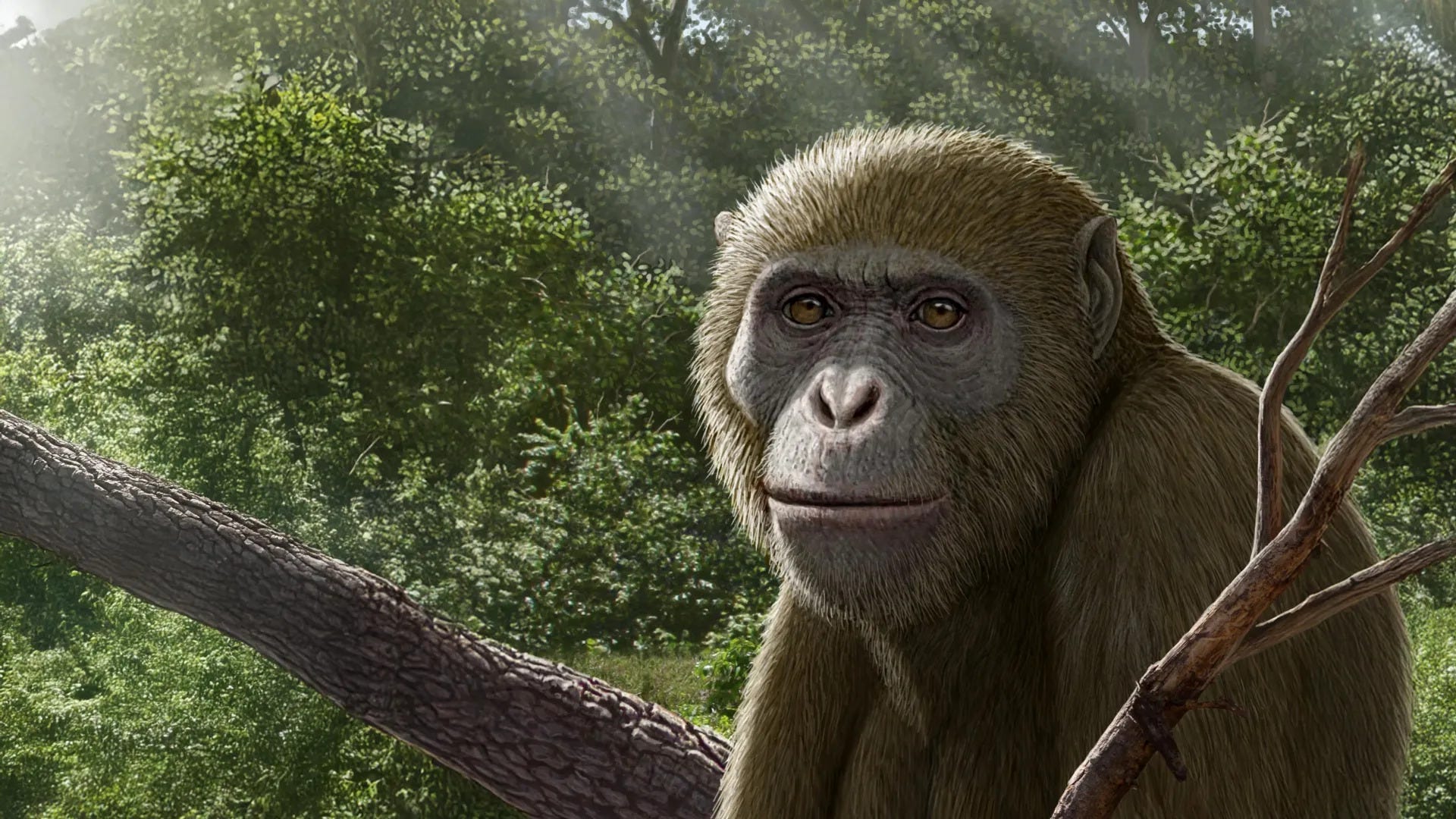
🐵 A previously unknown ape found in northern Egypt could rewrite the human story. The species Masripithecus moghraensis lived around 18 million years ago and is the first confirmed ape from that era to be found in North Africa.
The fossil, a sturdy section of lower jaw discovered at Wadi Moghra, carries a mix of traits not seen in other apes of the same age: notably large canine and premolar teeth, rounded, strongly textured molars and a robust jaw.
These point to a mainly fruit-based diet with the knack for crunching harder fare like nuts and seeds when times were lean - a handy bit of versatility.
Using advanced analyses, a research team found Masripithecus sits closer to living apes than any known ape at the time from East Africa, where we have always thought we sprang from.
Their biogeographic modelling points to northern Africa and the Middle East as the most likely homeland of the common ancestor of today’s apes - and us. Read more on Science Daily
👴 How long could a human really live if medicine cracked almost every part of ageing? A new study from the Skolkovo Institute of Science and Technology in Russia reckons the theoretical ceiling might be as high as about 190 years - that’s 120-odd years of retirement!
Researchers built a model that looked solely at somatic mutations — tiny copying errors that creep into our DNA each time cells divide. Most are harmless, some lead to cancers, and over decades they gradually hobble cell function across tissues. In simulations where every other ageing driver was removed or treated, average lifespans stretched to roughly 146–194 years.
That’s a big leap from today’s reality. Office for National Statistics figures put UK life expectancy at about 79.9 years for men and 83 years for women. And even if medicine keeps improving, some organs pose hard limits: skin and liver cells replenish regularly, but heart and brain cells mostly don’t, so damage accumulates regardless.
The findings land amid a surge of longevity efforts. In the US, Life Biosciences has FDA approval to test a rejuvenation therapy aimed at restoring optic‑nerve function - a first step to see if such techniques can reverse damage in people. Read more on the Metro

👽 An international group has agreed on a fresh playbook for how humanity should respond if we detect signs of intelligent life - and, like something out of The Hitchhiker’s Guide to the Galaxy, it starts off with don’t panic! The 2026 update to the International Academy of Astronautics (IAA) post‑detection declaration also expands the search to ‘technosignatures’ such as short optical laser pulses and the faint infrared glow that might leak from vast alien-built structures.
The overhaul outlines a coordinated path from the first hint to confirmed discovery. It calls for independent verification by multiple teams, transparent public disclosure at every stage, formal protections for researchers, robust archiving of all data, and long‑term governance to prevent rushed decisions under pressure.
For decades, SETI largely meant pointing radio dishes at the sky. The new approach acknowledges the wider toolkit astronomers now have - from cutting‑edge optical surveys to heat‑mapping telescopes - and the range of signals advanced technology could produce.
Crucially, the declaration emphasises patience and process. If a candidate signal turns up, scientists would share raw data, invite outside checks, and log every step before anyone shouts out ‘we’re not alone’. Read more on UFO-UAP News
🛸 Alien life likely can’t survive on exoplanets smaller than Mars. Rocky worlds tinier than the Red Planet are unlikely to be able to hold on to their atmospheres long enough for aliens to pop up
🗣️ We’re in the middle of a language extinction. Thousands more different languages were spoken in the past than today, with the ‘golden age’ of linguistic diversity being thousands of years behind us.
The long decline that continues to the present day began well before European colonial expansion, according to the findings published in the journal Science.
It’s estimated that up to 6,200 languages were spoken at the beginning of the Holocene period, around 12,000 years ago, compared with the roughly 7,500 languages spoken and signed today.
However, models suggest tens of thousands of languages may have existed between 1,000 and 3,000 years ago, with the decline appearing to have begun with the expansion of large states and empires.
So the languages spoken today represent a mere ‘small and historically biased’ sample of past linguistic diversity. Read more on Max-Planck-Gesellschaft
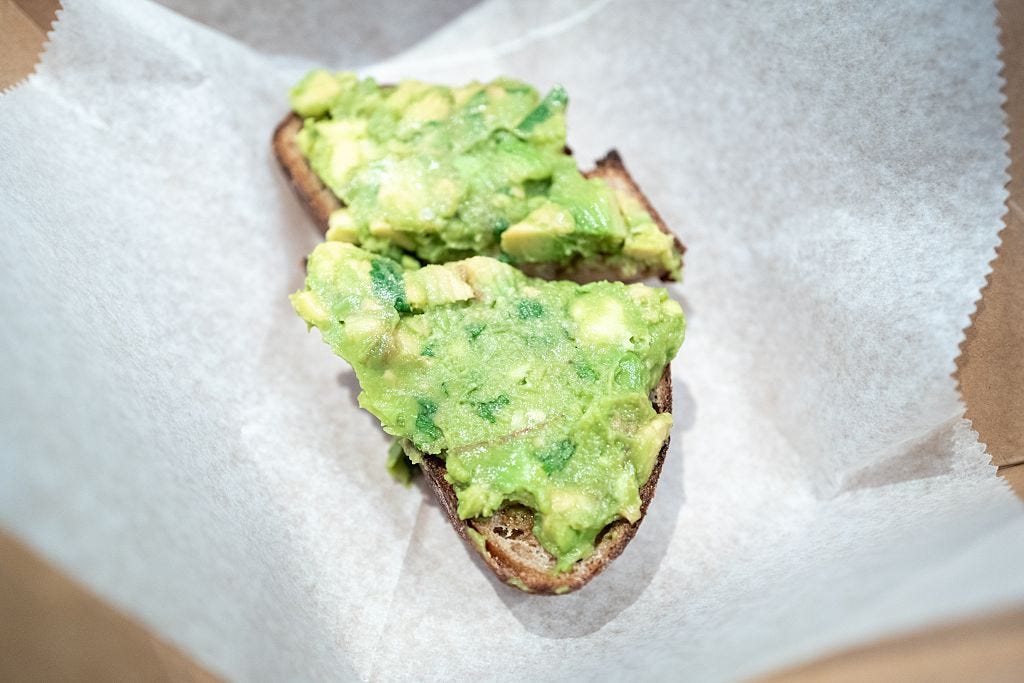
🥑 Special avocados discovered in Nicaragua could lead to more ‘superfoods’ rich in nutrients and healthy fats. The genetically distinct fruit has been discovered in a ‘hotbed’ of avocado diversity, which could boost sustainable agriculture and commercial varieties of the trendy foodstuff.
Researchers uncovered genetic traces of ancient migration in DNA from avocados and evidence that, around 5,000 years ago, people migrating north from South America carried oversized avocado seeds.
As the seeds were dispersed throughout the humid lowlands of Central America, they mixed with native varieties, producing a diversity of avocados that bear the large, smooth-skinned berries now enjoyed across the region.
Despite resembling the avocados found in humid regions such as Florida and the Caribbean, the local varieties are genetically distinct from the commercially grown fruits found in guacamole.
More than 80% of the avocados sold worldwide are a single variety, the Hass avocado. As a result, most avocados in grocery stores are genetically indistinguishable and vulnerable to threats. Read more on Smithsonian
👋 Hello, fellow science geek. If you’re enjoying this newsletter, it would really help me if you could spread the word. Simply forward this email to a friend, and they can sign up here or click the share button below.
What’s Up, Doc?
👴🏻 A natural molecule found in drugs like Ozempic and Mounjaro has been linked to a surprising hair loss risk in people with type 2 diabetes. GLP-1 users had a significantly higher rate of alopecia, although the hair loss was mainly non-scarring, which means it may be reversible
💪 Scientists have discovered a compound that could supercharge ageing muscle repair. The sulfur-based LASSS appears to protect and boost a key protein involved in fixing damaged muscles
🔥 Getting rid of an old gas stove can help asthmatics as much as some drugs, says new research. A US team found a 70% drop in hospital admissions and days off from work or school when people with poorly controlled asthma had their gas stove and hob replaced with electric
🍄 A study has found that one single dose of magic mushrooms can transform the brain physically - with changes lasting as long as a month. Researchers say the ‘shrooms can be used to treat anxiety, depression and addiction
💊 An aggressive prostate cancer has been stopped from spreading by a new antibody drug. The medicine’s unusual mechanism could open the door to a safer new treatment for advanced tumours
🩸 The risk of a stroke can be accurately predicted using a new ‘artery-on-a-chip’ tool. The device replicates in detail a patient’s specific vascular structure and blood flow dynamics
😮💨 A breathalyser that sniffs out when the body starts burning fat could revolutionise the treatment of obesity, diabetes, epilepsy, and other metabolic conditions. The handheld device measures acetone - a molecule released when the body burns fat - in about 90 seconds
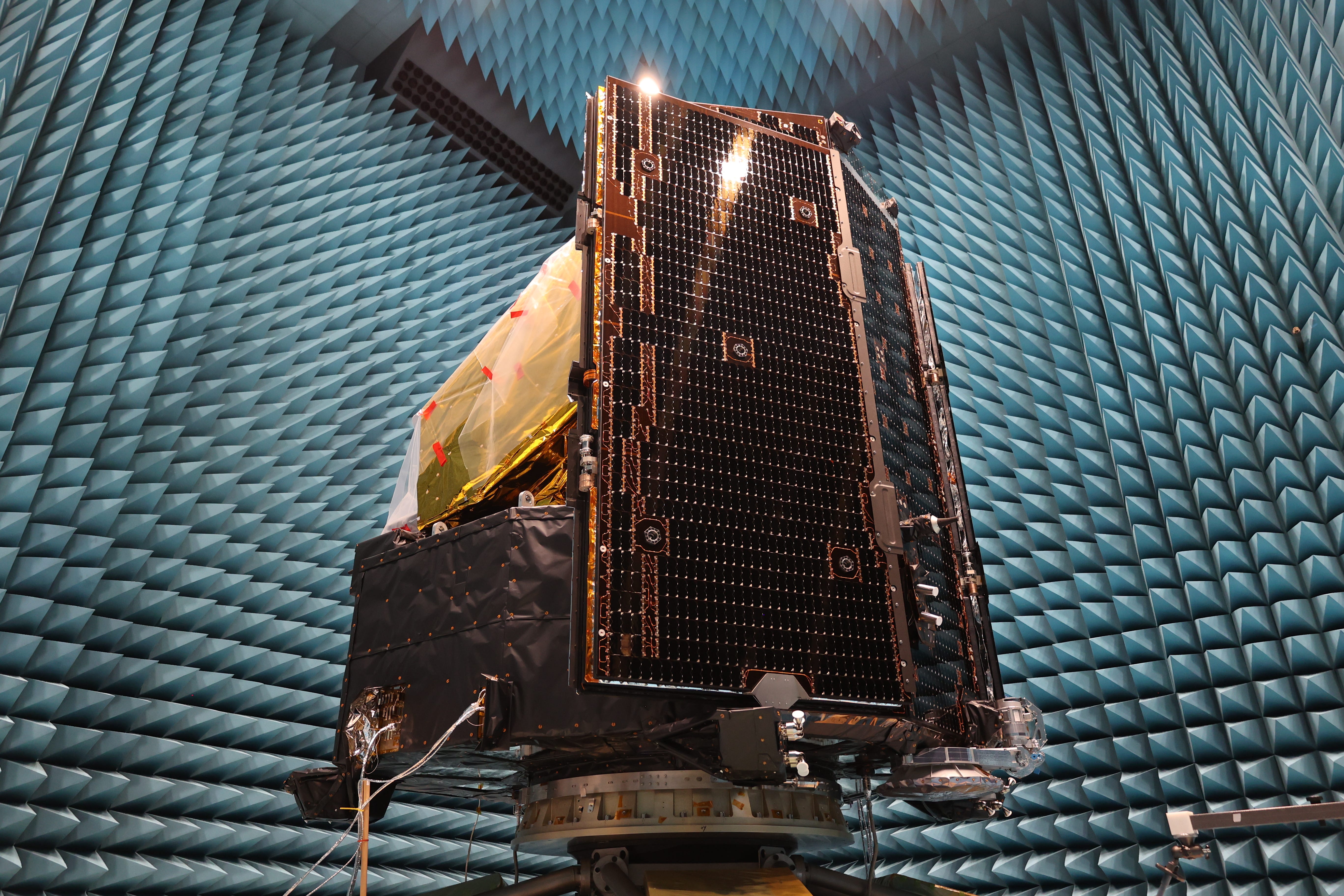
A spacecraft that will scan the skies for life-friendly planets orbiting other suns is getting ready for launch. Plato is shown above undergoing crucial tests in a special chamber that blocks out all sound and electromagnetic fields to mimic the vacuum of space.
A team from the European Space Agency turned on Plato's electronics to make sure that signals from some of the probe's instruments don't interfere with other systems or electronics on the craft.
Plato launches next year and will spend up to eight years searching 100 million stars looking for signs of rocky exoplanets that sit in the ‘habitable zone’ and where liquid water flows.
What has AI ever done for us?
📹 According to a new report from the Wall Street Journal, hundreds of users globally asked ChatGPT last summer how to make poisons and bioweapons - and the ever-helpful AI answered with instructions meted out ‘patiently’, and at the skill level of a high school student. So far, most of the sinister forms of assistance consumer-grade AI chatbots have allegedly provided to bad actors is more along the lines of general advice and encouragement than anything that sounds like a major power-up for bad guys.
"The distance between insanity and genius is measured only by success."
Bruce Alberts
Weird Science Factoid
Your body is gold. An average human weighing 70kg (154lbs) contains about 0.2 milligrams of pure gold. Most of it is dissolved in your blood and distributed across your organs. While you can’t exactly mine yourself for wealth, it plays a role in cellular functions and joint health alongside other trace metals like copper, zinc, and iron.
🦟 China is testing a controversial ‘laser weapon’ that can kill 30 mosquitoes a second. The portable mosquito air defence system - called the Photon Matrix - has attracted millions of crowdfunded bucks despite a few doubts over how it works
🧪 A mysterious molecule has been found on both Pluto and Saturn’s moon Titan, and no one knows why it’s there. Despite being radically different worlds, they share an identical, unexplained infrared signature on their surfaces
🌍 Here’s something cheery: Earth’s oceans are rapidly losing oxygen, and it could destabilise the entire planet. Human activity is draining the element from marine waters, and we need to brace ourselves for what that actually means
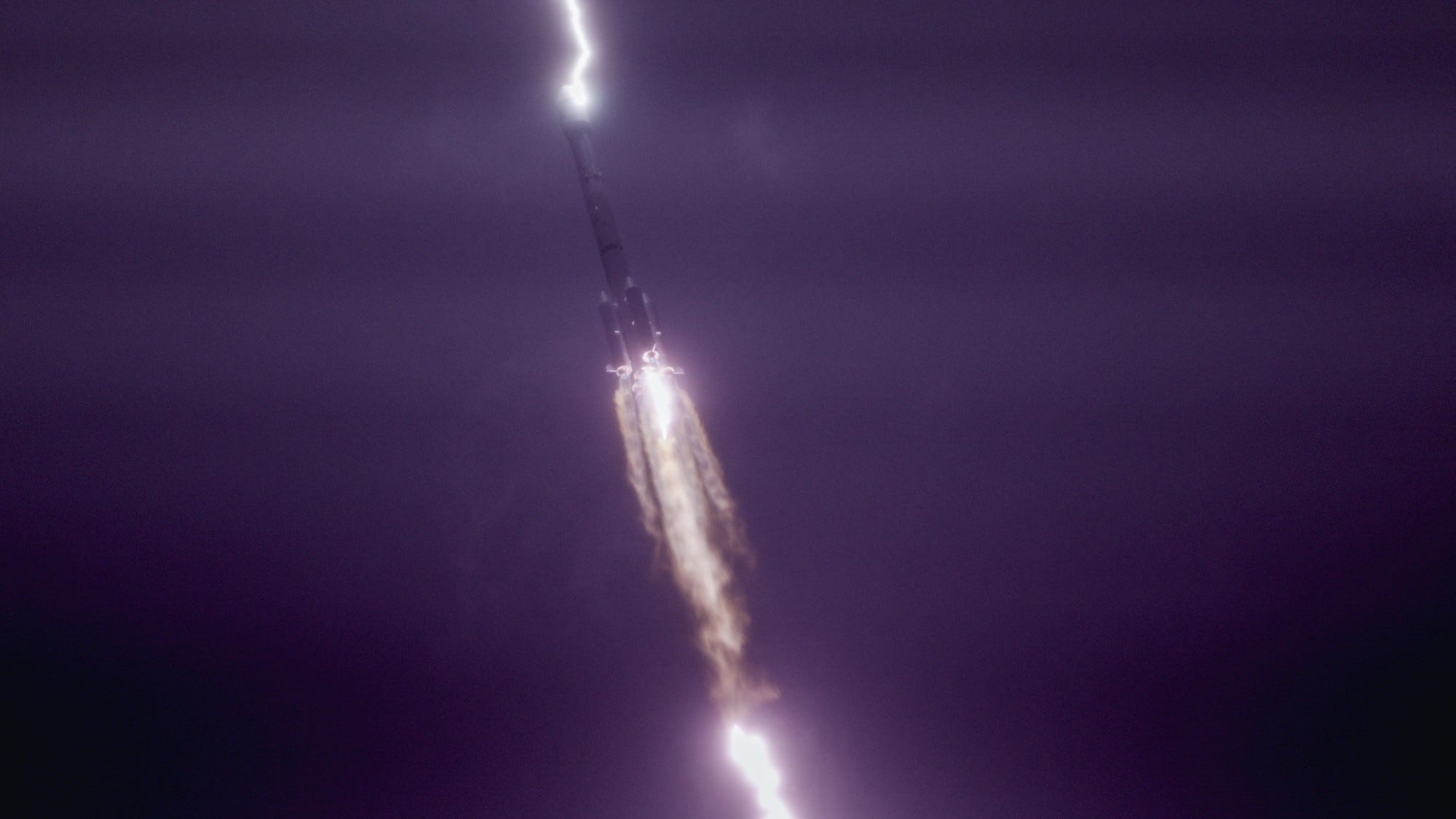
🌩️ Lightning struck a Chinese rocket 30 seconds after liftoff in a spectacular display that drew gasps from crowds gathered to watch the launch. Despite the strike, the Long March-3B rocket delivered a communications relay satellite to its intended orbit as planned
🌌 We’ve seen a unique nova explosion fire cosmic ‘bullets’ through the Milky Way at 20 million miles per hour. The Hubble Space Telescope spotted clumps of oxygen-rich gas being shot out by the only known ‘helium nova’ in our galaxy
🌀 Also spotted in the heavens this week is a massive galaxy that’s assembling piece by piece just 1.2 billion years after the Big Bang. Six small, young galaxies are in the process of merging to create one huge whopper
Get happy
Alien power plants
No more silver foxes
WHO says almost half of dementia cases ‘preventable’ with new health guidelines
The truth about cold and flu tablets – and what you should take instead
Common sleep supplement may also ease chronic pain, review of 23 trials reveals
About TWSD
Science is weird, and here’s the proof. The Weird Science Drop goes where other, more-sensible newsletters fear to tread. Every week, we grab our trusty white lab coat, bunch of bubbling test tubes and world-ending robot prototype to go in search of the overlooked, under-the-radar and, above all else, most madcap science news, views and research.
Daniel Smith is an ancient experienced journalist who has worked for a host of news publishers on both sides of the Atlantic. A long, long time ago, he fancied himself an astrophysicist but turned out to be the worst scientist since the man who mapped all those canals on Mars, which turned out to be scratches on his telescope’s lens. Luckily, he is not working on the Large Hadron Collider, inadvertently creating a black hole that would swallow the world by pressing the big red button, but is safely behind a desk writing this newsletter, bringing you the fantastical underbelly of nature... The Weird Science Drop.
No posts
Comments
Nothing yet. Say the first thing.
Sign in to join the conversation.