

“Benvingut* to a happy, smiley edition of TWSD. We’re all in the pursuit of happiness, but how many of us actually get there? Well, it turns out science can help. Research says following just three straightforward guidelines will put you on the right path. Also this week: a rocky super-Earth has an atmosphere, common flu tablets don’t work, Doomsday Glacier is in peril, and Romans saw UFOs. If you enjoy, please consider sharing/subscribing.”
Daniel
* Welcome in Catalan
☺️ We’re told happiness is the key to life - but most of us have trouble finding it and often find the things that are supposed to make us happy just don’t. Unless… yes, science can help put a smile back on your face if you choose to follow three rather simple rules. And you don’t need a stack of cash, either.
Talk to strangers: We consistently underestimate how good everyday chit‑chat can make us feel. A 2014 commuter experiment found that people who intentionally struck up conversations reported brighter journeys, and a 2022 review showed that we routinely misjudge the benefits of small social interactions. A 2020 analysis suggests our fears about awkwardness are mostly overblown. As someone who has an inherent mistrust of people I don't know, as well as being a grumpy so-and-so who can’t be bothered to talk to strangers, this sounds like my version of hell!
Value time over money: A 2019 Science Advances study tracking graduates found those who prioritised time chose more rewarding activities and were happier a year later. An earlier review from UCLA and Harvard indicates money helps most when used for others, for experiences, or to buy back time - think gifts, gigs or cleaners - rather than on more stuff. As someone who is surrounded by ‘things’, this has a ring of truth about it. Although I dare say you need ‘some’ money to pull this off.
Stop chasing happiness: Trying too hard can backfire. A 2011 study linked placing a high premium on happiness to lower mood in low‑stress moments and even dulled response to uplifting clips. In 2017, researchers found that those who accept their thoughts and feelings, rather than trying to control them, tend to fare better psychologically. So, as Homer Simpson once said to Bart: “The lesson is, never try”.
So for most of us, a friendly chat, more time, and less pressure to ‘be happy’ could go a long way. Let’s all do this and report back in a few weeks! Read more on Popular Science
🐬 A young whale who had been stuck in an Australian estuary for two weeks has been rescued by a super helpful pod of dolphins. The 10.6‑metre youngster, nicknamed ‘Gail the Whale’ by locals, entered the estuary at the end of June and struggled with its shallow sandbars until last week, when onlookers reported coastal dolphins appearing alongside and shepherding it across a tricky bar and into the channel to sea.
Geographe Marine Research’s director, Rodney Peterson, said a well-timed high tide and a falling barometer helped create just enough depth, with the whale finally slipping through after a couple of failed tries.
Marine educator Emily Ehlers, from the Dolphin Discovery Centre, said dolphins are known to assemble in loose formations and use vocalisations to steer disoriented whales towards deeper water, a behaviour seen in previous Aussie strandings.
Authorities say if the whale re-enters the waterway, there is now less concern, given it has demonstrated a safe route between the estuary and the ocean. Locals who watched over the animal for weeks cheered its return to the big blue. Read more on ABC
🔭 An incredibly smart Maya astronomer and mathematician now has a name. Archaeologists working in Guatemala have identified him as Sak Tahn Waax, translated as ‘White-chested Fox’.
‘Foxy’, as I’ll call him, is the author of a table of dates, recorded more than 1,200 years ago, that lays out the relationships among the cycles of Venus and Mars and several cycles of the Maya calendar over an eight-year span.
All this is painted on the wall of a ruin, and now researchers have spotted in among the calculations a phrase akin to ‘so says’ preceding a personal signature, attributing the work to Foxy.
This marks the first known case of a Maya astronomer being credited for their work. These stargazers mapped the heavens with astonishing naked-eye precision, far exceeding the accuracy of anyone in Europe at the time. These celestial observations were vital for agricultural planning, timing religious rituals, and governing. Read more on Science News
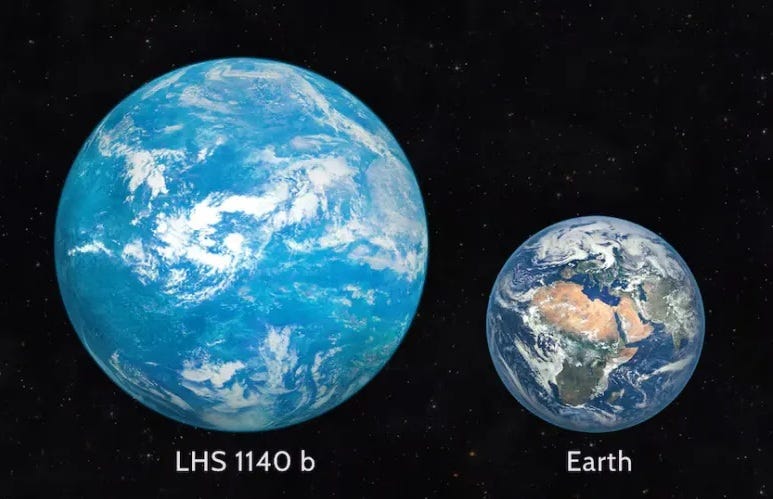
🪐 A rocky planet 49 light-years from Earth has become the most promising candidate yet for alien life after scientists confirmed it has an atmosphere - an essential prerequisite for life.
The planet - called LHS 1140 b - is a ‘Super-Earth’, around 70% bigger than our home, and was discovered 10 years ago, but a new report reveals that astronauts have discovered helium leaking from it, indicating the planet has an atmosphere.
This is a breakthrough for scientists who say it’s the closest we’ve come to finding a planet that could support life. Study lead author Dr Collin Cherubim said:
“An atmosphere is essential for a planet to support life as we know it. This is the first time anyone has found an atmosphere on a rocky planet in the habitable zone of another star.”
Not only is this the first exoplanet we’ve discovered with an atmosphere, but it’s also the first that lies in a ‘habitable zone’, which means it’s the perfect distance away from the red dwarf star it orbits for liquid to exist - another prerequisite for life. Read more on the New York Post
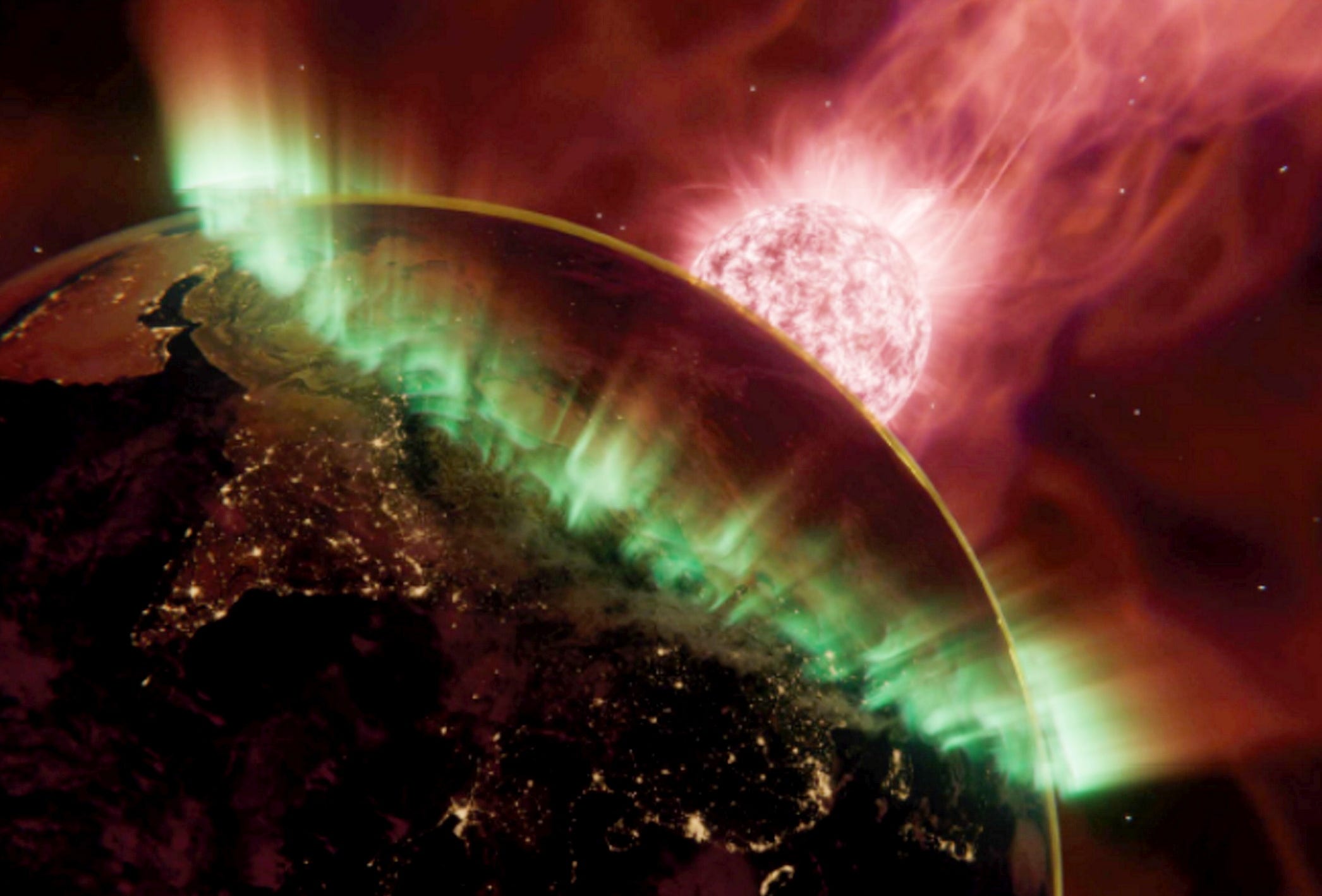
☀️ Risks of potentially devastating solar storms may be underestimated, and the effects of extreme space weather on life on Earth may be much larger than we thought.
It is already known that solar storms can disrupt satellite operations, GPS navigation and high-frequency radio transmissions, as well as trigger vivid auroral displays visible far beyond polar regions.
Extreme geomagnetic storms are temporary disturbances in the Earth's plasma and magnetic fields. They can also trigger widespread power outages and even increase the radiation exposure of astronauts and pilots.
For decades, scientists have thought that there is an upper limit to how Earth responds to solar storms. But new research suggests the upper limit is an ‘illusion’ resulting from uncertainty in the measurement of the solar wind strength.
The findings, published in the journal Nature, mean solar storms could have “far worse” effects on our technology than previously thought. Read more on Rock n’ Science
👋 Hello, fellow science geek. If you’re enjoying this newsletter, it would really help me if you could spread the word. Simply forward this email to a friend, and they can sign up here or click the share button below.
What’s Up, Doc?
🐍 Pythons’ extreme biology may hold clues for treating human disease. The snakes have a toolbox of useful tricks, including the ability to fast for months and still maintain muscle tone, while growing and shrinking their hearts and other organs depending if its feast or famine
🧠 The World Health Organisation says almost half of dementia cases are ‘preventable’ and all you have to do is follow its new guidelines. They’ve cooked up the rules using a wealth of evidence, and while aimed at governments, there’s no reason why you shouldn’t take heed
💊 A new trial has found that a common sleep supplement could also ease chronic pain. The natural hormone melatonin triggers chemical changes that prepare the body for sleep, but now these brain interactions are thought to help with pain relief
🤧 Research has shown that many common cold and flu tablets don’t actually work, and recommends what to use instead. Specifically, one medication that targets decongestion performed no better than a placebo
🎶 Dementia patients gain peace and contentment from attending live music concerts, say American scientists. The claim processing of music stays intact for a long time for people suffering from Alzheimer’s and other degenerative conditions
💉Claims that drugs such as Ozempic can prevent cancer are running way ahead of the evidence. A doctor has warned: “It’s still too early. These drugs are far younger than the cancers they are being credited with preventing.”

They don’t build them like they used to. An elderly couple battling the current heatwave in the UK are using Britain’s oldest working fridge, still chilling food after 90 years.
The pair, in their 80s, have been using the cooling appliance since 1949, just after World War II, when their family bought it. They paid £49 for the fridge, built by Electrolux in the 1930s, which is thought to be the equivalent of around £2,200 in today’s cash.
The loving couple had previously relied on a fridge during heatwaves in 2021, when their newer fridge-freezer gave up the ghost.
What has AI ever done for us?
📹 It takes one to know one, I guess. A new AI developed by super-rich chipmaker NVIDIA can detect deepfake videos in just 22 milliseconds. The Synthetic Video Detector is designed to help newsrooms and broadcasters identify dodgy videos quickly and accurately before they spread worldwide. The system examines videos frame by frame and assigns a probability score indicating whether the footage has been generated or manipulated using AI. It’s the latest in a race between the AI used to create deepfakes and the AI used to detect them. Or, as Lieutenant Jim Gordon put it: “We start carrying semi-automatics, they buy automatics. We start wearing Kevlar, they buy armour-piercing rounds.”
"A ship in port is safe, but that is not what ships are for. Sail out to sea and do new things."
Grace Hopper
Weird Science Factoid
Your body ‘reads’ out loud, even when you’re silent. When you’re reading completely silently in your own head, your body is physically preparing to speak. This phenomenon is called subvocalization. When you read text, minute electromagnetic impulses are sent from your brain to the muscles of your vocal cords, tongue, and larynx. Essentially, your throat muscles are firing up and mimicking the exact movements needed to say the words out loud. It’s one of the main reasons reading for hours can sometimes leave your throat feeling slightly dry.
🖥️ A software engineer has identified and explained every 90s computer seen in the legendary dinosaur caper Jurassic Park. Identified hardware includes five Thinking Machines CM-5 systems, a Motorola Envoy PDA, and multiple then-cutting-edge Silicon Graphics Inc workstations
📚 A 1,600-year-old mummy discovered in Egypt has revealed something archaeologists had never seen before: a fragment of Homer’s Iliad used during embalming. The papyrus was identified as part of the famous "Catalogue of Ships," one of the best-known sections of the ancient epic
🧊 The ‘Doomsday Glacier’ is losing its last shield against melting away and raising global sea levels by around 65 centimetres. The eastern ice shelf - the floating extension that protects the Thwaites Glacier’s front - could break apart as early as this year
🔥 Evidence has been uncovered that shows early humans may have mastered making fire 400,000 years ago - a remarkable 350,000 years earlier than previously thought. Archaeologists have dug up ancient fragments of iron pyrite alongside heat-damaged stone and ancient hearth remains in southeast England from waaaay back
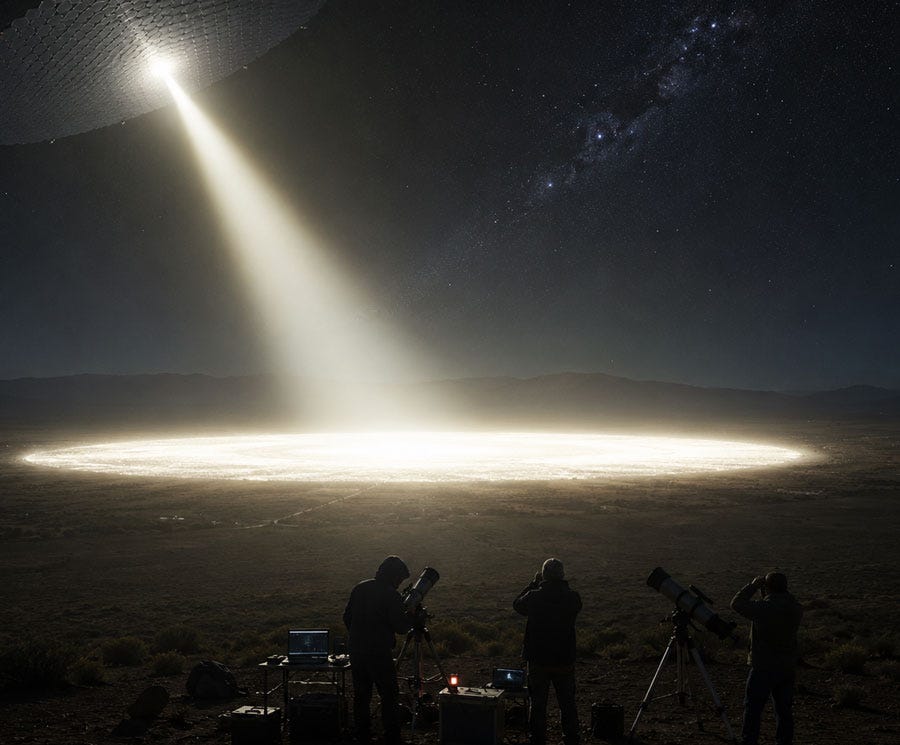
🪞 The first of tens of thousands of sunlight-directing space mirrors just got cleared for liftoff. Reflect Orbital wants to bring the world light on tap, never mind where you are or what time of day it is
🛰️ Yet more launches might be great for some, but could be ‘absolutely catastrophic’ for astronomers. One says the sheer number of planned orbiters means that someday soon the Earth will be surrounded by an artificial ‘Saturn’s Rings’ of satellites
🛸 Ancient Romans recorded metallic objects flying through the sky. Did they spot aliens? I’m going to say no, they did not. However, it is a decent reminder that strange things have been seen above our heads for thousands of years
Alien power plants
No more silver foxes
Universe, yes or no?
Scientists reveal a simple trick to finally ‘speak’ your cat’s language
Japanese scientists identify neural mechanism that may explain why we dislike people
Fi’s Starlink-enabled pet tracker found my dog when LTE couldn’t
About TWSD
Science is weird, and here’s the proof. The Weird Science Drop goes where other, more-sensible newsletters fear to tread. Every week, we grab our trusty white lab coat, bunch of bubbling test tubes and world-ending robot prototype to go in search of the overlooked, under-the-radar and, above all else, most madcap science news, views and research.
Daniel Smith is an ancient experienced journalist who has worked for a host of news publishers on both sides of the Atlantic. A long, long time ago, he fancied himself an astrophysicist but turned out to be the worst scientist since the man who mapped all those canals on Mars, which turned out to be scratches on his telescope’s lens. Luckily, he is not working on the Large Hadron Collider, inadvertently creating a black hole that would swallow the world by pressing the big red button, but is safely behind a desk writing this newsletter, bringing you the fantastical underbelly of nature... The Weird Science Drop.
No posts
Comments
Nothing yet. Say the first thing.
Sign in to join the conversation.