
“Croeso* to another jam-packed edition of TWSD. The search for intelligent alien life feels like it’s going to be a long one (no matter what you’ve read, space gribblies are definitely not zooming around the Earth in flying saucers). And there’s always a chance that we’re on our own. But new thinking raises the possibility we have been looking right at them all along. Also this week: building a better battery, you might have metabolic syndrome, zebras have their own insect repellent, and space travel speeds up ageing. Feel free to share/subscribe if you like what you see!”
Daniel
* Welcome in Welsh
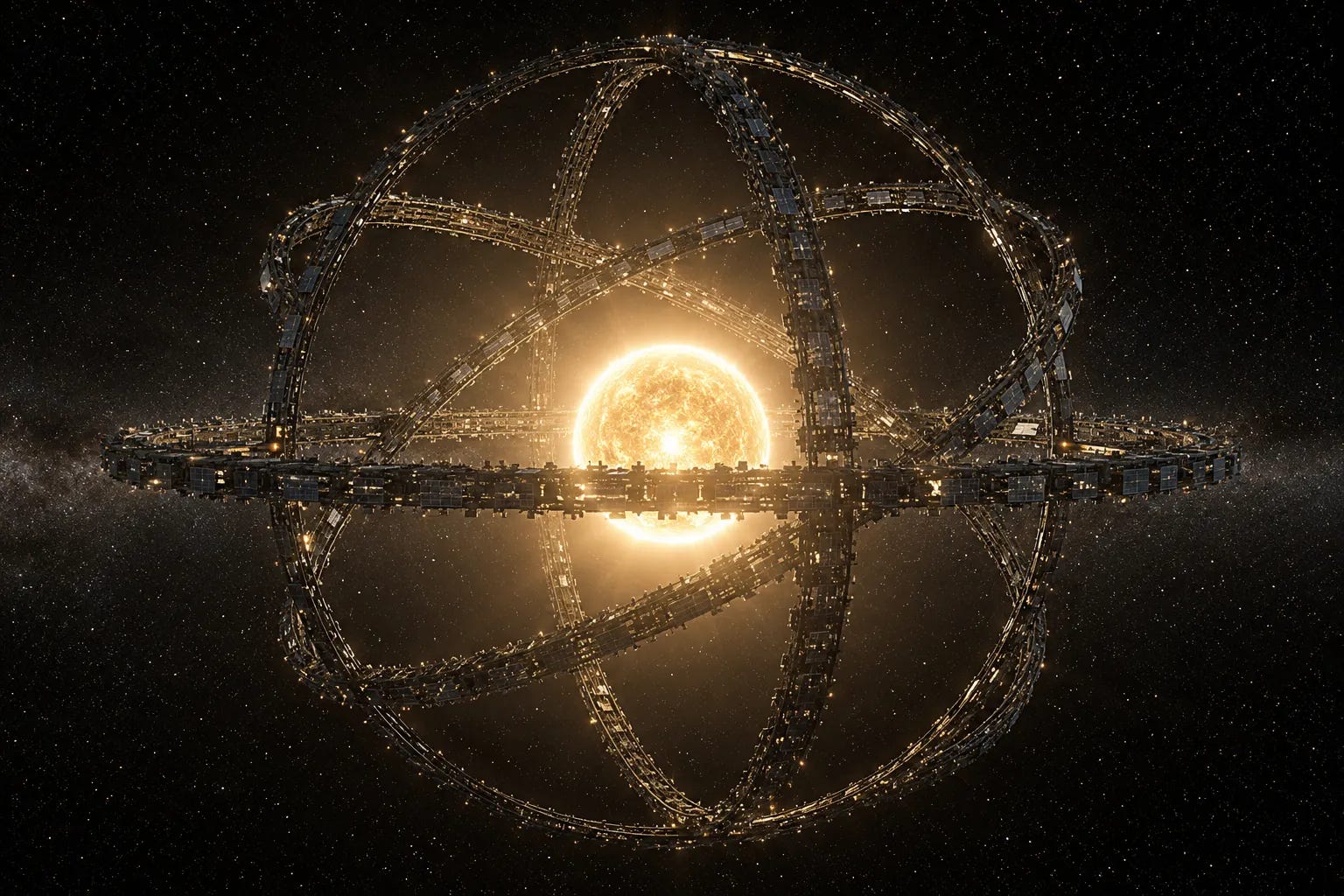
👾 Incredibly advanced alien civilisations might have been staring us in the face for years, and we never knew it. A new study says some of the chilliest objects in the Milky Way may not be stars at all but vast power‑harvesting machines built by ET.
The University of Arkansas has modelled how a Dyson swarm - a loose constellation of orbiting collectors that captures most of a star’s energy - would look to today’s telescopes. First imagined by physicist Freeman Dyson as a solid sphere in the 60s, the new version would see a myriad of independent satellites encircling a star.
A star largely wrapped in energy harvesters wouldn’t shine like a normal star. Most visible light would be trapped and re‑emitted as heat, making the system blaze in infrared while appearing strikingly cold by stellar standards.
The James Webb Space Telescope, tuned for infrared, is well placed to probe such candidates, building on earlier all‑sky searches like WISE. In 2024, Project Hephaistos flagged seven potential Dyson‑like systems around red dwarfs after sifting through about five million stars; one was later explained by a coincidental alignment with a distant supermassive black hole, but the others remain on the watchlist. Read more on The Business Standard
👽 However, aliens could be a lot closer to home. Astronomers say the planet GJ 3378b has an atmosphere that could be the right thickness for life to survive, and is in the temperature ‘sweet spot’, which means liquid water could exist on its surface. The world, which is twice the size of Earth, is a mere 25 light-years away, making it just next door in galactic terms
🔋 If there’s one thing that’s holding us back, it’s the batteries we use. Be it in your phone, computer, or car, the tech is in desperate need of a breakthrough. And we just might have had one.
A new sodium-metal battery has achieved blazingly fast recharge speeds, in the lab at least. In the real world, a car battery could go from 0% to 100% in just four minutes.
This does come at a cost to durability, but if you settle for a 20-minute recharge, the battery would retain a pretty decent 90% of its capacity after 2,000 cycles.
This is all in the prototype stage at the moment, but with the world crying out for better batteries, the pressure’s on to make it work. Read more on Digital Trends
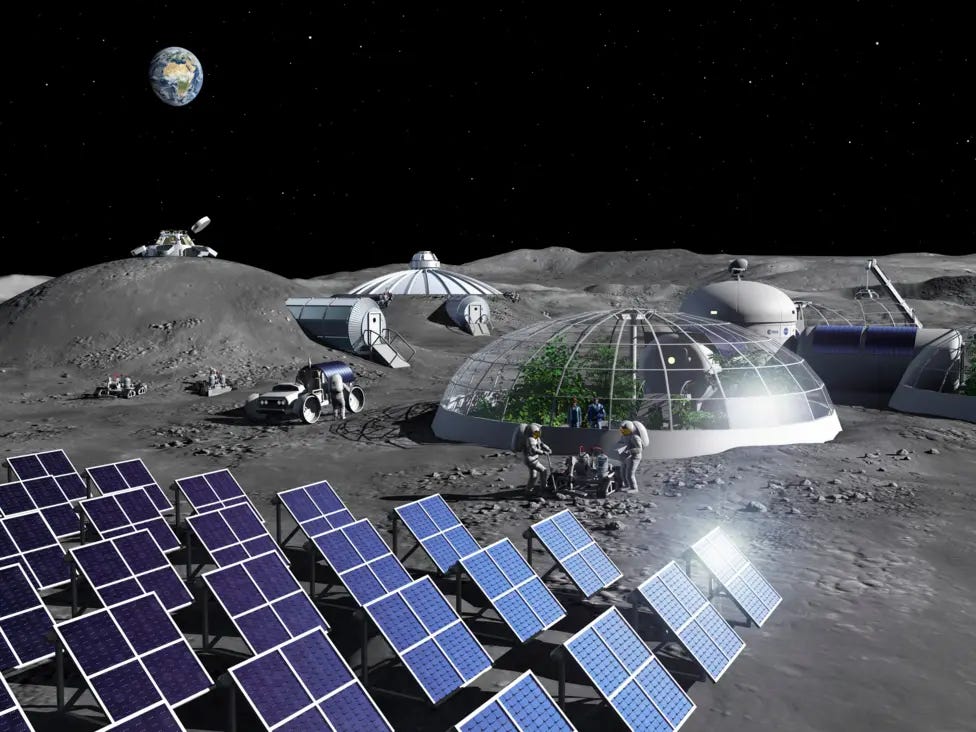
🧑🚀 We’re going to need more astronauts. A new study says NASA’s planned lunar outpost will work best with six moonwalkers on site and resupply flights every two weeks.
Researchers used computer simulations to test how different crew sizes, mission lengths, and logistic schedules might play out on the Moon’s south pole, where NASA aims to build a long‑term base under the Artemis programme.
In a stark reminder of just how hard it’s going to be to set up a permanent base somewhere humans aren’t supposed to be, the scientists showed that a crew of four with monthly supplies just won't cut it.
A baseline three‑month mission with a single resupply and a crew swap mid‑way produced an average task completion rate of just 20%. This means you’re spending a lot of money for not that much.
Keeping six people on the surface appears to be the sweet spot, while a fortnightly supply chain of food, air, spares and experiments keeps stress low and work flowing.
It’s interesting to note that because they will be so isolated, even the smallest hiccup can have a huge knock-on effect when it comes to morale, efficiency and safety. Read more on Space.com
🐕 A new pet tracker has been launched in the US that allows you to keep tabs on your prized pooch from orbit. Fi Ultra attaches to a dog’s collar and uses Starlink, SpaceX’s constellation of low Earth orbit satellites, to monitor the four-legged animal wherever they go
🔫 The US Space Force has got its hands on a new weapon able to zap enemy satellites with electromagnetic radiation. The system, known as Meadowlands, is ominously described by the USSF as a “robust toolkit for spectrum dominance”. It can knock out orbiters by messing with their signals but not damaging them, which is just as well, as you don’t want satellites falling out of the sky
🧁 Astronomers have detected sugar in gas clouds near the centre of the Milky Way. Sugars provide energy and are key building blocks of life on Earth, such as DNA, but how they got here is a mystery
💣 Meanwhile, a shoebox-sized satellite could sniff out nukes in space…
⛵ Thirteen-thousand-year-old human remains found on a remote chain of islands off the coast of California are fuelling fresh debate about how the first people reached the Americas - and how early they arrived.
The bones, known as ’Arlington Springs Man’, were discovered buried on Santa Rosa Island in 1959. A new study has now revived support for the idea that some of the earliest settlers arrived by boat rather than trekking over from modern-day Siberia using a land bridge.
Researchers say the Channel Islands - including Santa Rosa, San Miguel, Santa Cruz and Anacapa - preserve traces of this maritime story. The idea is that ancient seafarers followed a ‘kelp highway’ of rich coastal ecosystems, skirting glaciers and hopping between shorelines until they reached the sunny climes of what is now Southern California - earlier than the Clovis culture, which is recognised as landing in the area first.
The islands’ fossil record adds further intrigue. Bones of pygmy mammoths - dwarf relatives of the woolly mammoth - have been found there, with their disappearance coinciding with both human arrival and global climate shifts. Read more on The New York Post
🐒 Monkeys and apes could help save life on Earth. Experts believe we’re barrelling toward a sixth mass extinction unless we act now. Previous events - usually triggered by climate change - have wiped out around 80 per cent of animals. Not good.
However, new research points to primates as powerful ‘umbrella species’ that can protect their large, connected habitats and the countless other plants and animals that live alongside them.
Fieldwork in Yunnan, southwest China, suggests that safeguarding the forests used by 16 primate species - from gibbons and snub-nosed monkeys to langurs, macaques and lorises - can act like a cover over whole ecosystems.
It mirrors China’s panda reserves, which shelter hundreds of other endemic species because pandas require big, healthy tracts of forest. As Amy McEuen, a biologist at the University of Illinois Springfield and author of How to Think Like an Ecologist, puts it:
“With millions of species to protect, we don’t have time to protect one species at a time.”
👋 Hello, fellow science geek. If you’re enjoying this newsletter, it would really help me if you could spread the word. Simply forward this email to a friend, and they can sign up here or click the share button below.
What’s Up, Doc?
🍔 One in four adults worldwide has metabolic syndrome, a cluster of interrelated risk factors, including high blood sugar, high blood pressure, excess belly fat, low levels of ‘good’ cholesterol and high blood fats. Often thought of as a warning sign that diabetes or cardiovascular disease may be on the horizon, it could also be accelerating the ageing of the brain as well
🍌 Tucking into a low-inflammation diet can cut the risk of developing dementia by almost a third. So you should eat lots of fruit, veg and cups of tea, while swerving red meat and soft drinks
🧠 A sign of dementia could pop up way before any diagnosis. A new study has found that people who develop early-onset dementia show measurably lower work productivity as much as 15 years ahead of a medical judgment
🐸 A bacterium found in frog stomachs has been used to wipe out cancer tumours in mice with a single dose. The froggy substance works by attacking the nasty cells and activating the immune system at the same time, promising to open up new types of therapy
🐁 Mice are getting cured a lot these days, and now researchers have been able to deal a death blow to aggressive prostate cancer in our little furry pals. They have engineered tiny silica nanoparticles to seek out tumour cells and cause them to self-destruct while also supercharging the body’s natural defences
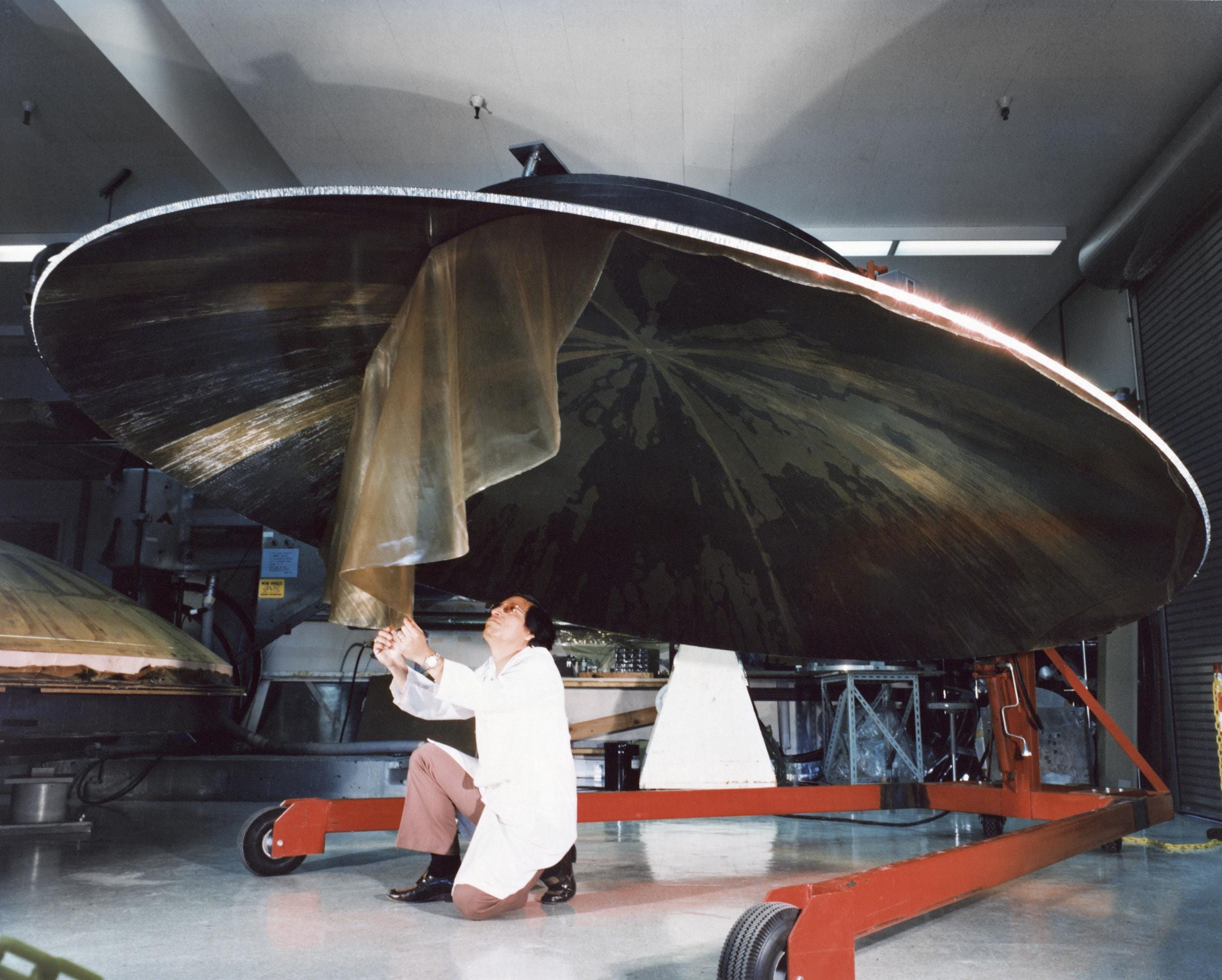
Launched almost 50 years ago, NASA’s Voyager 1 is the most distant human-made object in existence. Currently cruising at over 37,00mph, the probe is exploring interstellar space, having left our solar system back in 2012, and will break the one light-day barrier later this year.
We’re still in contact, despite the vast distance and the spacecraft’s transmitter operating with the power of a household light bulb. It boggles the mind that we can receive signals at all as Voyager 1’s 22.4-watt transmitter is reduced, at Earth, to roughly 0.1 billion-billionth of a watt. That’s about 0.0000000000000000001 watt. Not merely a fraction of a billionth of a watt, but a fraction of a billionth of a billionth.
Luckily, NASA can listen in using the Deep Space Network, a collection of large dishes in California, Spain and Australia. But one day soon, in the early 2030s, Voyager 1 will go quiet for good once its plutonium power generators run out of juice.
The plucky probe will be on its own, drifting through space till the end of time. Unless. In about 40,000 years, it will pass within 1.7 light-years of an obscure star in the constellation Ursa Minor called AC+79 3888. So there’s a chance it might get picked up by, errr, any AC+79 3888-ers.
What has AI ever done for us?
🌊 Scientists have used AI to crack one of water’s biggest mysteries. When you supercool water, it becomes almost impossible to work out its microscopic structure. It’s rather strange to think about it, but water is actually a rather weird substance, and behaves in strange ways depending on temperature and pressure, which sets it apart from almost any other liquid. However, artificial intelligence has taken up the challenge of understanding what makes H2O so special.
"The solar system has a boundary, but the human mind does not."
Harry Martinson
Weird Science Factoid
It feels like we’ve been on a run of amazing eye-related facts, and I must admit I can’t get enough of them! There is a ‘dead zone’ in every eye’s retina that makes space for the blood vessels and nerve fibres that carry visual signals to the brain.
👬 Scientists in Japan have come across a mechanism in the brain that sparks a dislike of another person - and have been able to trigger the aversion in mice. In a lab, they have been able to tinker with a neural mechanism in the brain to make enemies of former pals
🌌 Astronomers have come across the most distant quasar ever recorded, a blazing galactic core that first shone brightly when the Universe was only about 670 million years old. Short for ‘quasi-stellar radio source’, quasars are powered by supermassive black holes feeding on surrounding gas and dust
🦓 White stripes have been painted on black cows to test whether zebra markings deter biting flies. And, indeed, they do. The painted cows drew 50 per cent fewer flies, adding weight to the idea that zebras evolved their colouring not for camouflage or heat, but as a living insect repellent
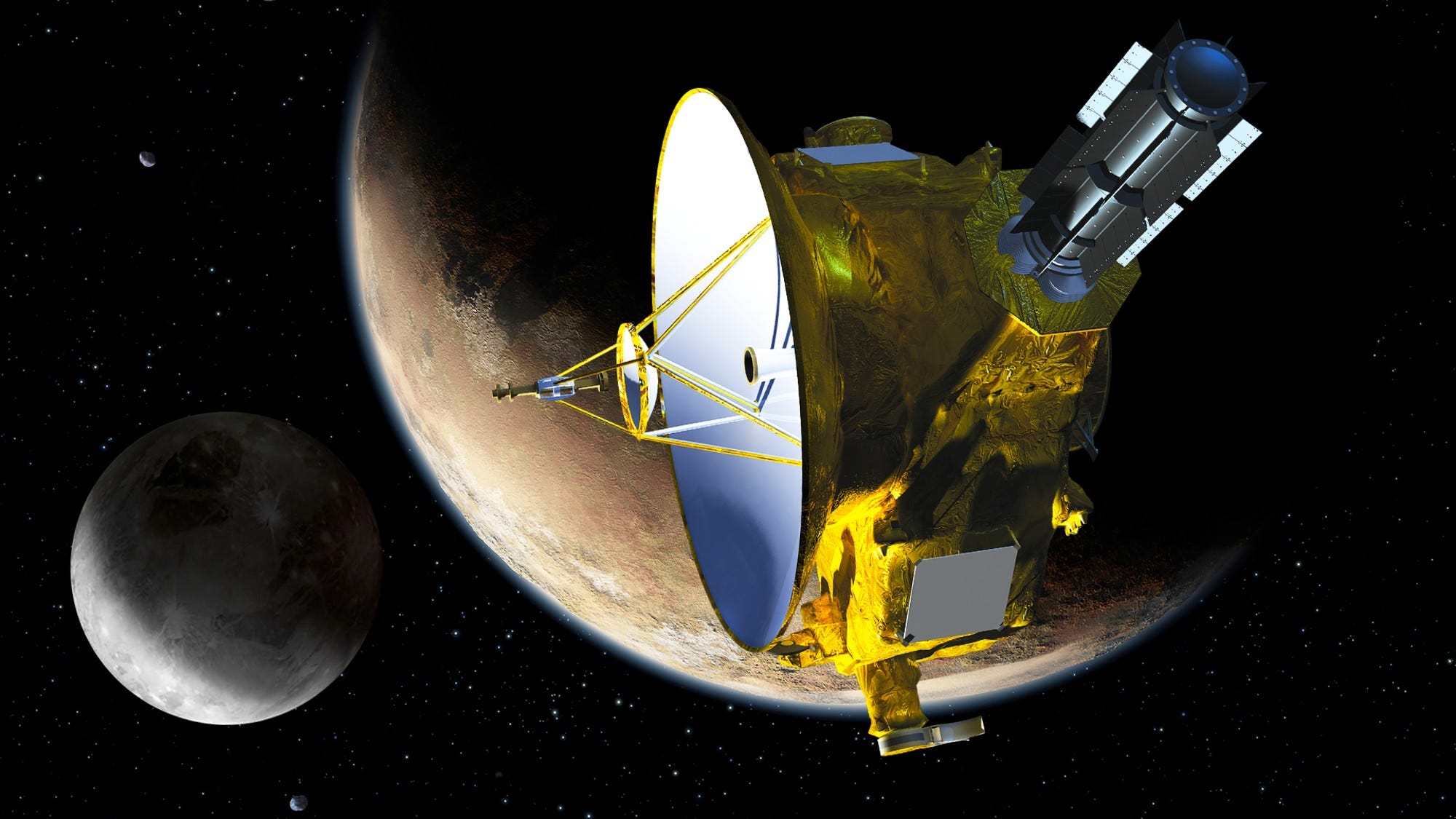
🚀 NASA’s New Horizons probe has just woken up from hibernation six billion miles away on the other side of Pluto. The craft has been asleep for almost a year, but has been successfully switched on and is now transmitting back all the data it has collected while in its slumber
🫛 A Greek scientist who helped revolutionise oat milk is now leading the development of pea milk that could feed the world’s growing population. Angeliki Triantafyllou hopes to produce a plant-based milk that delivers improved nutrition while reducing the environmental impact associated with dairy farming
🧑🚀 Astronauts beware - space travel speeds up ageing. Prolonged exposure to microgravity and cosmic radiation has been shown to affect the body at the molecular level
📱 After years of worry, a new study has shown your child isn’t the only one addicted to their smartphone. Parents constantly distracted by their devices unintentionally weaken their emotional bond with their kids, leaving lasting developmental and psychological effects
No more silver foxes
Universe, yes or no?
Can you learn charisma?
Charisma is tricky to define, but we all know it when we see it. When I think about this, I always go back to Steve Jobs vs Bill Gates. Jobs was cool, Gates is not. No matter how successful and rich Gates became, he could never hold a candle to his arch-rival when it came to pure pizzazz. It must have driven him crazy.
NASA Webb uncovers unusual galaxy shaped by cosmic collision
Scientists claim they have found a tiny particle that could erase the Universe at any moment
Scientists reveal a simple trick to finally ‘speak’ your cat’s language
About TWSD
Science is weird, and here’s the proof. The Weird Science Drop goes where other, more-sensible newsletters fear to tread. Every week, we grab our trusty white lab coat, bunch of bubbling test tubes and world-ending robot prototype to go in search of the overlooked, under-the-radar and, above all else, most madcap science news, views and research.
Daniel Smith is an ancient experienced journalist who has worked for a host of news publishers on both sides of the Atlantic. A long, long time ago, he fancied himself an astrophysicist but turned out to be the worst scientist since the man who mapped all those canals on Mars, which turned out to be scratches on his telescope’s lens. Luckily, he is not working on the Large Hadron Collider, inadvertently creating a black hole that would swallow the world by pressing the big red button, but is safely behind a desk writing this newsletter, bringing you the fantastical underbelly of nature... The Weird Science Drop.
No posts
Comments
Nothing yet. Say the first thing.
Sign in to join the conversation.