
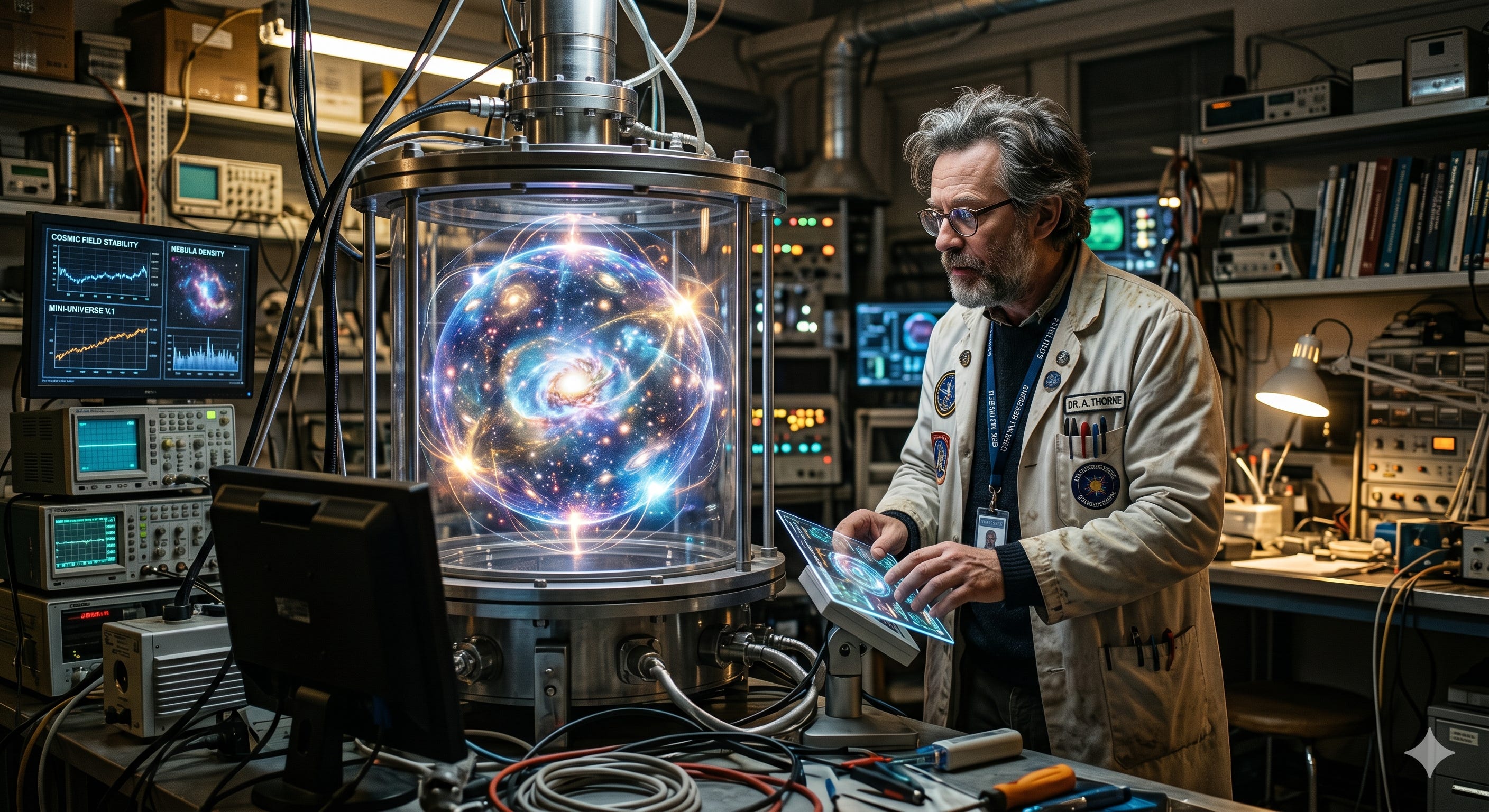
“Velkomst* to another slice of piping hot, crazy science pie. Actually, that reminds me that Carl Sagan once said ‘if you wish to make an apple pie from scratch, you must first invent the universe’. Well, one scientist is on his way to ultimately baking something very tasty in a lab not far from where I am typing this. Also this week: China wants to save the world, space tourism is like the Wild West in more ways than one, and a smiley happy spider has been found where it shouldn’t be. Please like/subscribe/share - every click helps!”
Daniel
* Welcome in Danish
⚛️ What is time? Well, we’re one step closer to understanding, to use a quote from a famous poem and Star Trek, ‘the fire in which we burn’, thanks to physicist Giovanni Barontini from the University of Birmingham in the UK.
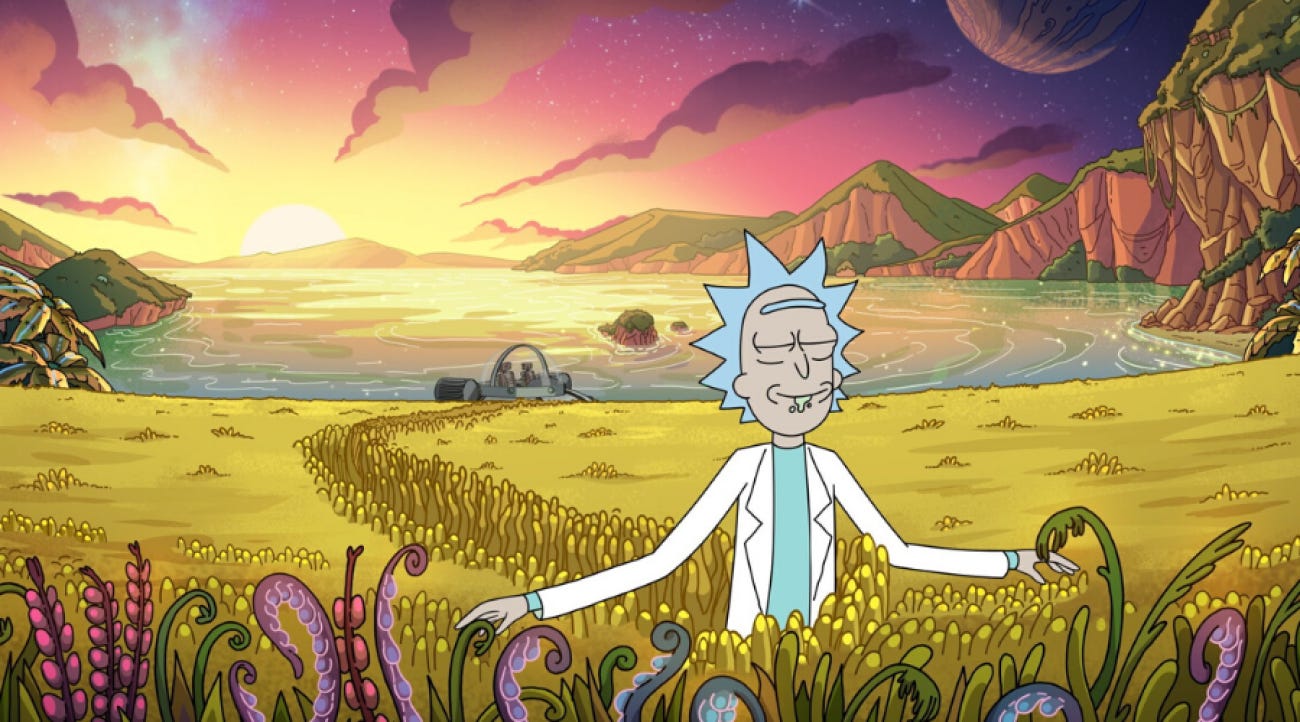
Giovanni has created his own ‘mini-universe’ by freezing 24,000 rubidium atoms to a whisker above absolute zero and sealing them off from the outside world and, theoretically at least, the ticking clock of time. Using two lasers, the ‘grand creator’ split the cloud into a ‘bright’ observed region and a ‘dark’ unobserved one.
Inside this tiny cosmos, the bright side repeatedly swelled and collapsed - Big Bang followed by Big Crunch - to construct a ‘before and after’ purely from these internal changes. Time emerged from how the atoms spread and shuffled. When that spread changed, time ‘moved’; when it didn’t, time stopped.
OK, this is all got very confusing very quickly, and that’s just for me who’s writing it. The experiment supports the idea that, at its deepest level, the universe has no built-in time but exists as a single, unchanging quantum blob. It has no external clock; rather, time bubbles up from the ever-changing parts within the blob. Got it? Me neither. But I’ll be sure to bore some people about it the first chance I get!
Giovanni’s mini-universe could be used to tackle huge questions like the fate of our universe and what came before all this, as well as to make mini black holes. As someone who lives a stone’s throw away from Birmingham, that last bit is rather alarming. Read more on Phys.org
🔫 China wants to save the world and plans to shoot down an asteroid to test whether it’s possible to protect the planet from dangerous space rocks on a collision course. An ambitious mission will see two spacecraft launched - one to smash into an asteroid and another to watch and report back.
The vast majority of asteroids do not pose a threat, and the ones that do zero in on Earth burn up in the atmosphere. However, it’s almost certain that one day a large celestial body will turn up with our name on it. Just ask the dinosaurs.
Plenty of ideas about what to do if we were under such a threat have been thrown out over the years, everything from nuking the asteroid to blowing the rock up from the inside, Armageddon-style.
Hitting an asteroid would be challenging, but it is at least doable. The rub really lies in predicting what happens after you smash into it. After all, you risk turning one massive doomsday rock into several smaller, but still deadly, projectiles that come straight for us. Read more on Global Times

🏰 Archaeologists have dug up ‘Mesopotamia’s Pompeii’ - a 4,000-year-old city in Iraq that was destroyed by war. The fortified settlement appears to have met a violent end: palace rooms burned, bodies were left in destruction layers, and clay tablets remained sealed in the debris.
The University of Central Florida excavation in the Kurdistan region of Iraq, near Erbil, has uncovered rare evidence of life and conflict during the Middle Bronze Age. Suspicion is high that what they have found is the ancient city of Qabra, a politically important centre known from Old Babylonian-period texts.
It certainly seems the city met a bloody end. Bodies have been found not in the usual formal graves, meaning they were left where they died. One individual was found face down over a stone basin. Not a great way to go. Read more on Europe Says
⚥ Sex changes everything, and it was no different for our planet’s earliest creatures. At the very dawn of animals on Earth, life was happy enough to reproduce asexually. This worked well enough, but it meant evolution was hamstrung, moving at a glacial pace with very little change over time.
However, when environmental pressures pushed them toward sexual reproduction, biodiversity exploded and evolution accelerated dramatically. So much so that, fast-forward just a few hundred million years, you end up with us.
The very earliest animals lived in deep waters and looked very different from anything you’ll find today. Many resembled ferns and appeared to have lacked mouths, organs, and the ability to move. It’s believed they absorbed nutrients directly from their surroundings.
These gribblies had very little competition during the early days, and so there was no pressure to change the status quo. However, as they spread into shallower waters, things got more challenging thanks to tides, storms and shifting temperatures.
This meant more competition for resources, which in turn kick-started sexual reproduction and so led to the explosion of species we saw some 600 million years ago. Read more on Science Daily

🕷️ A ‘happy face’ spider species has been discovered in the Himalayas, thousands of miles from ‘home’. While looking for ants, researchers were amazed to find arachnids with markings resembling a smiling face.
Spiders with such smiley-shaped symbols were thought to only be found in the Hawaiian Islands. But the team from the Forest Research Institute and the Regional Museum of Natural History discovered the new spider species, with the same smile pattern, in Uttarakhand, a mountainous region of India.
Describing it as “vibrant, tiny, and sporting a bright red grin on its back,” they christened it Theridion himalayana, meaning the Himalayan happy-face spider. While the smiling patterns are striking, their exact purpose remains a mystery.
👋 Hello, fellow science geek. If you’re enjoying this newsletter, it would really help me if you could spread the word. Simply forward this email to a friend, and they can sign up here or click the share button below.
What’s Up, Doc?
🍄 A case of a US woman who reversed the symptoms of Alzheimer’s by taking magic mushrooms has piqued plenty of interest. After a decade of progressive decline, which had left her unable to communicate other than with single words, the woman took a dose, sweated heavily, entered a prolonged sleep-like state, and then awoke almost a day later, speaking spontaneously and recalling memories from her own life
🧬 Living to a ripe old age may be down to a single gene, after researchers looked into how long, healthy lifespans are passed down from generation to generation in some families. A new Dutch study has identified a subtle difference in these long-lived clans that may be responsible for their longevity being passed on
💉 The good ol’ flu shot could save your life in more ways than one after being shown to cut deaths in people with heart disease by almost a third. A study looking at more than one million people hints that the annual influenza vaccination is a valuable prevention tool for those with high cardiovascular risk
❤️ Talking of heart problems, if you have a pacemaker - or are visiting someone who does - it might be best not to wear AirPods. Cardiologists fear that devices such as wireless headphones that emit magnetic fields could mess with health implants
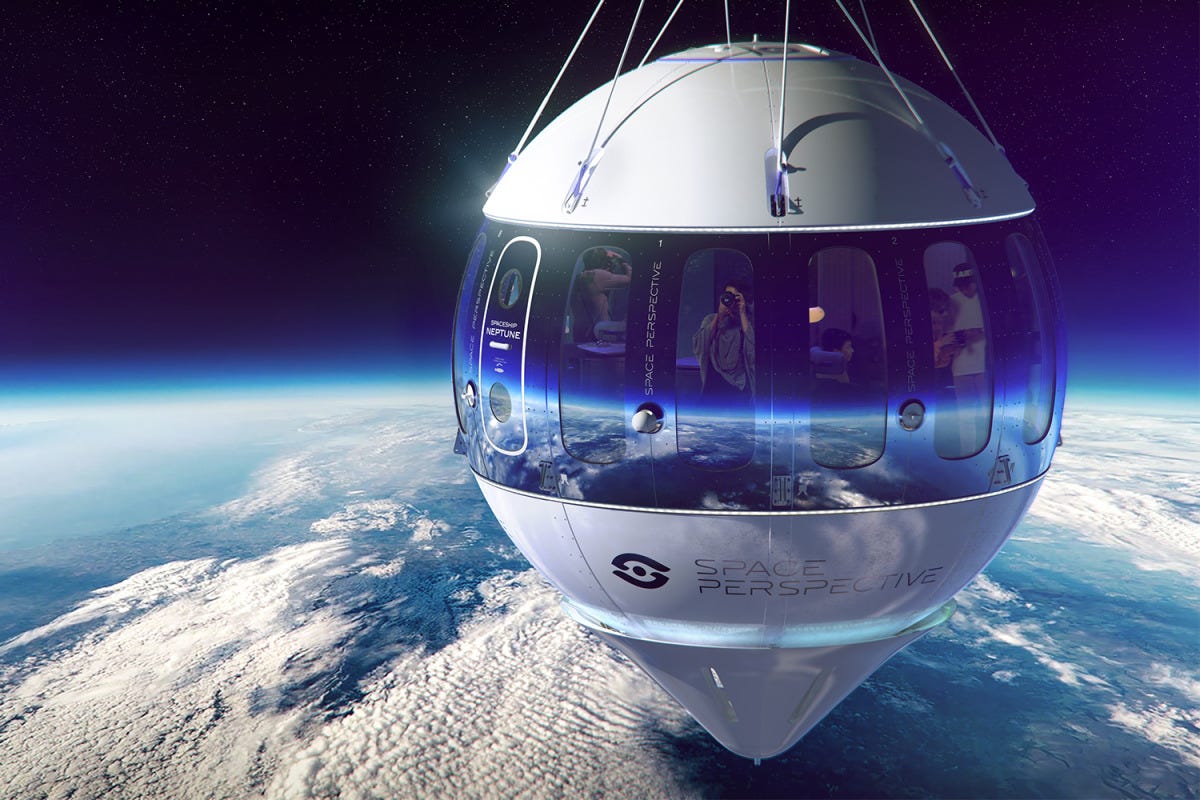
Space tourism stands on the edge of a futuristic boom - but the laws that govern the industry hark back to the days of the Cold War. And because of these fuddy-duddy rules, the celebrity‑studded industry is not all that it promises.
Since entrepreneur Dennis Tito’s trip 25 years ago, 140 paying tourists have flown up, up and away, with private firms such as Blue Origin, Virgin Galactic and Axiom Space pushing ever more ambitious missions.
Recent rocket mishaps have underscored the risks, yet the backbone of international space law remains 1960s- and 1970s-era treaties. The Outer Space Treaty makes states responsible for private activities and calls space “the province of all mankind”, but there’s no dedicated enforcement body, and compliance largely hangs on diplomacy.
Regulation on the ground is patchy at best, but once a mission reaches orbit, oversight gets as thin as the atmosphere, with little in the way of binding safety standards for those on board. Anna Marie Brennan, a law lecturer from the University of Waikato, writes:
“Space tourism is an industry with real consequences for safety, for the environment and for the legal promise that space belongs to everyone. Without these reforms, space tourism will remain a risky, weakly regulated luxury industry selling transcendence while evading responsibility.”
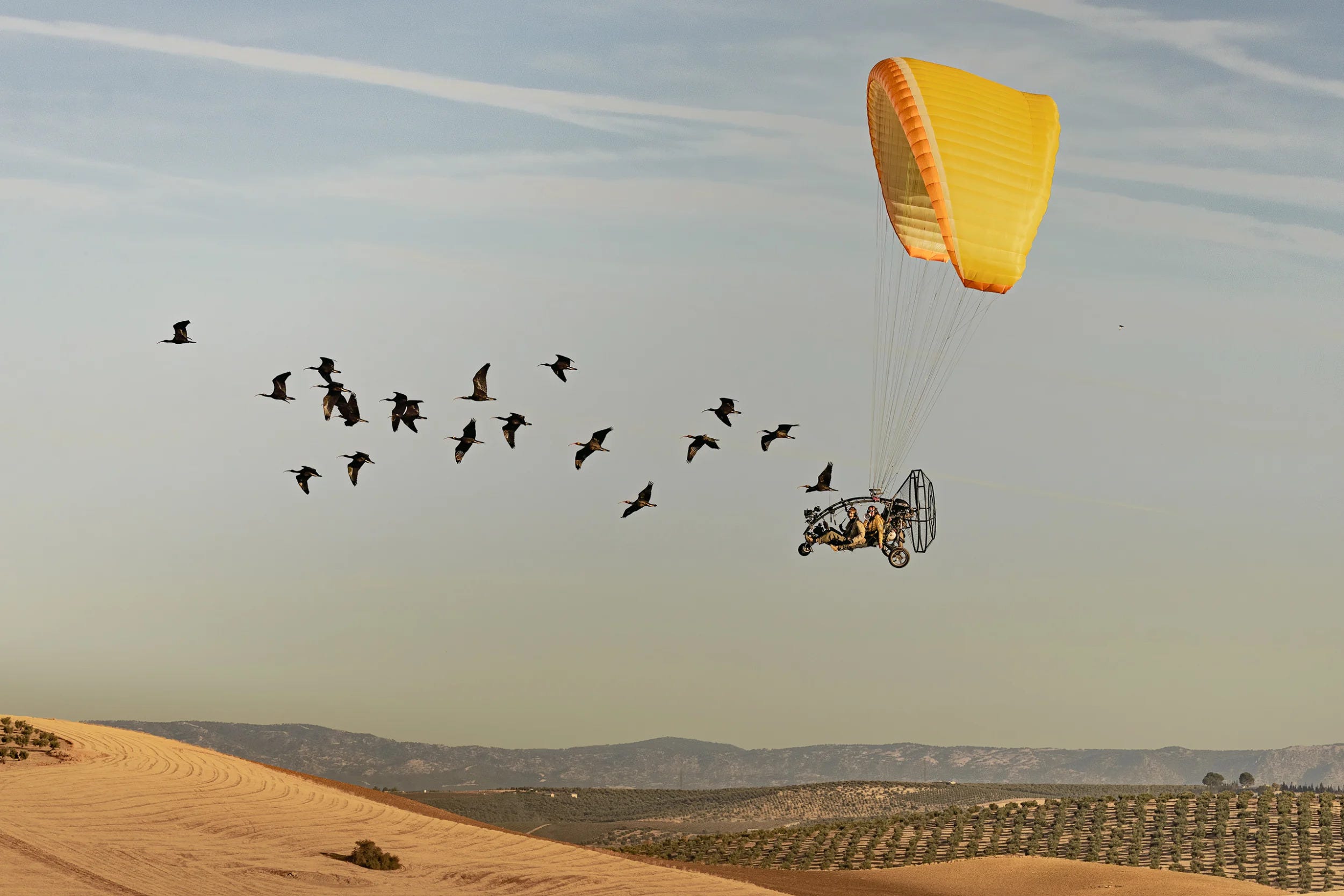
The winner of this year’s ‘scientists at work’ photo competition run by Nature is this spectacular snap of researchers joining a flock of bald ibises on their annual 2,800km, 50-day migration from southern Germany to southwest Spain. The birds are hand-raised by their human carers, forming a bond that makes the ibises happy to follow their foster parents as they ride in the aircraft.
"The great tragedy of science - the slaying of a beautiful hypothesis by an ugly fact"
Thomas Henry Huxley
Weird Science Factoid
You usually don’t see your nose because your brain cancels it out. The main reason our noses don't take up space in our vision comes down to a somewhat startling fact: We don't see the world as it is but rather as a model our brains have constructed to help us survive.
🐛 Millipedes beat vertebrates to land by an impressive 80 million years. A new study has sketched out their evolutionary family tree to reveal surprising clues about these ancient ecosystem engineers and their early chemical defences
👽 Aliens probably exist - but there are three very good reasons why they haven’t paid us a visit. Surprisingly, one of these reasons is not the existence of social media influencers
😮💨 When archaeologists blew an ‘Aztec death whistle’ for the first time, it sounded like a human scream. Shaped like a human skull, the grisly item was first uncovered in burial sites associated with sacrifice and ritual practices
☀️ It’s getting way too hot in the Antarctic, raising fears that the upcoming climate apocalypse will be arriving sooner than we thought. Temperatures at the bottom of the world reached a record 15°C on June 6 - breaking the previous top recorded temp by two clear degrees
🧑🏽🤝🧑🏽 It turns out we might have miscalculated just how many humans are on Earth right now - and we’ll have to start counting again from one! While current estimates place the current population at around 8.2 billion, a new study suggests we might be vastly underestimating the number of people who don’t live in cities and towns
🔴 The mystery of ‘little red dots’ seen in the very early universe might have been solved by astronomers using the James Webb Space Telescope. After giving one a good hard look, evidence suggests they are black hole suns - ravenously supermassive black holes cocooned in a dense cloud of gas
📈 The San Andreas Fault has just hit its highest stress level in 1,000 years, a new study has found. It’s been 160 years since the last major rupture, meaning the ‘system is in a critically loaded state’. Trouble a brewin’
We were warned
Anne Boleyn found by AI
Alien AI
Scientists stunned: unexpected baldness cure delivers results no one saw coming
Scientists found a new Alzheimer’s trigger and a drug that stops it
About TWSD
Science is weird, and here’s the proof. The Weird Science Drop goes where other, more-sensible newsletters fear to tread. Every week, we grab our trusty white lab coat, bunch of bubbling test tubes and world-ending robot prototype to go in search of the overlooked, under-the-radar and, above all else, most madcap science news, views and research.
Daniel Smith is an ancient experienced journalist who has worked for a host of news publishers on both sides of the Atlantic. A long, long time ago, he fancied himself an astrophysicist but turned out to be the worst scientist since the man who mapped all those canals on Mars, which turned out to be scratches on his telescope’s lens. Luckily, he is not working on the Large Hadron Collider, inadvertently creating a black hole that would swallow the world by pressing the big red button, but is safely behind a desk writing this newsletter, bringing you the fantastical underbelly of nature... The Weird Science Drop.
No posts
Comments
Nothing yet. Say the first thing.
Sign in to join the conversation.