

“Dobrodošli!* It’s that time again for your recommended weekly dose of strange science. The idea that your body is able to ‘see’ the future sounds utterly bonkers, but quantum physics says we shouldn’t totally discount it. Also: Halve dementia risk by doing exactly what science tells you, bees are taught to play football, bread made from mummy gut bacteria, and much, much more. If you like what you see, I’d be much obliged if you subscribe and/or share.”
Daniel
* Welcome in Croatian
⏰ We love a bit of fringe science here at TWSD Towers, so the theory that human intuition isn’t just biological instinct but memory reaching backwards in time really caught our attention. It’s a radical hypothesis, no doubt, but one you can’t throw into the dustbin just yet.
While mainstream neuroscience maintains that ‘gut feelings’ are simply ultra-fast processing of subconscious data, some physicists and psychologists argue that the human mind is capable of pulling information directly from the future. What’s led to this is a mixture of theoretical physics and actually peer-reviewed studies.
In the quantum world, equations function identically whether time flows forward or backwards. So neural structures within the brain may be subject to ‘retrocausality’ - a phenomenon where future events actively influence the past. An inexplicable flash of intuition could be a future memory leaking into the present day.
Of course, you can come up with lots of weird stuff on paper. But in this case, there’s some actual, admittedly debatable, evidence to back up the mind-bending concept. Researchers measured people's biometric responses seconds before they were shown random, highly emotional images and found that subjects' heart rates and brain waves spiked before the computer even selected the shocking stimuli, suggesting that the body possesses a predictive, anticipatory system that senses what is about to occur.
👽 NASA has teased the discovery of alien life over the past year or so - be that a potential biosignature on Mars or traces of biological activity on the far-away exoplanet K2-18b. However, the majority of astrobiologists think we’re still far away from finding the smoking gun that proves the existence of ET.
A team led by Durham University decided to ask them if the big pronouncements lived up to the hype. And the answer was a definite ‘no’. A mere fraction thought the traces of ‘life’ molecules on the explanet was a slam dunk, while 85% of those questioned agreed that life had probably been found on the Red Planet.
Out of the two, the claim that Martians are/were real was deemed to be one that should be taken much more seriously, hinting that NASA might be onto to something, but a lot more proof is needed. The K2-18b findings are seen as dubious at best, with scientists being fooled by nature masquerading as life on a few occasions over the years.
We appear to be stuck in a frustrating middle ground for now. There’s nothing that proves the two signals are not biological. Equally, nothing confirms they are, either. Read more International Business Times
🔭 Alien hunters have updated their handbook on sharing news of the possible discovery of intelligent life on another world. The new rules are designed to protect scientists, avoid premature announcements and reduce the risk of mad panic in the streets. Good luck!
🪨 A meteorite recovered from the Sahara Desert might be the first evidence of a long-lost world. The space rock has preserved an unusual chemical signature that suggests some of the solar system’s earliest heavenly bodies were very different to the inner planets we know today.
The rare find, known as NWA 12774, has been classified as an angrite, one of the rarest and oldest volcanic rocks in our neighbourhood. Radioactive elements within it reveal the meteorite formed 4.5 million years ago alongside a very young Sun.
NWA 12774 is jam-packed full of aluminium, which means it was formed deep inside a much bigger body than an asteroid. Something approaching the size of Mars.
Whatever happened to this young world remains a mystery, but it is thought that violent collisions between worlds were once very common. Indeed, a collision with a Mars-sized planet is what is thought to have created the Moon. Read more on Space.com
🕸️ Bots now outnumber humans on the web - something that wasn’t supposed to happen just yet. You might not be surprised to hear that it's all down to artificial intelligence.
New data shows that bots account for 57.4% of web traffic, and out of this automated traffic, more than half are AI crawlers training themselves. Search-related bots accounted for just over ten per cent.
As with everything AI, there’s a dark side. All this extra traffic acts as a ‘tax’ on websites. Or to put it another way, while AI companies make money off looking through websites, they won’t be paying the hosting bills for them to crawl through. Rand Fishkin, co-author of the forthcoming book Zero Click Marketing, said:
“Site owners: ‘So... you’re gonna steal my stuff, republish it on your own site without trademark/copyright exposure, and I’m going to PAY for you to do it?’ Google & AI Tools: ‘Yup!’ Site owners: ‘Sigh... OK, fine’.”
So someone’s going to pay, and it won’t be them. Read more on PPC Land👩
👩 Women could really run the world better. How do we know? We’ve found evidence that the fairer sex has done it before.
Archaeologists have unearthed evidence of a large settlement in Turkey that thrived for a thousand years during the Neolithic period. Called Catalhoyuk, the community was a matrilocality. This meant women remained in their homes and ran things while males moved away when they reached adulthood.
Estimates of Catalhoyuk’s population vary, but archaeologists agree it likely fluctuated over time as people moved to it or away, reaching peak habitation of 3,500 to 8,000 people at times.
The successful society from 9,000 years ago shows all the signs of egalitarianism, with females playing a central role in a civilisation that came without the organised violence often seen in the cruel and bloody world of other men-centric settlements of the time. Read more on Al Jazeera
👋 Hello, fellow science geek. If you’re enjoying this newsletter, it would really help me if you could spread the word. Simply forward this email to a friend, and they can sign up here or click the share button below.
What’s Up, Doc?
🧠 Your risk of dementia can be halved if you do exactly what science tells you to do. Almost 45% of all cases are linked to factors within the power of people to change - including smoking, high blood pressure, cardiovascular disease, and high blood lipids
Meanwhile, a new Alzheimer’s trigger has been spotted at the same time as a drug that stops it
👨🦲 Scientists have been left stunned after stumbling across an unexpected baldness cure that no one saw coming. A sugar-based gel with its remarkable effects on hairlines was found while studying wound healing in mice
😁 A Japanese company has just raised millions to support its radical plan to grow new living teeth to replace damaged ones. Toregem Biopharma is ready to revolutionise dentistry after finding a way to inhibit the gene responsible for suppressing tooth growth
🍷 A bit of bad news: just one glass of wine or pint of beer a day is enough to ‘substantially’ increase the risk of cancer and heart disease. Even what most people would consider a sensible level of alcohol intake elevates the dangers of dying young, disability and chronic diseases, says a new study. Boo!
Don’t say we weren’t warned. The first casualty of the upcoming great mech war will go down in history as a young lad kicked to the ground by a performing robot during a martial arts demonstration in northwestern China. Footage filmed in Xinjiang shows a crowd gathered around the humanoid machine as it carried out a series of programmed combat moves.
As spectators watched from close range, the robot suddenly turned and launched a high kick as part of its routine. The move struck a boy watching the demonstration in the stomach, causing him to double over and fall to the ground.
Bystanders rushed to check on the child, and according to the filmer, the boy was not seriously injured and was unharmed following the incident.
🐕 Taiwan is about to employ armed robot dogs to patrol remote South China Sea islands and guard against China. The four-legged machines developed in the US are designed to address the ‘pressing need’ for coastal defence
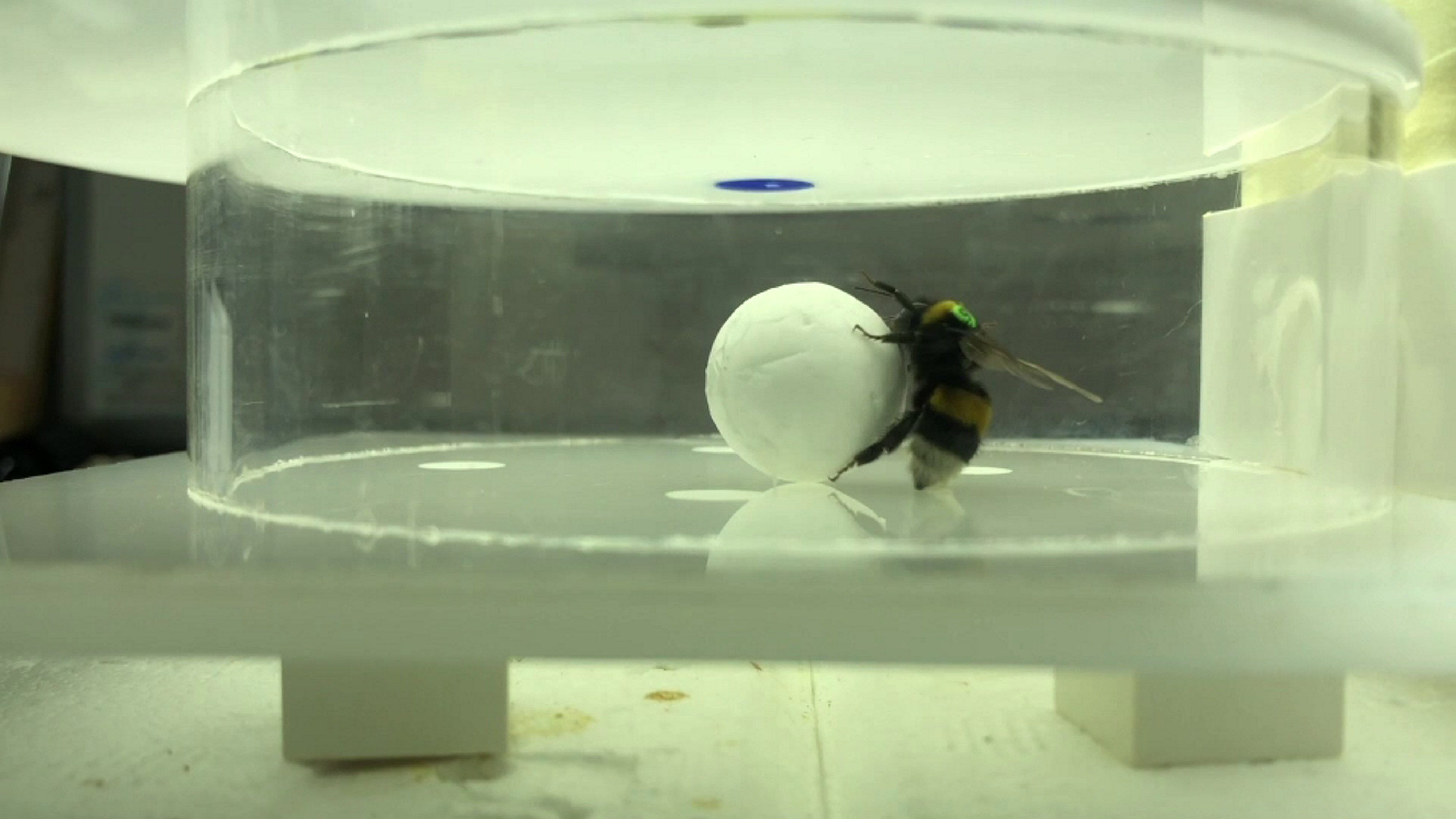
Bees have been taught how to play football just in time for the World Cup as part of a study into the surprising intelligence of the insects.
Researchers taught the bees two things before putting them through their paces: that the small Styrofoam ball was non-threatening and that blue meant a reward. They then placed a blue circle - imitating a flower - just high enough so the bees couldn’t stand and reach it, but just low enough so they couldn’t fly either. They then observed the bees to see how they would overcome the problem.
Published in Science, the new study shows that bees can solve complex tasks similar to those of elephants and chimpanzees, despite their brains being smaller than a grain of rice. Watch how little Ben Bee got on…
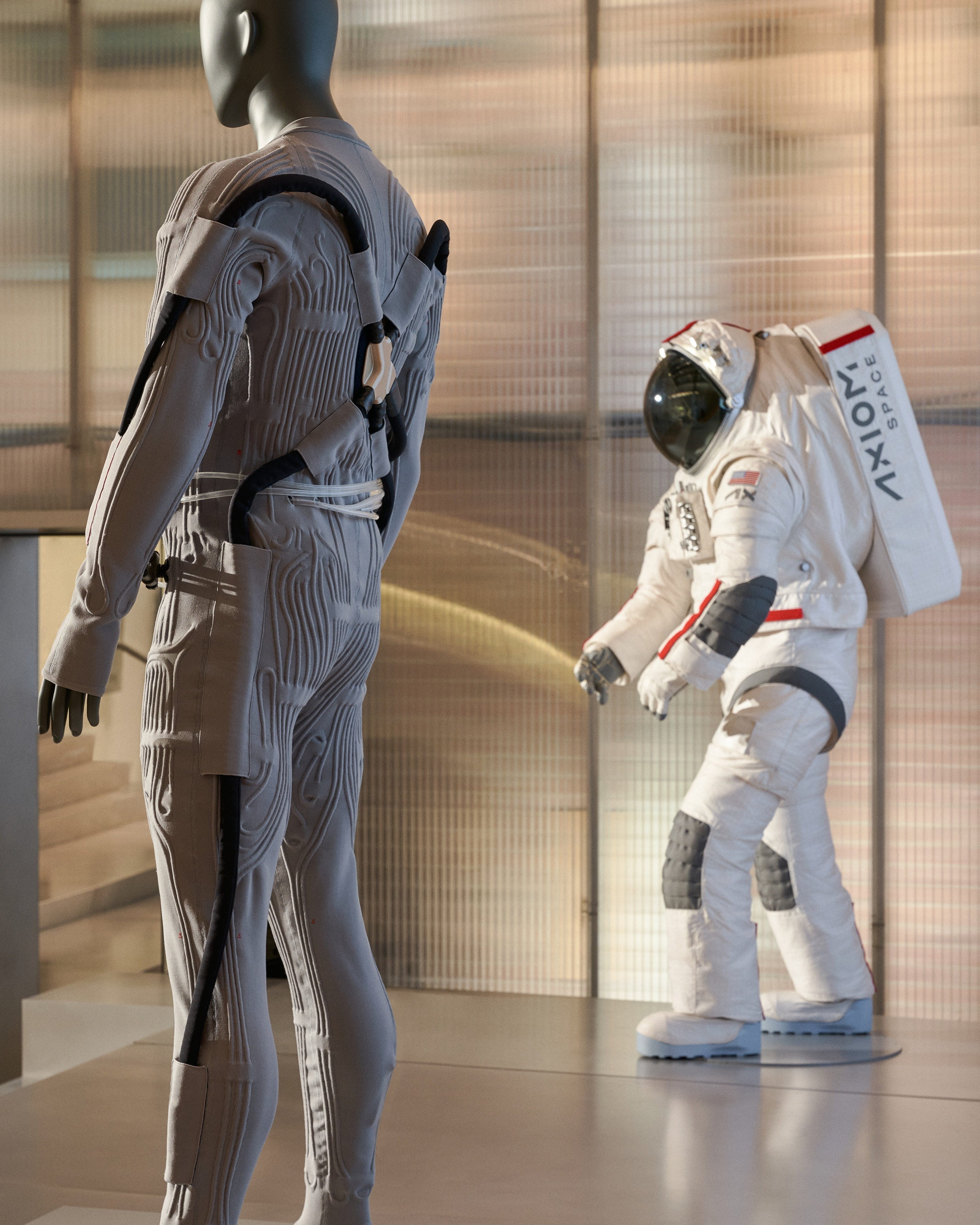
When you’re walking on the Moon, it’s important to be protected from the deadly space environment, but there’s nothing to say you can’t look good doing it! Axiom Space and Prada this week revealed the Liquid Cooling and Ventilation Garment (LCVG) that NASA’s moonwalkers will wear inside their main spacesuit. It’s built to protect astronauts from the elements when they explore the lunar surface for the first time in more than 50 years.
"If you know what you are doing, you are not doing research."
Pieter Zeeman
Weird Science Factoid
Time moves faster for your head than your feet. Thanks to Uncle Albert’s theory of general relativity, we know that gravity warps time. The closer you are to a heavy mass (like Earth), the slower time passes. Because your feet are technically closer to the centre of the Earth than your head, your head ages a tiny fraction of a second faster over a lifetime. How tiny? Physicists using ultra-precise atomic clocks calculated that if you spend 79 years living at the top of a skyscraper, you will be about 90 billionths of a second older than if you lived on the ground floor.
👾 A Washington archbishop has lost his job as an exorcist after saying UFO sightings were the work of demons. Cardinal Robert McElroy claims the ‘visiting aliens’ had the power to ‘influence us to do evil’. He’s not completely hatstand, however, as he has said people can be good Catholics and believe there’s life on other planets, though he does not personally believe life exists elsewhere
🪐 Fans of the mysterious Planet 9 look away now - there might not be such a world hiding in the darkest corners of our solar system. Evidence for the theoretical extra planet has been mounting in recent years, but now a new study says all this might be pure hokum
🧠 A previously overlooked cell type found in the brain might well explain why the human memory has no known upper limit. As someone who has a terrible memory, that last little bit came as a surprise!
🧈 A genetic master timekeeper orchestrates human biological growth and development. When the clock is disrupted, development stops, offering fresh clues about how growth-related disorders may arise
🍞 What do you do when you find yeast in the guts of a frozen, 5,000-year-old mummy? You use it to make sourdough bread, of course. That’s exactly what some Italian researchers did - and the result was a pretty decent loaf
☄️ Astronomers have been left scratching their heads after finding out the interstellar comet 3I/ATLAS that swung through our solar system last year was blasting out loads of methane gas. This makes it unique for a rock that came from another part of our galaxy
Anne Boleyn found by AI
Alien AI
All right
Scientists found a smarter Mediterranean diet that slashes diabetes risk by 31%
Something made Earth’s molten core reverse direction in 2010
About TWSD
Science is weird, and here’s the proof. The Weird Science Drop goes where other, more-sensible newsletters fear to tread. Every week, we grab our trusty white lab coat, bunch of bubbling test tubes and world-ending robot prototype to go in search of the overlooked, under-the-radar and, above all else, most madcap science news, views and research.
Daniel Smith is an ancient experienced journalist who has worked for a host of news publishers on both sides of the Atlantic. A long, long time ago, he fancied himself an astrophysicist but turned out to be the worst scientist since the man who mapped all those canals on Mars, which turned out to be scratches on his telescope’s lens. Luckily, he is not working on the Large Hadron Collider, inadvertently creating a black hole that would swallow the world by pressing the big red button, but is safely behind a desk writing this newsletter, bringing you the fantastical underbelly of nature... The Weird Science Drop.
No posts
Comments
Nothing yet. Say the first thing.
Sign in to join the conversation.