
The Tianxian View is the Pune International Centre’s (PIC) weekly newsletter on China. Each week, we bring you handpicked insights into the key developments shaping China’s politics, economy, defence, foreign policy, technology, and climate.

Power is moving in measured steps, not sudden blows. This week, Beijing sharpened its tools of retaliation while quietly sketching its vision for a reordered world. From blacklist diplomacy to grand governance blueprints, every move signalled intent without tipping into escalation. Beneath the surface, however, the strain between ambition and reality is beginning to show.
Xi Jinping’s anti-corruption campaign has once again moved to the forefront of Chinese politics. China has removed 13 members from the National People’s Congress (NPC), the country’s top legislative body. The number also includes 6 senior officers from the People’s Liberation Army (PLA). The announcement, which offered no official explanation, also confirmed the dismissal of former Politburo member Ma Xingrui and former financial regulator Li Yunze. The removals illustrate the campaign’s reach into China’s military, political, and financial establishments.
Among those removed are:
General Xu Xueqiang: Head of the Central Military Commission’s Equipment Development Department and commander-in-chief of China’s Manned Space Programme since 2022.
General Li Fengbiao: Political Commissar of the Western Theatre Command.
General Guo Puxiao: Political Commissar of the PLA Air Force.
Lieutenant General Wang Kangping: Senior officer from the Eastern Theatre Command.
Lieutenant General Zhang Minghua: Senior officer from the PLA Cyberspace Force.
Lieutenant General Yin Hongxing: Political Commissar of the Tibet Military Command.
Ma Xingrui: Former Politburo member and Party Secretary of Xinjiang, under investigation since April 2026.
Li Yunze: Former head of the National Financial Regulatory Administration.
The latest reshuffle demonstrates Xi’s insistence on absolute loyalty to the Communist Party of China (CPC) and control of the Party over the PLA. However, the fact that only Xi Jinping and anti-corruption chief Zhang Shengmin remain from the seven-member Central Military Commission appointed in 2022 raises questions about institutional stability, leadership cohesion, and persistent governance shortcomings within China’s military and political system. The opaque nature of these removals also reflects the limited transparency that characterises elite politics under Xi’s leadership.
Text within this block will maintain its original spacing when published
Recommended Sources:South China Morning Post - China removes 6 generals from legislature as military anti-corruption drive continues (June 27, 2026)
Reuters - China strips generals, ex-financial regulator, politburo member of lawmaker posts (June 27, 2026)
On June 28, China placed 20 additional Japanese entities on its export control list for dual-use items. The measures restrict Chinese firms from exporting products with potential civilian and military applications to the listed entities. According to the Ministry of Commerce of the People’s Republic of China (PRC), the measures are intended to curb Japan’s ‘new type of militarism’ and its nuclear ambitions. The recent move demonstrates Beijing’s continued reliance on economic statecraft to further its strategic objectives.
What Do China’s New Export Controls Cover?
The measures target prominent Japanese defence and industrial entities, such as subsidiaries of Mitsubishi Heavy Industries, Mitsubishi Electric, Kawasaki Heavy Industries, Komatsu, Nikko Tokki, and the National Institute for Defense Studies. The affected products include rare earths, machine tools, batteries, semiconductor manufacturing equipment, and other dual-use technologies that are essential to defence manufacturing and advanced industrial production. Although Beijing maintains that the restrictions will not affect normal commercial exchanges, exporters to firms on the additional watchlist are subject to strict end-use requirements and must guarantee that Chinese goods will not support the Japanese military.
The measures come as China-Japan relations continue to deteriorate over Prime Minister Sanae Takaichi’s remarks on Taiwan and Tokyo’s actions to expand defence spending and ease restrictions on arms exports. China has already responded through a series of economic measures, including restrictions on heavy rare earth exports, reduced flights, and tourism curbs. Despite being framed as export control regulations, the latest measures exemplify Beijing’s reliance on trade and critical supply chains as instruments of strategic coercion. The episode demonstrates a shift from economic interdependence to strategic competition. It not only calls for regional supply chain diversification but also for reduced dependence on China for critical technologies and industrial inputs.
Text within this block will maintain its original spacing when published
Recommended Sources:Ministry of Commerce, People’s Republic of China - The Ministry of Commerce announced in Announcement No. 27 of 2026 that 20 Japanese entities will be added to the export control list. [Chinese Version] (June 29, 2026)
Ministry of Commerce, People’s Republic of China - The Ministry of Commerce announced in Announcement No. 28 of 2026 that 20 Japanese entities have been added to the list of entities under surveillance. [Chinese Version] (June 29, 2026)
Reuters - China places 20 Japanese entities on export control list for dual-use items (June 29, 2026)
The Wall Street Journal - China Adds More Japanese Entities to Export Control List (June 29, 2026)
From June 22 to 26, the Prime Minister of Bangladesh, Tariq Rahman, was on an official visit to China. Rahman had an audience with Xi Jinping, President of the People’s Republic of China, Li Qiang, Premier, and Zhao Leji, Chairman of the National People’s Congress. He also attended the 17th Summer Davos Forum. Both China and Bangladesh agreed to upgrade their Comprehensive Strategic Cooperative Partnership and establish a ‘China-Bangladesh Community with a Shared Future in the New Era.’ Xi welcomed Bangladesh’s newly elected government and its ‘Bangladesh First’ policy, while Dhaka expressed optimism that China’s 15th Five-Year Plan would create new opportunities for bilateral cooperation.
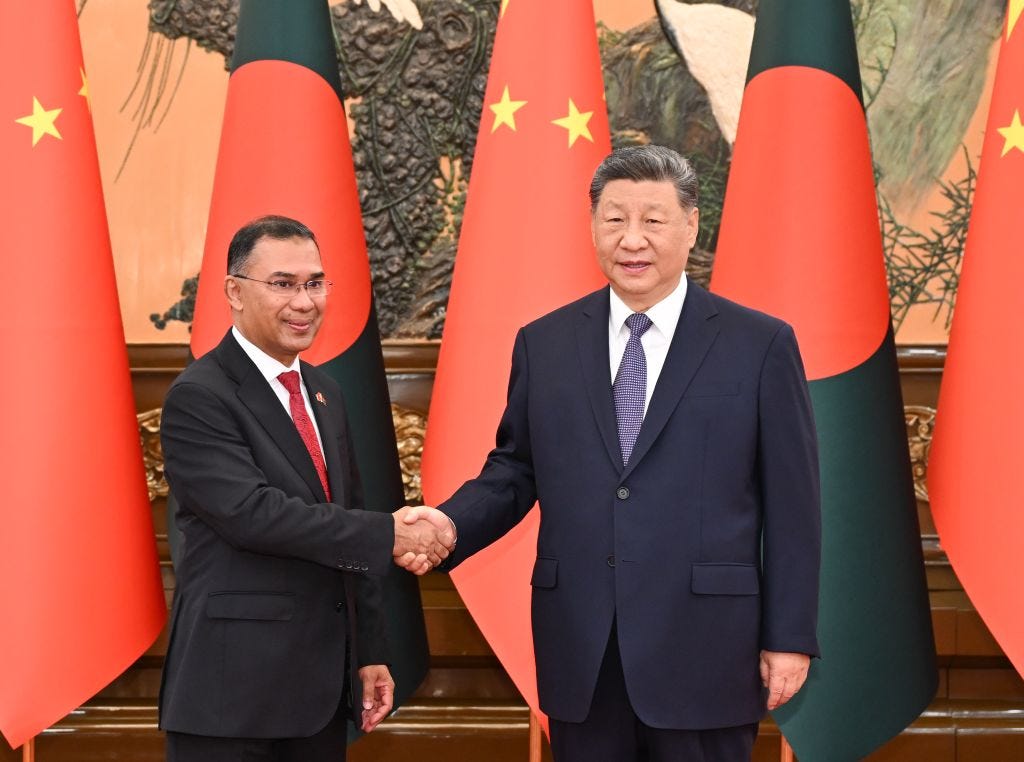
What does the Joint Communiqué between China and Bangladesh state?
Political and Strategic Cooperation
Upgrading bilateral ties to a Comprehensive Strategic Cooperative Partnership and establishing a ‘China-Bangladesh Community with a Shared Future in the New Era.’
Launching a Foreign Ministers’ Strategic Dialogue and exploring a ‘2+2’ dialogue on foreign and defence affairs.
Bangladesh reaffirmed the One-China principle, while China reiterated support for Bangladesh’s sovereignty.
Economic and Connectivity Cooperation
Expanding high-quality Belt and Road cooperation, trade, investment, industrial and supply chain integration, and infrastructure projects, including Mongla Port and the Chittagong China Economic and Industrial Park.
Strengthening cooperation in connectivity, green energy, technology, water resource management, and the Teesta River restoration project.
Security and Multilateral Engagement
Enhancing defence exchanges, education, cultural cooperation, and people-to-people ties.
China is supporting Bangladesh’s participation in BRICS activities and its bid to become a partner of the Shanghai Cooperation Organisation.
Given its strategic location along the Bay of Bengal, the manufacturing sector, and importance in regional connectivity networks, Bangladesh occupies a prominent position in China’s South Asia strategy. The China-Bangladesh partnership also helps Beijing to increase its economic influence in the eastern Indian Ocean through infrastructure and connectivity projects. At the same time, the agreement reflects China’s efforts to secure Dhaka’s support on issues central to Beijing’s foreign policy agenda, particularly Taiwan. However, despite the ambitious agenda, the implementation of many projects is likely to face challenges related to finance, governance, and regional sensitivities. Consequently, the success of the upgraded partnership will depend on the effective and timely implementation of its promised infrastructure, connectivity, and development projects.
Text within this block will maintain its original spacing when published
Recommended Sources:Ministry of Foreign Affairs, People’s Republic of China - Joint Communiqué Between the People’s Republic of China And the People’s Republic of Bangladesh (June 26, 2026)
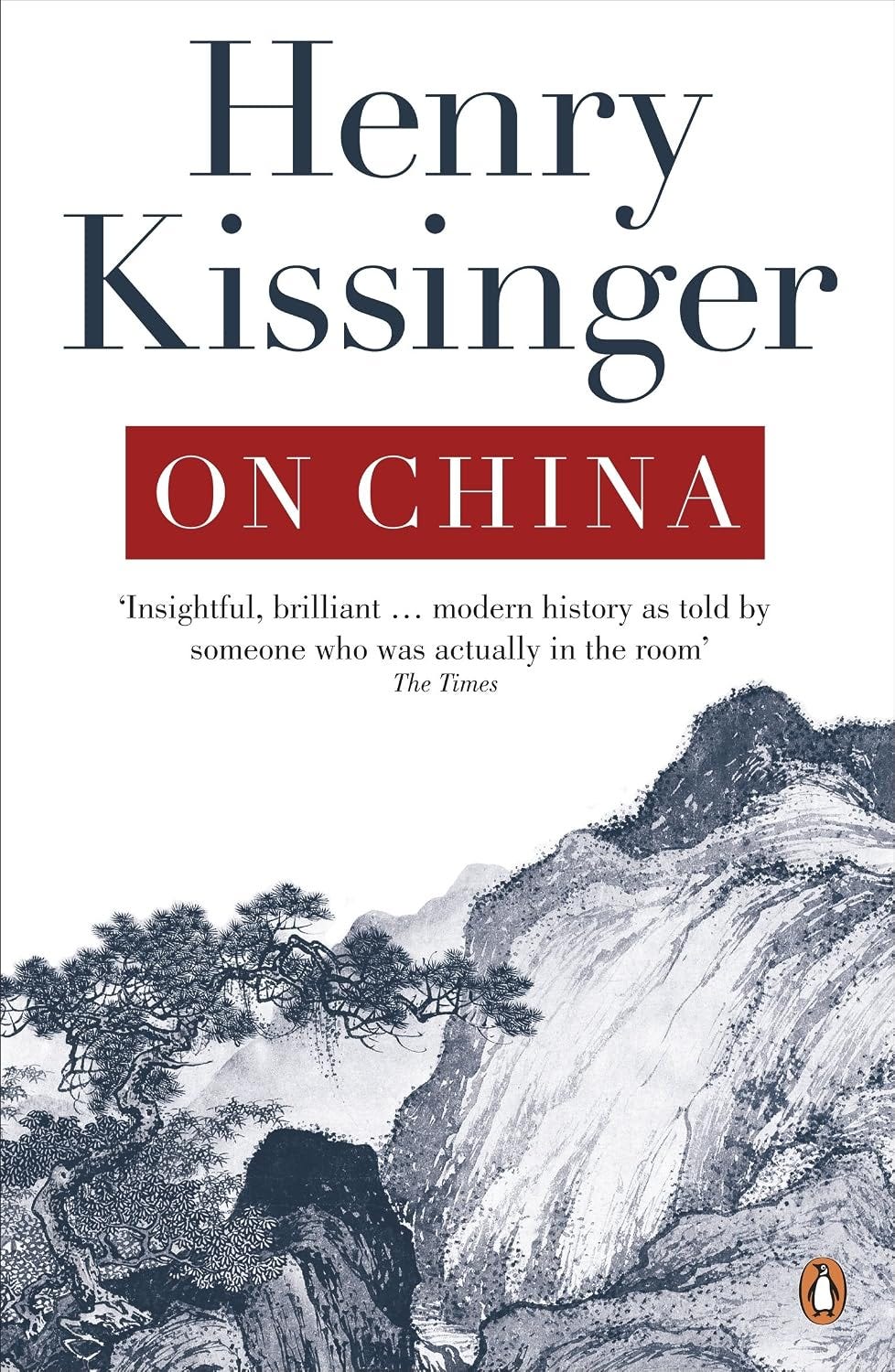
On China by Henry Kissinger examines key episodes in Chinese foreign policy from the classical era to the present day. Drawing on decades of diplomatic engagement with Chinese leaders, Kissinger blends historical analysis with personal reflections to explain the principles that have shaped Chinese foreign policy. It explores China’s historical evolution, strategic culture, and rise as a global power. The book chronicles China’s transformation from the imperial era and the ‘Century of Humiliation’ to the founding of the PRC and its rise under successive leaders. The author explains Chinese strategic thinking through concepts such as Confucianism, the balance of power, and the game of Wéiqí (Go), contrasting them with the Western emphasis on decisive confrontation. His first-hand account of landmark events, particularly the U.S.-China rapprochement of the 1970s, provides readers with valuable insights into the diplomatic processes that reshaped global politics. For those who are interested in China’s historical worldview, diplomatic traditions, and global ambitions, On China serves as an interesting read.

内卷
(nèijuǎn)
Nèijuǎn (内卷) literally means ‘internal rolling’ or ‘involution’ and is used to describe hyper-competitive environments where greater effort results in diminishing returns. It is commonly used to describe highly competitive environments in education, workplaces, and everyday life, where individuals feel compelled to overwork simply to keep up with others. The phrase ‘这太内卷了’ (Zhè tài nèijuǎn le) means ‘This is too competitive’ or ‘This is too intense.’ In addition to its social connotations, nèijuǎn has become a prominent term in official Chinese policy discourse, serving as a critique of structural inefficiencies, excessive competition, and unsustainable economic practices. The term has been used to support reforms that reduce destructive competition in sectors such as technology, manufacturing, and local government investment. It has become commonplace on platforms such as Zhihu and Weibo, where it encapsulates both the lived experience of intense social competition and broader debates about economic and governance issues.
Thanks for reading! This post is available for free. Please feel free to share it with others.
The Tianxian View is an initiative of the Pune International Centre (PIC), an independent and multidimensional policy think tank based in Pune, India. This newsletter aims to offer clear, contextual insights into China’s evolving trajectory.
To know more about PIC’s work and upcoming initiatives, follow us on our website and social media handles.
LinkedIn | X | Instagram | YouTube | Spotify
AI Disclosure Statement: Select Mandarin-to-English translations in this newsletter were produced using advanced large language models (LLMs), applying artificial intelligence and machine learning techniques for natural language processing.
Comments
Nothing yet. Say the first thing.
Sign in to join the conversation.