
The Tianxian View is the Pune International Centre’s (PIC) weekly newsletter on China. Each week, we bring you handpicked insights into the key developments shaping China’s politics, economy, defence, foreign policy, technology, and climate.

Some messages build bridges, others test boundaries. This week, Beijing did both through diplomacy in the Nordics and a missile launch in the Pacific. The contrast reflects China’s growing effort to turn influence into leverage. Meanwhile, slowing EV sales cast a shadow over one of its brightest success stories.
From 2 to 8 July, Wang Yi, Minister of Foreign Affairs of the People’s Republic of China, is on an official visit to the Nordic countries at the invitation of the foreign ministers of Denmark, Sweden, Finland, and Norway. At a time when Beijing faces growing European scrutiny over trade, security, and strategic issues, the visit seeks to strengthen economic cooperation and political engagement.
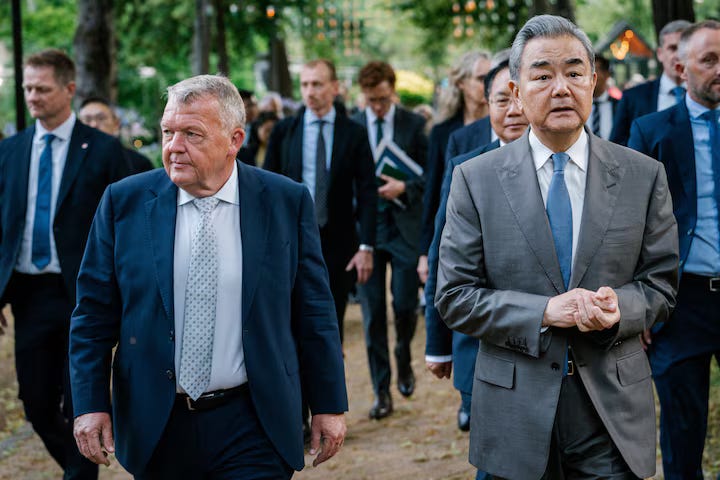
Key Outcomes of Wang’s Nordic Tour:
During the visit, Wang held talks with foreign ministers from all four countries, with discussions centred on trade, investment, technological cooperation, climate action, and multilateralism.
Denmark: Discussions focused on expanding cooperation in green shipping, healthcare, scientific innovation, and trade. Both sides expressed support for strengthening economic ties and maintaining constructive China-European Union (E.U.) dialogue.
Sweden: Wang highlighted the importance of rebuilding bilateral trust after recent strains and encouraged greater cooperation in green transformation, artificial intelligence, technological innovation, and sustainable development.
Finland: Both sides agreed to extend cooperation in green and low-carbon development, digital economy, trade, and investment. Beijing also encouraged Finland to play a constructive role in promoting stable China-EU relations.
Norway: Talks focused on clean energy, green transition, electric vehicles, maritime cooperation, and the China-Norway Free Trade Agreement. Both sides also discussed international issues, including the Ukraine crisis and the situation in the Middle East.
Due to its expertise in technology, innovation, and sustainable development, as well as its influence within the E.U., the Nordic region remains an important strategic partner for China. Beijing’s engagement with the Nordic countries reflects an effort to retain access to advanced technologies and investment, and to discourage further convergence between Europe’s economic policies and its strategic concerns about China. Wang’s visit also highlights China’s diplomatic challenge: while Nordic countries seek economic cooperation, they remain cautious about strategic dependencies on China.
Text within this block will maintain its original spacing when published
Recommended Sources:
Ministry of Foreign Affairs, People’s Republic of China - Wang Yi to Visit Denmark, Sweden, Finland and Norway [Chinese Version] (June 30, 2026)
Ministry of Foreign Affairs, People’s Republic of China - Wang Yi Holds Talks with Norwegian Foreign Minister [Chinese Version] (July 7, 2026)
Ministry of Foreign Affairs, People’s Republic of China - Wang Yi Holds Talks with Finnish Foreign Minister [Chinese Version] (July 7, 2026)
Ministry of Foreign Affairs, People’s Republic of China - Wang Yi Holds Talks with Swedish Foreign Minister [Chinese Version] (July 7, 2026)
Ministry of Foreign Affairs, People’s Republic of China - Wang Yi Holds Talks with Danish Foreign Minister [Chinese Version] (July 7, 2026)
China’s electric vehicle (EV) industry is encountering headwinds as domestic demand continues to decline. The industry recorded its sixth consecutive month of year-on-year declines, with June 2026 EV deliveries reaching 1.04 million battery electric and plug-in hybrid vehicles, 7% lower than a year earlier. In the first half of 2026, EV deliveries declined 13 per cent year on year to 4.73 million units. This underscores subdued consumer demand despite sustained discounts and promotional incentives offered by manufacturers.
How Sustainable is China’s EV-Led Growth Model?
The latest data raise questions about the sustainability of China’s EV-led growth model. As consumers anticipate further price cuts, subdued confidence has fostered a wait-and-see attitude among buyers. This has, in turn, resulted in weak demand and intensified price competition across the EV industry. At present, only BYD, Leapmotor, and Xiaomi are profitable among China’s EV-focused manufacturers. It is projected that only seven of the country’s 30 dedicated EV makers are likely to be profitable by 2030. Beijing’s gradual withdrawal of policy support has further exposed the industry’s vulnerabilities. The EV sales tax exemption was reduced in January 2026 and is due to be abolished entirely from January 2027.
Amidst slowing domestic demand, overseas markets have become an important source of growth for Chinese automakers. BYD’s recent sales growth has been driven primarily by exports, with overseas sales having nearly doubled despite a sharp decline in domestic sales. Tesla’s Shanghai factory also registered strong June deliveries through exports to Europe. Chinese vehicle exports are expected to rise by 41% to 10 million units in 2026, which signals a shift in the industry’s growth model towards external markets. However, growing dependence on overseas markets makes Chinese EV manufacturers susceptible to geopolitical tensions, tariff barriers, and global competition. This creates new uncertainties for China’s EV-led growth model.
Text within this block will maintain its original spacing when published
Recommended Sources:
Reuters - BYD’s sales rise for second month, buoyed by exports (July 1, 2026)
Reuters - Tesla’s China-made EV sales rise 24.4% year on year in June (July 2, 2026)
South China Morning Post - China’s EV deliveries remain stuck in downward spiral, exacerbating industry worries (July 6, 2026)
On July 6, the People’s Liberation Army (PLA) Navy conducted a successful test launch of a submarine-launched strategic ballistic missile into the Pacific Ocean. According to Beijing, the test complied with international law, relevant countries were notified in advance, and it was not aimed at any specific country. The launch, however, has drawn criticism from Australia and Japan. Canberra described it as destabilising amidst China’s growing military expansion in the Indo-Pacific.
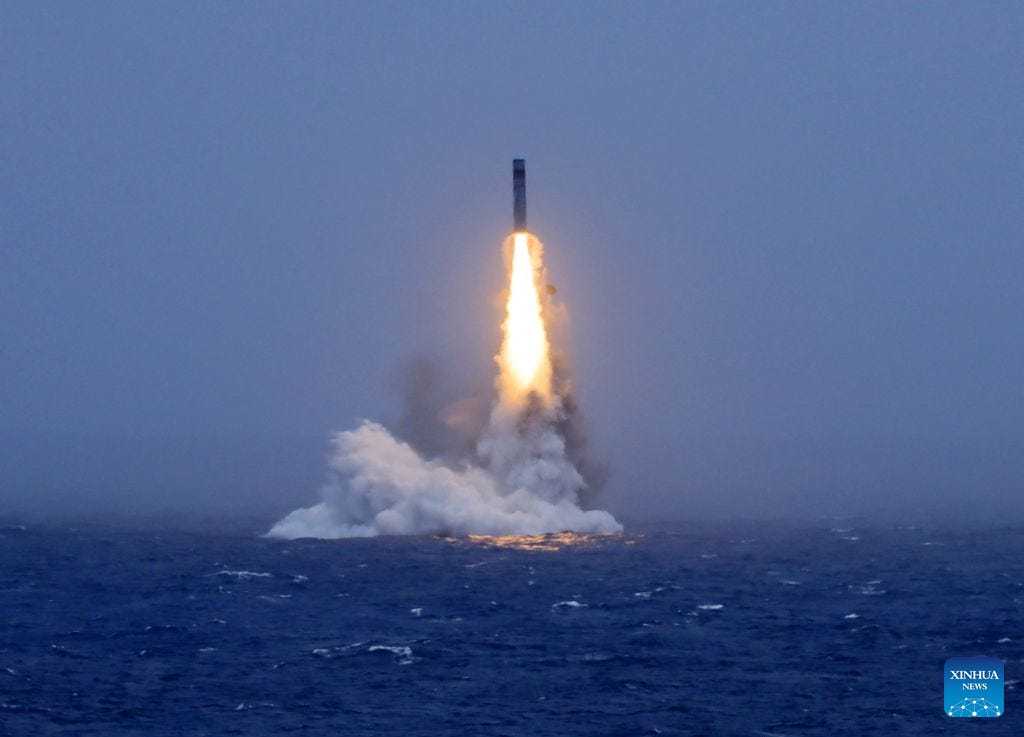
What does China’s Pacific Missile Test Reveal?
The test is believed to have involved the JL-3 submarine-launched ballistic missile (SLBM), a long-range missile with an estimated range of 10,000 kilometres and the capacity to carry multiple independently targetable nuclear warheads (MIRVs). The recent launch shed light on the rapid modernisation of China’s sea-based nuclear deterrent. If confirmed, the launch illustrates the sophistication of China’s nuclear-powered ballistic missile submarine force and its capacity to maintain a credible second-strike deterrent. The launch also represents China's second ballistic missile test into the Pacific in two years. It departs from its traditional practice of testing such missiles over its own territory.
The launch coincided with Fiji’s signing of the Ocean of Peace Alliance treaty with Australia and prompted speculation that its timing was intended to convey a strategic message. The test adds to recent Chinese naval deployments around Australia, live-fire exercises, and military modernisation under Xi Jinping. While China maintains that the exercise was routine, its scale, timing, and strategic context are likely to reinforce regional concerns over transparency, deterrence, and the evolving balance of power in the Indo-Pacific.
Text within this block will maintain its original spacing when published
Recommended Sources:
The Wall Street Journal - Chinese Nuclear Submarine Test-Launches Long-Range Missile (July 6, 2026)
Xinhua - Chinese navy conducts test launch of strategic missile by submarine (July 7, 2026)
The Guardian - What does China’s long-range missile test in the South Pacific mean for Australia? (July 7, 2026)
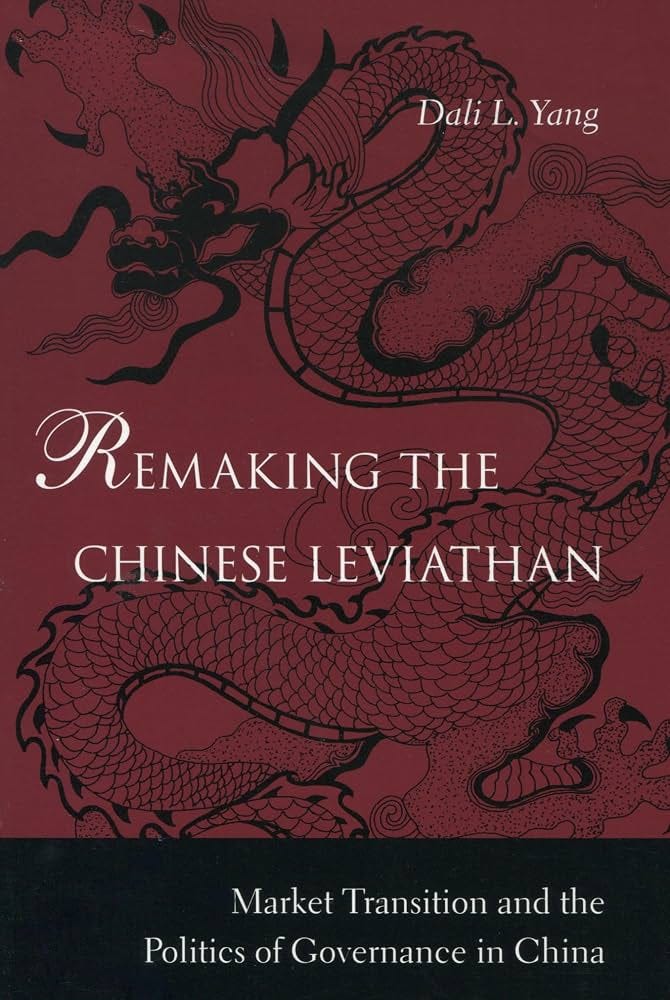
Remaking the Chinese Leviathan: Market Transition and the Politics of Governance in China by Dali L. Yang explores how China’s governance evolved alongside its market reforms. Yang traces China’s transition from a socialist economy to what he describes as a ‘regulatory’ economy during the Jiang Zemin era. He argues that the expansion of market forces created pressures for a more effective, transparent, and rules-based state. Drawing on crises such as the 1989 Tiananmen Square protests and massacre, the 1997 Asian financial crisis, major anti-smuggling campaigns, and the 2002–2004 SARS outbreak, the author explains how Beijing strengthened regulatory institutions, restructured the bureaucracy, curbed the military’s commercial activities, and expanded anti-corruption mechanisms. This book is recommended for those who are interested in understanding the institutional foundations of China’s contemporary political economy and state capacity.

躺平
(tǎng píng)
Tǎng píng (躺平) literally means ‘lying flat’ and refers to a lifestyle of opting out of relentless social and economic competition by doing only the minimum necessary to sustain oneself. It is commonly used to describe individuals who reject excessive overtime, consumerism, and conventional expectations surrounding career success, marriage, and homeownership. The phrase ‘我选择躺平’ (Wǒ xuǎnzé tǎng píng) means ‘I choose to lie flat.’ The term emerged as a viral online expression in 2021 and became a symbol of growing frustration among young Chinese facing economic uncertainty, high living costs, and limited social mobility. Although state media criticised the concept for promoting passivity and discouraging ambition, it has continued to resonate as a form of quiet resistance to mounting societal pressures. It has become commonplace on platforms such as Zhihu and Weibo, where it reflects broader discussions on youth culture, work-life balance, and the structural challenges confronting contemporary Chinese society.
Thanks for reading! This post is available for free.
Please feel free to share it with others.
The Tianxian View is an initiative of the Pune International Centre (PIC), an independent and multidimensional policy think tank based in Pune, India. This newsletter aims to offer clear, contextual insights into China’s evolving trajectory.

To know more about PIC’s work and upcoming initiatives, follow us on our website and social media handles.
LinkedIn | X | Instagram | YouTube | Spotify
AI Disclosure Statement: Select Mandarin-to-English translations in this newsletter were produced using advanced large language models (LLMs), applying artificial intelligence and machine learning techniques for natural language processing.
Comments
Nothing yet. Say the first thing.
Sign in to join the conversation.