
Thornton Wilder’s decades-long love affair with theatre began in his earliest days. As a young boy in Berkeley, California, he relished performances of classic plays in the William Randolph Hearst Greek Theatre, parlaying his observations from the audience into backyard productions of his own creation, with siblings and neighbors assigned to starring and supporting roles.1 In young adulthood, he adopted a writing practice that would serve to hone his knack for creating dramatic tension quickly and economically. These “playlets,” or short plays that often centered on religious themes, would become so numerous that by the time he wrote to friend Amy Wertheimer in 1926 of his proclivity for endowing his characters with his own most private feelings, he’d completed enough material to form the basis of his first published collection of dramatic work in 1928, The Angel That Troubled the Waters and Other Plays.2 The volume followed the breakthrough success of The Bridge of San Luis Rey the previous year, and was itself succeeded in 1931 by The Long Christmas Dinner and Other Plays in One Act—which includes such beloved classics as The Happy Journey to Trenton and Camden and Pullman Car Hiawatha. Taken in whole, Wilder’s early short plays track the evolution of a writer experimenting to find his own signature storytelling structure and style; they would see complete realization in the delivery of the full-length Our Town in 1938, and The Merchant of Yonkers (later, The Matchmaker) and The Skin of Our Teeth thereafter.
“An artist is one who knows how life should be lived at its best and is always aware of how badly he is doing it,” Wilder wrote in the foreword to The Angel That Troubled the Waters.3 “An artist is one who knows he is failing in living and feeds his remorse by making something fair, and a layman is one who suspects he is failing in living but is consoled by his successes in golf, or in love, or in business.” Wilder clearly fell into the “artist” camp.
The publication of The Angel and its foreword in 1928 came just a few years after the mid-1920s heartbreaks of which Wilder wrote to Wertheimer with explicit emotion and vague detail. By 1928, it’s possible that he had already settled into a pattern of sexual and emotional separation that would track through adulthood. That Wilder thought to preface his first collected dramatic works with the assertion that each person is “failing in living” is a harbinger of the brand of existentialism that Emily Gibbs would come to lay bare in Our Town, though by the premiere of that play ten years later, he had smoothed its sharp edges into one of his most famous lines: “Oh, earth, you’re too wonderful for anybody to realize you. Do any human beings ever realize life while they live it?—every, every minute?”4 As an artist, Wilder assumes that he knows how life should be lived at its best—in the present, among people, with the understanding that every moment is a miracle—and channels that knowledge into the “fair” works we cherish today.
Life, and particularly the commitment to stop “failing in living,” are at the heart of the full-length works. Whether it be the appreciation of the day-to-day motions and rituals of human existence in Our Town, the instinct to survive in the face of war and calamity in The Skin of Our Teeth, or the will to joyously persevere through poverty and grief in The Matchmaker, Wilder implores his audience to commit to living life, “at its best.” There is a transcendence from “layperson” to “artist” in each of Wilder’s primary protagonists—Emily Gibbs, Dolly Levi, and George and Maggie Antrobus—when they finally see humanity for what it is and move forward through life (or afterlife) with that knowledge.
But what lies at the heart of Wilder’s distinction between “artist” and “layperson” is not simply its shared “failure in living,”—or, as Dolly says in The Matchmaker, “we’re all fools and we’re all in danger of destroying the world with our folly”—but rather the diverging responses to that failure’s inherent loneliness.5 In his failure, the artist turns inward, to capitalize on creative instinct to make something to share with the world to “feed his remorse.” The layperson, on the other hand, turns outward—centering his focus on business relationships, romantic pursuits, social sports—to seek meaning in living.
The characters who appear most like Wilder in attribute or attitude are similarly observers, outcasts, drop-ins, and misfits marred by their own unique brands of loneliness; perhaps they are proxies for the writer’s own aspirational or feared existences. Our Town’s Stage Manager is the consummate observer of life in scales from the small-town, like Grover’s Corners, to the cosmic. The same play’s Simon Stimson is a long-suffering, wandering alcoholic who even in death cannot square his own existence within his community, or humanity. And in The Long Christmas Dinner, Cousin Brandon is a boozy bachelor uncle whose perennial place at the Bayard family’s Christmas table goes unchanged over decades, even as the family shows little interest in who he is or how he feels.
Our Town follows the residents of Grover’s Corners, New Hampshire across several years of their lives around the turn of the 20th century. Each of the play’s three acts correspond to themes—Daily Life, Love and Marriage, and Death and Eternity—with a young couple, George Gibbs and Emily Webb, at their center. A Stage Manager acts as the audience’s guide through town and the story, instructing, annotating, and framing the small moments of these people’s lives in the context of world history and social forces. By the third act, Emily Gibbs has died in childbirth and, unwilling to accept her fate, returns to Earth for one happy day. She is overwhelmed by how quickly time passes, and how recklessly humans squander the miracle of life. She realizes that to live is to do so unaware of the preciousness of our brief moment of existence. Wilder wrote the play to be performed on a sparse set with very little scenery, a convention employed in the prior one-acts, but which earned him a reputation for experimentalism among wider audiences with Our Town’s success.
Of all the characters in Wilder’s dramatic canon, none is more closely connected with the image of Wilder himself than the Stage Manager (the stage version of Wilder’s semi-autobiographical novel Theophilus North was adapted by a different writer, Matthew Burnett, after Wilder’s death). Despite the appearance and ostensibly similar purpose of a Stage Manager in The Happy Journey to Trenton and Camden and Pullman Car Hiawatha, in no other work does the device play such a pivotal role in the story. Our Town’s Stage Manager is known for his profound commentary on the state of humanity and its role in the universe. If Wilder ever felt resistant to being tagged as the real-life Stage Manager, he did himself no favors by playing the role in a number of productions throughout his lifetime.6
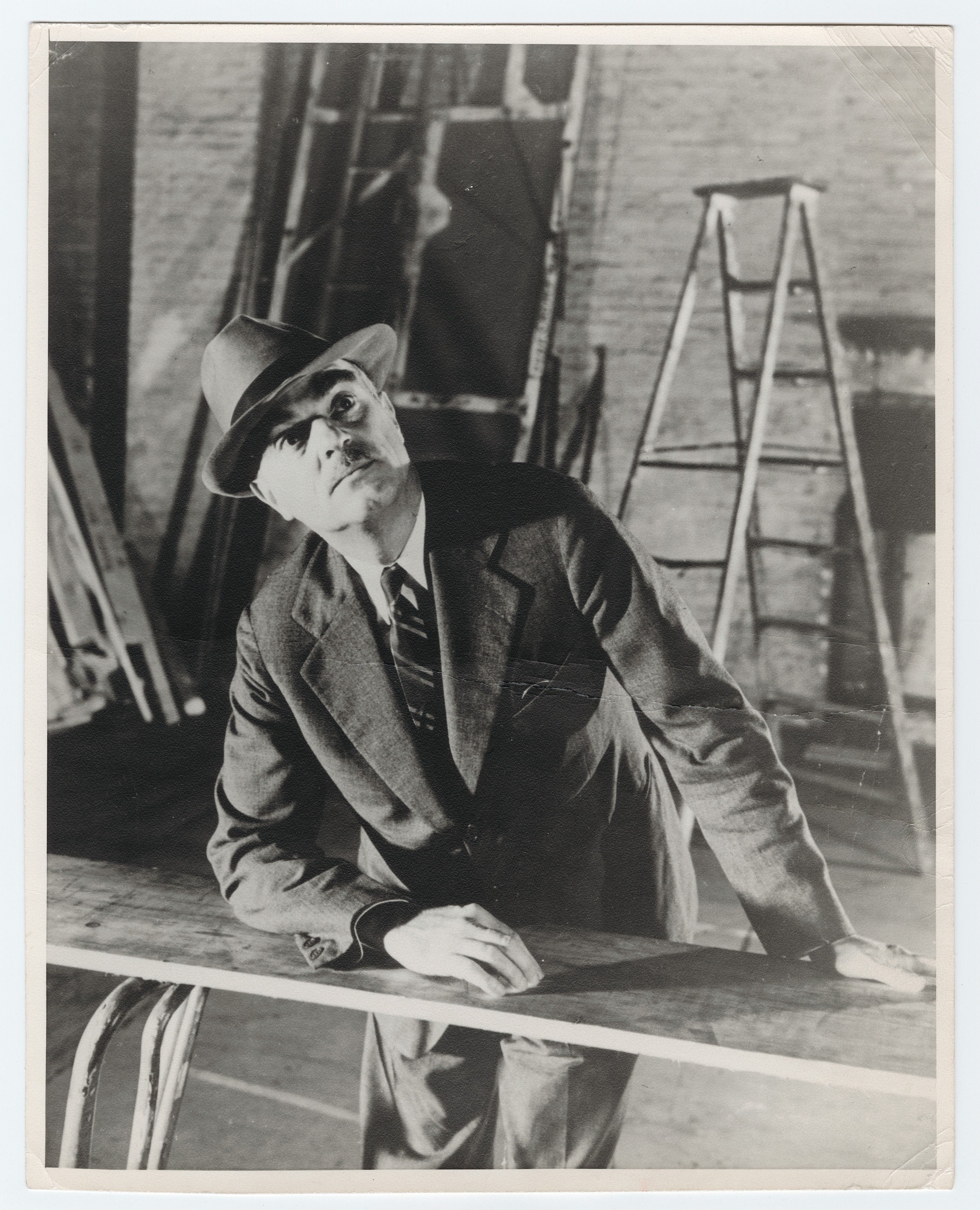
In his omniscience and social interactions, the Stage Manager straddles life in and above Grover’s Corners. Like Tom in The Glass Menagerie, he is both outside and inside the world he has curated for our viewing.7 But whereas Tom, seen similarly as a proxy for Tennessee Williams, examines what Wilder would deem his “failure of living” through the prism of his memory and the imagined walls of the Wingfield apartment, the Stage Manager diagnoses such failures on a species level. If Tom is hyperrealistic in building his warped illusion, the Stage Manager is ultrasimplistic in constructing a world that is profoundly complex.
The Stage Manager sees humans for who we are and how we err. He is both a person and a prophet; a narrator and observer who foresees all fates, vices, and mistakes. He knows every inch of Grover’s Corners; where pockets of people congregate and how their location and relation to others factors into the social order. He walks among the living and talks with the dead. He is both Thornton Wilder and everyman.
If we take Wilder at his word that there is that of himself in his characters—“men, women and children”—and we accept the Stage Manager as a proxy for Wilder himself, perhaps we can understand why major modern New York productions of Our Town have featured performers who increasingly mirror Wilder’s attributes at the time of its premiere (white, male, forty-one years old, experiencing same-sex attraction) than original performer Frank Craven.8 Jim Parsons and David Cromer fit the bill when they starred (and directed, in Cromer’s case) in the 2024 Broadway production and 2009 Barrow Street Theatre productions, respectively. And Spalding Gray, who was 47 years old during the 1988 Broadway production, wrote of his own same-sex attractions.9
In many ways, Our Town is a play of contradictions—birth causes death, the security of marriage comes at the expense of personal freedom, beauty so wholly blankets the world that humans are blind to it—and the Stage Manager is himself an embodiment of contradictions. He is “in the ministry,” but doesn’t “quite know what it means” when marriage is referred to as a sacrament.10 He knows the play is contrived, but still announces his plans to put a copy of it in the cornerstone of the fictional town’s new bank. He knows that the comments of the dead might hurt our feelings, but has them proceed anyway. With one foot in the world and another above it, he can transcend the boundary between; he can code-switch in this would of his curation.
In that regard, the Stage Manager exhibits behavior that many LGBTQ people, closeted or not, have had to adopt in their lives, often for personal safety or emotional security. By existing both in a society that is dominated by the historically heterosexual institutions of marriage and child-raising, but also alongside it as someone who is not a participant in those institutions, he gleans a unique outsider’s perspective. He briefly steps into other roles as well: Mr. Morgan, the owner of the store where George and Emily enjoy their strawberry phosphate; Mrs. Forrest, an old woman who George bumps into on Main Street while tossing a baseball; and the minister who marries the couple.
In their own way, each of these characters are also observers and outsiders, archetypes of a small town. The druggist is witness to the earliest kindling of young love, but also to the medications and intimate products his neighbors are purchasing from him. The minister looks after the spiritual lives of his flock, but in such a rarefied position, do his neighbors see him as on the level of themselves? As one of the eldest in her community, the old woman has seen the people around her grow and develop, but does the prioritization of youth like Emily and George push her to the margins? George doesn’t notice her presence until they physically collide.
With the focus on Emily, George, and their families, Wilder leaves no room to flesh out the lives and personalities of these other characters. The Stage Manager speaks for them by becoming them. And if we consider them as extensions of the Stage Manager and, accordingly, Wilder, is it possible that consciously or subconsciously he was asserting that people like him—those who experience same-sex attraction and were therefore incompatible with the dominant social forces of marriage and parenthood in 1938 (and certainly 1901)—are all around, existing under the radar; that everyone else interacts with us only in passing, unaware of (or disinterested in) the interior lives we lead? Did those characters have heartbreaks and complicated relationships with their sexuality too? Could Mr. Morgan have had a furtive romance? Is it possible the minister’s position provided cover for a sustained bachelorhood? Was Mrs. Forrest ever actually a missus?
Each of these roles clearly has a place in Grover’s Corners, but in their fleeting presence is loneliness. And in his own omniscience—that privileged ability to speak from his outsider’s point of view—the Stage Manager stands truly alone among the others onstage. The Stage Manager’s remorse for his “failure in living” produces the play he’s curating for us, with only momentary dabbles in business (as a druggist), love (as a minister), and sport (baseball, not golf, and unhappily). He is, like Wilder, an artist among laypeople.
Simon Stimson, Our Town’s catty, alcoholic church music director, is seen in the first act preparing the choir for an upcoming wedding and chiding them for poor musicianship. After practice, three members of his choir—Mrs. Gibbs, Mrs. Webb, and Mrs. Soames—discuss his behavior, which tees up a later conversation between the Gibbses that makes clear Simon’s drunkenness is a well known and worsening problem in town. Editor Webb and Constable Warren also encounter Simon as he wanders town in a quiet stupor while his unseen wife looks for him. And by the third act, Simon is among the dead in the cemetery, having committed suicide by hanging in his attic.
Simon is notable as the only character who exhibits an open despair through the entire play, which continues even after his death and puts him at odds with those souls around him who’ve made peace with it all. He is a foil for the town and its inhabitants, one whose accusations of ignorance in others only underscores his own, blinded to the beauty around him by anger. If the Stage Manager has been closely linked with Wilder as a proxy, the character of Simon Stimson mostly has not, though, like Wilder, his sexuality has been the subject of speculation by critics, scholars, and—as evidenced by Howard Sherman’s Our Town oral history, Another Day’s Begun—creatives.11
In some respects, Simon and the Stage Manager could not be less alike. While the Stage Manager has a deep sense of the entire town and its social order—its geography, names, history, and rituals—and is able to balance human follies with the beauty of humanity’s continuity, Stimson scorns the community in which he lives as one of “ignorant” people. He participates in church life and wedding ceremonies as an obligation. While the Stage Manager exists in an air of immortality, Simon sits among the dead. And as the Stage Manager muses on the dead’s gradual disconnection from life on earth, Simon remains tethered to a world that he could not fit into.
“Yes, now you know,” he says bitingly and with mounting violence, per Wilder’s stage directions. “Now you know! That’s what it was to be alive. To move about in a cloud of ignorance; to go up and down trampling on the feelings of those…of those about you. To spend and waste time as though you had a million years. To be always at the mercy of one self-centered passion, or another. Now you know—that’s the happy existence you wanted to go back to. Ignorance and blindness.”12
Unlike the bit characters the Stage Manager plays, Simon is unable to fade into the background of the town. When the town has retreated into their homes for the night, he is awake and wandering. His epitaph is not a Bible verse, but musical notes, which he selected. His life and death are shrouded in secrecy, but marred by incessant gossip. His actions are subject to ridicule by his neighbors. His attempts to fit within the confines of the same heterosexual institutions the Stage Manager successfully exists parallel to have largely failed. Aside from his physical existence in Grover’s Corners, he is isolated.
Simon’s insistence that to be alive is to “go up and down trampling on the feelings” of others, and to “be at the mercy of one self-centered passion” are reminiscent of the words Wilder wrote to Wertheimer a decade earlier regarding his heartbreak over the 1925 winter holiday. He wrote then: “I loved with all the exaggeration one can imagine. But I was not only not loved so in return. I was laughed at. The cleverest humiliations were set for me. And for a long time I am going to be the most cautious, the most distrustful (of myself) man in the world.”13 The root of Simon’s anger at his neighbors in the first act comes into focus in the third act. It’s clear he encountered betrayal by others. He, like Wilder, responds with distrust and suspicion of the motivations of others. His reference to “self-centered passion,” if taken in the sexual or romantic sense, suggests that Simon also had negative experiences in those regards. Perhaps it’s that experience—a failed encounter with desire, maybe—that precipitated the “troubles” and resulting gossip.
After the choir practice in the first act, Mrs. Webb, Mrs. Gibbs and Mrs. Soames discuss Simon’s alcoholism and depression privately. Mrs. Soames’ attitude toward Simon’s behavior takes an unkind turn, which elicits a defensive response from Mrs. Gibbs, who dismisses her comments and insists that the preacher’s acceptance of Simon is an example they all should follow.
“We all know about Simon Stimson,” she says. “And we all know about the troubles he’s been through, and Dr. Ferguson knows too, and if Dr. Ferguson keeps him on there in his job the only thing the rest of us can do is just not to notice it.”14
“Not to notice it,” Mrs. Soames retorts. “But it’s getting worse.”
“No, it isn’t, Louella,” Mrs. Webb says, siding with Mrs. Gibbs. “It’s getting better. I’ve been in that choir twice as long as you have. It doesn’t happen anywhere near so often.”
It’s clear that Mrs. Soames’s fixation is on the alcoholism and Simon’s conduct before the choir. She picks up on the visual and behavioral clues of his drinking. But Mrs. Webb and Mrs. Gibbs seem to see the drinking as a symptom of something larger, which Mrs. Soames hasn’t been clued into. Their allusion to Simon’s previous “troubles” implies that those who’ve been in town for a long period of time are more familiar with Stimson’s talked-around history; that they see the alcoholism as a byproduct. These scenes are so fleeting, and the alcoholism so present in both the first and third act (“Hm, drank a lot, we used to say,” says Sam Craig, a mourner reading Simon’s epitaph), that it’s easy for a production to conflate the “troubles” and the alcoholism as one and the same.15 But Wilder writes of them distinctly.
Later, when the Gibbses are discussing the rehearsal, Mrs. Gibbs admits Simon’s behavior was the worst she’d seen from him, despite her earlier protestations.
“I guess I know more about Simon Stimson’s affairs than anybody in this town,” Doctor Gibbs says. “Some people ain’t made for small-town life.”16 The line indicates that Doctor Gibbs has treated Simon in his practice. But these two sentences diverge as to the kind of treatment Doctor Gibbs would have delivered. As a physician, he would have treated the physical ailments that Simon experienced throughout his life, perhaps exacerbated by the alcohol he consumes. But the second assertion, the judgment that Simon is among those who aren’t cut out for small town life, implies a deeper, psychological understanding of the man’s health. He knows that Simon’s secrets, or “troubles,” are incompatible with the small-town life that he finds himself successfully immersed in. Maybe Doctor Gibbs had clued his wife into Simon’s medical history, including his psychological and sexual history, previously, which caused her to speak in his defense. At any rate, he takes the stance of so many others: “I don’t know how that’ll end; but there’s nothing we can do but just leave it alone.” He doesn’t ask, and he won’t tell.
Whatever Simon’s troubles were, the pastor has kept him in his position despite them. Following that example, the rest of the town has accepted Simon and his troubles, or at least consented to collectively concealing them. But their obfuscation leaves the lingering question: what are the troubles that would have both required a moral excuse of a pastor and been so detrimental as to exacerbate an addiction? One would traditionally assume that grief, from a death or loss, or trauma, such as war or humiliation, would be the trigger.
It’s unlikely that Simon’s troubles would be rooted in war, however. The American Civil War ended nearly four decades prior to the play’s setting in 1901 and New Hampshire’s sole volunteer unit in the Spanish-American war stayed stateside. If Simon had endured a ruinous loss, such as the death of a family member or a financial disaster, what need would he have for moral excusal? Even in more repressive times, it’s daffy to think that a commonplace tragedy would require a pastor’s forgiveness. Mrs. Gibbs’s assertion that the pastor is aware of Simon’s trouble, supports him anyway, and sets an example that others should follow, implies the existence of something much less commonplace, much less socially acceptable.
Is it possible that Simon’s problem, the one that drives him to self-medicate with alcohol, is, in fact, one of passion? Aside from the colonial sodomy laws that remained on the books in early American states, the social stigma and moral pressures Simon would have faced as a man experiencing same-sex desire would have made living as an out gay man practically impossible. But social stigma and moral pressures are not enough to vanquish desire, only to influence the responsive behaviors of those who experience it.
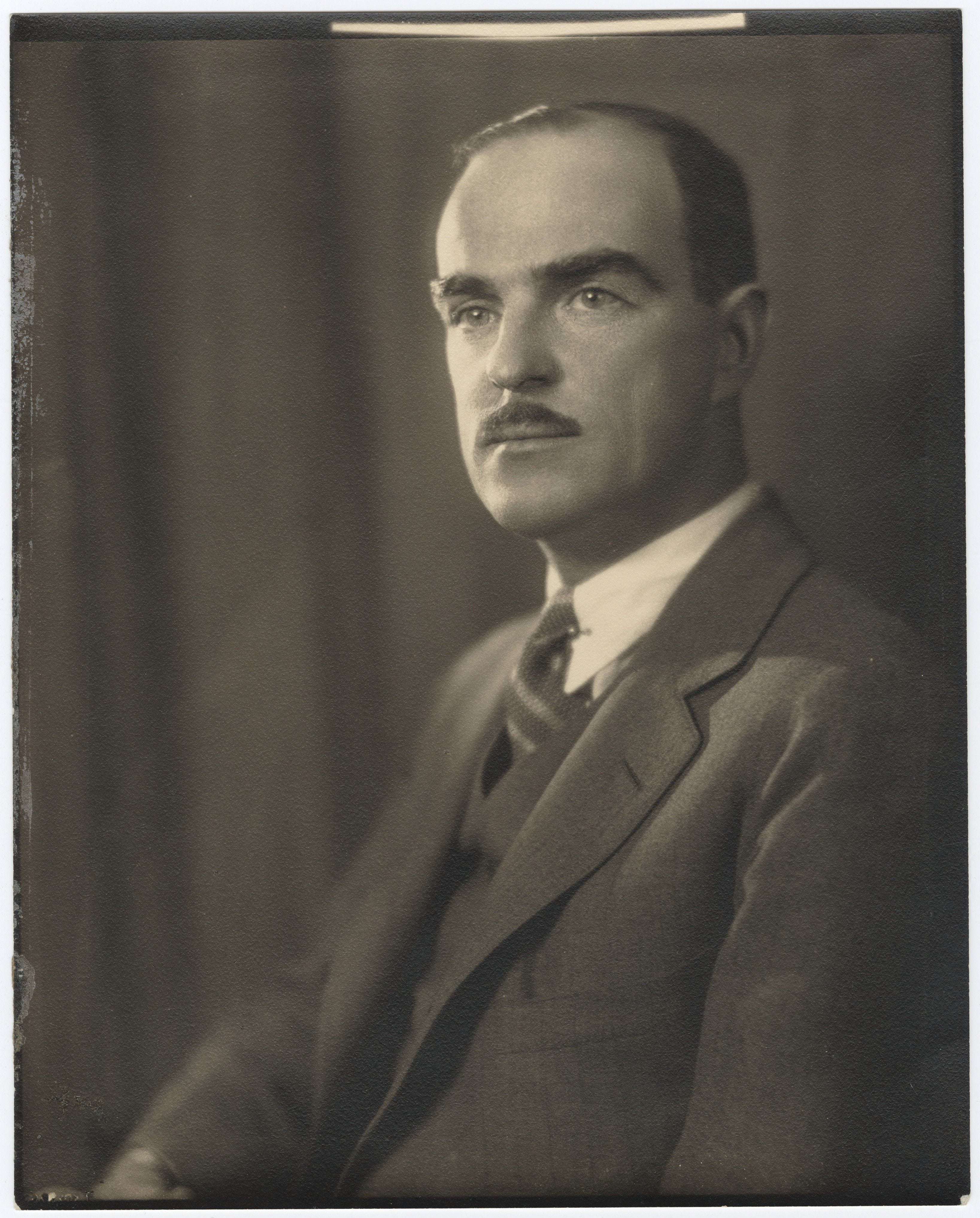
Later in the act, Editor Webb and Constable Warren encounter Simon wandering silently through the night, alone. The constable shares, in the first and only mention of Simon’s unseen wife, that he observed her “movin’ out to hunt for him.”17 Constable Warren joins the chorus of unnoticing neighbors: “I looked the other way.” His ignorance, a status quo-preserving gesture that is neither embracing nor scornful, echoes Mrs. Webb’s earlier suggestion that they ignore Stimson’s public outbursts, and Doctor Gibbs’s advice to his wife to, “just leave it alone.”18
But their insistence on looking away is at odds with Wilder’s decision to keep bringing him back. Wilder wants the audience to notice Simon. And Editor Webb begins this scene with Simon and Constable Warren with reference to the moon, which casts bright light onto the darkness Simon is retreating into; perhaps a symbol of the town’s ever-watchful eye.
“Town seems to have settled down for the night pretty well,” Editor Webb suggests before repeating the sentiment and offering to walk Simon home.19 Simon silently rejects the offer and continues walking in solitude. Their half-hearted attempts to stop him, and lack of concern when he quietly refuses, makes it clear that while the ritual is not embraced by the town’s foremost citizens, it is accepted as a regular occurrence.
Editor Webb’s repeated insistence that the town had gone to bed may be to signal that any available drinking holes are closed for the evening. Wilder previously has Editor Webb report on the status of alcohol in town: “We’ve got one or two town drunks, but they’re always having remorses every time an evangelist comes to town. No, ma’am, I’d say likker ain’t a regular thing in the home here, except in the medicine chest.”20 But is it possible that Simon isn’t looking for something or somewhere, but someone? Is Simon’s nighttime wandering an early dramatization of cruising?
It’s reminiscent of a sequence in Tony Kushner’s Angels in America, when Joe Pitt wanders Central Park at night to watch men have sex.21 Like Simon’s wife, Joe’s wife Harper is alone at home. And like Simon, Joe has turned to alcohol to curb the inhibitions that keep him from engaging in affairs with men. Both men are facing the pull of something, and they can only find the courage to seek it in the dark of night.
“That’s what it was to be alive,” Simon says, “to spend and waste time as though you had a million years.”22 The irony of the statement is that Simon ended his life prematurely and by his own hand. His only legacy, aside from the secrets and the gossip, which like most of human life would disappear with time, are the musical notes on his gravestone of a song we don’t know; the artist lost forever behind the art. Simon’s sin—his “failure in living”—is not his suicide or even his sexuality, as the ministers and moralists of Grover’s Corners would have likely said. To Wilder, it seems that Simon’s sin was that he was an artist who never learned to escape the life of a layperson; that the possibility of night was always followed by the bright, lonely truth of morning.
In her biography, Thornton Wilder: A Life, author Penelope Niven makes the case that Wilder, who signed a temperance pledge as a young man at the behest of his father, turned to alcohol with increasing frequency later in life as a balm for his loneliness.23 Her association of his reliance on alcohol in the early 1950s is concurrent with writings on homosexuality that appear in his journals.24 Wilder certainly wouldn’t be the first or only writer with same-sex attractions to turn to alcohol as self-medication for the insecurities and emotions that come as fallout of living in the closet (Williams’s struggles with alcohol were well-documented, as were those of Wilder admirer Edward Albee and others), but Niven notes that Wilder asserted in 1957, “I drink a good deal, but I do not associate it with writing.”25 Though Wilder may not have linked alcohol with his creative process, he certainly infused it into characters like Simon Stimson and others that align with his personal attributes.
Wilder’s play The Long Christmas Dinner, which was first published as the headline work of a collection of one-act plays in 1931, could be regarded as a response to his transient childhood. With the dispersion of his family and the specter of poverty that hung over them for much of Wilder’s young life, holidays were rarely shared among the entire family.26 Wilder’s letters from the time show the extent to which those experiences away from family hurt him, and the recurrence of family themes not only in The Long Christmas Dinner and The Happy Journey to Trenton and Camden, but also Our Town and The Skin of Our Teeth, indicate that they loomed large enough in his mind to bleed into his work years or decades later.27
The Long Christmas Dinner covers 90 years of Bayard family holiday gatherings, tracking as children are born and grow to inherit the family roles their parents and grandparents leave behind as they die. Like Our Town, the play employs a spare set—a table and doors to signify birth and death—and is a brief study for a core theme that appears in the later play: though we exist and imagine ourselves as individuals, we are each a continuation of humanity, given a brief opportunity to exist in this little corner of the cosmos. Early in the play, Wilder introduces Cousin Brandon, an Alaska explorer who has returned home to the family with no wife or children of which to speak. He remains a fixture at the dinner table through dozens of years of gatherings, until his advanced age requires him to enter the portal to heaven too. While alive, he is prolific in his consumption of wine, but the family, focused on their own relationships and children, do not choose to delve into Brandon’s life the way they do others.
As a result, we know little about Brandon’s life, aside from his lack of immediate relations. His contributions to the conversation—a mention of a preacher’s sciatica, a comment on the weather, a remembrance of the days before sidewalks, a passing mention of a new factory of the firm he shares with Roderick—are decidedly surface-level. Given the exceptional economy of the play, which covers 90 years in roughly 20 pages of dialogue, one may argue that Brandon’s backstory is a casualty of the structure.28 But, after he dies, he is replaced by another single cousin, Ermengarde (a name that will appear later in The Merchant of Yonkers), an older woman who finds herself alone at the table when the descendants of the original Bayards relocate their Christmas tradition to a different home and leave her behind.
Brandon fits exceedingly well into the archetype of George Chauncey’s middle-class queer, who creates, “a place in middle-class culture by constructing a persona of highly-mannered—and ambiguous—sophistication.”29 This model employs stylish and masculine airs to conceal same-sex attraction to social and familial relations. It was a model into which one could argue that Wilder himself fit well, especially the, “pronounced Anglophilia (which, more precisely, was a reverence of the elegance and wit attributed to the English gentry).”30
What Brandon sought in Alaska is never entirely clear, but it is apparent that loneliness brought him home. Since returning, he is in close physical and economic proximity to his relatives, but their focus on one another creates an emotional distance that keeps him a peripheral member of the family regardless. The primary interactions with Brandon are to ask whether he wants more wine and to deliver the drink accordingly.
In Brandon, Wilder creates something of an inversion of Simon Stimson in the treatment of his alcoholism. For starters, his drinking is visible to the audience and seen exclusively in the context of celebration. His consumption is also fueled by his hosts, not himself. And his drinking is not seen as a hindrance to his career or family life. Unlike Simon, he lives to an advanced age and dies naturally.
For his part, Simon is never seen drinking. The audience is only attuned to it because of the other characters’ descriptions. Any time Simon drinks, it is cause for concern in the community, and his consumption is driven not by others, but by private consternation. And it is not only detrimental to his status in town and relationships with others, but is regarded as bringing about, or at least contributing to, his premature death.
Both of these men, however, exist in a lonely space, no matter Wilder’s treatment of them or placement in proximity to others. If Wilder’s ideal family structure is rooted in “Love and Marriage” as the title of Our Town’s second act implies, neither Simon nor Brandon (nor the Stage Manager, for that matter) fit successfully into it. Simon’s attempt to settle into marriage is a failure, as he wanders the night and self-soothes with alcohol. In his bachelorhood, Brandon is seen as a supporting player outside the traditional family structure and only in relation to the family centerpiece. His name is almost always affixed to an honorific: cousin or uncle. And in recasting Brandon’s role in the family with the spinster Ermengarde, and then leaving her alone at the table, Wilder seems to offer a bleak assessment: the single sitter at the table is always at risk of being jettisoned by the core, traditional family.
Of all three of these Wilder proxies, Brandon fits most cleanly into Wilder’s concept of the layperson. His “failure in living” was to go through life unremarkably alone, happily fixed in the outer orbit of a social structure to which he didn’t really belong.
In each of their peculiarities, the Stage Manager, Simon Stimson, and Cousin Brandon represent the kinds of men Wilder could have become had the circumstances of his life, attractions, or relationship to alcohol played out differently. How many times and ways did Wilder game out the trajectory of his social life as he privately considered options of confronting and embracing his sexuality? In his residencies and travels, how many Simon Stimsons did he encounter in bars, parks, and churches? As he watched his siblings date, marry, and consider having children—and as he accepted that neither marriage nor parenthood were in his future—how did he envision his eventual place at the family holiday table he yearned for as a young man? In light of his religious education, interactions in a carousel of small communities, and extensive engagement with the classics, how did he conceptualize himself as not only a commentator on, but a mirror for, humanity?
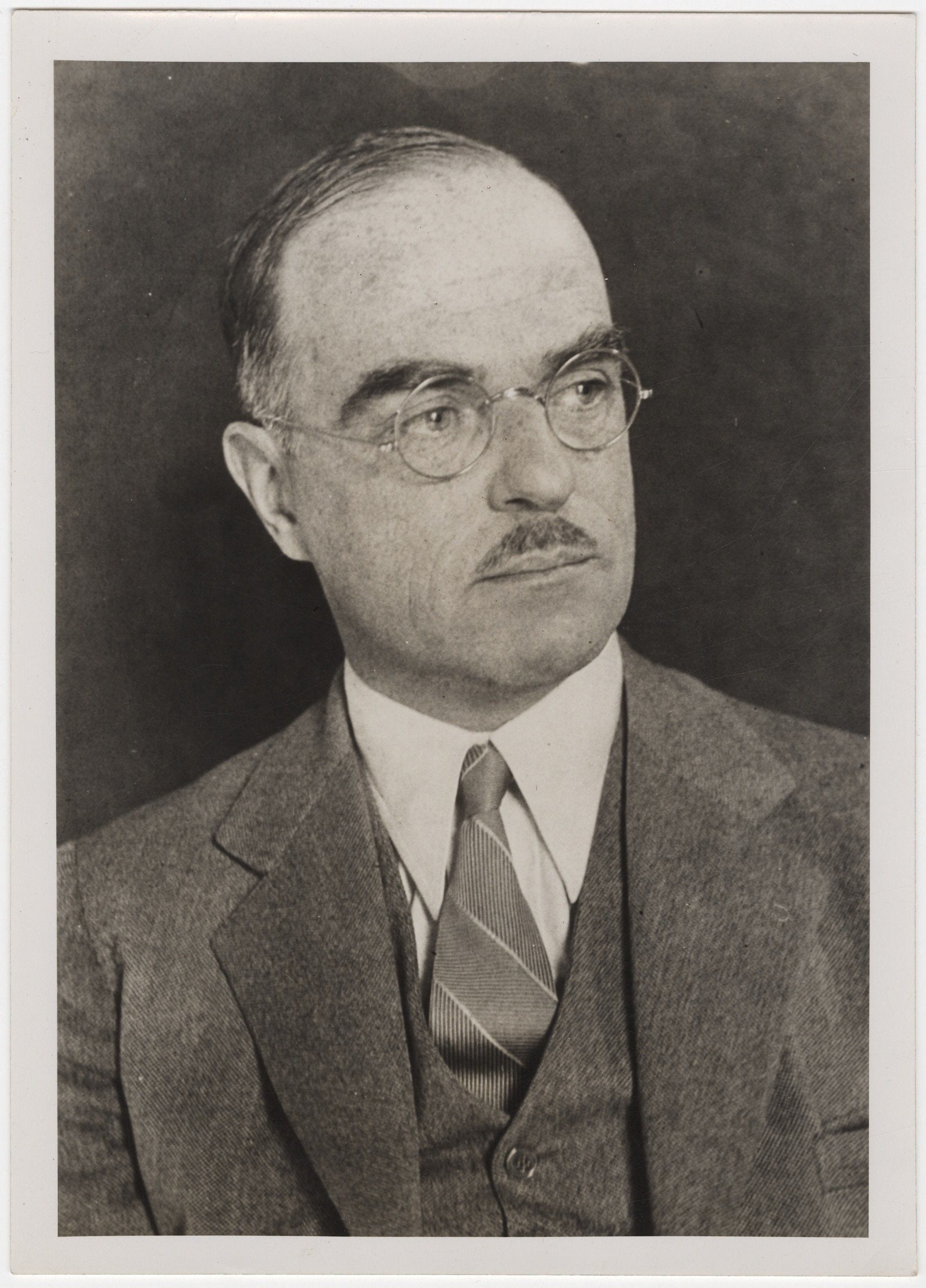
The Stage Manager is obviously the closest and most recognizable proxy for how Wilder existed in the world and moved through life. Like Wilder, his craft is curating stories and characters who exhibit his impression of society; he grapples with faith and the purpose of social institutions; he fixates on the history and legacy of humanity, and our fleeting blip on the timeline of the universe; he appears as a sophisticated man floating seamlessly in and out of provincial life with one eye on the ground and the other toward the heavens. His strength and his staying-power hinge on his ability to come and go. He is the Wilder who went into the world.
Simon Stimson is the model of a Wilder who lacked the courage, knowhow, or ability to become a citizen of the world. He is the Wilder who didn’t travel or adopt a resistance to romance; who took on the trappings of the heterosexual institutions he valued, though they were incongruent with his deepest emotional needs, and lost himself in them; who rebuked the temperance pledge insisted upon by his father and turned to alcohol early as a means of self-medication; who didn’t wander the world searching for his next story or the meaning of life, but instead walked the perimeter of town searching for a reason to see the coming sunrise; whose artistic inclinations were limited to reinterpretation, rather than outright creation. He is the Wilder who would have stayed home.
And in Cousin Brandon there is the version of a Wilder who mustered the bravery to set out on his own to find success, but came back empty-handed. He is the Wilder who resisted the urge to assimilate into heterosexual institutions for the price of a limited role in the social order; whose only tangible claims to the family were a partnership in business and a single chair at the holiday table; who didn’t foresee the lonely, inevitable outcome of bachelorhood. He is the Wilder who went into the wilderness, only to return home.
If Wilder saw creation as the artist’s tool to address his “remorse,” perhaps these characters—in their triumphs and trials—offer clearer insight into what Wilder’s belief a “life lived at its best” truly was. Maybe Wilder’s justification to himself or the higher power that he often wrote of was that by not becoming Cousin Brandon or Simon Stimson—and instead becoming a world figure and staving off self-medicated despair in stalled creativity or social emptiness—he was able to avoid the excesses of a “failed” life. Maybe their role in his remorse was to offer assurance that he was not like those other men, those real-life Simons and Brandons he surely encountered.
If Simon and Brandon exist to show the kind of man Wilder is not, then the Stage Manager offers an aspirational version of the kind of man he wants to be. Wilder makes his remorse actionable by distilling the essence of a life “lived at its best,” and creating a character to dispense it. Wilder returns to his experiences as an educator, not asserting, look how much I know, but rather, humbly, look how much I’ve learned. If he cannot live at his best in every moment, then he will feed his remorse in the purest way he knows how: by immortalizing a version of himself who can.
This post is part of a larger collection, A Walk on The Wilder Side: A Queer Reading of Thornton Wilder, available on Substack and to view here:
Download the full PDF version of the report by D.R. Lewis here.
Read the next section, Part Three: Wonderful Woman, here.
Niven, Penelope. 2012. Thornton Wilder: A Life. First ed. New York: HarperCollins, 27.
Wilder, Thornton to Amy Wertheimer, February 7, 1926. Thornton Wilder Papers, Yale Collection of American Literature. Beinecke Rare Book and Manuscript Library.
Wilder, Thornton. 1928. The Angel That Troubled the Waters and Other Plays. New York, NY: Longmans, Green, and Co, v-vi
Wilder, Thornton. 2020. Three Plays: Our Town, the Skin of Our Teeth, and the Matchmaker. N.p.: HarperCollins Publishers, 110.
Wilder, Three Plays, 409.
Williams, Tennessee. 1999. The Glass Menagerie. Twentieth ed. N.p.: New Directions Books.
Wilder to Wertheimer, February 7, 1926.
Casey, Nell. 2011. “Spalding Gray’s Tortured Soul.” The New York Times, October 6, 2011. https://www.nytimes.com/2011/10/09/magazine/spalding-grays-tortured-soul.html.
Wilder, Three Plays, 77.
Sherman, Howard. 2021. Another Day’s Begun: Thornton Wilder’s Our Town in the 21st Century. N.p.: Bloomsbury Academic.
Wilder, Three Plays, 111.
Wilder to Wertheimer, January 12, 1926
Wilder, Three Plays, 42.
Wilder, Three Plays, 93.
Wilder, Three Plays, 43.
Wilder, Three Plays, 46.
Wilder, Three Plays, 43.
Wilder, Three Plays, 46.
Wilder, Three Plays, 27.
Kushner, Tony. 2011. Angels in America. Tenth ed. New York, New York: Theatre Communications Group.
Wilder, Three Plays, 111.
Wilder, Thornton. 1985. The Journals of Thornton Wilder, 1939-1961. Edited by Donald C. Gallup and Donald Gallup. New Haven: Yale University Press, 182-184.
Wilder, Thornton. 2011. Wilder’s Classic One Acts. N.p.: Samuel French.
Chauncey, George. 1994. Gay New York: Gender, Urban Culture, and the Making of the Gay Male World 1890-1940. Second Trade Paperback ed. New York, NY: Basic Books, 106.
Chauncey, Gay New York, 106.
Thornton Wilder photographs courtesy of the Thornton Wilder Papers, Yale Collection of American Literature. Beinecke Rare Book and Manuscript Library. With the consent of The Wilder Family LLC and The Barbara Hogenson Agency, Inc. All rights reserved.
Quotations and excerpts from The Angel That Troubled the Waters and Other Plays © 1928, The Merchant of Yonkers © 1939, The Journals of Thornton Wilder, 1939-1961 © 1985, Wilder’s Classic One Acts © 2011, Three Plays: Our Town, The Skin of Our Teeth, and The Matchmaker by Thornton Wilder Reprinted by arrangement with The Wilder Family LLC and The Barbara Hogenson Agency, Inc. All rights reserved.
Thornton Wilder: A Life by Penelope Niven © 2012. Reprinted by arrangement with Jennifer Niven and The Barbara Hogenson Agency, Inc. All rights reserved.
To learn more about Thornton Wilder, visit www.ThorntonWilder.com
No posts
Comments
Nothing yet. Say the first thing.
Sign in to join the conversation.